

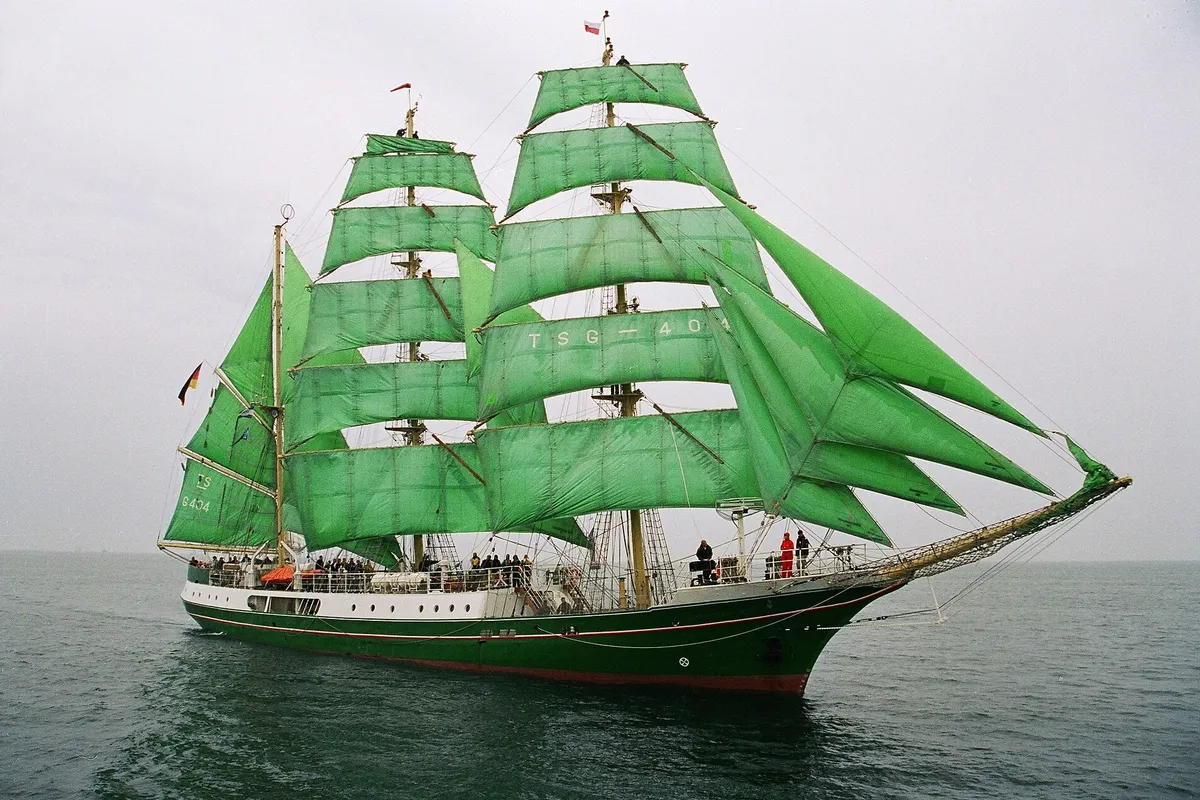
Stationary river botels occupy a distinct niche between commercial hospitality and preserved naval engineering, and Alexander von Humboldt Bremen is one of the most prominent examples moored in northern Germany. Stationed along the urban riverbank, this converted tall ship operates as a fully functional floating hotel and dining venue rather than an offshore cruiser. Anyone boarding expecting the standardized acoustics, king-sized mattresses, or seamless elevator access of a mainland boutique property will be caught off guard by steep companionway ladders, narrow bunk configurations, and the ambient rhythm of the Weser River.
Over years of inspecting historic vessel conversions, I have seen how promotional photography tends to conceal the physical realities of marine living. Sleeping aboard a historic sailing ship involves practical compromises: tight hatchways, raised watertight door sills, and shifting gangway inclines governed by the tidal river. Yet for travelers who appreciate authentic naval architecture and direct waterfront access, this vessel provides a rare look at vintage lightship craftsmanship right in the heart of Bremen.
Berth Location and Transport: Reaching the Schlachte Botel Along the Weser
Mooring Address, Martinianleger Pier, and Navigating the Schlachte Promenade
The vessel is berthed at Anleger Schlachte 1a, right at the Martinianleger pier in central Bremen (postal code 28195). This stretch forms the historic pedestrianized riverside quay known as the Schlachte promenade, where former merchant quays now support modern hospitality. Moored alongside active day-cruise piers and open-air restaurant terraces, this Schlachte botel enjoys a direct riverfront position directly facing the water.
Approaching the ship on foot requires descending from the elevated street level of Martinistraße down to the stone embankment. Broad stone staircases and occasional paved ramps lead down to the riverside promenade. Once on the lower level, a secured steel gangway extends from the stone quay out to the Martinianleger floating pontoon, providing foot access directly to the vessel's starboard boarding hatch.
Travelers pulling heavy luggage should prepare for uneven terrain. The upper walkway and sections of the embankment feature traditional historic pavers and textured cobblestones that can make rolling heavy wheeled suitcases difficult. The immediate surroundings are lively, with adjacent berths serving seasonal Weser river excursion boats and neighboring gastropubs bustling throughout the evening.
Public Transit Connections from Bremen Hauptbahnhof and Bremen Airport
Reaching the ship via public transit is straightforward thanks to Bremen's compact central layout. From Bremen Central Station (Hauptbahnhof), situated approximately 1.3 to 1.4 kilometers away, arriving passengers can take a direct tram ride that reaches the stop in about 8 minutes. Alternatively, walking from the station south through the pedestrianized shopping districts to the Martinianleger takes roughly 15 to 20 minutes across flat city pavements.
For air arrivals landing at Bremen Airport (BRE), transit access is exceptionally fast. Tram Line 6 runs directly from the terminal forecourt to Domsheide tram stop in 10 to 11 minutes without transfers. Domsheide functions as a central transit hub served by tram lines 4, 6, and 8, leaving guests with a short walk of under 500 meters down through the old town alleys directly to the gangway.
Travelers using local municipal buses can also disembark at the Martinistraße or Wilhelm-Kaisen-Brücke stops, both positioned less than a 3-minute walk from the descent to the ship's gangway. Ticketing machines are located at major platforms, and standard single-trip local transit fares cover both the tram and bus approaches without additional surcharges.
| Departure Hub | Transit Line | Transit Duration | Final Walking Distance to Berth |
|---|---|---|---|
| Bremen Hauptbahnhof (Central Station) | Tram 4, 6, or 8 | 8 minutes | Under 500 meters (from Domsheide) |
| Bremen Airport (BRE) | Tram 6 (Direct) | 10–11 minutes | Under 500 meters (from Domsheide) |
| Old Town Bus Stops (Martinistraße) | Buses 24, 25 | 3 minutes | 200 meters (down stone ramp) |
| Bremen Hauptbahnhof (Walking Route) | Pedestrian paths | 15–20 minutes | Direct to Martinianleger 1a |
Parking Realities and Vehicle Restrictions on the Riverside
Driving directly to the gangway is prohibited because the Schlachte promenade is a strictly controlled pedestrian zone. Motor vehicles cannot pull up next to the hull to unload baggage or drop off passengers. Motorists attempting to approach the waterfront will encounter rising bollards and delivery-only access restrictions along the riverside alleyways.
The closest secure parking facility is the Parkhaus Pressehaus Langenstraße, situated roughly 200 meters inland from the berth. This multi-story public parking garage operates around the clock and accommodates standard passenger cars, though hourly and overnight parking fees apply according to standard municipal commercial tariffs.
When parking in the nearby garage, I suggest transferring overnight essentials into a smaller weekend duffel bag if possible. Hauling oversized hard-shell luggage across Langenstraße, down the historic steps, and across the gangway is physically demanding, especially in wet weather when the stone stairs become slippery.
- Park at Parkhaus Pressehaus / Langenstraße (approx. 200 m walking distance).
- Avoid loading zones on Martinistraße during peak morning hours to avoid municipal towing.
- Transfer essential gear into carry-on bags before descending to the river pontoon.
- Use the sloping ramps near St. Martini Church rather than steep stairs if hauling wheeled cases.
Heritage and Layout: The Transformation of Das Schiff Bremen
From Reserve Sonderburg Lightship to Beck's Beer Icon
The maritime history of Das Schiff Bremen spans more than a century of naval service and adaptation. The hull was initially laid down in 1906 as an unpowered maritime lightship designated Reserve Sonderburg, built by the AG Weser shipyard to serve as a floating navigation beacon marking shallow banks across the North and Baltic Seas. For decades, the vessel withstood punishing open-sea gales while tethered in offshore shipping lanes.
In 1988, the retired lightship underwent a comprehensive transformation into a three-masted barque. Outfitted with rigging, a traditional clipper bow, and signature emerald green sails, the vessel was rechristened Alexander von Humboldt. It operated as a youth sail-training vessel and gained global recognition as the Beck's beer green ship, featured in international advertising campaigns cruising under full canvas.
After logging hundreds of thousands of nautical miles and rounding Cape Horn, the ship was retired from active ocean voyaging. In 2015, the historic barque found a permanent home along the Weser River, thoughtfully refitted into a stationary botel, maritime event space, and restaurant ship. Much like the windjammer experience documented in my review of Barken Viking in Gothenburg, preserving a vintage steel-hulled sailing ship as a functional botel requires balancing historical integrity with practical guest comforts.
Nautical Architecture, Gangways, and Accessibility Realities
Navigating the vessel requires the same physical agility needed aboard an active sailing craft. The interior layout is defined by original steel framing, compact companionway stairs steep sills at watertight bulkheads, and narrow passage corridors. Guests must step over raised coamings when moving between accommodation sectors, designed originally to keep compartments watertight at sea.
Because the vessel rests in the tidal Weser, riverbotel motion and sway occur naturally with tidal shifts and passing river traffic. The Weser in central Bremen exhibits a semi-diurnal tidal range of roughly 3.5 to 4 meters, meaning the elevation of the ship relative to the stone quay changes continuously. As a result, the boarding gangway's incline shifts throughout the day, transitioning from an almost flat walk at high water to a steep ramp at low tide.
Travelers with reduced mobility must recognize that the ship does not have passenger elevators, mechanical wheelchair lifts, or step-free entries. Every guest deck, including cabin corridors and dining areas, requires negotiating stairs and stepping over raised steel sills. Heavy luggage cannot be rolled down the corridors and must be lifted by hand down the steep companionway stairs.
Physical Accessibility Notice: Alexander von Humboldt is a certified historic vessel with structural barriers. There are no elevators, accessible ramps, or step-free cabins on board. The property cannot accommodate motorized wheelchairs, rigid mobility devices, or guests unable to climb steep marine stairs independently.
Cabin Types, Interior Specs, and On-Board Accommodation Comfort
Two-Berth and Four-Berth Cabins: Dimensions, Bunks, and En-Suite Amenities
The overnight capacity of this hotel ship Bremen is strictly limited to 14 private guest cabins, accommodating a maximum of 38 guests across the accommodation deck. The inventory consists of 9 two-berth cabins (Zweibettkajüten) and 5 four-berth cabins (Vierbettkabinen). Prospective guests should understand that there are zero double beds or queen-sized mattresses on the entire ship; every cabin is outfitted exclusively with maritime bunk beds (Etagenkojen).
Each cabin is equipped with a private en-suite marine wet room, including a shower cubicle, a washbasin, a ceramic toilet, and a heated towel rail. Basic liquid soap is supplied, though guests should bring their own personal toiletries. Hairdryers are not kept in individual cabins but can be borrowed from reception during desk hours. For a broader look at managing compact naval bathrooms, review my guide on compact ship quarters and marine wet rooms.
Standard cabin fittings include a wall-mounted flat-screen television, wall radiators connected to the central heating system, complimentary Wi-Fi, and authentic heavy brass portholes offering a genuine porthole Weser view. While the cabins are compact and storage space is limited to wall hooks and modest cubbies, the authentic wood paneling and riveted steel ribs retain an undeniable naval atmosphere.
| Cabin Category | Berth Layout | Capacity | Private Wet Room | Ventilation & Climate | Key Amenities |
|---|---|---|---|---|---|
| Zweibettkajüte (Two-Berth) | 1 upper, 1 lower bunk | 1–2 guests | En-suite shower, toilet, sink | Operable porthole, wall radiator | Flat-screen TV, desk ledge, Wi-Fi |
| Vierbettkabine (Four-Berth) | 2 upper, 2 lower bunks | 1–4 guests | En-suite shower, toilet, sink | Operable porthole, wall radiator | Flat-screen TV, luggage floor space, Wi-Fi |
Soundproofing, Promenade Noise, and Daily Living Comfort
Managing comfort on a moored historic vessel involves understanding how sound travels through steel hulls. The cabin quarters on the lower deck are somewhat sound-permeable (*hellhörig*), meaning quiet conversations in the corridor or heavy footsteps on the deck above can be heard inside the cabins. Additionally, because the ship's galley and dining salon occupy the same hull, evening service sounds filter downward until closing time.
Exterior sound exposure depends heavily on the season and time of week. Because the ship is berthed on the bustling Schlachte promenade, warm summer evenings bring lively crowds to the adjacent beer terraces, and sounds from riverside bars regularly carry across the water until midnight. During the winter, the annual *Schlachte-Zauber* Christmas market sets up stalls along the quayside, bringing festive music and crowd chatter right to the mooring.
Climate management is another practical consideration: the vessel operates without central air conditioning. Summer cooling relies entirely on opening the heavy brass portholes to let the river breeze circulate, and the reception desk can provide electric desk fans upon request during heatwaves. In colder months, the built-in hot-water radiators heat the compact cabins quickly and maintain a comfortable interior temperature throughout the night.
Berth Selection Strategy: Light sleepers should pack high-grade foam earplugs and consider requesting a cabin oriented away from the landside gangway to minimize foot-traffic noise from the promenade and early morning delivery carts.
On-Board Dining, Crew Mess Breakfast, and Public Shipboard Spaces
Morning Buffet in the Crew Mess: Offerings, Costs, and Schedule
Breakfast is served every morning from 08:00 to 10:00 in the historic crew mess (*Messe*), where sailors and trainees once ate their communal meals during open-sea passages. The room features fixed marine wooden bench seating, nautical memorabilia, and rectangular portlights looking directly out onto the flowing waters of the Weser. The crew mess breakfast buffet is not included in the baseline cabin rate and costs an optional €15 per person per morning.
The morning buffet emphasizes a traditional continental German spread. Guests can serve themselves from a selection of cold cuts, local sliced cheeses, boiled eggs, freshly baked bread rolls, sliced whole-grain breads, fruit jams, breakfast cereals, yogurt, and muesli. Fresh fruit, chilled fruit juices, and hot coffee and brewed teas are replenished continuously by the galley staff throughout the service window.
I found the seating in the crew mess cozy and unhurried during the weekday service, though the space can fill quickly on weekend mornings when multiple four-berth family groups head up for breakfast together. Settling by the outer portholes with a cup of filter coffee while watching rowers and municipal barges cruise down the Weser offers a memorable start to the day.
Galley Gastronomy at Kombüse and the Waterfront Kompass Beer Garden
Beyond morning breakfast, the ship features on-board gastronomy through its restaurant, the *Kombüse* (galley), which operates out of the main deck salon. The kitchen prepares hearty regional North German maritime fare alongside international bistro classics. Signature offerings on the menu include authentic *Original Bremer Labskaus* (served with pickled gherkin, fried egg, and rollmops) priced at €18.90, as well as *Humboldt's Fischplatte*, showcasing pan-seared regional fish fillets with mustard-dill sauce and potatoes.
The property separates its open-air dining areas into two distinct zones. The ship's own open-air upper deck (*Oberdeck*) provides sun loungers and deck tables with panoramic views across the Weser for dining and evening drinks. Meanwhile, situated directly on the paved promenade right in front of the hull (*direkt vor der Alex*), the botel runs a seasonal waterfront beer garden named *Kompass*.
The *Kompass* beer garden operates during favorable weather from spring through early autumn, pouring cold draught beer and serving quick quayside snacks to hotel guests, cyclists, and strolls along the Schlachte. This dual setup allows botel residents to choose between the public buzz of the promenade beer garden or the quieter vantage point atop the tall ship's teak-planked deck.
Event Salons: The Stern Quarters of Blaue Lagune
Near the vessel's stern lies one of its most distinctive interior spaces: the *Blaue Lagune* (Blue Lagoon). This salon occupies the former captain's quarters, characterized by rich maritime woodwork, classic nautical brass instruments, and panoramic stern windows curving around the ship's counter stern. The salon serves as an exclusive venue for private dinners, corporate meetings, and intimate family gatherings.
According to the official event specifications for Das Schiff, the Blaue Lagune accommodates up to 21 people in total. The room is configured with 15 fixed seats arranged around a curved semi-circular mahogany table, accompanied by 6 additional seats split across two adjacent side tables. When reserved for private events, this room remains closed to general hotel traffic, keeping social gatherings distinct from the main accommodation corridor below.
The vessel also features separate communal mess areas (such as *Messe 3*, which accommodates 16 to 18 persons) used for corporate seminars and maritime celebrations. Having these independent communal areas ensures that private evening gatherings do not disrupt breakfast operations in the main crew mess.
Nightly Pricing, City-Tax, Booking Policies, and House Rules
Seasonal Room Rates, Occupancy Pricing, and Breakfast Add-Ons
Pricing aboard the Alexander von Humboldt operates on a straightforward fixed-capacity tier structure. As of 2026, standard direct booking rates for a two-berth cabin start at €85 per night for single occupancy and rise to €130 per night for double occupancy. This pricing structure makes the ship one of the more accessible budget-to-midscale waterfront accommodation options in central Bremen.
For groups and families, the four-berth cabins use an occupancy-based tiered pricing model. A four-berth cabin booked for a single occupant is €125 per night, €170 for two guests, €215 for three guests, and €260 per night when fully occupied by four guests. Families traveling with infants should note that children aged 0 to 3 stay free of charge, while children aged 4 to 12 incur a flat charge of €45 per child per night.
All base accommodation rates exclude the mandatory municipal tourist tax imposed by the Free Hanseatic City of Bremen. The local Bremen City-Tax is calculated at 5.5% of the net accommodation price and is added to the guest's folio upon arrival or checkout. Breakfast is billed separately as an optional add-on at €15 per person per day.
| Cabin Category | Guests | Base Room Rate (2026) | Bremen City-Tax (5.5%) | Optional Breakfast | Estimated Nightly Total |
|---|---|---|---|---|---|
| Two-Berth (Single Occupancy) | 1 adult | €85 | €4.68 | €15 | €104.68 |
| Two-Berth (Double Occupancy) | 2 adults | €130 | €7.15 | €30 | €167.15 |
| Four-Berth (Family of 3) | 2 adults, 1 child (age 5) | €215 | €11.83 | €45 | €271.83 |
| Four-Berth (Full Occupancy) | 4 adults | €260 | €14.30 | €60 | €334.30 |
Safety Briefing, Check-in Windows, Cancellation Terms, and House Rules
Checking in to a certified historic vessel involves specific maritime requirements. The botel's front desk reception operates daily from 08:00 to 13:00, while the afternoon check-in window runs from 15:00 to 22:00. Before guests receive their cabin keys, management conducts a mandatory brief ship safety briefing, explaining emergency alarm sirens, escape ladder routes through deck hatches, and the location of personal flotation gear.
Guests arriving earlier in the day or wishing to explore the city after checking out can store their bags on board. Free luggage storage is available in a secure shipboard locker room near reception. Check-out on the day of departure must be completed by 11:00 to allow housekeeping staff to prepare the compact bunk quarters for afternoon arrivals.
Direct booking cancellation terms are relatively generous: reservations can be canceled free of charge up to 24 hours prior to the scheduled arrival date. Cancellations submitted within 24 hours of arrival incur a 50% penalty fee, while failing to arrive (no-show) results in a 100% room charge. This clear policy provides flexibility should transit schedules change.
House rules aboard the vessel are strictly enforced due to maritime safety regulations. Smoking is strictly prohibited inside all cabins, corridors, salons, and below-deck spaces; sensitive optical smoke detectors are wired directly to the municipal fire department. Smoking is permitted exclusively on the open pier outside the ship. Furthermore, dogs and pets are strictly prohibited inside the cabins and accommodation decks to protect fire-escape clearances and maintain sanitary standards in the carpeted berths.
Surrounding Sights: Exploring Central Bremen from the Weser Mooring
Walking Access to Marktplatz, Bremen Roland, and the Schnoor Quarter
One of the primary benefits of staying aboard this vessel is its walking proximity to Bremen's historic attractions. A short walk of 300 to 400 meters up the gentle slope of Böttcherstraße brings visitors to the historic Marktplatz. Here, travelers can view the Gothic Bremen City Hall and the iconic 1404 stone statue of the Bremen Roland, both recognized as UNESCO World Heritage sites.
Right around the corner on the western facade of the town hall stands the famous bronze sculpture honoring the Town Musicians of Bremen (*Bremer Stadtmusikanten*), located just 350 meters from the gangway. Visitors traditionally rub the front hooves of the bronze donkey for good fortune before exploring the soaring twin towers of St. Peter's Cathedral (*St. Petri Dom*) on the eastern edge of the market square.
A 7- to 10-minute stroll eastward along the riverbank leads into the Schnoor historic quarter, Bremen's oldest surviving residential district. This pedestrian labyrinth of narrow 15th- and 16th-century timber-framed houses contains artisanal craft workshops, independent teahouses, and small art galleries. Staying at the Martinianleger allows you to explore these historic quarters on foot early in the morning before daytime tour groups arrive.
Comparing the Botel with Conventional Bremen City Hotels
Deciding whether to book Alexander von Humboldt or a traditional mainland hotel comes down to balancing historic character against modern amenities. Conventional city-center hotels such as the *Radisson Blu Hotel Bremen* on Böttcherstraße or *Motel One Bremen* at Am Brill sit within a 300- to 400-meter radius of the berth. These properties feature predictable conveniences: spacious king beds, soundproof double-glazed exterior windows, seamless elevator access, and climate-controlled rooms.
In contrast, this hotel ship Bremen provides a specialized nautical adventure that standard chain hotels cannot replicate. Waking up to water reflections dancing across the steel ceiling and sipping morning coffee on a teak deck beneath towering masts offers an authentic maritime atmosphere. However, guests sacrifice step-free access, endure steeper stair climbs, and must settle for bunk beds rather than sprawling mattresses.
For solo travelers, maritime buffs, and active families, the trade-off is often well worth it. For those requiring total nighttime silence or barrier-free amenities, a standard hotel room nearby remains the safer choice. For more insight on how historic hotel ships compare across northern Europe, see our comprehensive guide to Stockholm's historic hotel ships.
| Feature / Metric | Alexander von Humboldt Botel | Standard 3- to 4-Star City Hotel |
|---|---|---|
| Bed Configuration | Stacked maritime bunks only (single/twin width) | Standard double, queen, or twin flat beds |
| Accessibility | No elevators; steep stairs, high watertight sills | Step-free entrances, elevators, accessible rooms |
| Acoustic Isolation | Sound-permeable steel hull; nearby quayside noise | Insulated drywall, sealed double glazing |
| Climate Control | Radiator heat; opening portholes (no central AC) | Thermostatic central air conditioning / heating |
| Setting & Views | Direct Weser river views, historic sailing rig | Standard urban street, courtyard, or skyline views |
| Single Night Rate (2026) | From €85 (two-berth cabin for 1 guest) | Typically €95–€140 depending on brand |
Final Verdict: Who Should Sleep Aboard Alexander von Humboldt?
Best-Fit Profiles: Maritime Enthusiasts, Families, and Experiential Travelers
Alexander von Humboldt is an excellent match for travelers who prioritize memorable character over generic hotel footprints. Maritime history enthusiasts and sailing fans will appreciate the opportunity to sleep aboard an authentic 1906 tall ship with genuine naval fittings, original lightship bulkheads, and green-sailed barque heritage. The tactile nature of the brass portholes, riveted steel plates, and preserved crew mess delivers an atmosphere that modern hotels simply cannot match.
Budget-conscious families and small groups will find the four-berth cabins cost-effective. At €260 per night for four adults or €215 for a family of three, the ship provides affordable central accommodation within short walking distance of Bremen's primary historic sights, saving on local tram fares and taxi transfers. Children fascinated by sailing ships and pirate lore will find climbing into authentic nautical bunks far more engaging than staying in a standard chain hotel room.
Finally, experiential weekenders and solo city explorers looking for a unique base on the water will appreciate stepping off the gangway directly into the lively ambiance of the Schlachte promenade. For a single traveler at €85 per night, it offers a central waterfront stay with a distinctive personality, provided they are comfortable with standard marine bunks.
Who Should Book Elsewhere: Key Trade-offs and Uncompromising Red Lines
Certain travelers should avoid booking this vessel and choose a mainland hotel instead. Most critically, anyone with limited physical mobility, chronic joint pain, or reliance on wheelchairs, walkers, or pushchairs will find the ship's steep companionways, narrow corridors, and raised watertight sills difficult or impossible to navigate safely.
Couples seeking a traditional romantic weekend with a shared double bed should look elsewhere. The cabins contain strictly single-width stacked bunks (*Etagenkojen*), meaning partners must sleep separated on upper and lower berths. Pet owners must also make other arrangements, as the ship's safety regulations strictly prohibit dogs and other animals from boarding.
Finally, light sleepers sensitive to outside noise should think twice during warm summer weekends or peak holiday events. The sound from lively quayside beer gardens and the winter *Schlachte-Zauber* market can filter through the steel hull until late evening. Travelers requiring absolute quiet, blackout curtains, and climate-controlled air conditioning will be better served by booking an insulated room in Bremen's old town.
Pre-Booking Decision Checklist:
- Can all guests in your party safely climb steep ship stairs without assistance?
- Are all guests comfortable sleeping in individual, stacked single bunk beds?
- Can you manage your luggage across stone steps and an angled tidal gangway?
- Do you have earplugs ready if waterfront nightlife extends past 22:00?