

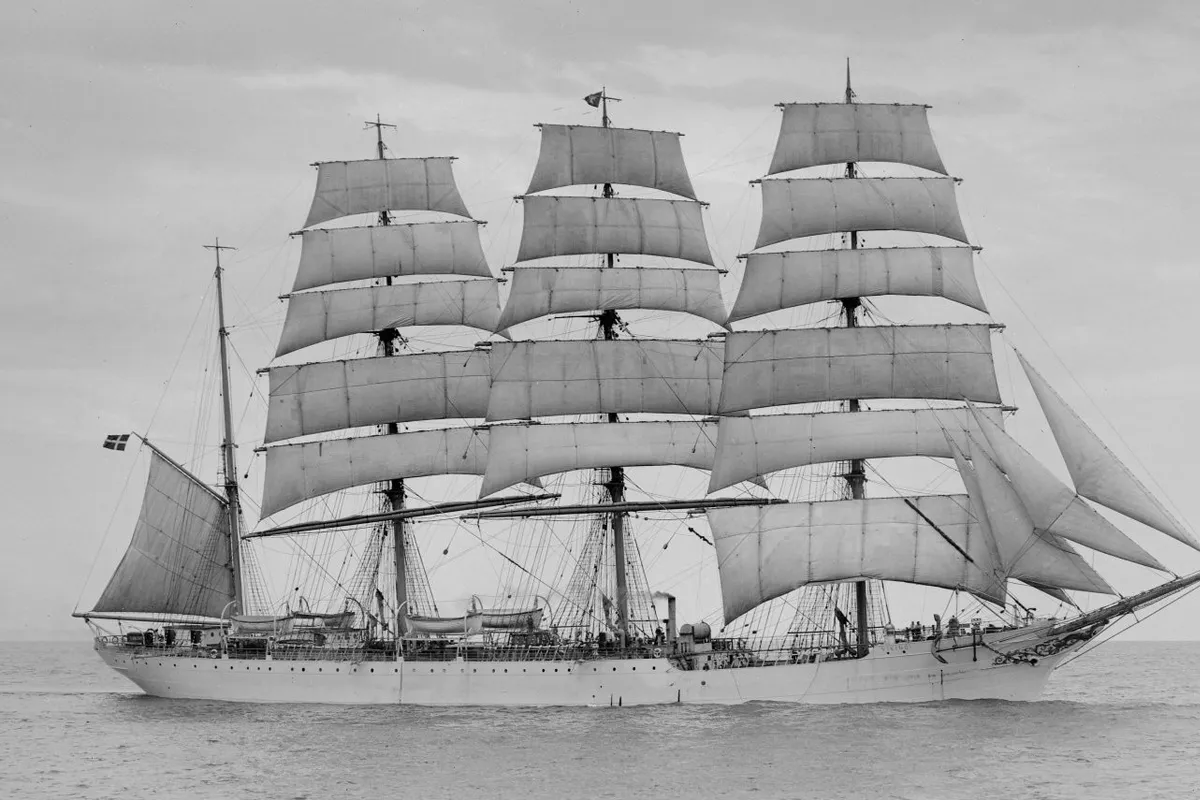
When you step off the quay at Gullbergskajen and cross the gangway of Barken Viking in Gothenburg, the first physical reality that hits you is the sheer scale of the rigging. Four steel masts tower overhead, cables hum faintly in the river wind, and the deck timber feels rock-solid underfoot. This is not a floating barge dressed up with nautical props; it is a genuine ocean-going steel windjammer that carried wheat across Cape Horn for decades before retiring as a permanently moored botel Barken Viking in the heart of Gothenburg harbor.
Over the past twelve years, I have stayed in dozens of historic harbor vessels across Northern Europe, and they invariably split into two camps: museum pieces where you are treated like a trespasser, or stripped-down floating hostels where heritage has been erased. Barken Viking strikes a distinctive middle path, functioning as a working ship hotel Gothenburg visitors can use as a practical, central base while preserving genuine maritime bulkheads, deep-hold conference spaces, and authentic naval proportions.
Barken Viking Gothenburg: Maritime Heritage and Harbor Location
Historic Background: From Danish Training Ship to Municipal Landmark
Barken Viking was launched in Copenhagen in 1907 by the shipyard Burmeister & Wain. Built as a sail-training vessel for the Danish merchant fleet, this four-masted barque served to educate future maritime officers under grueling commercial sailing conditions. With a total length of 108 meters including her bowsprit, she remains the largest sailing ship ever constructed across the Nordic countries, engineered with a reinforced steel hull to withstand heavy southern ocean swells.
After decades in the transoceanic grain trade under Finnish shipowner Gustaf Erikson, the barque was acquired by the city of Gothenburg in the mid-twentieth century to serve as a seamanship school. Since 1998, the vessel has been owned and systematically maintained as a protected municipal landmark by the municipal property company Higab, as detailed on the Higab property page for Barken Viking. The hospitality operations aboard are managed under lease by Dialog Hotels, an operational branch of Hotel Solutions i Stockholm AB.
Today, the ship operates as a dual-purpose maritime asset. Above deck, her masts, yardarms, steering gear, and deckhouse preserve the silhouette of the Edwardian sailing era. Below deck, the vast former cargo hold has been transformed into a four-level hospitality structure containing 29 guest cabins, dining quarters, and modern meeting facilities. For travelers accustomed to Swedish maritime stays like the Mälardrottningen Yacht Hotel in Stockholm, the Viking offers an entirely different structural atmosphere rooted in commercial sailing rather than private yachting luxury.
Getting to Gullbergskajen: Transit from Gothenburg Central Station
Logistically, Barken Viking is one of the most accessible floating accommodations in Scandinavia. The vessel is permanently berthed along Gullbergskajen at Lilla Bommens Torg 10, situated directly on the southern bank of the Göta älv river. The walk from Gothenburg Central Station (Göteborgs Centralstation) and the Nils Ericson Bus Terminal takes between 5 and 10 minutes, covering a distance of roughly 500 meters along paved pedestrian walkways flanking Kanaltorgsgatan.
If you arrive with heavy rolling luggage, you can skip the walk by utilizing the local public transit authority, Västtrafik. The nearest stop is Lilla Bommen (situated within transit Zone A), served directly by tram lines 5 and 10, as well as municipal bus lines 18 and 25. Single transit tickets can be purchased seamlessly tap-to-pay via mobile payment on the boarding platforms or through the Västtrafik To Go app.
The physical approach from the transit stop leads directly past the Lilla Bommen marina basin toward the ship's gangway. Navigating wheeled baggage along this route is straightforward, as the path consists of level concrete and asphalt paving rather than jagged cobblestones. However, crossing the short transition plate where the municipal quay meets the ship's steel gangway requires lifting bags over raised metal edges.
Parking Options and Vehicle Access Near Lilla Bommen
Drivers should be aware that Barken Viking maintains zero dedicated vehicle parking spaces on the quay. Gullbergskajen is a restricted harbor zone managed under municipal harbor regulations, meaning you cannot leave a vehicle parked adjacent to the ship's boarding ramps. Dropping off luggage at the curb is technically feasible along the perimeter access road at Lilla Bommens Torg, but traffic wardens patrol the area regularly.
The most reliable covered vehicle facility within walking distance is the multi-story Nordstan parking garage tariff schedule, located roughly 400 meters south of the berth. The Nordstan garage operates with a standard clearance height of 2.10 meters. The rate structure is divided into time blocks: 30 SEK per hour between 06:00 and 18:00, free parking between 18:00 and 20:00, 30 SEK per hour from 20:00 to 22:00, and a reduced night tariff of 5 SEK per hour from 22:00 to 06:00, capped at a maximum daily rate of 199 SEK for 24 hours.
An alternate nearby parking structure is P-hus Lilla Bommen, positioned adjacent to the waterfront office complexes. Space availability in both garages fluctuates during weekday business hours, making Nordstan the safer choice for guaranteed entry. Walking from the Nordstan elevators to the ship takes approximately 6 minutes along flat pedestrian crossings.
If you are arriving by car with several heavy bags, unload your passengers and luggage at the designated drop-off bay near Lilla Bommens Torg before driving into the Nordstan garage. Wheeling full bags across the busy road crossings from the multi-story garage is cumbersome.
Cabin Layouts and Living Quarters Aboard the Windjammer
Single and Double Cabin Configurations: Dimensions, Berths, and Portholes
Barken Viking houses 29 guest rooms across four internal levels, presenting an accommodation profile that reflects the constraints of a historic steel hull. Unlike modern land-based hotels where floorplans are uniform, every cabin here is dictated by the curve of the hull frames and the placement of structural bulkheads. Prospective guests should consult our general guide on compact ship cabin dimensions and wet rooms to understand the realities of converted marine architecture.
Solo travelers have two distinct entry-level choices. The Economy Single cabin with a shared hallway bathroom is an exercise in extreme functional minimalism, measuring approximately 5 square meters (53 square feet). Furnished with a single 90 cm berth, a reading lamp, wall hooks, and a small washbasin, this category is designed strictly for sleeping. By contrast, the en-suite Single Room measures up to 12 square meters and incorporates a private compact wet-room shower module, providing substantially more floor area for luggage.
For couples and traveling pairs, the botel offers Standard Double and Standard Twin layouts. Double cabins are fitted with a 160 cm double bed tucked tightly between nautical timber bulkheads, while Twin cabins provide two separated 90 cm berths. River-facing cabins on the upper accommodation levels feature heavy brass portholes that open out toward the Göta älv, providing natural airflow and morning water reflections, whereas quay-facing cabins look directly onto the mooring pilings and the urban promenade.
Economy Windowless Cabins and Family Quarters Below Deck
Deeper within the hull structure sit the Economy windowless cabins. Marketed on the Hotel Barken Viking on Dialog Hotels portal as 'Double Room without window', these quarters are situated beneath the waterline. They contain a 160 cm double berth and an en-suite bathroom but feature solid timber-paneled steel walls with no natural light. For light sleepers, these windowless units offer a significant acoustic advantage, eliminating streetlamp glare and muffling exterior harbor sounds.
For small groups or parents traveling with children, Barken Viking features Family Four-Bed cabins. Rather than cramming four cots into a single open square, this quarters layout consists of two interconnecting sleeping compartments. Each compartment contains a sturdy 90 cm bunk bed constructed from solid timber, accompanied by shared closet storage and a single private en-suite bathroom with an enclosed shower stall facing outward toward the river.
Living in these lower quarters requires a degree of spatial discipline. Ceilings are lower than standard domestic builds, door thresholds require stepping over structural sills, and storage is predominantly vertical, utilizing bulkhead pegs and under-bed niches. Travelers prone to acute claustrophobia should bypass the windowless lower-deck units in favor of upper-deck porthole cabins.
Onboard Meeting Spaces and Communal Hold Infrastructure
At the center of the ship's lower passenger decks lies an open-plan central atrium that once served as the commercial cargo hold. This space has been engineered into a central reception, lounge, and corporate gathering zone that exposes the towering ribs of the vessel. The surrounding perimeter houses four dedicated meeting and conference spaces managed by Dialog Hotels, accommodating groups ranging from 2 up to 40 participants, as outlined on the official Dialog Hotels conference spaces platform.
These conference rooms are fully wired with modern presentation projectors, wall-mounted whiteboards, fast local Wi-Fi, and independent ventilation units to keep the subterranean air circulating. The architectural contrast between contemporary AV screens and the century-old riveted iron plates gives these work spaces a distinct operational character uncommon in corporate business hotels.
The open atrium adjacent to the meeting rooms serves as an informal lounge for hotel guests throughout the afternoon and evening. Timber tables, maritime artifacts, and comfortable banquette seating allow travelers to work remotely on laptops without remaining confined to their compact cabin desks.
Dining on the Göta Älv: Morning Mess, Deck Bar, and Seasonal Feasts
Swedish Breakfast Buffet in the Historic Mess Hall
Breakfast aboard Barken Viking is served daily until 10:00 in the ship's restored dining room, configured within the former crew mess and lower deck salon. This morning meal is automatically included in all standard room rates, eliminating unexpected breakfast surcharges on your final bill. The dining room itself features varnished wood tables, built-in benches, and historical framed navigational charts spanning the walls.
The food presentation follows a traditional Scandinavian continental buffet format. The cold spread includes freshly baked rye and sourdough breads, Swedish crispbreads (knäckebröd), sliced ham, mild cheeses, sliced cucumbers, tomatoes, hard-boiled eggs, yogurts, and fruit preserves. Hot coffee, brewed tea, and fruit juices are available at self-service dispensing stations. While seasonal specialties appear occasionally, the daily morning setup focuses on reliable cold cuts and cereals.
During peak morning hours between 08:00 and 09:15, seating in the dining salon fills rapidly, particularly when business groups or weekend city-break travelers occupy the cabins simultaneously. If you prefer a quiet morning meal without waiting for a table, I recommend heading down to the mess before 07:45 or after 09:30.
Deck Bar Service and Riverfront Dining in Summer
During the warmer spring and summer months, the focus of the ship's hospitality shifts up to the exposed wooden weather deck. Here, the seasonal open-air deck restaurant and bar operates, providing an elevated vantage point overlooking the Göta älv river and the active boat traffic of Gothenburg harbor. On sunny weekdays, the kitchen serves hot lunch starting from 11:30, as confirmed by Restaurang Barken Viking.
In the afternoons and long Nordic summer evenings, the deck functions primarily as an outdoor bar. Guests and locals gather along wooden benches set beneath the ship's rigging to drink cold draft beers, cider, and wine, or to order light harbor snacks. The atmosphere is casual and unpretentious, framed by the industrial cranes of the northern riverbank and passing passenger ferries.
Because the deck restaurant is entirely open to the elements, its operating hours depend strictly on prevailing weather conditions. On rainy or unseasonably windy days, deck service is curtailed, and food and beverage operations migrate down into the sheltered interior dining hall and lounge spaces.
Traditional Julbord: The Winter Christmas Smörgåsbord
From late November through late December, Barken Viking transforms into a major local venue for the traditional Swedish Christmas buffet, known as Julbord. The converted cargo hold and dining salons are decorated with warm holiday lights, winter foliage, and festive table settings, attracting both hotel guests and corporate dining parties from across western Sweden.
The Julbord smörgåsbord features a vast, multi-course progression of classic winter dishes. Guests typically begin with multiple varieties of marinated herring (sill), cured salmon (gravlax), and smoked fish, before moving to cold cuts, liver pâté, and cheeses. The warm section delivers Swedish meatballs (köttbullar), Prince sausages (prinskorv), and the quintessential potato-anchovy casserole known as Janssons frestelse, followed by an extensive dessert table of gingerbread, saffron buns, and rice pudding.
Demand for Julbord seatings is high, with weekend evening slots frequently booking out weeks in advance. Travelers staying aboard during the holiday period must book their dining reservations separately through Dialog Hotels, as standard room rates do not incorporate the full Christmas feast.
If you plan to stay aboard Barken Viking in December, email the front desk to reserve a Julbord seating simultaneously with your room booking. The public dining sessions fill completely with local office parties, leaving little room for walk-ins.
Rates, Direct Booking Perks, and Policies for the Ship Hotel Gothenburg
Seasonal Price Tiers: Off-Peak Savings vs. Summer Harbor Peaks
Room rates aboard Barken Viking fluctuate noticeably between the quiet winter months and the peak Scandinavian summer. During the off-peak season (spanning October through April, excluding the December holiday dining rush), baseline pricing for an Economy Single with shared bathroom or a windowless double cabin begins at 889 SEK (approximately $85 USD) per night. This makes the windjammer hotel Sweden one of the most cost-effective central sleep options in Gothenburg.
During the peak summer season from June through August, demand from domestic and international maritime tourists pushes nightly rates upward. Standard double cabins featuring porthole river views typically range between 1,400 SEK and 2,200 SEK (approximately $135 to $210 USD) per night, depending on weekend dates and local festival schedules. For those looking to optimize their travel budget across the country, our field report on booking low-season floating hotel deals outlines how shoulder-season visits maximize value.
Below is a comparative breakdown of cabin categories, standard berth configurations, and seasonal rate expectations:
| Cabin Category | Approx. Dimensions | Berth Type | Bathroom Setup | Off-Peak Rate (SEK) | Peak Summer Rate (SEK) |
|---|---|---|---|---|---|
| Economy Single | 5 sq m (53 sq ft) | Single 90 cm | Shared hallway | 889 SEK | 1,250 SEK |
| En-suite Single (No Window) | 10–12 sq m | Single 90 cm | Private shower/WC | 990 SEK | 1,450 SEK |
| Economy Double (No Window) | 10–12 sq m | Double 160 cm | Private shower/WC | 1,050 SEK | 1,600 SEK |
| Standard Double (Porthole) | 12–14 sq m | Double 160 cm | Private shower/WC | 1,190 SEK | 1,850 SEK |
| Standard Twin (Porthole) | 12–14 sq m | Two Singles 90 cm | Private shower/WC | 1,190 SEK | 1,850 SEK |
| Family Four-Bed Compartment | 18–22 sq m | Two Bunks (4x 90 cm) | Private shower/WC | 1,650 SEK | 2,450 SEK |
Direct Booking Advantages: Promo Codes, Check-Out, and Pet Surcharges
While Barken Viking is listed across major third-party hotel aggregator channels, booking directly through Dialog Hotels provides clear financial and practical advantages. Entering the promotional code WEBB10 on the official booking engine applies an immediate 10% discount to all publicly listed room categories, reducing off-season baseline stays below the standard 889 SEK rate.
Direct reservations also carry operational perks that make departure morning significantly more relaxed. While standard check-in begins at 15:00 and standard check-out is set for 11:00, guests who book through the official website receive a guaranteed complimentary late check-out at 12:00, granting an extra hour aboard without penalty.
The botel also accommodates pet owners under specific guidelines. Dogs are permitted in designated cabins for a standard surcharge of 250 SEK per pet per night. However, if your reservation is made directly through the official website, this fee is discounted by 50% down to 125 SEK per night. Advance notification is required to ensure an assigned pet-friendly cabin is allocated.
Operational Policies: Cashless Payment and Cancellation Terms
In line with modern Swedish commercial standards, Barken Viking operates as an entirely cashless property. Cash currency (Swedish kronor, euros, or US dollars) is strictly not accepted at the front desk, the breakfast mess, or the outdoor deck bar. All room charges, incidentals, and bar tabs must be settled using major credit cards, debit cards, or approved digital mobile payment systems.
Cancellation rules for direct website bookings are among the most generous in the regional botel sector. Guests who book via dialoghotels.se can cancel or amend their reservation free of charge up until 18:00 local Swedish time on the scheduled day of arrival. Third-party OTA bookings, by comparison, often enforce stricter 24-hour or 48-hour cutoffs depending on the rate package selected.
The reception desk is staffed to handle arrivals, key handovers, and luggage storage. Guests arriving prior to the 15:00 check-in window can leave their bags securely in the luggage area adjacent to the atrium while exploring the city center.
Living Aboard a Windjammer Hotel in Sweden: Motion, Acoustics, and Comfort
Hull Stability and Water Movement in the Sheltered Harbor
One of the primary concerns travelers raise before boarding a converted vessel is stability. Barken Viking is permanently moored along the stone quay wall at Gullbergskajen inside the deeply sheltered Göta älv river basin. The vessel rests in calm inland river water rather than an exposed sea roadstead, meaning the oceanic swells that cause typical motion sickness are absent. To understand the physics behind ship hotel stabilization, consult our analysis of motion sickness on moored floating hotels.
Because the hull weighs thousands of tons and is anchored securely with heavy industrial mooring lines, movement is practically imperceptible during normal weather conditions. Even walking across the highest open deck feels remarkably similar to walking on solid ground. However, water motion is not entirely zero under all circumstances.
When large commercial passenger ferries or high-speed harbor patrol vessels pass along the central river channel, a gentle low-frequency wake can cause a subtle, rhythmic swaying that lasts for a few seconds. For 99% of guests, this movement is unnoticed, but hypersensitive travelers who feel unsettled by the slightest floating sensation should book a lower-deck cabin where lateral movement is minimized.
Acoustic Profile: Bridge Traffic, Steel Bulkheads, and Harbor Echoes
The acoustic environment aboard Barken Viking is defined by its historic construction and its proximity to city transit infrastructure. As an authentic steel vessel built in 1907, interior cabin partitions consist of timber bulkheads attached to vintage steel frames. Sound insulation between adjoining cabins is moderate; while conversational murmurs are largely dampened, loud television audio or heavy footfalls in the corridors can transmit through structural joints.
Externally, the ship is berthed roughly 250 meters east of Hisingsbron, the vertical lift bridge carrying automobile traffic, city buses, and tram lines 5 and 10 across the river. While the bridge is a modern structure, the ambient hum of morning rush-hour traffic and the occasional crossing tram can be heard from upper-deck cabins facing the river, especially if portholes are left cracked open for ventilation.
Harbor gulls are another inevitable sonic factor at dawn. If you require absolute silence to sleep soundly, I recommend packing a pair of silicone earplugs or booking one of the sub-waterline 'Double Room without window' cabins, which act as natural sound baffles against external traffic and harbor noise.
Upper-deck river-facing cabins offer great harbor views, but portholes let in the ambient mechanical hum of morning traffic from Hisingsbron. If you are an exceptionally light sleeper, choose an interior windowless cabin below the waterline instead.
Physical Accessibility: Gangways, Steep Stairs, and Door Coamings
Historic naval architecture and modern barrier-free accessibility are fundamentally at odds, and Barken Viking is no exception. The ship is accessed from Gullbergskajen via an inclined metal gangway. While the gangway features solid safety railings, its angle of elevation changes depending on daily river water levels, occasionally resulting in a relatively steep incline.
Once aboard, guests encounter structural features common to century-old vessels: raised door coamings (steel sills measuring 10 to 20 cm in height) that you must physically step over to enter hallways and cabins, narrow companionways, and relatively steep internal stairs connecting the accommodation tiers. While an internal mechanical elevator links the primary public levels and conference atrium, it does not bypass the raised sills and tight doorways leading into individual guest quarters.
As a result, Barken Viking is not suitable for independent wheelchair users or travelers with significant mobility impairments requiring zero-threshold access. Anyone who struggles with balance, steep companionways, or stepping over raised thresholds will find the physical layout challenging.
Practical Evaluation: Target Guests, Alternatives, and Final Verdict
Who Barken Viking Suits and Who Should Skip It
Barken Viking is an authentic character property, which means it delivers a memorable stay for the right traveler while frustrating those who expect standard business hotel uniformity. To determine whether this windjammer hotel Sweden fits your travel style, consider the following parameters:
- Book Barken Viking if: You appreciate genuine maritime history and want to sleep inside a century-old four-masted barque; you want a central Gothenburg location within a 7-minute walk of the central station; you are a budget solo traveler seeking clean, affordable central quarters from 889 SEK; or you enjoy open-air deck beers with panoramic harbor views.
- Skip Barken Viking if: You rely on full wheelchair accessibility or cannot navigate raised marine sills and steep gangways; you require a spacious modern bathroom with a sprawling vanity; you suffer from claustrophobia in compact quarters; or you demand absolute soundproofing and luxury resort amenities like those found at Salt & Sill floating hotel on Klädesholmen.
Alternative Waterfront and Central Gothenburg Accommodations
If Barken Viking's compact quarters or historic limitations do not align with your physical requirements, several conventional land-based alternatives sit within a 500-meter radius of the central station. For corporate travelers needing full business infrastructure and guaranteed accessibility, the Radisson Blu Scandinavia on Södra Hamngatan provides large uniform rooms, high-speed business centers, and elevators with zero thresholds.
Alternatively, the Clarion Hotel Post, situated directly on Drottningtorget across from the train station, offers an upscale lifestyle experience inside Gothenburg's historic 1920s central post office. Featuring multiple restaurants, a rooftop pool, and expansive suites, it caters to guests who desire architectural heritage without compromising on high-end modern hospitality services. However, both of these properties regularly price at double to triple the nightly cost of Barken Viking's economy cabins.
Final Verdict: Assessing Value, Atmosphere, and Authenticity
Barken Viking succeeds because it does not attempt to disguise what it is: a rugged, 108-meter steel sailing ship that traded across the globe and found a peaceful second life on the Göta älv. It offers a genuine connection to Scandinavia's maritime heritage at a price point that undercuts almost every traditional land-based hotel in central Gothenburg.
Provided you book directly through Dialog Hotels using code WEBB10 to secure the 10% discount and the 12:00 late check-out, accept the spatial limits of 5 to 14 square meter cabins, and come prepared for the gentle hum of harbor life, an overnight stay aboard this magnificent barque is one of the most rewarding urban botel experiences in Northern Europe.