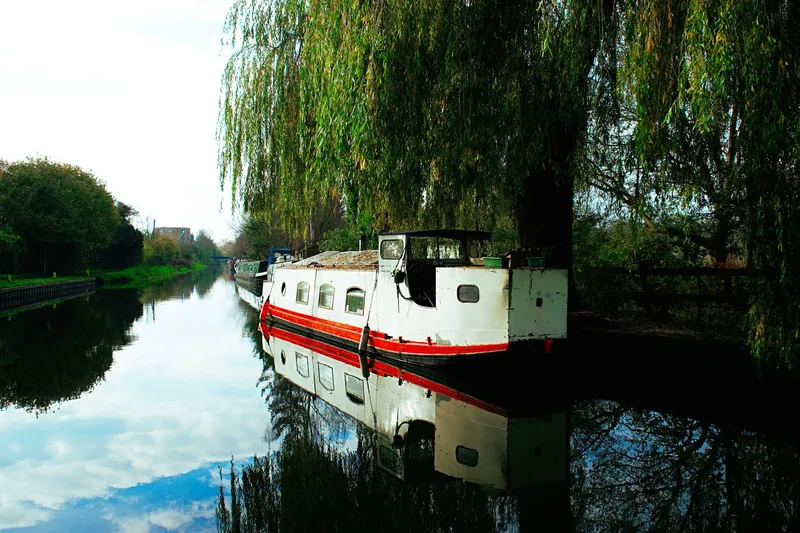
Low rates on the water carry the same three costs everywhere: small cabins, compact bathrooms and stairs. Nothing in the Oosterdok flotilla has a lift, lower corridors run 70 to 80 centimetres wide, and ceilings in the converted holds sit around two metres. Accept that and you sleep fifteen minutes from Centraal Station for hostel money.
Where the Sub-≈ $110 (€100) Berths Are
What ≈ $110 (€100) Buys in the Shoulder Season
The ceiling used here is ≈ $110 (€100) for a twin, double or bunk cabin outside peak summer weekends and the city's big event dates. That figure is the room rate before the municipal tourist tax, which the operator adds at checkout. Consumer prices in the Netherlands are shown including VAT, so the tourist tax is normally the only line on top of the quoted rate.
Timing decides whether a berth exists at all. Summer weekends in July and August, the King's Day week in late April and the December holiday weekends push these same cabins past ≈ $110 (€100), and the cheapest bunks go first. Shoulder weeks are when the sub-≈ $110 (€100) stock is deepest.
Oosterdok and NDSM: Two Mooring Zones
Oosterdok steiger 2 and 3 are wooden pontoons opposite the NEMO Science Museum, holding converted Dutch freight barges. From Centraal Station it is a 12 to 15-minute walk east along Oosterdokskade, past the OBA public library and over the footbridges. A SPAR city supermarket on Rapenburg sits 200 metres from the pontoons, which matters because none of these barges has a kitchen for guests.
NDSM pier 3 in Amsterdam North is a different world: a purpose-built 175-room hotel ship on a former shipyard wharf known for street art, festivals and a wide waterfront terrace. Botel's own site puts the free ferry stop 250 metres from its door.
The difference shows up in the evening. Oosterdok lets you walk to Nieuwmarkt, the metro and the canal ring without buying a transport ticket. NDSM buys more space per euro and a quieter night, with every return trip tied to the ferry timetable.
Always confirm whether online quotes show the net rate or include mandatory surcharges. While base rates frequently sit below ≈ $110 (€100), local taxes will increase your total checkout bill.
| Botel | Mooring | Vessel | Room rate from | Bathroom | Trade-off to expect |
|---|---|---|---|---|---|
| Vita Nova | Oosterdok Steiger 2 | Converted freight barge | ≈ $72 (€65) | Shared corridor showers, washbasin in cabin | Cabins of 6 to 8 m²; reception open 14:00 to 22:30 only; no night desk |
| AmicitiA | Oosterdok Steiger 3 | 1897 freight klipper | ≈ $77 (€70) | Shared corridor toilets and showers | Steep companionway stairs; group bookings settled by bank transfer |
| Botel Amsterdam | NDSM pier 3 | Purpose-built hotel ship, 175 rooms | ≈ $100 (€95) | Private en-suite pod | Free F4 ferry, 10 to 15 minutes; adults only; six-night maximum stay |
| Hotelboot Zwaan | Oosterdok Steiger 3 | Winter hotel ship | ≈ $110 (€100) | Private shower and toilet in all 8 cabins | Moored October to March only; cash only at check-in, ≈ $22 (€20) key deposit; breakfast included |
What Differs Below Deck
Sound, Heat and Condensation
A converted cargo hull behaves nothing like a modern hotel room. Footsteps in the corridor, dock fenders working against steel and the wash of passing tour boats all reach the lower cabins, because the partitions between them are thin timber on riveted iron frames. Radiators run all night in winter and the cabins do get warm, but insulation is the weak point: steel plating passes the cold of the water straight inside, and single-glazed brass portholes fog up overnight. Keep a porthole cracked and the bedding stays dry.
Mobile Signal and Wi-Fi
Steel decks and hull plating block mobile data, the same effect that makes Wi-Fi on metal-hull ships so uneven. Signal in a lower-deck cabin can fall to one bar or disappear, so download what you need before boarding. Botel Amsterdam and AmicitiA both run Wi-Fi in their public areas.
Gangways, Coamings and Stairs
Boarding surprises people more than anything inside the ship. The IJ basin is a locked body of water, so the pontoon level barely moves and the gangway angle stays much the same through the year; what changes is the surface. Wet timber decking turns slippery, and every barge has a raised steel coaming at the boarding point that you step over with your bag in hand.
Inside, the sleeping decks are reached by near-vertical companionway ladders of roughly 55 to 60 degrees. Carrying a hard-shell suitcase down those steps is genuinely precarious, which is why a soft backpack or duffel is the right bag for every vessel on this list.
Do not book converted cargo barges if you travel with large rolling suitcases or have mobility limitations. The companionway steps are steep, and lower corridors rarely exceed 75 centimetres in width.
The Oosterdok Flotilla: Three Barges on Steigers 2 and 3
Vita Nova, Steiger 2
Moored along Oosterdok Steiger 2, the Vita Nova botel has the lowest starting rates in central Amsterdam, from ≈ $72 (€65) a night. The converted cargo vessel holds 24 compact cabins of roughly 6 to 8 square metres, each with narrow bunk or twin berths, a peg rail and a wall-mounted washbasin with hot and cold water.
Sanitary facilities are communal: gender-separated blocks with shared hallway showers and toilets on the lower deck. Radiators keep the berths warm in cold weather, and airflow depends on leaving the porthole cracked.
The washbasin in the cabin turned out to be the useful part. On a frosty week in late autumn I gave up on the corridor shower at 7:30, when three people were queuing with towels over their shoulders, and washed at the basin instead; the water is hot, and the queue had cleared by the time I finished breakfast. I book the shower before seven or after nine now.
Check-in runs from 14:00 to 22:30 and there is no night desk, so a late flight means agreeing an arrival time in advance. Quiet hours on the pontoons are taken seriously by the operators.
AmicitiA, Steiger 3
A few steps further along Steiger 3, facing NEMO's green copper roof, AmicitiA is a converted Dutch freight klipper launched in 1897, with 17 cabins. Base rates start at ≈ $77 (€70) for a heated twin; the lowest cabins in the hold measure 3 to 6 square metres, so pack accordingly.
Every cabin has a washbasin, with toilets and shower stalls along the central passageway. The included breakfast is the real saving: it is served in the upper-deck salon, and a comparable breakfast in the city centre costs ≈ $11 (€10) to ≈ $17 (€15), which is most of the price gap to Vita Nova gone.
Reaching the cabin deck means descending an authentic, steep iron companionway with a handrail. Group bookings are settled by bank transfer before confirmation, so larger parties should fix payment early.
Hotelboot Zwaan, Steiger 3, October to March
Operating on a split year, Hotelboot Zwaan occupies Steiger 3 only from the beginning of October to the end of March; for the rest of the year the ship sails the Dutch waterways as a bike-and-barge cruise boat. Winter rates start around $110 (€100) for a cabin with private hot shower and toilet, and breakfast is included.
All eight cabins have their own shower and toilet, which is unusual at this price on the water. Smoking is forbidden inside, with the covered deck veranda as the designated area, and there is no curfew.
The catch is payment. The operator takes no credit or debit cards: the balance and a ≈ $22 (€20) key deposit are settled in cash on arrival. The ship's own listing points guests to the free internet at the OBA library two minutes away, so plan on going out for a reliable connection.
That cash rule caught me once. I arrived late in the evening in heavy rain with ≈ $17 (€15) in my wallet and had to leave my bag at reception and walk back to the Geldmaat machine near Centraal Station before I could check in, which cost me 25 minutes in wet shoes. Withdraw before you leave the station, or ask the operator to confirm the exact amount in advance.
Botel Amsterdam at NDSM Pier 3
175 Cabins, Adults Only
Berthed at NDSM pier 3, Botel Amsterdam is the commercial end of the market: a 175-room purpose-built floating hotel with a bar, a pool table, a rooftop terrace and bicycle rental. Room rates start from ≈ $100 (€95) for twin and double cabins, split between IJ views and shipyard views.
Rooms measure around 15 square metres, roughly twice the floor area of the cargo-hold cabins, and each has a private bathroom pod with toilet, shower and sink. Hull plating still carries the low rumble of river traffic and the vibration of large passing vessels, and the rooftop terrace is where you want to be on a warm evening.
Two policies shape a stay here. The maximum stay is six nights, and that applies across multiple bookings that add up to more than six nights. The desk pre-authorises cards before arrival, check-in opens at 15:00, and reception is staffed around the clock.
Guests under 18 cannot check into Botel Amsterdam under any circumstances. If traveling with minors, you must book family-approved properties elsewhere in the city.
Getting There: the Free F4 Ferry
The GVB ferry Line F4 runs from De Ruijterkade behind Centraal Station to NDSM. It is free for pedestrians and cyclists, takes ten to fifteen minutes across, and leaves every 15 minutes in the daytime, dropping to every 30 minutes late in the evening.
Night travel is less of a problem than older guides suggest. The separate night line F5 was discontinued on 1 January 2024, and F4 now covers the night hours itself, running about every 30 minutes until roughly 02:00, and until about 03:30 on Friday and Saturday nights. If wind warnings stop the ferries, the land fallback is metro 52 to Noorderpark and then bus 35 or 394; bus 391 from Centraal also stops at Klaprozenweg, a short walk from the pier.
One raw evening in winter I came back from a late dinner and stood on the open deck of the F4 at 01:00 with rain coming sideways off the IJ. The indoor cabin was full, so I took the covered bench at the stern and learned to board early. Check the F4 timetable before a night out, because the last boat does not leave at the same time every day of the week.
What the Bill Adds: City Tax and the 2026 VAT Change
Rates on this page are the room price; Amsterdam adds a tourist tax on top. The municipality charges 12.5% of the overnight price excluding VAT and the operator collects it from you, a rate that is unchanged for 2026 on the Gemeente Amsterdam tourist tax page. The business.gov.nl portal for entrepreneurs lists it among the municipal levies that operators pass on to guests.
The base is what trips people up. VAT is already inside the price you are quoted, so the city tax applies to the amount that remains after VAT is stripped out. On a ≈ $72 (€65) cabin the room price without VAT is about $59 (€53.7), the tourist tax comes to ≈ $7.4 (€6.7), and the night costs roughly $79 (€71.7). If a vessel quotes you a rate excluding VAT, as group invoices sometimes do, add 21% first and then 12.5% of that amount. Either way the tax adds about 10% to a VAT-inclusive rate.
That calculation changed at the start of 2026. The reduced 9% VAT rate for accommodation was abolished on 1 January 2026, and logies moved to the standard 21% rate, as set out on the Belastingdienst page on the VAT rate for logies. The Belastingdienst sets that rate nationally, so it applies to moored botels exactly as it does to land hotels.
| Vessel | Room rate excl. VAT | City tax at 12.5% | Total per night |
|---|---|---|---|
| Vita Nova | ≈ $59 (€53.72) | ≈ $7.4 (€6.72) | ≈ $79 (€71.72) |
| AmicitiA | ≈ $64 (€57.85) | ≈ $8 (€7.23) | ≈ $85 (€77.23) |
| Botel Amsterdam | ≈ $86 (€78.51) | ≈ $11 (€9.81) | ≈ $120 (€104.81) |
| Hotelboot Zwaan | ≈ $91 (€82.64) | ≈ $11 (€10.33) | ≈ $120 (€110.33) |
Read the last column before comparing botels with hostels: the ≈ $110 (€100) line applies to the room rate, and Botel Amsterdam crosses it once the tax is added.
Onboard Rules That Catch First-Timers Out
Floating hotels do not connect to municipal gravity sewers. They rely on macerator pumps and holding tanks to move waste uphill to a dockside connection, so wipes, cotton pads and anything non-dissolvable clog the system and can shut down the toilets for the cabins around yours.
Space inside a cargo hull follows its own logic. Corridors rarely run wider than 70 to 80 centimetres, doorways have raised thresholds to contain bilge water, and ceilings in the holds sit around two metres, which feels low if you are tall.
Quiet hours are enforced from 22:00 on most of these vessels, and thin partitions carry every latch click. A late call or a streamed match is better done in the OBA library on Oosterdokskade or in one of the waterfront cafés than in a cabin.
Why So Few Floating Beds: The Beddenstop
Amsterdam caps hotel capacity, and floating hotels sit inside that cap. Under the municipal Hotelbeleid, a hotel can only be built or expanded through the nieuw-voor-oud rule: an existing hotel has to close, and the number of overnight places cannot rise. Since 28 November 2024 a beddenstop has applied on top of that, so hotels cannot add sleeping places at all, whether beds or sofa beds. The measure is set out in the municipality's Voorbereidingsbesluit slaapplaatsen hotels.
That cap is why the list above stays this short. Nobody is going to launch a cheap barge hotel to compete with the four vessels here, and the ships that are here cannot add cabins. Renovation happens inside the same steel hull, which is why cabin footprints and companionway layouts on the Oosterdok barges have barely changed in years.
Which Botel for Which Trip
The four options sort by what you are willing to trade:
- Lowest price, no frills: Vita Nova at Steiger 2, from ≈ $72 (€65) for a cabin with a washbasin and shared showers, 12 minutes on foot from Centraal.
- Breakfast and character: AmicitiA at Steiger 3, from ≈ $77 (€70) in an 1897 klipper, with breakfast served in the upper-deck salon opposite NEMO.
- Private bathroom and space: Botel Amsterdam at NDSM pier 3, from ≈ $100 (€95) for a 15 m² cabin with its own shower and toilet, adults only.
- Winter only, cash only: Hotelboot Zwaan at Steiger 3 from October to March, around $110 (€100) for one of eight en-suite cabins with breakfast included.
Two of them are worth skipping on specific trips. Botel Amsterdam is out if anyone in your group is under 18 or if you intend to stay longer than six nights, because both rules are absolute. Hotelboot Zwaan is out if you do not want to carry cash, since the ship takes no cards and the ≈ $22 (€20) key deposit is cash as well. Neither point is a verdict on quality; both end the conversation at the desk.
A dorm bed in a central Amsterdam hostel runs roughly $61 (€55) to ≈ $99 (€90) in high season, with no acoustic privacy and up to ten strangers in the room. The botels give you a private cabin with a lockable door for about the same money, and the split between en-suite and shared facilities at this price is set out in the comparison of Amsterdam floating hotels with private bathrooms. Budget chain hotels outside the A10 ring charge ≈ $130 (€120) to ≈ $180 (€160) and add ≈ $7.7 (€7) to ≈ $11 (€10) a day in metro or train fares into Centraal, while an Oosterdok barge puts you inside the historic centre with no transport cost at all.
Where a botel loses is straightforward. If you want an elevator, a full-size bathroom and room to open two suitcases at once, book a land hotel. For a two-night city break I would take an AmicitiA twin and spend the breakfast saving on dinner, and for a winter weekend I would pay the extra for one of Zwaan's eight en-suite cabins and arrive with cash in hand.