 Floating Hotel
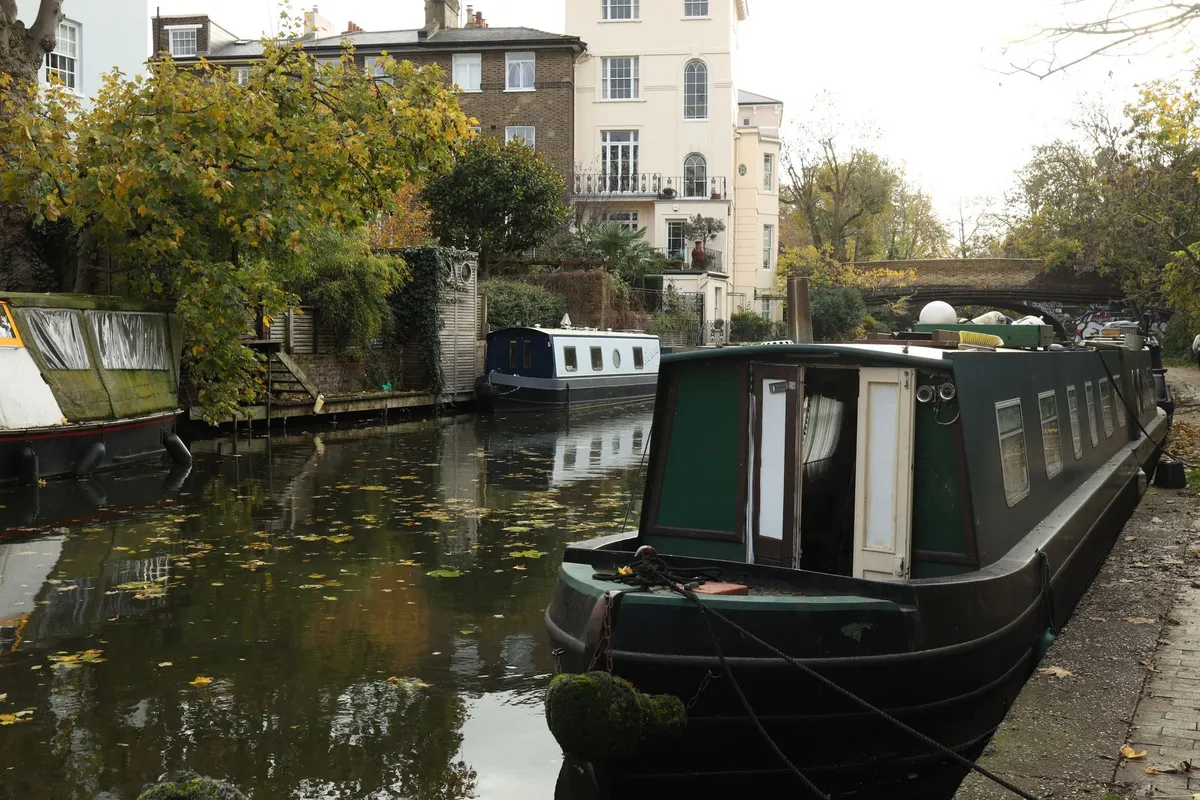
Choosing between an English narrowboat and a French péniche is not just a choice of canal scenery. It is a choice between two completely different maritime architectures with distinct spatial boundaries, utility setups, and legal requirements. Understanding these physical limits helps you avoid cramped berths, tripped breakers, and unvetted operators.
Architectural Anatomy of a Converted Barge Stay: English Narrowboats vs. French Péniches
Hull Dimensions, Headroom, and Berths: 6'10" UK Gauges vs. Freycinet Cargo Holds
Traditional English narrowboats were engineered to squeeze through the tightest locks of the British Industrial Revolution. Their dimensions are strictly constrained to a maximum beam of 6 feet 10 inches (2.08 m) and a maximum length of 72 feet (21.95 m). When fitted out as an english narrowboat b and b, the interior ceiling height rarely exceeds 6 feet 2 inches to 6 feet 6 inches (1.88 m to 1.98 m), leaving tall travelers with little room above their heads.
By contrast, French cargo vessels built to the 1879 Freycinet gauge measure up to 38.50 meters (126.3 ft) in length and 5.05 meters (16.6 ft) in beam. Originally built to haul 250 tons of grain or coal, their converted holds yield between 120 and 190 square meters of living space. A french peniche hotel offers vertical hold clearances between 2.20 and 2.50 meters, accommodating full-height domestic doorways and standard residential furniture.
| Dimension / Parameter | Standard English Narrowboat | Freycinet French Péniche |
|---|---|---|
| Maximum Beam | 6 ft 10 in (2.08 m) | 16 ft 6 in (5.05 m) |
| Maximum Length | 72 ft (21.95 m) | 126 ft 4 in (38.50 m) |
| Interior Ceiling Height | 1.88 m – 1.98 m | 2.20 m – 2.50 m |
| Usable Interior Space | 30 m² – 40 m² | 120 m² – 190 m² |
| Bed Configuration | Transverse cross-bed or narrow inline | Standard King / Queen island beds |
Physical Clearance Warning: Due to the 2.08-meter external hull beam, insulation and lining leave less than 1.93 meters of usable interior cabin width. Transverse cross-beds force anyone taller than 6 feet (1.83 m) to sleep diagonally or duck beneath overhanging gunwales.
I have spent weeks in cabins where traversing from the stern galley to the forward bow cabin meant squeezing sideways past the bathroom bulkhead. In a French cargo hull, you walk down wide central corridors with separate, partitioned guest suites. The spatial difference between these two vessels shapes your entire daily routine on the water.
Widebeam Canal Boats: Bridging the Interior Space Gap and Cruising Boundaries
To overcome the narrowboat squeeze without leaving the UK canal network, builders developed the widebeam canal boat. These modern craft expand the traditional profile to widths of 10 to 12 feet, and occasionally up to 14 feet. This extra beam doubles the interior square footage, allowing for central kitchen islands, free-standing baths, and proper walk-around double beds.
However, this structural volume comes with severe geographical compromises. A 10-foot or 12-foot widebeam is physically locked out of the central Midlands canal network, where narrow locks on the Trent & Mersey or Oxford canals permit only 6-foot-10-inch hulls. A widebeam vessel moored in the south on the Grand Union Canal cannot cruise to the northern waterways without braving open coastal seas or paying for commercial road transport.
For a static barge rental europe, widebeams provide an ideal middle ground in cities like London, Bath, or Manchester. You gain the generous layout of a studio apartment while floating directly on British waterways. Still, do not expect the expansive, vaulted proportions of a historic European cargo ship.
Static Barge Rental in Europe: Locations, Rates, and Booking Channels
Prime Mooring Basins: Regent's Canal, Parisian Quays, and Canal du Midi
Location dictates the entire atmosphere of your canal barge boutique hotel experience. In London, prime static berths sit along the Regent's Canal and Paddington Basin, right beside Little Venice London. These urban basins put you minutes from major railway terminals, but the towpath runs right past your cabin windows, bringing early-morning joggers and commuting cyclists within arm's reach of your bed.
In Paris, static péniches cluster along the Seine quays and Canal Saint-Martin Paris, particularly near the Port de l'Arsenal. These urban moorings deliver unmatched skyline views, yet they expose guests to urban street noise, diesel fumes from river shuttles, and strict harbor traffic regulations. Finding secure, well-lit pontoon access at night requires checking street-level access points before booking.
For genuine tranquility, rural moorings along the Canal du Midi UNESCO corridor or Burgundy's waterways offer quiet, plane-tree-lined banks. These moorings trade central tube stations for rural darkness, crickets, and occasional morning mist. You will likely need a rental car to reach local bakeries, but you sleep without sirens echoing across your steel hull.
Nightly Rates, Charter Formats, and Vetting Booking Portals
Pricing for a converted barge stay varies widely based on whether you book a private cabin or charter the entire vessel. Converted static barges in the UK and France generally operate under two main commercial models: owner-occupied boutique B&Bs with private en-suite staterooms, and exclusive-use whole-boat holiday rentals.
| Vessel Class & Location | Accommodation Format | Nightly Rate Range (£ / €) | Nightly Rate Range (USD) |
|---|---|---|---|
| London Luxury Narrowboat / Widebeam | Exclusive Private Rental | £180 – £450 | $235 – $590 |
| Canal du Midi / Burgundy French Péniche | B&B Cabin (En-suite) | €150 – €350 | $165 – $385 |
| Paris Quay / Canal du Midi French Péniche | Whole-Barge Private Charter | €500 – €1,200 | $550 – $1,320 |
You can source verified floating properties through specialist platforms such as Bookahouseboat.com and Host Unusual, or via general OTAs like Airbnb (under the Boat category) and Vrbo. When reviewing listings, always consult a static houseboat stays guide to confirm whether your host holds dedicated commercial insurance or is simply subletting a private mooring illegally.
Regulatory Warning on Rogue Lets: A significant number of peer-to-peer listings on urban waterways are operated by continuous cruisers without home moorings. Booking an unvetted boat exposes you to sudden council or navigation authority evictions, uncertified gas appliances, and voided personal injury insurance.
I once arrived at an unverified canal boat booking to find the host scrambling to untie lines because harbor wardens were actively issuing notices. Sticking to vetted operators with verified moorings protects your trip from sudden cancellations.
Maritime Regulations and Licensing: What Distinguishes Legal Floating Hotels
UK Statutory Rules: CRT Business Licences, Beam Surcharges, and Gas Safety
Operating a static holiday let on British inland waterways requires strict statutory compliance. Under navigation authority rules, operating a static commercial holiday let or B&B on Canal & River Trust waters strictly requires a designated commercial home mooring and an official Canal & River Trust business boat licence.
Commercial static craft must hold a valid Non-Private Boat Safety Scheme (BSS) Certificate, which imposes far stricter ventilation, electrical, and fuel standards than private recreational surveys. Operators must also provide an annual Landlord Gas Safety Record for all onboard LPG cookers, water heaters, and boilers. These checks prevent deadly gas leaks and carbon monoxide poisoning inside sealed steel hulls.
Mooring costs reflect vessel size and impact on waterway infrastructure. Under the Canal & River Trust licence pricing structure enforced from 1 April 2026, widebeam vessels face phased surcharges of +19% for beams over 2.16 meters and +38% for beams over 3.24 meters. Furthermore, boats without a home mooring face a +15% continuous cruiser surcharge in the 2026/2027 cycle, rising to 25% by 2028, reinforcing the ban against transient boats operating as stationary accommodation.
French Waterways Governance: VNF Mooring Conventions, Dry-Docking, and Taxes
Across the Channel, the regulatory framework is equally demanding. Mooring a residential or hospitality barge on public waterways managed by Voies Navigables de France requires a formal Convention d'Occupation Temporaire (COT) from Voies Navigables de France. This permit is strictly non-transferable, tied to a specific location, and requires explicit administrative approval for commercial hospitality.
Commercial vessels over 20 meters in length must hold a valid Community Navigation Certificate (certificat communautaire). To maintain this title, every French péniche must undergo a mandatory ten-year dry-dock hull inspection (carénage décennal). During this dry-docking, marine surveyors conduct an ultrasonic hull thickness survey to ensure the steel bottom plates have not corroded below safety limits.
Financial obligations extend to local government as well. Converted static barges hosting paying guests are subject to local tourist accommodation taxes (taxe de séjour) collected per adult per night, administered directly by local municipalities or intercommunal authorities like the Ville de Paris. Meanwhile, port authorities such as HAROPA Port assess separate commercial mooring and occupancy fees against the operator.
Mooring Check: When evaluating a French péniche stay, ask the host for their COT registration number or verify their harbour post badge. Legitimate operators openly post their safety and tax compliance certificates on board.
Onboard Technical Systems: Managing Off-Grid Power, Water, and Waste
Shoreline Electric Hookups, Inverter Capacity, and Wattage Management
Living on a boat means managing an electric budget. Most commercial moorings provide a 16A shore power hookup, delivering roughly 3,600 watts of continuous 230V power. On boats running off an inverter battery bank without an active shore cord, total instantaneous output drops to what the DC-to-AC inverter can pull from the domestic battery cells.
| Appliance | Typical Power Draw | Operational Impact on 16A Shore Supply |
|---|---|---|
| Electric Kettle | 2,000 W – 3,000 W | Draws 55% to 85% of total mooring capacity |
| Professional Hair Dryer | 1,800 W – 2,200 W | Trips breaker if run alongside an active kettle |
| Domestic Space Heater | 1,500 W – 2,000 W | Sustained continuous load; requires load shedding |
| LED Cabin Lighting & Laptop | 50 W – 150 W | Negligible draw; runs safely on inverter battery bank |
Running a high-draw hair dryer while an electric kettle boils will trip the pontoon circuit breaker. On serviced pontoons, power bollards often rely on prepaid smart cards. If you exhaust the card balance running electric heaters overnight, the entire boat goes dark and heating shut-off valves trip until staff reload the meter.
Where static boats rely on diesel generators to charge battery banks, strict waterway bylaws apply. Canal & River Trust rules prohibit running engines or generators between 20:00 and 08:00 to protect neighbors from acoustic disturbance and exhaust fumes. Learn to monitor the 12V battery state-of-charge panel before going to sleep.
Fresh Water Conservation and Marine Toilet Operating Protocols
Unless moored to a fully plumbed pontoon with permanent mains water, a narrowboat relies on an onboard fresh water tank holding 200 to 500 liters. For two guests taking daily residential-style showers and washing dishes, a 400-liter supply lasts just two to three days before the freshwater pump begins sputtering air.
Sanitation requires equal care. Converted barges rely either on a cassette chemical toilet or an electric macerator pump-out toilet connected to a central blackwater holding tank. Cassette systems store waste in an onboard 15- to 20-liter tank that fills within 48 hours of normal use, requiring careful disposal by the host or guest at designated sanitation points.
Plumbing Warning: Marine macerator pumps rely on small, high-speed rotating blades. Flushing wet wipes, sanitary items, paper towels, or grease jams the impeller, causing instant motor burnout and incurring £150 to £300 in emergency marine plumber call-out fees.
Before unpacking, ask your host to clarify their waste setup. On high-end French péniches, commercial-grade macerators pump waste directly to shoreside municipal sewers. On smaller narrowboats, treating the head with respect is the only way to prevent unpleasant backups and foul cabin smells.
Living Realities: Microclimate, Soundscapes, and Accessibility
Thermal Dynamics: Condensation, Spray-Foam Insulation, and Heating Systems
Steel hulls are massive heat sinks that mirror canal water temperatures. In autumn and winter, warm indoor air hitting cold, uninsulated steel frames creates cold bridging and immediate hull sweating behind timber paneling. To prevent hidden rot, modern conversions apply closed-cell polyurethane spray foam directly to the bare metal hull.
Heating an uninsulated cabin with traditional single-glazed brass portholes requires active management. Most luxury narrowboats rely on a Webasto diesel central heating or Eberspächer hydronic unit that pumps hot coolant through domestic radiators. These automated systems keep cabins comfortable, but they emit a distinctive jet-engine hum and diesel exhaust outside.
Many English narrowboats pair diesel boilers with a multi-fuel solid stove burning anthracite coal or seasoned timber. Stoves add warmth and dry out condensation, but they require continuous maintenance: emptying ash pans, checking chimney flu drafts, and ensuring carbon monoxide detectors are active. If you ignore the fire, the cabin drops to hull temperature by morning.
Mooring Dynamics, Towpath Disturbances, and Boarding Accessibility
Life on the water is rarely motionless. Inland speed limits of 4 mph (6.4 km/h) in the UK and 6 km/h in France protect canal banks from erosion, but irresponsible skippers frequently push larger wakes. A passing cruiser rolls your hull, making steel mooring springs creak and rubbing fenders squeak loudly against the stone quay wall.
Light sleepers should prepare for ambient soundscapes: towpath foot traffic, water lapping against the hull, and ducks pecking at waterline algae. For insights on managing internal noise and motion, read my cabin living reality check before settling on a water-level vacation.
Boarding access presents another challenge. Guests must navigate narrow, suspended gangways, step down onto damp gunwales, and descend steep companionway stairs. Mooring pontoon angles shift significantly with tidal surges or river floods—the Seine and Rhône can fluctuate between 1 and 3 meters after heavy rain—creating gangway ramp angles of 30 degrees or more.
Accessibility Alert: Converted barges are not accessible for standard wheelchairs or individuals with limited mobility. Hauling heavy, rigid rolling suitcases across wet gunwales and down steep wooden steps is hazardous; use soft-sided duffel bags instead.
Final Evaluation and Guest Safety Protocols
Arrival Safety Audit: Alarms, Emergency Valves, and Bilge Systems
When you step aboard a converted barge, take five minutes to conduct an initial safety sweep. Marine environments present fire, sinking, and asphyxiation risks that land-based boutique hotels do not share. Walk through the cabin and locate critical safety gear using this checklist:
- Detectors: Locate and press the test buttons on both the optical smoke alarm and the digital carbon monoxide alarm. Carbon monoxide is heavier than air and pools low in the cabin hold.
- Gas Isolation: Find the manual LPG shut-off valve, typically located in a galley cupboard or adjacent gas locker, and confirm it turns smoothly.
- Bilge Switch: Inspect the engine bay or bilge access hatch to confirm the automatic bilge pump float switch is unblocked and the manual override switch is functional.
- Certification: Review the posted Non-Private Boat Safety Scheme (BSS) certificate in the UK, or the navigation certificate and insurance decal aboard a French craft. For broader vessel safety details, check our houseboat hotel safety inspection guidelines.
- Emergency Egress: Ensure forward and aft escape hatches open freely and are not padlocked from the exterior.
Inspection Tip: If you smell raw diesel, see oily water deep in the cabin bilge, or discover out-of-date gas safety certificates, contact the host immediately. Safe operators pride themselves on clean, dry engine bilges and clear maintenance paperwork.
Decision Framework: Narrowboat, Péniche, or Luxury Shore Hotel?
Deciding between an English narrowboat, a French péniche, or a traditional land-based hotel comes down to balancing spatial comfort, maintenance responsibilities, and your desire for character. Here is how the three options compare across key categories:
| Evaluation Metric | English Narrowboat B&B | French Péniche Hotel | 5-Star Heritage Shore Hotel |
|---|---|---|---|
| Usable Floor Area | 30 m² – 40 m² | 120 m² – 190 m² | 35 m² – 65 m² |
| Interior Ceiling Height | 1.88 m – 1.98 m | 2.20 m – 2.50 m | 2.80 m – 3.50 m |
| Acoustic Privacy | Moderate (Thin steel walls) | High (Substantial bulkheads) | High (Insulated masonry) |
| Mechanical Duty | High (Monitor water, power, toilet) | Low to Moderate (Often mains-tied) | None (Full municipal utilities) |
| Accessibility | Very Poor (Narrow gangways) | Limited (Steep steps, high sills) | Full (Lifts, step-free access) |
| Nightly Cost Baseline | £180 – £450 | €150 – €350 (Room) | £300 – £700 / €350 – €800 |
Choose an English narrowboat if you want an authentic taste of British industrial history, enjoy compact living spaces, and do not mind watching your power and water meters. It provides an intimate, cozy base in historic canal basins like Little Venice.
Book a French péniche if you need generous ceiling height, full-sized residential beds, and space to unwind. It gives you the atmosphere of the water without the spatial compromises of narrowboat living, making it well-suited for longer European stays.
Book a conventional heritage hotel on land if you require step-free accessibility, rely on high-draw beauty appliances, want complete silence at night, or dislike the mechanical realities of marine living. A converted barge rewards curious travelers who respect the technical limits of floating hulls.