 Floating Hotel
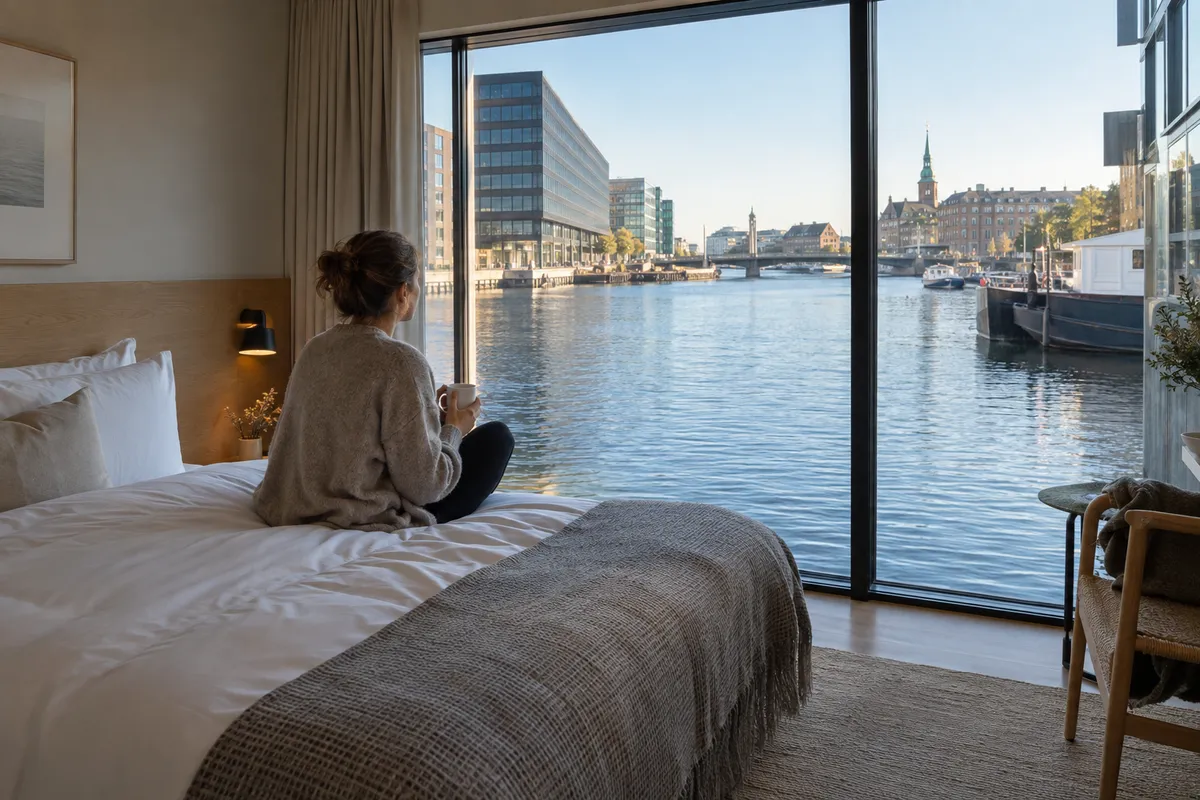
Waking up at water level in Copenhagen Harbor is an experience defined by light, reflection, and the low mechanical hum of morning harbor life. Moored permanently along the Christianshavn waterfront at Langebrogade 1A, Hotel CPH Living occupies a unique operational niche among European botels: an intimate, 12-room floating vessel offering pure Scandinavian minimalism right against the city center. However, sleeping on a converted steel barge comes with physical compromises that promotional photography never reveals.
In this field-tested CPH Living Copenhagen review, I break down the vessel layout, examine how the hull behaves during daytime boat wake, and detail the logistical realities of Langebro traffic noise, check-in limits, and seasonal climate control. Having surveyed dozens of moored botels across European waterways, I evaluate every operational detail so you know whether this boat hotel Christianshavn fits your itinerary or if a traditional hotel on solid ground is a safer bet.
Origins and Floating Architecture
From German Cargo Barge to Design Botel: The Naval Conversion
Hotel CPH Living began its operational life not as a hospitality venue, but as an industrial German cargo barge hauling dry freight across mainland European rivers. In 2008, the vessel underwent a comprehensive marine transformation. The steel hull was towed through the Baltic Sea to Poland, where shipwrights lengthened the midsection by several meters to create adequate displacement and interior volume. From there, the lengthened structure proceeded to the Loksa shipyard in Estonia, where twelve prefabricated, heavily insulated guest cabin modules and the upper superstructure were fitted onto the deck.
The vessel arrived at its permanent berth on the Christianshavn waterfront in 2009, opening its gangway as Copenhagen’s first purpose-built floating design hotel. Operational governance has remained remarkably steady: the property is privately owned and operated by the Danish family partnership CPH LIVING I/S (CVR 30410211), documented on the Hotel CPH Living about page. Day-to-day operations are directed on weekdays by property manager Rose, while weekend desk shifts are frequently handled directly by the owners. Original maritime-themed oil and acrylic paintings mounted in each guest cabin were produced by co-owner Hans Henrik Petersen, giving the interiors a distinct personal character unlike corporate chain botels.
Harbor Ecology and Marine Engineering: Geothermal Seawater Loops
Below the deckboards lies one of the most innovative HVAC installations found in European botel conversions. Rather than relying on noisy diesel generators, auxiliary marine fuel, or external district heating pipelines running across the pedestrian walkway, the ship relies on a water-source heat pump system. This closed-loop marine geothermal system extracts ambient thermal energy directly from the circulating seawater of Copenhagen Harbor, exchanging calories through an submerged plate heat exchanger within the vessel’s double bottom.
This extracted thermal energy feeds a low-temperature hydronic underfloor heating network routed beneath the timber flooring of every guest cabin and en-suite wet room. Because the system relies purely on electrical heat pumps driven by municipal green grid power, the barge produces zero local carbon emissions and operates in near-total silence. In my inspections of converted barges across Europe, engine bay vibration is a frequent complaint, but here there is no auxiliary diesel rumble or mechanical vibration transmitted into the hull structure.
Berth Location, Christianshavn Waterfront, and Transit Logistics
Arriving by Metro, Train, and Bus 5C from Copenhagen Airport
The hotel is moored at Langebrogade 1A in the historic Christianshavn quarter, positioned immediately adjacent to the southern abutment of the Langebro bridge. Transit connections from Copenhagen Kastrup Airport (CPH) are among the fastest and most reliable in Europe, with three viable public transport corridors connecting directly to the Christianshavn quay.
| Transit Route | Travel Time | Frequency | Pedestrian Walk to Berth | Approximate Cost (DKK) |
|---|---|---|---|---|
| Metro Line M2 (Airport to Christianshavn St.) | 12 minutes | Every 3–5 min | 10 minutes (paved streets) | 30 DKK (3-zone ticket) |
| Regional Train (Airport to København H) | 14 minutes | Every 10–20 min | 15 minutes (across Langebro) | 30 DKK (3-zone ticket) |
| Bus Line 5C (Airport to Klaksvigsgade) | 30 minutes | Every 7–10 min | 3 minutes (300 meters) | 30 DKK (3-zone ticket) |
| Direct Taxi / App Ride | 18–22 minutes | On demand | 0 meters (curbside drop-off) | ~250 DKK |
The pedestrian route from Christianshavn Metro Station follows along Overgaden oven Vandet or Langebrogade. While Christianshavn features historic cobblestones, the pavement leading toward Langebrogade 1A consists largely of smooth asphalt and flattened concrete pavers, making standard rolling luggage manageable. However, the descent from the street curb onto the floating pontoon involves a steel gangway that shifts in gradient depending on the daily harbor water level, requiring firm footing when carrying heavy baggage.
If arriving with heavy bags in inclement weather, take the 5C bus directly from CPH Airport to the Klaksvigsgade stop. The walk is under 300 meters along flat sidewalks, eliminating the longer walk across the bridge deck from Central Station.
Street Parking Regulations and Municipal Meter Costs along Langebrogade
Motorists should be aware that Hotel CPH Living does not own or operate private parking bays. All vehicle parking takes place in public street bays situated along Langebrogade and adjacent residential streets in Christianshavn. Copenhagen Municipality operates a strictly enforced zoned meter system, with Langebrogade falling under the standard municipal fee structure detailed on the Hotel CPH Living parking guide.
- Daytime Rate (08:00–18:00): 44 DKK per hour
- Evening Rate (18:00–23:00): 17 DKK per hour
- Nighttime Rate (23:00–08:00): 6 DKK per hour
Street meter tickets can be purchased at sidewalk pay terminals or via mobile parking applications, primarily EasyPark. Parking for a full 24-hour cycle on the street totals roughly 589 DKK, making long-term vehicle storage prohibitively expensive. For secure off-street covered parking, the automated underground BLOX Car Park is located across the bridge at Vester Voldgade 129, approximately 700 meters away on foot, though commercial hourly and daily tariffs apply.
Waterfront Landmarks: BLOX, Black Diamond, and Harbor Baths
Moored on the Christianshavn side of the harbor, the botel sits within direct sight of several of Copenhagen’s most prominent architectural monuments. Directly across the main fairway stands The Black Diamond (Den Sorte Diamant), the waterfront extension of the Royal Danish Library, located 750 meters away via the Langebro pedestrian footway. Directly opposite the berth to the northwest is the BLOX complex (650 meters walk), housing the Danish Architecture Center (DAC), urban exhibition galleries, and waterside cafes.
For open-water recreation, the acclaimed Havnebadet Islands Brygge (Islands Brygge Harbor Bath) is situated just 500 meters south along the waterfront promenade, reachable in less than six minutes on foot. Guests frequently ask whether they can dive directly into the water from the hotel’s deck. Swimming directly off the hotel hull or mooring apparatus is strictly prohibited by By & Havn (the Port of Copenhagen Authority) due to heavy vessel traffic in the Langebro bridge channel. All swimming must take place within the supervised, buoyed municipal swimming enclosures down at Islands Brygge.
Never jump or dive into the water from Hotel CPH Living. The ship sits directly on an active commercial navigation lane, and Copenhagen port authorities enforce strict fines for swimming outside authorized harbor bath facilities.
Floating Hotel Copenhagen Harbor: Anatomy of Water-Facing Cabins
Standard Double Cabin Specs: Floor-to-Ceiling Harbor Glass
Every single one of the twelve cabins aboard this floating hotel Copenhagen harbor vessel faces outward across the water toward the historic city skyline. Online travel agencies report the standard double cabins at approximately 23 square meters (248 square feet), though official technical schematics leave room dimensions unspecified. The spatial arrangement is distinctly maritime: clean lines, white acoustic bulkhead panels, pale hardwood floors, and a double bed positioned to maximize line-of-sight through the floor-to-ceiling glass wall that forms the entire outer boundary of the cabin.
Looking out across the water, the glass frames an uninterrupted vista of historic spires, tour boats, and the reflective glass facade of the Royal Library. To manage privacy, each cabin is equipped with full-length vertical blackout roller blinds. Because passing sightseeing vessels and public ferry passengers can look directly into the cabins during daylight hours, lowering the blinds when dressing is an absolute necessity. Storage is optimized around minimalism: rather than bulky wardrobes, cabins feature open wall-mounted hanging rails, recessed coat hooks, and clear under-bed clearance suited for sliding flat luggage pieces out of the walkway.
Marine Bathroom Engineering and the Harbor-View Shower
The en-suite bathrooms demonstrate clever marine engineering within a compact wet-room footprint. In contrast to cramped fiberglass shower stalls found on older river barges, these bathrooms are tiled and finished with contemporary chrome fittings, wall-hung toilets, and integrated floor drainage. The signature architectural feature is a floor-to-ceiling glass panel tinted in deep oceanic blue, positioned directly between the enclosed shower cabin and the bedroom. This unique pane allows natural daylight to penetrate the bathroom and lets guests watch the harbor traffic while showering, while maintaining functional privacy through tinted glass refraction.
The en-suite inventory includes a wall-mounted hair dryer (verified on the Hotel CPH Living rooms overview), soft towels, basic soap dispensers, and heated floor tiles powered by the seawater heat loop. Because the bathroom is configured as a wet room where shower water drains directly toward a central floor gulley, the floor tiles remain damp for some time after showering. Guests should utilize the provided rubber squeegee and floor mats to keep moisture contained.
Daily Inclusions: Continental Breakfast and Rooftop Sun Deck
Hospitality aboard Hotel CPH Living is deliberately lean and self-directed. A complimentary basic continental breakfast is included in all room rates and laid out daily in the communal reception salon at the aft of the vessel. The morning spread focuses on simple Danish staples: crusty sourdough rolls, rye bread, butter, sliced cheeses, jams, boiled eggs, fruit, and cereal. It is designed as a light morning refueling before exploring the city rather than an extensive hot buffet.
Beyond breakfast hours, the reception lounge remains accessible 24 hours a day with complimentary self-serve automated machines providing fresh coffee, espresso, tea, and hot chocolate. While the botel does not operate a full-service restaurant or evening bar, it provides two essential amenities for self-catering: a communal guest refrigerator where visitors can store personal food, milk, or beer purchased from nearby supermarkets, and an automated vending machine dispensing cold soft drinks, mineral water, and packaged snacks. Upstairs, the entire roof of the barge is converted into an open-air sun deck accessible via an exterior spiral staircase. Furnished with wooden lounge chairs, dining tables, and potted coastal plants, this rooftop terrace provides an elevated vantage point over the canal and city skyline during long Nordic summer evenings.
The Botel Experience: Motion, Acoustic Profile, and Microclimate
Boat Wake Motion and Maritime Stability in Copenhagen Harbor
One of the primary concerns for prospective guests is the degree of cph living room motion experienced during an overnight stay. The vessel is a flat-bottomed displacement barge ballasted with heavy concrete and steel, meaning it does not experience the sharp, nauseating roll typical of ocean mono-hulls or light recreational vessels. In calm conditions, the vessel feels as solid and stable as a structure built on pilings. However, the hotel is moored along an active waterway, and hydrodynamics dictate that energy from passing vessels transfers directly into the hull.
During daytime operations from 09:00 to 19:00, motion occurs primarily when yellow Havnebussen water buses (routes 991 and 992) or sightseeing boats operated by Stromma canal tour boats and Netto-Bådene pass Langebro. As these displacement vessels accelerate through the bridge arches, they push a steady bow wave. When this wake reaches the barge, guests will feel a gentle, distinct rocking sensation lasting between twenty and forty seconds. For most visitors, this subtle motion is a pleasant reminder of sleeping on water, but travelers with severe vestibular sensitivity or acute motion sickness should take this movement into account. To understand how displacement hulls handle waterway swells, read our technical breakdown on motion sickness on moored floating hotels.
Harbor Acoustic Dynamics: Bridges, Tour Vessels, and Soundproofing
The acoustic environment of Hotel CPH Living is a dynamic blend of maritime tranquility and metropolitan bustle. Moored beside Langebro, the ship sits adjacent to one of Copenhagen’s primary cross-harbor transit arteries. The bridge carries four lanes of vehicle traffic, separated bus corridors, and thousands of commuter bicycles daily. During morning and evening rush hours, the low rumble of tires on asphalt and the occasional warning siren when the bridge opens for tall vessels can be heard from the water.
The guest cabins are fitted with heavy acoustic double-glazed windows that effectively dampen exterior street and bridge noise when fully sealed. However, if the narrow window vents are left open for air circulation, city ambient sounds filter inside. Along the water, daytime tour boats emit a distant diesel hum, and guide commentary can occasionally drift across the water. Late at night, the harbor quietens down significantly, though revelers walking along the Islands Brygge promenade on warm summer weekends can generate sporadic ambient noise. Guests sensitive to urban noise often keep windows closed overnight, and disposable foam earplugs are kept at the reception desk for light sleepers.
Seasonal Cabin Temperatures: Summer Solar Gain vs. Winter Heating
The ship’s climate dynamics vary radically between summer and winter due to its architectural envelope. The floor-to-ceiling harbor glass walls face roughly northwest across the water. During midsummer heatwaves in July and August, when Copenhagen experiences up to eighteen hours of daylight, the afternoon sun strikes the glass facade directly. Because the vessel does not have central compressor air conditioning, cabins can experience noticeable solar heat gain by late afternoon.
Managing cabin temperature in summer requires proactive habits: keeping the heavy blackout blinds fully lowered during peak daylight hours, switching on the portable electric desk fan provided in the room, and opening the small marine ventilation vents once the evening harbor breeze sets in. Conversely, winter performance aboard the barge is exceptional. The seawater geothermal heat pump pushes consistent hydronic warmth through the underfloor heating loops. Even during sub-zero January frosts, the cabin floor stays pleasantly warm underfoot, creating a cozy Scandinavian shelter against harbor winds.
Pricing, Booking Terms, and Operational Ground Rules
Dynamic Seasonal Tariffs, Cancellation, and Merchant Surcharges
Room rates at Hotel CPH Living fluctuate dynamically based on seasonal demand, city-wide congresses, and festival dates. Based on the hotel's dynamic booking calendar as of September 2026, standard double room tariffs typically start from approximately 1,400 DKK per night during low-season winter months (November to March) and scale up to 2,400 DKK or more per night during the peak summer sailing and tourist period between June and August. Exact real-time rates must always be verified through the integrated booking engine on the Hotel CPH Living prices portal.
When booking directly through the official website, the property enforces a transparent cancellation framework: cancellations submitted at least 48 hours prior to scheduled arrival incur zero penalty. Cancellations made within 48 hours of check-in, or guest no-shows, result in a 100% charge of the total booking value. For settled payments at reception, the property accepts major payment cards including Maestro, JCB, Mastercard, VISA, and VISA-Dankort. Depending on Danish merchant processing regulations, travelers using non-EU foreign corporate credit cards should check with their issuing bank regarding cross-border transaction fees.
Arrival Protocols: Front Desk Hours, Self-Check-in, and Luggage Limits
Operating a 12-cabin botel requires a streamlined front desk model. Check-in officially opens at 14:00, while morning check-out is fixed strictly before 10:00. This 10:00 departure cutoff is one hour earlier than the conventional 11:00 standard observed by most land-based hotels in Copenhagen, providing the housekeeping team adequate time to turn around rooms on a tight schedule.
The reception desk is staffed primarily during daytime operational windows, typically winding down around 18:00. Guests anticipating an arrival after 18:00 must contact hotel management in advance via telephone or email. Staff will issue self-service key card access codes and digital pin instructions allowing entry through the security gate on the quay and the main vessel entrance door. For early arrivals before 14:00, luggage can be safely deposited inside the reception lounge free of charge. On departure day, guests must collect their bags by late afternoon in accordance with daily staff schedules, or alternatively utilize the automated 24-hour luggage lockers at Copenhagen Central Station.
Vessel Restrictions: Security Deposits, Non-Smoking, and Accessibility
As with most specialized maritime properties, living on board requires adhering to firm vessel safety regulations:
- Smoking Policy: Hotel CPH Living enforces a 100% smoke-free policy throughout all internal cabins, bathrooms, corridors, and reception areas. Smoking is permitted solely on designated open-air sections of the rooftop deck.
- Occupancy and Children: Cabins accommodate a maximum of two guests. The hotel does not provide extra rollaway beds or baby cots due to strict cabin square-footage limits, making it unsuited for families traveling with infants.
- Pet Regulations: In keeping with allergy-safe standards and compact vessel quarters, pets and emotional support animals are strictly prohibited.
- Damage Deposits: Third-party booking channels frequently require a credit card pre-authorization hold (often around 500 DKK) prior to arrival to cover incidental damage.
Physical accessibility represents a critical constraint of the vessel's naval architecture. The hotel is accessed from Langebrogade via an articulated metal gangway that inclines and declines with water level shifts, followed by raised marine doorway thresholds and steep internal staircases fitted with handrails. The vessel possesses no elevators, wheelchair ramps, or ADA-compliant wide door frames. Consequently, Hotel CPH Living is fundamentally unsuitable for wheelchair users or travelers with severe mobility limitations. For practical packing advice tailored to these gangways and metal hulls, explore our guide on what to pack for a floating hotel stay.
Final Verdict: Who Should Book Boat Hotel Christianshavn and Who Should Skip
Critical Trade-Offs: When Floating Minimalism Falls Short
Staying at Hotel CPH Living requires trading the comprehensive infrastructure of an international business hotel for the poetic charm of harbor life. The limitations are concrete and unyielding. The strict 10:00 check-out leaves little room for a slow morning. The lack of an evening restaurant, bar service, or room service means every dinner or cocktail requires stepping off the boat into Christianshavn or the city center.
During hot summer weeks, the absence of active air conditioning combined with solar heat gain through the large glass panes can result in warm cabin nights if afternoon blinds are neglected. Furthermore, travelers requiring complete library silence will find the daytime wake of passing tour boats and the low, constant hum of the Langebro roadway jarring. The property offers an unvarnished botel stay: efficient, minimalist, self-directed, and intimately connected to the water.
Ideal Guest Match: Who Thrives vs. Who Should Choose Land
To determine if this floating vessel fits your travel style, consider how your needs align with the realities of botel living:
- Who Thrives Aboard Hotel CPH Living: Design minimalists, independent solo travelers, and couples who appreciate Scandinavian interior design and want an immersive harbor vista. It is an outstanding base for travelers who plan to spend their days walking or cycling through Copenhagen and prioritize scenic authenticity over room service.
- Who Should Choose a Land Hotel: Families with young children needing extra beds or cribs; travelers with limited physical mobility who cannot navigate steep gangways and steps; light sleepers sensitive to bridge traffic or boat wake; and business travelers who require 24/7 staffed concierge desks, on-site meeting facilities, and high-capacity gyms.
Objective Scorecard and Copenhagen Waterfront Alternatives
| Evaluation Criterion | Score (1–10) | Field Inspection Notes |
|---|---|---|
| Location & Harbor Vistas | 9.5 / 10 | Unobstructed water-level views toward Black Diamond and BLOX. |
| Minimalist Design & Cleanliness | 8.5 / 10 | Immaculate hardwood floors, Danish art, modern wet room. |
| On-Site Amenities & Services | 6.0 / 10 | Basic breakfast, no dinner/bar, self-service late arrival model. |
| Climate Control & Soundproofing | 6.5 / 10 | Superb winter floor warmth, but summer heat and bridge rumble occur. |
| Overall BOTEL Performance Index | 7.6 / 10 | A distinctive, high-character botel stay best suited for cooler months. |
If you love the concept of sleeping on the water but need a different operational format, several nearby properties offer distinct alternatives:
- Kaj Hotel: Moored near Holmen, this is an ultra-exclusive single-room floating boutique suite constructed from reclaimed timber and materials. It offers absolute privacy for a couple seeking bespoke design, though at a significantly higher nightly price point.
- NH Collection Copenhagen: Located just 600 meters north along the Christianshavn waterfront at Strandgade 7. A full-scale 5-star land-based hotel featuring central air conditioning, multiple elevators, a comprehensive fitness center, and the elevated ROOF bar overlooking the canal.
- citizenM Rådhuspladsen: Situated on solid ground near City Hall Square. Offers compact modular design rooms with app-controlled mood lighting, power showers, robust soundproofing, and full climate control, ideal for travelers who want Scandinavian minimalism without maritime movement.
For a broader perspective on how converted barges compare across the continent, read our comprehensive overview of European urban botels and converted ships.