
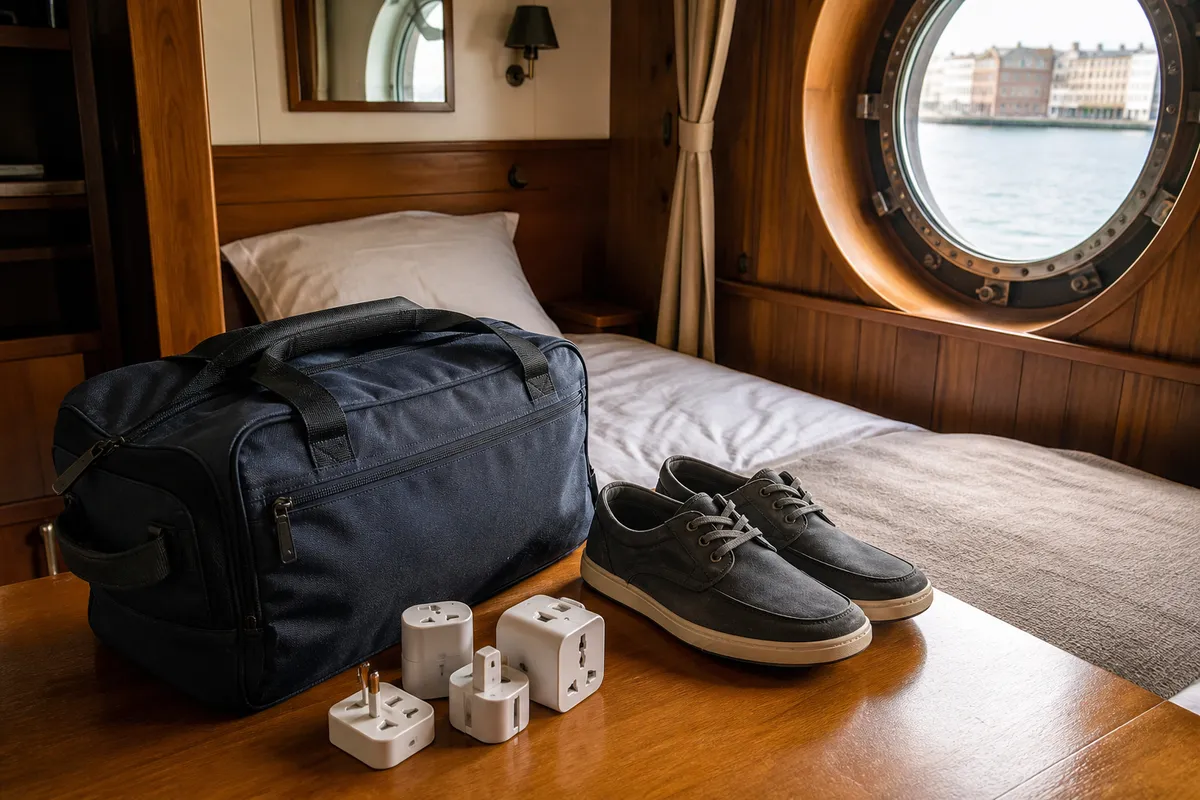
Marine accommodation rules and port safety inspections tightened significantly across European waterways in 2026, leading harbors to enforce stricter prohibitions against uncertified electrical accessories, heavy shore-line power draw, and luggage that obstructs vessel evacuation corridors. Bringing domestic multi-strip extensions, oversized hard-shell suitcases, or smooth-soled street shoes onto a moored vessel now creates friction at check-in, damages historic timber decks, and risks sudden cabin power blackouts.
Preparing a proper packing list for boat hotel berths depends on the structural realities of your vessel. Guests heading to converted canal barges in Amsterdam or Paris must optimize for steep companionways and compact wet-rooms, while travelers boarding modern commercial pontoons in London can rely on standard urban gear if socket standards match. For off-grid river rafts in Southeast Asia, packing requires independent battery banks and sealed waterproof protection against boarding spray.
Luggage Size for Botels and Navigating Tight Cabin Berths
Why Rigid Suitcases Fail: Berths, Under-Bed Clearance, and Collapsible Bags
Standard hard-shell rolling luggage creates an immediate physical blockage inside water-based accommodation. In historic botels across Central Europe, entry-level rooms regularly provide floor plans as tight as 10 square meters, such as the waterline cabins on heritage craft moored along the Vltava or Danube. Opening a 28-inch or 30-inch clamshell suitcase requires a flat footprint of roughly 80 by 100 centimeters, which instantly seals off the narrow walkway between the door frame and the mattress.
The built-in joinery of nautical sleeping quarters leaves no surplus perimeter clearance. Berth bases on converted cargo hulls and traditional passenger craft sit directly atop steel ballast framing or integrated structural drawers, restricting available under-bed clearance to 20 to 25 centimeters in typical layouts. A rigid suitcase thicker than 26 centimeters cannot slide beneath the platform, leaving it propped upright against the bulkheads where it restricts access to heating controls and bathroom doors.
Switching to a 40-liter to 55-liter collapsible duffel bag resolves this cabin storage bottleneck entirely. Once unpacked into wall cubbies or hanging lockers, a soft canvas or nylon duffel flattens to a profile of less than 10 centimeters, tucking neatly behind berth headboards or beneath shallow bedframes. Because soft bags lack an internal perimeter skeleton, packing cubes are necessary to compress clothing, compartmentalize clean and damp garments, and protect delicate accessories from impact against interior steel ribs.
Companionway Stairs, Narrow Gangways, and Station Locker Alternatives
Moving heavy baggage onto a moored vessel exposes travelers to industrial marine architecture rather than standard hotel corridors. Converted freight barges and vintage passenger botels feature companionway stairs configured at steep pitches between 60 and 75 degrees, with step widths narrowed to 500 or 600 millimeters. Manhandling a 23-kilogram rigid suitcase down these ladder-like ascents forces you to descend backward with one hand occupied, severely raising the risk of losing your footing on painted steel treads.
When traveling with oversized transit baggage, offloading bulk gear at shore lockers before reaching the pier prevents dangerous cabin congestion. Travelers stopping in the Netherlands can use the official Nederlandse Spoorwegen (NS) self-service lockers at Amsterdam Centraal, detailed on the Nederlandse Spoorwegen luggage service page. The NS terminal charges €10.00 for a Small locker (43×85×34 cm) and €16.00 for a Large locker (58×90×40 cm) for the initial 24 hours, accepting only debit or credit cards with a 72-hour storage ceiling.
If your hard case exceeds the 40-centimeter width limit of station lockers or you require multi-day staging, localized third-party luggage drop services within walking distance of central canal basins offer rates starting around €5.00 per bag per day. Paying for temporary shore storage allows you to board your floating accommodation with a compact weekender bag, keeping your cabin floor navigable and eliminating the strain of dragging bulky luggage across wet cobbles. For deeper neighborhood context on local moorings, see my detailed review of Amsterdam botels and harbor vessels across the Oosterdok and NDSM basins.
Julian's Field Tip: Pack a lightweight foldable tote inside your main duffel. When boarding older canal botels with spiral ladders, decant only your daily essentials into the tote at reception and leave your primary bag compressed under the berth bunk.
Best Shoes for Floating Hotel Decks and Wet Gangways
Wet Timber, Painted Steel, and Tidal Gangway Incline Grip
Selecting the best shoes for floating hotel decks requires understanding how moisture interacts with marine access surfaces. Moored vessels connect to shore piers via articulating aluminum or steel gangways that respond dynamically to passing wakes, current drift, and tidal shifts. Under international marine access standards, operational gangways can reach incline angles up to 30 degrees, transforming painted metal ramps and ribbed plates into slick inclines when morning river mist or coastal rain settles on the deck.
Conventional running shoes and road sneakers perform poorly in these conditions. Hard carbon-rubber outsoles designed for asphalt glide across wet, painted marine enamel because their rigid tread blocks trap a micro-film of surface water instead of dispersing it. The safest deck footwear incorporates razor-cut wave siping across a softer, slip-resistant compound, engineered precisely to squeegee surface water away from the contact patch and grip wet wood or metal instantly.
Moisture resistance in the shoe upper is equally important for comfort during early departures. Heavy morning dew coats open foredecks and boarding ramps throughout spring and autumn river hotel stays. Shoes built with hydrophobic treated leather, water-repellent canvas, or fast-drying synthetic mesh prevent dampness from penetrating into your socks during gangway crossings, while an EVA midsole provides enough shock absorption for walking over rigid steel deck plating.
Deck Etiquette and Hazards: Metal-Grate Traps, Heel Restrictions, and Teak Care
Mooring pontoons and industrial approach ramps often utilize open galvanized steel mesh to shed rainwater and ice. Walking across these grates in footwear with narrow heels presents an immediate physical hazard. Thin heels slip directly into the 25-millimeter mesh voids, shearing heel caps, jamming shoe shafts, and causing sudden falls or severe ankle twists directly above cold harbor water.
Pointed heels also inflict severe physical damage on wooden vessel decks. Soft Burmese teak planks and the flexible polyurethane caulking seams that waterproof traditional decks deform under high-pressure contact points. A narrow heel concentrates hundreds of pounds per square inch onto delicate planking, leaving deep gouges and breaking the waterproof seal between deck boards, which prompts captains and botel managers to ban formal heels on vessel boarding areas.
Black-soled street shoes with carbon-loaded rubber compounds are similarly problematic because they leave permanent scuff marks on white gelcoat, painted metal decks, and natural teak finishes. Crew members spend significant labor scrubbing scuff marks off vessel walkways, which is why authentic non-marking rubber sole shoes—featuring white, light grey, or natural gum compounds—are standard etiquette on private barges, static river liners, and historic ships.
Marine Hazard Warning: Avoid walking on outdoor gangways in smooth leather-soled dress shoes or plastic hotel slippers. Metal gangway ramps coated with river algae become friction-free slides when wet, providing zero traction for ungrooved soles.
Power Sockets on Converted Barges and Critical Electrical Limits
Fire Hazards on the Water: The Surge Protector Ban and Marine Grounding
Standard household surge-protected power strips pose a documented fire hazard when plugged into water-based electrical infrastructure. Domestic terrestrial buildings utilize grounded neutral electrical networks (TN-S systems) where circuit breakers trip immediately during a ground fault. Marine vessels and floating accommodations frequently operate on isolated neutral or floating-ground systems (IT configurations), where neither electrical conductor is bonded directly to earth potential.
In a floating-ground environment, an accidental phase-to-ground fault elevates the remaining line conductor to the full line-to-line voltage level. Standard metal-oxide varistors (MOVs) inside domestic surge strips cannot endure this continuous sustained overvoltage; they overheat rapidly, enter thermal runaway, and ignite nearby plastics without pulling enough amperage to trip the breaker. The United States Coast Guard marine safety alert database outlines how MOV-equipped power strips cause vessel fires and strictly warns against their maritime use.
When traveling with multiple electronic devices, pack an unshielded, non-surge-protected multi-port USB-C GaN charging hub instead of an extension strip. Multi-port GaN chargers draw modest power, house no combustible varistors tied to ground pins, and plug directly into single wall receptacles without risking vessel electrical alarms or violating maritime hotel fire codes.
Shore Power Hookups, Plugs, Voltage Gaps, and Off-Grid Constraints
Power delivery systems on floating properties vary drastically depending on the vessel type and berth infrastructure. Converted freight barges and historic residential houseboats rely on shoreline bollard connections running through flexible shore cables. These marina hookups are typically capped at 6 to 10 amperes per vessel berth—providing between 1,380 and 2,300 watts of total load—meaning personal 2,000-watt hair dryers or travel kettles instantly trip the pontoon circuit breakers and shut down cabin power.
Fixed urban botels in continental Europe—including Germany, the Czech Republic, and Sweden—supply standard 230V electricity at 50 Hz through Type C, Type E, or Type F wall sockets. Moored floating hotels in the United Kingdom, such as Good Hotel London at Royal Victoria Dock, utilize standard British three-pin Type G receptacles delivering 230V. If your devices originate from North America, you will need compatible pin adapters, as listed by the International Electrotechnical Commission world plugs portal.
Do not confuse a mechanical plug adapter with a voltage converter. North American travelers plugging single-voltage 110V curling irons or steamers into European 230V boat sockets without an active step-down transformer will destroy internal elements and trip berth breakers. Conversely, off-grid eco-lodges like River Kwai Jungle Rafts FAQ feature zero wall outlets in guest raft rooms, relying entirely on traditional kerosene lamps for night lighting and limiting device charging to shared reception stations.
Electrical Loading Rule: Charge laptops (65–100W) and phones (20–30W) without hesitation. If you must use high-wattage styling tools, use the low-heat blower setting or request the hotel's low-wattage salon amenities, which are calibrated to match the vessel's inverter wattage capacity.
Wet-Room Bathrooms and Marine Plumbing Essentials
Surviving the Compact Wet-Room Pod Without Soaking Personal Gear
Bathrooms on converted historic barges and mid-range river botels rarely feature separate, glassed-in shower stalls. To maximize tight hull layouts, marine architects construct integrated wet-room pods where the showerhead, hand basin, and toilet share a single curbless compartment. When the shower runs, water blankets the entire deck floor, including the base of the toilet and surrounding fixtures, draining toward a shallow floor sump.
Using a traditional counter-standing toiletry bag in this environment is frustrating, as sink surrounds are narrow or sloped. The most effective floating hotel essentials packing item for hygiene is a hanging toiletry kit equipped with a 360-degree swivel hook. This design allows you to suspend your grooming supplies from high door hooks, shower curtain rods, or towel bars safely above the active spray zone, keeping your dry items clean and moisture-free.
Navigating the wet-room floor after a shower requires practical footwear. Leaving the bathroom barefoot or in cotton socks guarantees soaked feet for hours. A pair of waterproof EVA slide sandals allows you to walk into the bathroom to wash your hands or brush your teeth without slipping on the damp surface or soaking your travel socks. For broader tips on living arrangements on converted vessels, consult my guide to living in water cabins.
Marine Macerator Pump Toilets: Operation, Restrictions, and Failure Risks
Marine blackwater plumbing operates under mechanical principles that differ entirely from municipal gravity sewers. Moored botels and converted barges employ marine macerator pump toilets or vacuum waste lines to discharge effluent through narrow-diameter pipes into onboard holding tanks or shore collection points. The electric motor drives a spinning stainless-steel blade that shreds human waste and standard toilet paper before pumping the slurry through the lines.
These small-bore macerators jam quickly when non-degradable fibers enter the bowl. Flushing facial wipes, sanitary products, dental floss, or heavy multi-ply paper binds the rotating cutter shaft instantly, stalling the motor and causing the holding tank to back up. Operators maintain strict house rules regarding plumbing misuse, and guest accommodation contracts regularly stipulate direct maintenance callout charges (often ranging from €150 to €300) if service teams have to dismantle a jammed pump unit.
- Flush only light, dissolvable marine-grade paper or single-ply tissue provided by the vessel.
- Deposit all wet wipes, makeup wipes, cotton pads, and hygiene products into the provided pedal bin.
- Keep a small supply of sealable sanitary disposal bags in your daypack for discreet disposal.
- Never flush paper towels, bandage strips, or hair clumps down the toilet bowl.
Waterline Cabins: Noise Isolation and Water-Taxi Tender Gear
Acoustic Reality of Waterline Cabins: Hull Slap and Low-Frequency Noise
Cabins situated directly at or below the vessel waterline deliver an unusual acoustic environment that catches unprepared travelers off guard. Steel and composite hulls act as acoustic conductors for external vibrations. When commercial tugs, harbor patrol craft, or morning ferries pass the mooring, their displaced wake creates a rhythmic, metallic hull slap noise against the hull plating, while tidal currents produce continuous bubbling and low-frequency resonance along the cabin wall.
To manage this underwater soundscape, high-density foam or moldable silicone earplugs with a noise reduction rating (NRR) of 32 to 33 dB are indispensable. Standard travel headphones and active noise-canceling earbuds perform poorly against low-frequency wave impacts and can feel bulky when sleeping on your side on narrow berth mattresses. Simple industrial foam earplugs soften wake sounds without requiring battery recharging.
Wearing high-attenuation earplugs introduces the practical risk of sleeping through early auditory alarms, especially when jet-lagged. To avoid missing morning water taxis or airport transfers, wear a smartwatch or fitness tracker programmed with a haptic vibrating wrist alarm. The localized physical vibration wakes you reliably without disturbing your travel partner or relying on muffled phone speakers.
Open Tenders, River Swell, and Water-Taxi Transit Protection
Reaching your berth on floating resorts or moored harbor pontoons often requires transit across open waterways. In places like Kanchanaburi's river corridors, Venice's lagoon terminals, or Seattle's lake slips, guests transfer from shore piers onto low-sided wooden longtails, motorized dinghies, or open water taxis. Passing boat wakes and river chop send spray flying over the gunwales, quickly soaking unshielded luggage on the floorboards.
Standard urban canvas backpacks and zippered duffels do not protect electronic hardware against breaking spray. Even water-resistant fabrics fail when pressurized spray penetrates coil zippers. Keeping your laptop, cameras, travel documents, and passport inside a 15-liter to 20-liter roll-top dry bag with IPX6 welded seams prevents moisture damage during choppy pier transfers. Folding the roll-top collar a minimum of three times creates an airtight seal that withstands heavy spray and incidental water contact.
Pack moisture-sensitive electronics inside this sealed dry sack before stepping onto boarding ramps or boarding water taxis. If you want to explore the financial mechanics of water-based accommodation before booking your next transfer, review my breakdown of hidden mooring fees and floating hotel booking costs.
Tender Boarding Protocol: When stepping into a small river taxi or harbor tender, keep both hands free to grip the gunwales or crew support lines. Wear your dry bag across your chest or shoulders rather than carrying loose items in your hands.
Complete Packing List for Boat Hotel Stays: Master Gear Audit
Categorized Packing Architecture: Marine-Approved Essentials vs. Left Behind
Packing for floating accommodation requires eliminating domestic items that clash with narrow berths, marine electrical systems, and wet walkways. Prioritize items that compress easily, resist water, and function safely within low-amperage, isolated circuits.
| Category | Marine-Approved Gear (Pack This) | Prohibited / Hazardous Gear (Leave at Home) |
|---|---|---|
| Luggage | 40L–55L collapsible duffel bag, compression cubes | Rigid 28"–30" hard-shell suitcases, bulky trunks |
| Footwear | Non-marking rubber sole shoes with wave siping, EVA slides | Stiletto heels, carbon black-soled boots, leather street soles |
| Power & Tech | Multi-port USB-C GaN charger, simple pin adapters, power bank | Surge-protected multi-strips (MOV-based), 2,000W hair dryers |
| Bathroom | Hanging toiletry kit with swivel hook, quick-dry towel | Counter-top cosmetic cases, non-dissolvable wet wipes |
| Sleep & Transit | NRR 32–33 foam earplugs, vibrating wrist alarm, IPX6 dry bag | Open canvas totes for boat taxis, bulky over-ear headphones |
Pre-Boarding Decision Matrix: Vessel Architecture vs. Packed Inventory
Every category of floating accommodation presents unique physical demands. Reviewing your vessel profile prior to packing prevents logistical headaches during boarding and check-in:
- Heritage Canal Barges & Converted Freighters: Strict space constraints. Limit gear to a compressible 45L duffel bag. Expect steep 60° to 75° companionways requiring grippy, siped footwear. Ensure power draw remains minimal to respect 6A to 10A shore limits, and pack a hanging toiletry kit for curbless wet-rooms. For more structural context, browse my guide to European urban botels and converted ships.
- Commercial Floating Hotels & Modern Pontoons: More forgiving dimensions. Accommodates standard wheeled carry-on bags. Confirm plug standards (Type G for the UK, Type C/E/F for continental Europe) and verify on-site elevator availability. Use non-surge power taps to protect isolated marine wiring.
- Off-Grid Floating Eco-Rafts: Remote, rustic settings. Prepare for zero in-room wall outlets by carrying high-capacity power banks (20,000 mAh). Protect electronics with an IPX6 roll-top dry bag for open-boat river transfers, and bring quick-drying synthetic layers to handle humidity.
Before leaving for the dock, run a final gear inspection: verify that your multi-plug lacks internal surge suppression components, test your deck shoes on a wet kitchen tile to check slip resistance, and make sure your luggage compresses down to slide into shallow berths. Following these marine-tested steps ensures your floating stay remains smooth, safe, and comfortable from the moment you cross the gangway.