

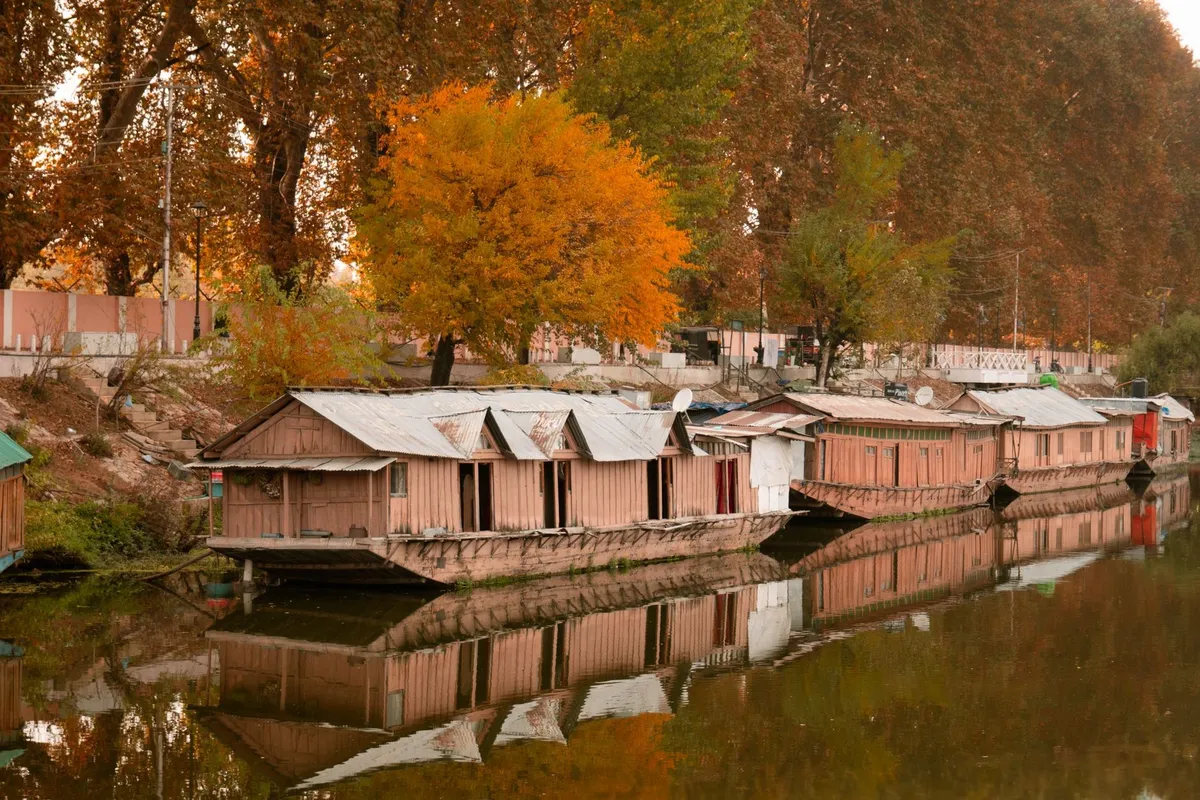
Srinagar’s water frontage often surprises travelers who arrive expecting a quiet alpine escape, only to find the central Boulevard along Dal Lake choked with bumper-to-bumper traffic, blaring horns, and aggressive vendors. Choosing WelcomHeritage Gurkha Houseboats shifts your base north to Nigeen Lake, an interconnected body of water flanked by weeping willows and the Shankaracharya and Hari Parbat ridges. This property operates 18 guest rooms across multiple stationary, moored deodar cedar vessels under a heritage hospitality joint venture between ITC Hotels and the Royal Family of Jodhpur.
Having inspected dozens of static craft and converted vessels across Europe and Asia, I know that staying on water demands a realistic look at logistics, insulation, heating, and boarding access. If you are comparing a Kashmir floating hotel to conventional concrete properties on land, or evaluating a Nigeen Lake houseboat stay against the busier Dal Lake basins, this guide provides the floor plans, transit details, noise profiles, and seasonal rate structures you need before putting down a deposit.
Setting, Surroundings, and Transfer Logistics
Heritage Lineage and Stationary Floating Structure
The fleet that forms WelcomHeritage Gurkha Houseboats traces its identity to the late nineteenth century, when British administrators in colonial India were barred from owning land in the princely state of Jammu and Kashmir. Their workaround was the construction of moored floating cedar residences, an architectural legacy that persists today. As part of the WelcomHeritage Gurkha Houseboats collection, these vessels combine royal Rajasthani heritage stewardship with the hospitality service standards of ITC Hotels.
A crucial distinction for first-time water lodge visitors: these boats are strictly stationary. Each craft rests on heavy, submerged deodar cedar hull timbers permanently moored to cedar pilings and anchored along the western perimeter of the lake opposite Nigeen Club. If you are prone to motion sickness, there is no open-water swell or cruise motion to worry about; the hull remains rock-steady underfoot, even during passing afternoon lake breezes.
Nigeen Lake Waterfront vs Central Dal Lake
While connected by a narrow water channel to Dal Lake, Nigeen Lake functions in an entirely different acoustic and environmental realm. The central commercial ghats of Dal Lake (Ghats 1 through 7) sit along a four-lane city arterial road packed with motor traffic and continuous motorboat activity. In contrast, Nigeen is nestled into the quieter Nagin Bagh residential enclave, surrounded by poplars and willows that buffer against urban noise.
| Environmental & Operational Factor | Nigeen Lake (WelcomHeritage Gurkha) | Central Dal Lake (Boulevard Ghats) |
|---|---|---|
| Ambient Daytime Noise | 45–55 dB (lapping water, distant bird calls) | 68–80 dB (road traffic, honking, commercial megaphones) |
| Motorized Boat Density | Low; strictly regulated shikara and maintenance craft | High; continuous motorboat tenders and water-taxi wakes |
| Vendor Approach Frequency | Moderate (2–4 merchant shikaras per day) | Aggressive (continuous merchant approaches along the veranda) |
| Hydrological Quality | Lower BOD and COD levels; higher water clarity | Elevated organic nutrient runoff and weed accumulation |
Comparative hydrological data published by Faheem Ahamad and colleagues on Dal and Nigeen Lakes confirms that Nigeen maintains lower biochemical oxygen demand (BOD) and chemical oxygen demand (COD) levels than Dal's central basins. While both alpine water bodies face long-term weed-growth challenges, the water around the Gurkha moorings remains noticeably clearer, free from floating motor fuel slicks.
Arrival Route: Airport, Road Head, and Shikara Shuttles
Reaching the houseboat from Sheikh Ul-Alam International Airport (SXR) requires a 25-kilometer journey through Srinagar's central core. In normal traffic conditions, this drive takes 45 to 60 minutes. Prepaid airport taxis operate directly from the arrivals terminal counter, charging fixed regional rates between ₹1,200 and ₹1,500. Taxis drop passengers on the road head at the Nigeen Club bank pier, where secure private vehicle parking is available if you are traveling with a hired driver.
- Arrive at Nigeen Club Pier: Drivers park at the dedicated water-gate entrance on the Nagin Bagh shoreline.
- Board the House Shikara: The property provides a complimentary private shikara boat transfer for checking in and checking out. Step from the stone quay onto the padded wooden bench of the awaiting shikara.
- Cross the Waterway: A five-minute paddle across the mirror-calm channel brings you directly to the carved cedar gangway of your designated Gurkha hull.
When heading out for evening dining or morning sightseeing in Srinagar, simply inform the onboard houseboat caretaker 15 minutes before departure. He will summon a shikara directly to the front veranda steps to paddle you over to the Nigeen Club bank at no extra charge.
Houseboat Architecture, Cabins, and Climate Systems
Handcrafted Cedar Interiors and Shared Layouts
Stepping aboard this Srinagar luxury houseboat reveals historic Kashmir carpentry. The hulls and bulkheads are assembled entirely from Himalayan deodar cedar (Cedrus deodara), a wood dense with natural oils that resist water rot and emit a rich, resinous fragrance. Overhead, the ceilings feature khatamband woodwork–an intricate mosaic of hand-carved geometric pine strips fitted together entirely without nails, a craft preserved in the valley since the Persian-influenced Mughal era.
Unlike standard urban hotels, living spaces on these floating vessels operate on a shared-floor layout. Each boat hull contains three to four private guest rooms accessed from a central carpeted hallway. At the forward bow, all guests on that vessel share an open carved-wood veranda overlooking the water, an adjoining formal salon furnished with walnut-wood tables and hand-knotted Kashmiri carpets, and a communal dining room serviced by a dedicated butler (khansama).
Accommodation Dimensions: Deluxe Rooms vs Suites
The property offers 18 private guest accommodations split across two specific categories: 15 Deluxe Rooms and 3 Suites. If you are familiar with tight European canal barges, you will find these rooms noticeably more generous, although the linear floor plans reflect the narrow, elongated shape of the wooden hulls.
| Cabin Category | Inventory | Interior Floor Area | Bedding Configuration | View Orientation | Ensuite Bathroom Features |
|---|---|---|---|---|---|
| Deluxe Room | 15 keys | 20–21 m² (215–224 sq ft) | 1 Double Queen or 2 Twin beds | Side lake or corridor window | Western flush toilet, walk-in shower stall, geyser hot water |
| Suite | 3 keys | 23–24 m² (248–258 sq ft) | 1 King or Queen bed | Direct lake-facing bow / veranda | Full ensuite bathroom, dressing vanity, deep soaking tub/shower |
Deluxe Rooms feature either a double bed or two separate twin mattresses set upon carved walnut frames, making them suitable for business colleagues or solo travelers. Suites are positioned closer to the boat's primary lake-view corners and feature dedicated sitting alcoves with upholstered diwans. Each room includes a modern ensuite bathroom equipped with a private electric water heater (geyser) delivering piping-hot water directly to the basin and shower.
Managing Mountain Weather: Bukhari Stoves, Radiators, and Cross-Drafts
Srinagar experiences sharp seasonal shifts, from sub-zero winter freezes to sunny summer afternoons with temperatures exceeding +32 °C. The houseboats rely on a tailored heating and ventilation strategy suited to timber structures. In winter, cold is countered by fitted electric mattress blankets, heavy wool quilts, supplemental oil-filled electric radiators, and traditional wood-burning bukhari chimney stoves stoked with fragrant cedar cuttings.
In warm summer periods, note that the houseboats do not feature central air conditioning or compressor split-units. Cooling relies entirely on overhead ceiling fans, deep veranda roof overhangs that block direct solar heat, and open pinjrakari wood-lattice shutters that pull fresh evening lake breezes through the sleeping cabins. The valley typically cools down significantly once the sun drops behind the mountain ridges.
Srinagar’s municipal power grid frequently experiences scheduled load shedding. The property manages this via dedicated onboard diesel backup generators, which engage during blackouts to keep bedroom lights, Wi-Fi routers, and charging sockets active throughout the night.
Dining Traditions, Kitchen Operations, and Onboard Rules
Wazwan Traditions, Custom Sourcing, and Kahwa Service
Dining at Gurkha Houseboats avoids commercial mass catering. Meals are prepared fresh in an attached kitchen utility barge (dunga) moored directly behind the main vessel, ensuring cooking smoke and smells do not enter guest sleeping quarters. Upon arrival on the front deck, staff welcome you with a brass samovar service of steaming Kashmiri Kahwa–a delicate green tea infused with whole saffron strands, crushed cardamom, and slivered almonds.
The culinary kitchen serves 100% Halal-certified local specialties alongside pan-Indian curries and standard continental breakfast items (eggs cooked to order, toast, porridge, and fresh preserves). If you want to experience authentic Kashmiri Wazwan–including slow-cooked Rogan Josh, yogurt-poached Gushtaba meatballs, or spiced Rista–you must give the staff 4 to 6 hours advance notice. Because the floating kitchen does not store large frozen meat reserves, the khansama travels to the local onshore morning butcher markets specifically to source meat and spices for each evening's dinner orders.
If you prefer milder spices, inform the khansama when placing your dinner order at breakfast. Traditional Wazwan relies on potent Kashmiri dried chilies and dried ginger, but the kitchen staff can easily adjust spice heat levels for international palates.
House Guidelines, Alcohol Status, and Legal Formalities
To preserve peace and protect these historic wooden craft, WelcomHeritage enforces straightforward property guidelines that differ from land-based business hotels.
- Strict Check-in and Check-out Times: Check-in begins at 14:00 (2:00 PM), while check-out is fixed at 12:00 PM to allow housekeeping sufficient time to ventilate and clean cedar cabins between guests.
- Mandatory Identification: Every adult guest must be at least 18 years old and show government-issued physical ID at check-in (Aadhaar or Driving License for Indian nationals; original Passport with valid Indian Visa for international travelers).
- Dry Property Policy: The houseboats operate without a commercial liquor license. Staff do not sell alcohol on the premises, though guests may bring personal beverages for discreet, private consumption inside their private bedrooms.
- Pet Restrictions: Pets and emotional support animals are strictly prohibited on all houseboats due to unprotected wooden floors and fragile heritage carpets.
- Nighttime Quiet Hours: Sound travels easily across open water. Guests are asked to observe quiet hours in communal salons and front decks after 22:00.
Seasonal Tariffs, Taxes, and Booking Channels
Nightly Rate Ranges Across Kashmiri Travel Seasons
Pricing for a stay on WelcomHeritage Gurkha Houseboats reflects regional travel seasons in the Kashmir Valley. Peak demand centers around two periods: the spring Tulip Festival (April to May) when lake gardens burst into color, and the autumn chinar foliage window (September to October). High summer (May to July) also brings steady holiday traffic escaping the intense heat of the northern Indian plains.
| Travel Season | Calendar Period | Deluxe Room Rate (EP, Room Only) | Suite Rate (CP, Bed & Breakfast) | Half Board (MAP, Breakfast + Dinner) |
|---|---|---|---|---|
| Off-Peak / Winter | November to March | ₹8,000–₹10,000 ($95–$120) | ₹10,500–₹12,500 ($125–$150) | Add ₹1,500–₹2,000 per guest |
| Peak Spring / Summer / Autumn | April to October | ₹12,000–₹14,500 ($145–$175) | ₹14,500–₹16,500 ($175–$200) | Add ₹1,800–₹2,400 per guest |
When calculating your total stay budget, account for standard Indian hotel taxation. Under current Indian Goods and Services Tax (GST) hotel bands, rooms booked above ₹7,500 per night incur an 18% GST charge, which is added to your room tariff on your final checkout statement. Unlike budget houseboats on Dal Lake, base rates here include all shikara crossings between the Nigeen Club bank pier and the boat veranda throughout your stay.
Booking Channels, Loyalty Programs, and Cancellation Policies
You can reserve rooms directly through the central WelcomHeritage / ITC Hotels reservation portal, or through established regional online travel agencies such as MakeMyTrip and Booking.com. Stays booked directly through the official ITC portal earn Club ITC Green Points, allowing enrolled loyalty members to build tier credits across the ITC group's luxury portfolio.
WelcomHeritage maintains a clear cancellation framework on Best Available Rates across its heritage properties:
- Standard Policy: Cancellations made up to 7 days prior to scheduled arrival qualify for a refund, minus standard bank merchant processing fees.
- Late Cancellations and No-Shows: Reservations cancelled within 7 days of the check-in date forfeit 100% of the total booking value.
- Tulip Festival Peak Blackouts: Special non-refundable terms apply during high-demand festival periods in April, requiring a full 100% non-refundable deposit upon booking.
For more details on seasonal policies, security deposits, and mooring structures across stationary vessels, review our detailed guide to rented houseboat hotels and our breakdown of floating hotel pricing and extra costs.
The Realities of Lake Living: Noise, Vendors, and Access
Acoustic Realities and Shared Hull Dynamics
Heritage cedar craft offer unmatched character, but sound insulation behaves differently here than in standard concrete hotels. Handcrafted timber partitions cannot accommodate thick acoustic mineral wool insulation. As a result, heavy footsteps in central hallways, closing timber doors, and normal conversations carry between adjoining rooms on the same hull.
If you are a light sleeper, carry a pair of silicone earplugs. If traveling with an extended family or a group of four to eight adults, consider reserving all three or four rooms on a single hull. This secures the entire boat, including the private front veranda, salon, and dining quarters, for your group's exclusive use.
Floating Vendors and Front Deck Etiquette
One defining element of Kashmir's lake culture is the floating bazaar. Throughout the day, independent merchants in small wooden canoes (shikaras) paddle up to the houseboat veranda to showcase their wares. Typical items include hand-carved walnut-wood boxes, fresh-cut lake lotus blossoms, certified saffron boxes, raw paper-shell almonds, and embroidered Pashmina shawls.
These artisans are polite and accustomed to lake life, but they can be persistent. If you want to browse, feel free to inspect the items; reasonable bargaining is expected and customary. If you do not wish to shop, a polite wave and a firm "Na, shukriya" (No, thank you) will prompt the trader to untie his boat and paddle on. You can also ask your khansama to manage merchant interactions if you prefer uninterrupted reading on the veranda.
Physical Mobility and Timber Maintenance Realities
Floating accommodations require reasonable physical agility. To reach WelcomHeritage Gurkha Houseboats, you must step down stone stairs at the Nigeen Club pier, step across the narrow, rocking gunwale of a wooden shikara, and then step up onto the boat's outer timber pontoon gangway. Inside, cabins feature raised wooden door saddles (thresholds) designed to prevent water ingress.
Because of open water transfers and narrow timber steps, these houseboats cannot accommodate full-time wheelchair users or travelers with severe mobility limitations. For safety advice on water access, read our overview of safety inspections on houseboat stays and our guide to family-friendly floating accommodations.
Living on water also means living with natural timber movement. Depending on morning humidity, wooden doors and window latches may stick slightly. Dedicated staff walk the hull decks daily, clearing fallen leaves and running bilge pumps to keep the floating foundation balanced and level.
Traveler Suitability and Final Evaluation
Who Should Book and Who Should Look Elsewhere
The WelcomHeritage Gurkha experience suits travelers who value historic atmosphere and natural calm over modern resort amenities. It is an exceptional match for couples, heritage architecture enthusiasts, photographers, and independent travelers seeking a genuine glimpse of traditional Kashmiri living away from congested tourist centers.
Conversely, look for a standard city hotel if your priority list includes high-energy nightlife, on-site cocktail lounges, thermal swimming pools, passenger elevators, or expansive gym facilities. If your itinerary demands stepping straight out of your lobby into a street market on foot without waiting for a shuttle boat, base yourself at a land-based boutique hotel in downtown Srinagar.
Summary Evaluation
WelcomHeritage Gurkha Houseboats strikes an appealing balance in Srinagar's complex floating hotel landscape. By pairing the corporate oversight of ITC Hotels with the quieter natural waters of Nigeen Lake, it bypasses the commercial carnival atmosphere and noise that often disrupt stays along Dal Lake's primary Boulevard. You will pay a 30% to 40% premium compared to unbranded, independent houseboats on the lake, but that margin translates into clean linens, functioning electrical backups, reliable hot-water geysers, and freshly prepared local dining served with genuine care.