 Floating Hotel
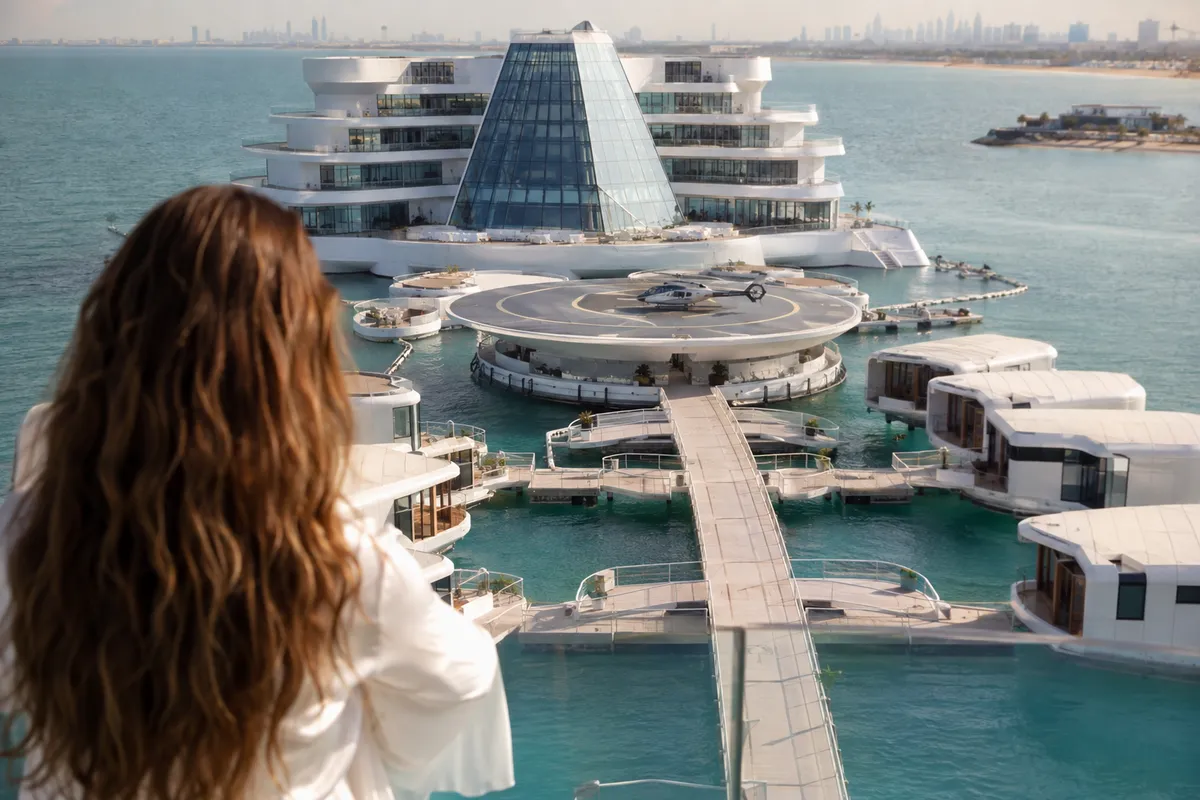
Offshore hotel construction in the United Arab Emirates has reached an unprecedented scale with the Kempinski Floating Palace Dubai, an anchored marine resort valued at approximately AED 1.6 billion (around $435 million USD). Engineered by Seagate Shipyard and El Bahrawy Group, this offshore resort drops the anchor on traditional coastal land developments in favor of an entirely waterborne footprint off Jumeirah Beach Road. Having spent over a decade inspecting floating pontoons, converted iron hulls, and marine accommodations across three continents, I know that water-level hospitality introduces distinct mechanical friction that marketing brochures never show. Navigating gangways, engine hum, and wave-induced heave requires looking closely at actual engineering schematics, marine access restrictions, and real operating costs.
Unlike conventional overwater resorts where villas stand on concrete pilings driven into the seabed, the entire Kempinski complex floats directly on the surface of the Arabian Gulf. For prospective guests and maritime real estate buyers, understanding the distinction between fixed overwater structures and untethered displacement pontoons is critical. The engineering parameters, logistical bottlenecks, and financial realities of this maritime project determine what staying on board will actually look like once operations commence.
Kempinski Floating Palace Dubai: Structural Engineering and Offshore Architecture
The core structure of the Kempinski Floating Palace Dubai departs from standard barge hotel layouts by using a modular, interconnected pontoon configuration designed to balance passenger stability with yacht traffic. Rather than presenting a solid floating barrier to the coastline, the central palace is divided into four distinct quadrants anchored around a massive glass pyramid atrium. This naval architectural design creates a protected water-level portal that allows larger cruising yachts to navigate directly into and underneath the heart of the floating complex.
Core Palace Quadrants, Duplex Suites, and the Glass Pyramid Atrium
Within the main four-quadrant palace, the resort houses between 156 and 200 luxury rooms and suites, crowned by 16 duplex penthouses that feature private freshwater swimming pools on their upper decks. Distributing structural weight across four buoyant sectors reduces point loads, which helps mitigate hull stress and uneven settling on the water. The central glass pyramid atrium serves as an architectural centerpiece while acting as an open maritime breezeway, funneling sea breezes into the interior common areas while letting visiting yachts navigate beneath the structure.
According to development tracking data published by PropSearch Dubai, the project was originally slated for completion in 2023, subsequently moved to 2025, and is currently tracking toward full delivery and commercial handover by late 2026. Across my stays on floating platforms, multi-section floating hulls invariably present subtle joint movements where pontoons meet; maintaining structural integrity across these four quadrants requires heavy-duty flexible articulation dampers capable of absorbing tidal torsion.
Quadrant Architecture Note: The central passage beneath the glass pyramid atrium is engineered to accommodate cruising yachts. However, passage clearance depends on sea-level tidal height, requiring visiting captains to coordinate vertical air draft with resort dockmasters before navigating beneath the main hotel frame.
Autonomous Off-Grid Utilities: Solar Arrays, Desalination, and Waste Filtration
Maintaining high-end hospitality on an offshore structure requires robust, self-contained utilities. The Kempinski complex operates off-grid, relying on roof-integrated photovoltaic solar panels to support its base electrical load, supplemented by onboard generators. Potable water is produced through an onboard water desalination plant utilizing high-pressure reverse osmosis to filter seawater from the Arabian Gulf into clean domestic water for guest taps and swimming pools.
Wastewater management is handled by an internal sewage treatment plant using vacuum-drainage systems and advanced biological filtration, avoiding environmental discharge into the surrounding coastal waters. In my experience on marine botels and floating eco-resorts, as I noted in my review of tropical floating eco-resort infrastructure, self-contained sewage systems depend entirely on continuous power to prevent valve backpressure. The resort has also incorporated automated air sterilization systems across all public corridors and enclosed suite spaces to control humidity and marine odors.
- Power Generation: Roof-mounted photovoltaic solar arrays linked to internal battery banks and marine generator backup systems.
- Water Supply: Industrial multi-stage onboard reverse-osmosis desalination filtration units supplying all suites and swimming pools.
- Effluent Processing: Closed-loop internal vacuum sewage treatment plant eliminating direct marine discharges into the Jumeirah basin.
- Climate Control: Marine chiller loops integrated with automated air sterilization systems to handle maritime humidity and airborne salinity.
Offshore Positioning: Jumeirah Basin Footprint Without Causeway Links
The Kempinski Floating Palace is positioned permanently offshore in the open water off Jumeirah Beach Road, in the maritime basin near Jumeirah Bay Island. It is vital to recognize that this development features no connecting causeway, breakwater pier, or vehicular road access. Guests cannot pull up to an entrance in a taxi or drive a car to the lobby.
This layout contrasts sharply with nearby high-end island resorts. For example, the Bulgari Resort Dubai on Jumeirah Bay Island connects directly to the mainland via a 300-meter two-lane road bridge, allowing uninterrupted automotive access around the clock. By contrast, Kempinski’s offshore positioning cuts off land vehicles entirely, making guests and logistics completely dependent on maritime and aerial shuttles. For an in-depth breakdown of how true displacement platforms differ from shore-connected structures, see my technical comparison of overwater bungalows versus floating hotels.
Neptune Floating Palace Villas Dubai: Engineering, Cruising Range, and Layouts
While the central palace accommodates standard guests, the outer ring of the resort features the floating palace villas Dubai project, known formally as the Neptune villas. Originally conceived as an exclusive cluster of 12 floating units, the development scope was officially expanded by Seagate Shipyard and El Bahrawy Group to 48 independent cruising vessels arranged along wide pontoon walkways radiating from the central palace.
Detachable Navigation Mechanics and Cruising Speed Knots
Unlike standard static floating suites, each Neptune floating villa is a fully seaworthy, solar-powered floating home engineered on an independent displacement hull. When moored to the resort, the villas draw electrical support and water utilities through modular pontoon connections. However, owners and chartered guests can disconnect their villa from the main pontoon walkway and cruise out into coastal waters under independent power.
Cruising capability is driven by hybrid solar-electric motors linked to rooftop solar panel arrays. The certified maximum cruising speed is capped at 6 nautical miles per hour (6 knots). This modest cruising speed knots ceiling means the Neptune villa functions as a slow displacement vessel intended for gentle coastal repositioning and calm-water anchorage, rather than rapid open-sea transit. The exact kilowatt-hour battery storage capacity has not been made public by Seagate Shipyard, but autonomous navigation is intended for calm sea states and sheltered coastal routes.
| Specification Metric | Documented Parameter | Operational Reality |
|---|---|---|
| Maximum Cruising Speed | 6 nautical miles per hour (6 knots) | Displacement speeds; limited headway against strong tidal currents |
| Propulsion System | Solar-electric hybrid marine drive | Silent electric propulsion supported by rooftop solar arrays |
| Hull Configuration | Multi-level catamaran-style displacement pontoon | Optimized for wide living footprint and stability at anchor |
| Mooring Interface | Quick-disconnect utility umbilical connectors | Decouples freshwater, power, and data lines from the resort pontoon walkway |
| Energy Storage | Integrated marine battery bank (kWh undisclosed) | Requires generator support under extended heavy air-conditioning loads |
Architectural Configurations: Aston Martin Interior Styling and Duplex Footprints
The interior architecture of these 48 floating homes was designed by Laila Aziz in collaboration with British luxury automaker Aston Martin. The design language incorporates marine-grade leather finishes, tailored wood veneers, and polished metal accents reminiscent of sports car cabins, adjusted to withstand the corrosive marine atmosphere of the Persian Gulf.
The Neptune villas are configured as duplex structures across 2-, 3-, and 4-bedroom layouts, with living areas ranging from approximately 4,000 square feet to more than 10,000 square feet. Each layout includes floor-to-ceiling glass paneling, staff quarters, and dedicated crew spaces. The open upper deck includes an outdoor roof terrace alongside an integrated private infinity pool, a feature that requires advanced internal structural baffling to prevent pool water from sloshing over the sides when the villa pitches in coastal swells.
| Villa Tier | Total Usable Area | Structural Levels | Outdoor Amenities |
|---|---|---|---|
| 2-Bedroom Duplex | ~4,000 sq. ft. | Two floors + sun deck | Roof terrace, private infinity plunge pool, outdoor dining bar |
| 3-Bedroom Duplex | ~6,500 sq. ft. | Two floors + sun deck | Expanded infinity pool, wrap-around upper terrace, crew cabin |
| 4-Bedroom Duplex | 10,000+ sq. ft. | Two floors + panoramic deck | Full-sized rooftop pool, multiple lounges, dual crew quarters |
Mandatory Maritime Manning: Dedicated Crew and Service Protocols
Detaching a multi-thousand-square-foot floating residence from a marina pier and operating it on navigable waters brings it under maritime shipping regulations. Guests cannot simply take the helm of a Neptune villa themselves. Under maritime law and project operating guidelines, every detached voyage must be manned by a mandatory dedicated crew of six professionals.
This operational crew includes one licensed boat captain, three marine deckhands, and two dedicated Kempinski hospitality stewards. The captain handles marine navigation, VHF communications, and propulsion, while the deckhands manage mooring lines, anchor drops, and tender boat operations. Meanwhile, the Kempinski stewards manage in-villa dining, housekeeping, and personalized butler services. This six-person complement ensures that nautical navigation and five-star resort service operate smoothly without pulling crew members across conflicting duties.
Crew Privacy Consideration: A mandatory six-person crew ensures safe navigation and service, but it also means six staff members live and work on board throughout any detached charter. While crew quarters are separated, guests who prioritize absolute solitude should be aware of this continuous staffing presence.
Dubai Floating Hotel Cost Analysis and Kempinski Floating Palace Booking Realities
Evaluating the financial commitment for this luxury floating hotel Dubai development involves two distinct paths: capital acquisition of an independent Neptune villa or short-term booking within the central palace and rental fleet. As with most marine real estate, the true cost goes well beyond the initial purchase price, requiring careful attention to maintenance and marine operations.
Acquisition Costs vs. Off-Season Nightly Rental Rates for Neptune Units
Private purchase pricing for Neptune cruising villas was established by El Bahrawy Group across three distinct structural tiers. A 2-bedroom duplex is priced at AED 29 million (approximately $7.9 million USD), a 3-bedroom unit lists at AED 32 million (approximately $8.7 million USD), and the flagship 4-bedroom villa commands AED 46 million (approximately $12.5 million USD). To better understand how marine vessel depreciation and slip fees impact long-term value, read my analysis of costs for floating hotels versus land-based properties.
For charter guests, the developer projects an off-season nightly rental rate starting from AED 50,000 (roughly $13,600 USD) for a detached Neptune villa. Notably, these charters are billed on fixed 24-hour day rates rather than conventional hourly yacht charter rates. This nightly fee covers the vessel, the six-person crew, and basic maritime hotel operations, though yacht fuel, specialized provisioning, and offshore mooring fees represent additional expenses. As with all marine hulls operating in warm, saline waters, owners must budget for routine hull haul-outs, sacrificial zinc anode replacements, and antifouling bottom paint—costs that have not yet been published by the developer.
| Unit Type | Outright Purchase Price (AED) | Purchase Price (USD equiv.) | Projected Off-Season Nightly Rate |
|---|---|---|---|
| 2-Bedroom Neptune Villa | AED 29,000,000 | ~$7,900,000 USD | Starting from AED 50,000 (~$13,600 USD) |
| 3-Bedroom Neptune Villa | AED 32,000,000 | ~$8,700,000 USD | Variable based on season/charter plan |
| 4-Bedroom Neptune Villa | AED 46,000,000 | ~$12,500,000 USD | Premium event tier pricing |
Central Palace Inventory Status and Direct Kempinski Reservation Channels
A frequent question from travelers is how to secure a Kempinski floating palace booking for the main hotel rooms. According to official corporate statements released by the Kempinski Press Room, the hotelier manages brand standards and operations, but standard room keys remain unpublished and unbookable across global reservation engines. The central palace inventory of 156 to 200 rooms and suites cannot currently be reserved through direct consumer platforms.
Because delivery is targeted for late 2026, nightly rates for standard suites inside the central quadrants are still withheld. Prospective travelers must watch out for unauthorized booking intermediaries. No third-party agency has verified booking access to room keys right now. Any service demanding advance payment for hotel room stays ahead of official Kempinski commissioning should be treated with extreme caution. To understand how room pricing models work for pre-opening marine projects, consult my guide on floating hotel booking costs and hidden dockage fees.
Consumer Booking Alert: Standard suites within the Kempinski Floating Palace are not bookable on any legitimate retail channel at this time. Room reservations will only open once the offshore structure completes sea trials, utility certifications, and safety inspections closer to the late 2026 delivery window.
Offshore Arrival Logistics: Floating Helipad Transfers, Berthing, and Tender Shuttles
Getting guests, luggage, and supplies out to an unlinked offshore platform requires carefully planned maritime and aviation logistics. The Kempinski Floating Palace Dubai manages guest transport through three distinct arrival corridors: a floating helipad, private yacht slips, and scheduled mainland tender boats.
Floating Helipad Transfers: Operational Limits and Flight Clearance
For high-speed air arrivals, the resort features a dedicated floating helipad transfer deck engineered directly adjacent to the main palace quadrants. This floating helipad allows chartered helicopters to land passengers right on the water. However, operating an offshore helipad involves clear regulatory boundaries enforced by the Dubai Civil Aviation Authority (DCAA).
Commercial helicopter operations over water generally run under Visual Flight Rules (VFR) during daylight hours. While the developer has not published specific crosswind limits or platform heave thresholds for the helipad, bad weather can ground flights. During severe sandstorms or winter marine gales, helicopter transfers must be suspended, diverting arriving travelers to mainland landing pads and marine tender boats.
Helipad Luggage Realities: Rotary-wing aircraft have strict weight and balance limits. Helicopter transfers typically enforce rigid baggage dimensions and weight caps. Guests arriving with heavy or oversized luggage should expect their bags to travel separately on maritime tender shuttles rather than in the aircraft luggage hold.
Private Yacht Berthing Decks and Dubai Maritime City Authority Regulations
Guests arriving by private yacht can dock directly at the resort’s integrated marina dock, which features dedicated slips engineered to moor up to 16 private yachts simultaneously alongside the palace quadrants. This lets visiting yacht owners dock, disembark, and access resort amenities without boarding an intermediate tender vessel.
Any private pleasure craft entering these waters must comply with UAE maritime navigation laws. The Dubai Maritime Authority (DMA) issued Circular No. 16 (2025), which mandates the continuous operation of Automatic Identification Systems (AIS) on all vessels navigating Dubai waters, as documented by Yachtfinds Marine Legal Updates. Arriving captains must maintain active AIS tracking and hold valid marine registrations before receiving clearance into resort slips. Internal VHF radio channels and berthing fees for visiting yachts will be issued by the resort dockmaster upon official opening.
Mainland Marina Tender Shuttles and Baggage Transit Infrastructure
The primary arrival route for most hotel guests will be a scheduled maritime tender shuttle operating between a mainland Dubai base and the floating palace. The developer has not officially designated the specific mainland marina terminal for check-in lounges, but shuttles will use fast, twin-engine passenger catamarans and covered speedboats to ferry passengers across the channel.
Once the tender arrives at the resort, passengers step off at a floating pontoon dock and follow pontoon walkways out to the central palace reception or their moored Neptune villa. Moving luggage across floating pontoons and boarding launches during windy chop demands proper footwear and care. To prepare for waterborne arrivals, check out my field-tested guide on what to pack for a floating hotel stay.
- Mainland Check-In: Guests complete initial identification and security checks at a designated marina lounge on the Dubai coast.
- Water Transit: Boarding a sheltered high-speed resort tender for the open-water crossing to the Jumeirah offshore mooring grid.
- Pontoon Disembarkation: Stepping onto buoyant, articulated dock systems equipped with safety railings and non-slip surfaces.
- Escort to Accommodations: Walking or electric-cart transfer along the pontoon walkway directly into the central palace lobby or private villa entry deck.
Hydrodynamic Realities: Navigating Arabian Gulf Swell and Motion Comfort
No matter how luxurious the finishes are, an ungrounded offshore structure remains subject to the laws of hydrodynamics. Living on a floating platform means dealing with water movement, wave energy, and weather changes—realities that every guest should understand before booking.
Pontoon Heave Dynamics and Mitigating Motion Sickness on Floating Structures
The open Jumeirah coastal basin experiences persistent low-amplitude marine swell and afternoon wind chop generated by local sea breezes. Because the central palace and its Neptune villas rest on displacement hulls rather than fixed seafloor pilings, the entire structure moves slightly with the water, experiencing pontoon heave (vertical up-and-down movement) and subtle roll.
For people prone to motion sickness on floating structures, this subtle motion can cause sensory disorientation, especially when spending hours inside enclosed suites where the horizon is out of view. While the broad beam of the central quadrant pontoons dampens sharp wave movements, sensitive guests will still feel the movement of the sea beneath their beds. If you are sensitive to movement on the water, take a look at my detailed breakdown of the physics behind motion sickness on moored floating hotels.
Motion Comfort Tip: If you are sensitive to motion on the water, book suites on lower deck levels located toward the center of the palace quadrants. Lower, central rooms experience less rolling motion than upper-deck penthouses or outer pontoon villas, where wave movement is felt more directly.
Shamal Wind Seasonality, Wave-Damping Mechanics, and Evacuation Thresholds
The Persian Gulf weather calendar is shaped by the shamal, a strong northwesterly wind pattern that blows across the basin during the winter months, typically peaking between December and February or March. Winter shamal events bring sustained high winds, rough surface chop, and larger coastal swells that can disrupt marine resort operations.
During intense winter shamal periods, offshore logistics face real practical constraints. Maritime tender shuttles may be delayed, private yacht dockings can be temporarily suspended, and Neptune villas must remain firmly moored to the main pontoon walkway. Although Seagate Shipyard builds seaworthy hulls, the developer has not publicly outlined the exact wave height or wind thresholds that would trigger an evacuation of guests to mainland partner hotels.
| Operational Factor | Calm Season (May to October) | Winter Shamal Season (December to March) |
|---|---|---|
| Sea State & Swell | Predominantly flat water; minimal chop | Choppy open water; persistent swell in the Jumeirah basin |
| Helipad Accessibility | High reliability under standard VFR daylight rules | Occasional weather holds due to high winds and low visibility |
| Neptune Villa Cruising | Normal cruising capability at 6-knot maximum speed | Autonomous cruising often paused; villas stay moored |
| Tender Transfer Comfort | Smooth water crossings across the channel | Moderate spray and motion during tender transits |
Strategic Verdict: Is This Luxury Floating Hotel Dubai Experience Worth the Friction?
The Kempinski Floating Palace Dubai offers a rare architectural concept that stands apart from standard mainland luxury resorts. However, total waterborne isolation brings operational friction that will not suit every luxury traveler. Deciding whether to plan a stay depends on balancing seclusion and maritime novelty against access delays and weather dependencies.
Kempinski Floating Palace vs. Mainland Ultra-Luxury Resorts
Comparing the Kempinski Floating Palace against world-renowned Dubai properties like the Burj Al Arab, the Bulgari Resort Dubai, or Atlantis The Royal highlights distinct trade-offs. Mainland resorts offer road access, instant limousine transfers, and reliable city access at any hour. If you want to leave your hotel for an impromptu midnight dinner in Downtown Dubai, a land-based suite makes that effortless.
At the Kempinski Floating Palace, leaving the resort requires scheduling a water tender or helicopter transfer, coordinating around weather conditions, and stepping across floating pontoon walkways. What you gain in return is pure maritime privacy: unobstructed sea views, no car traffic, and the option to take an entire luxury villa out to sea. It represents a self-contained retreat rather than a convenient base for exploring Dubai's urban attractions. To see how other high-end floating properties stack up globally, read my overview of the world's best luxury floating resorts and sea lodges.
| Feature Comparison | Kempinski Floating Palace Dubai | Mainland Luxury Resorts (Bulgari / Burj Al Arab) |
|---|---|---|
| Vehicle Access | None; strictly tender boat, yacht, or helicopter | Direct highway and bridge access via private car or taxi |
| Accommodation Mobility | High; 48 Neptune villas detach and cruise independently | Fixed foundation; no structural movement or relocation |
| Weather Dependency | High; transfers subject to marine wind and shamal swells | Low; fully shielded mainland operations in all seasons |
| Marina Integration | Direct mooring slips for up to 16 visiting yachts | Mainland marina slips require landside transfers to hotel lobby |
| Noise & Isolation | Total isolation from street and vehicular traffic | Exposed to coastal road traffic and surrounding resort bustle |
Final Assessment: Ideal Profiles and Critical Booking Caveats
For yacht owners, maritime design enthusiasts, and travelers looking for complete waterborne privacy, the Kempinski Floating Palace introduces a compelling new standard for regional hospitality. Chartering a detached Neptune villa complete with a dedicated captain, deck crew, and private stewards delivers an experience closer to a crewed superyacht charter than a conventional hotel stay.
Conversely, corporate business travelers on tight schedules, families needing frequent trips to mainland schools or malls, and individuals prone to seasickness should think twice before booking. With delivery targeted for late 2026, the smart move is to monitor verified commissioning milestones directly from Kempinski, keeping your funds safe from unverified booking platforms until the resort is formally anchored, certified, and opened to the public.