
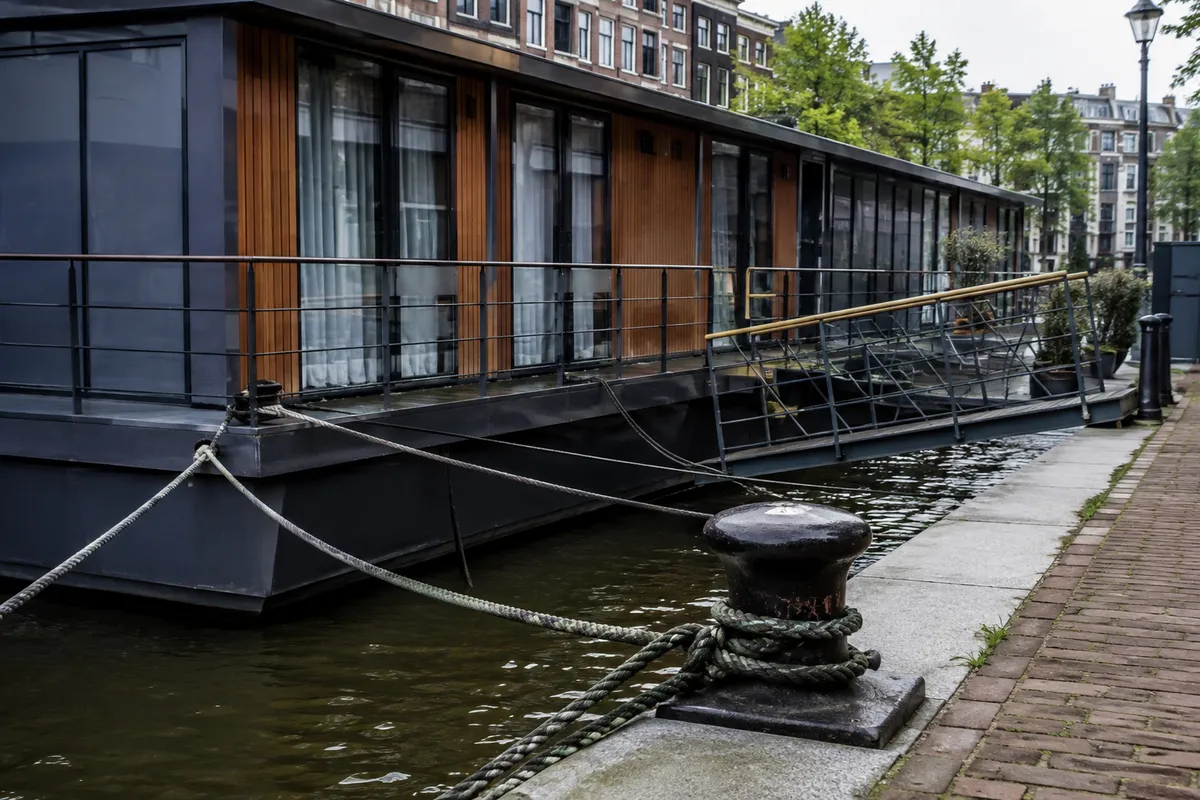
National fiscal reforms and tightening municipal maritime regulations have dramatically altered the financial reality of waterborne lodging. As of 2026, the Dutch national value-added tax on short-stay lodging increased to 21%, which, when compounded with local tourism levies, inflates checkout balances on stationary barges by roughly a third over base rates. This floating hotel booking guide cuts through idealized marina marketing to document the structural surcharges, non-negotiable harbor fees, and mechanical quirks that dictate your actual stay expenses.
Stationary botels offer urban access without navigation responsibilities, making them functional alternatives to land-based city hotels for independent travelers carrying light luggage. Self-drive houseboats and inland charters suit organized groups prepared for physical line handling, mechanical troubleshooting, and substantial fuel expenditures. However, guests with reduced mobility, light sleepers unsettled by automated mechanical pumps, or travelers working on fixed utility budgets will find traditional land hotels far more predictable.
Floating Hotel Booking Guide: Categories, Cabin Specs, and Baseline Nightly Rates
Stationary Botels vs. Pontoon Suites: Floating Room Nightly Rates Across European Harbors
Floating room nightly rates vary widely depending on whether a vessel is a converted historic steel ship or a modern pontoon platform. Permanently moored botel accommodation provides standardized hotel operations, with round-the-clock reception desks maintained on larger vessels. Conversely, converted private barges and peer-to-peer harbor rentals frequently enforce restricted arrival windows between 15:00 and 18:00, assessing late fees if check-in extends past harbor master office hours.
Pricing reflects maritime hull constraints and physical berth locations. At Good Hotel London, a converted floating platform berthed in the Royal Victoria Dock, standard double cabins range from £87 to £128 ($103–$138) per night, as outlined in the Good Hotel London guest FAQ. Across the channel at OFF Paris Seine, a purpose-built four-star floating hotel at Quai d'Austerlitz, entry-tier double rooms range from €150 to €206 ($162–$225) per night.
Budget-tier historic hulls trade space for central harbor coordinates. At Stockholm's Rygerfjord Hotel & Hostel, comprising three berthed vessels at Söder Mälarstrand, compact bunk cabins start between 280 and 500 SEK ($28–$46) per night. Further out on Klädesholmen Island in Sweden, pontoon-based suites at Salt & Sill average between 1,269 and 2,500 SEK ($130–$246) per night, demonstrating the premium commanded by modern floating structures. For a broader look at converted vessel architecture across the continent, read my guide to European urban botels.
| Property & Harbor | Vessel Type | Baseline Nightly Rate | Key Cabin Specification |
|---|---|---|---|
| OFF Paris Seine (Paris, France) | Modern twin-hull pontoon | €150 – €206 ($162–$225) | 14 m², panoramic river view, central HVAC |
| Good Hotel (London, UK) | Repurposed floating concrete pontoon | £87 – £128 ($103–$138) | 13 m², compact en-suite wetroom, fixed dock view |
| Rygerfjord (Stockholm, Sweden) | Moored 1950s steel passenger vessel | 280 – 500 SEK ($28–$46) | 6–9 m², maritime bunk setup, shared or compact head |
| Salt & Sill (Klädesholmen, Sweden) | Modern pontoon hotel modules | 1,269 – 2,500 SEK ($130–$246) | 16–22 m², private exterior deck access, underfloor heat |
When inspecting cabin layouts on historic botels, verify whether the en-suite facility is a fully separated bathroom or an integrated molded fiberglass wet unit where the showerhead hangs directly over the marine toilet.
Navigable Houseboats and Charters: Base Rates and Cruising Realities
Navigable charters introduce operational responsibilities absent in stationary hotels. Operating an inland rental houseboat across designated canals in France, Germany, or Canada does not demand a commercial captain's license. However, charter operators contractually mandate a pre-departure orientation briefing lasting 45 to 90 minutes covering engine checks, helm controls, line management, and safety gear before handing over the craft.
Solo cruising is strictly prohibited by inland waterway charter contracts. Mooring, negotiating bridges, and passing through river locks requires an active crew of at least two capable adults—one to handle the throttle and rudder, and a second on deck to secure bow and stern lines. Travelers seeking waterborne lodging without crew duties can review my analysis of static houseboat stays.
In southern India, an overnight full-board houseboat charter through the Alleppey backwaters operates under distinct local constraints. Off-peak and weekday rates for an entry-tier one-to-two-bedroom private craft run from ₹8,500 to ₹12,000 ($100–$145) per night, including crew and freshly prepared meals. However, state inland navigation regulations require all houseboats to halt cruising and drop anchor at designated bankside moorings between 5:30 PM and 7:00 AM to prevent collisions with nighttime fishermen and their submerged nets.
On entry-level 'Deluxe' houseboats in Alleppey, bedroom air conditioning runs strictly on a timer from 9:00 PM to 6:00 AM. Operating the compressor during afternoon cruising requires upgrading to a 'Premium' hull or paying an unadvertised generator surcharge of approximately ₹2,500 ($30) per day.
Statutory Surcharges: Municipal Tourist Taxes and National Lodging VAT
European City Taxes and Combined VAT Burdens on Moored Vessels
Online travel platforms regularly omit local municipal visitor levies from the headline accommodation rate, transferring settlement to the vessel reception desk at arrival. On floating accommodations, these taxes can represent a massive portion of the final bill, particularly in jurisdictions that classify berthed passenger vessels under strict municipal maritime berth codes.
Amsterdam represents the most expensive tax environment in Europe for floating stays. Under the published Gemeente Amsterdam tourist tax rates, houseboats and floating botel rooms incur a municipal tourist tax (toeristenbelasting) of 12.5% calculated on the accommodation price excluding VAT. Effective 1 January 2026, the Netherlands implemented an increase in the national lodging VAT rate from 9% to 21%, as detailed in the official Belastingdienst short-stay VAT regulation.
When combined, the Dutch lodging tax burden elevates your final bill by approximately 33.5% above the net room price. A berthed cabin quoted at a net base rate of €150 per night incurs €31.50 in national VAT alongside €18.75 in municipal tourism levy, resulting in a mandatory check-in surcharge of €50.25 per room per night. On my last check-in at an Oosterdok berth, the printed folio listed these two lines separately, surprising several incoming international guests.
Flat-Rate Per-Person Local Levies and Check-In Settlement Rules
Where percentage-based municipal levies do not apply, fixed per-person statutory taxes are collected on arrival. At OFF Paris Seine, berthed at Quai d'Austerlitz, adult guests must pay a mandatory city tax (taxe de séjour) of exactly €8.45 per person per night at check-in, established under the regional Île-de-France four-star lodging schedule.
In Central European waterways, municipal flat rates remain modest but strictly monitored. Staying aboard stationary river botels like Botel Albatros on Prague's Vltava River incurs a municipal tourist tax (místní poplatek z pobytu) governed by Czech Act No. 565/1990 Coll. and Prague municipal decree, capped at 50 CZK (approx. $2.20 / €2) per person per night for guests aged 18 and older.
- Minor Tax Exemptions: Dependents under 18 years of age are legally exempt from local bed taxes in Prague and Paris, but exemption requires presenting a valid physical passport during front-desk registration.
- Settlement Methods: Commercial hotel botels process city taxes via credit card terminals, but private barge skippers and municipal quays without integrated merchant systems sometimes mandate exact cash in the local currency.
- Incidentals Registration: Expect front desks to scan identity documents and charge tourist levies prior to issuing cabin access cards or brass boarding keys.
Hidden Costs of Houseboat Hotels: Fuel, Utilities, and Berth Logistical Fees
Blackwater Holding Tanks, Municipal Sewer Hookups, and Septic Pump-Out Fees
Waste management systems on the water operate under rigorous environmental legislation. In Amsterdam, the Dutch environmental framework (Besluit lozing afvalwater huishoudens) strictly prohibits discharging untreated toilet blackwater into canals. As a result, all stationary houseboats and botels must maintain a direct mechanical connection to the municipal sewer system (rioolnetwerk) via shoreline flexible conduits.
Navigable houseboats rely on onboard blackwater holding tanks rather than continuous sewer pipes. Emptying these tanks requires docking at designated marina disposal facilities. In major Canadian lake houseboat charters, such as those operated by Twin Anchors or Bluewater on British Columbia's Shuswap Lake, operators bill a mandatory environmental and blackwater septic pump-out fee of $30.00 CAD plus tax upon return to the marina base.
Marine heads rely on electric macerator pumps to shred solids before sending them into the holding tank. These macerators fail instantly if standard household products are introduced. Charter operators mandate the use of rapid-dissolving marine toilet paper, which retails at $7 to $12 per four-pack at marina ship stores. Dropping foreign items or standard heavy-ply tissue into a macerator toilet can jam the pump impellers, incurring repair penalties starting at $150 to $300.
Discharging raw human sewage directly into inland canals or marine conservation zones violates environmental laws. In the UK, the Environment Agency issues fines ranging from £500 to £2,500 for recreational vessels illegally releasing blackwater into inland rivers.
Shore Power Limits, Generator Burn Rates, and Off-Grid Constraints
Docked floating hotels depend on a shore power connection (amperage limit) supplied from marina pedestals. European docks standardize on 230V feeds restricted to 16 amps, delivering a peak load of approximately 3.7 kW, while North American slips commonly provide 30-amp, 120V circuits (3.6 kW). Running a cabin space heater or reverse-cycle air conditioner concurrently with an electric kettle or hairdryer will trip the marina shore breaker, requiring a dockmaster to unlock the pedestal to reset the switch.
Away from the dock, chartered houseboats run auxiliary combustion equipment for power and propulsion. Motorized rental houseboats achieve fuel efficiency of only 0.5 to 1.0 miles per gallon at standard cruising speeds of 7 to 10 mph. Depending on the size of the pontoon hull and daily distance traveled, renters must budget an extra $125 to $300 per day for marine propulsion fuel.
Auxiliary houseboat generators burn approximately 1 gallon of fuel per hour. Maintaining electrical climate control and charging house battery banks demands 2 to 8 hours of daily generator runtime, adding $15 to $50 per day to the checkout fuel settlement. When calculating how much do botels cost across different waterways, utility burn rates represent the single largest pricing variable.
| Operational Configuration | Average Energy/Fuel Consumption | Direct Daily Guest Cost | Key Operating Restriction |
|---|---|---|---|
| Stationary Shore Connection | Metered 16A (EU) / 30A (US) | Included or €5–€15 ($5–$16) | Trips if simultaneous high-draw appliances exceed ~3.6 kW |
| Cruising Pontoon Propulsion | 0.5 – 1.0 nautical miles per gallon | $125 – $300 | Burn escalates heavily in river currents and headwinds |
| Auxiliary Onboard Generator | ~1.0 gallon per running hour | $15 – $50 | Marina noise curfews ban operation from 22:00 to 07:00 |
| Tropical Backwater Charter | Dedicated auxiliary diesel generator | ₹2,500 ($30) or included | Off-peak deluxe rentals restrict AC to 21:00–06:00 window |
Mooring Fees, Slip Berth Permits, and Continuous Cruising Limits
Navigating an independent houseboat between destinations introduces transit harbor expenses. Transient daily harbor mooring buoy fees across North American municipal anchorages average between $20 and $35 per night for basic water swinging moorings. In contrast, full-service marina pier slips charge per foot of boat length, running from $1.50 to $4.00+ per foot per night ($50–$150+ nightly for a 35-to-45-foot boat).
Berthing at private docks involves administrative deposits. Marina offices frequently assess a refundable deposit of $20 to $50 for electronic security gate cards or shower key fobs. In addition, private marinas routinely implement mandatory two-to-three-night minimum reservation windows during regional sailing regattas, making single-night transient tie-ups impossible without paying for extended berths.
Public waterways enforce statutory duration limits. Under the British Waterways Act 1995, continuous cruiser regulations managed by the Canal & River Trust continuous cruising guidance require vessels without a home mooring to move to a new location every 14 days. Municipal harbors across North America impose identical 14-day continuous stay ceilings to prevent transient slips from turning into permanent unauthorized residences.
Onboard Policies, Damage Pre-Authorizations, and Charter Liabilities
Credit Card Pre-Authorizations, Security Deposits, and Damage Buydowns
Checking into floating properties triggers security holds to cover hull or dock infrastructure risks. At Good Hotel London, arrival requires a credit card damage deposit pre-authorization of £30 for incidentals. For a deeper breakdown of structural cabin categories and floating platform properties worldwide, see my floating resorts overview.
On chartered self-drive houseboats, financial liabilities escalate substantially. Standard refundable security holds charged at the dock range from $2,500 to $12,000 if you refuse damage waivers. As outlined in the Twin Anchors charter policy, purchasing an optional collision damage waiver for $25 to $28 per day lowers that security deductible to a manageable $2,500 to $6,000 hold.
Releasing these substantial holds takes time. Following your cruise, charter operators conduct below-waterline diver examinations or haul-out inspections of the rudder, skeg, and propeller blades within 3 to 7 business days. However, commercial bank processing can tie up your credit line for 14 to 30 days before the pre-authorization hold fully drops from your statement.
Before accepting a bareboat charter, walk the perimeter with the dockmaster to photograph pre-existing propeller dings, skeg gouges, and hull rub-rail scrapes. Ensure every mark is logged in the signed pre-departure manifest.
Ancillary Surcharges: Pier-Side Parking, Extra Beds, and Behavioral Fines
Logistical facilities on piers command separate commercial fees. At Stockholm's Rygerfjord Hotel, pier-side self-parking on the quay costs 200 SEK ($19) per day without dedicated security surveillance. Breakfast buffets on historic hulls are rarely included in basic rates; Rygerfjord bills an optional Scandinavian morning service at 130 SEK ($12.50) per guest.
Accommodating additional guests requires paying specific equipment fees. At Sweden's Salt & Sill pontoon rooms, rollaway beds for extra occupants cost between 350 and 500 SEK ($34–$49) per night. Pet policies also diverge across vessel formats: stationary hotel barges charge a flat £25 per stay or €15 to €25 nightly, while charter firms like Le Boat assess a single cleaning charge of roughly €50 to €60 per pet for the entire cruise.
Behavioral restrictions carry immediate automated fines due to marine fire risks. Good Hotel London enforces an unyielding non-smoking and anti-vaping penalty of £200, charged directly to the guest's incidentals card upon detector activation. Tampering with marine safety equipment, emergency lifebuoy releases, or automatic float switches incurs immediate dockside eviction without refund.
Environmental, Structural, and Accessibility Realities of Boat Stays
Gangway Slope, Tidal Variation, and Physical Accessibility Bottlenecks
Unlike land hotels with fixed ground thresholds, floating properties connect to the shore via articulated aluminum ramps. In tidal estuaries and coastal harbors with 4-to-6-meter tidal swings—such as the Thames estuary or Normandy coast—a standard 10-to-12-meter ramp pivots through severe vertical transitions. At low spring tides, the gangway slope reaches steep inclines of 25 to 35 degrees, making it impossible for unaccompanied wheelchair users or travelers with heavy roller bags to embark safely.
Historic conversions possess structural designs incompatible with barrier-free standards. Converted cargo barges, vintage passenger hulls, and floating heritage assets are legally exempt from modern accessibility frameworks, such as ADA Title III §36.405 and European PRM regulations. Preserving watertight bulkheads and hull shear requires maintaining raised coamings (knee-high steel thresholds) at every cabin doorway, posing constant trip hazards.
Do not book historic botel cabins if traveling with wheeled walkers or mobility impairments. Boarding ramps flex continuously with wave wake, and narrow marine companionships rarely feature elevator access to lower deck berths.
Bilge Pump Cycling, Hull Condensation, and Heating Insulation Quirks
Acoustic signatures aboard vessels differ from standard hotel architecture. Submersible 12V or 24V bilge pumps cycling intermittently beneath cabin floorboards produce a noticeable mechanical hum (45 to 55 dB) as automated float switches clear packing-gland runoff and condensation drainage. This sound represents routine automated water clearance rather than a vessel compromise.
Steel hulls act as natural thermal conductors. In late spring and autumn, the contrast between chilled harbor water and warm interior air pushes uninsulated hull plates past their dew point, causing thin layers of moisture along exterior cabin bulkheads. Converted vessels maintain adequate heating, but relative humidity remains elevated. I pack breathable synthetic footwear and compact earplugs whenever staying in lower-deck accommodations. For more on living in close quarters with water, review my cabin living reality check.
River Flood Surges, Low-Water Navigation Bans, and Force Majeure Risks
Inland waterborne hotels are directly vulnerable to hydrological extremes. During severe European droughts, Danube water gauge levels dropped to 59 cm at Budapest, falling far below the 93 cm regulated low-water reference level and forcing vessels to halt operations. Conversely, during Storm Boris, river flood spikes pushed the Danube to an 8.30-metre peak in Budapest, completely submerging riverside pedestrian quays and floating gangways, which prompted widespread booking cancellations.
Standard travel insurance provides limited coverage for inland river variations. Policies reject trip interruption claims if a river hotel operator offers alternative coach-based logistics or substitute shore rooms. Coverage takes effect only when waterway authorities issue an official emergency navigation ban (Schifffahrtssperre) that closes the river, or when submerged boarding infrastructure creates documented force majeure conditions. To evaluate how these conditions affect longer river stays, read my guide to sleeping on inland waterways.
Booking Advice Boat Hotel: Step-by-Step Decision Framework and Risk Audit
Stationary Botel vs. Self-Drive Houseboat: Total Cost-to-Risk Comparison
Evaluating hidden costs houseboat hotels require contrasting fixed, all-inclusive pricing against dynamic utility billing. A stationary botel acts like a city hotel with an elevated tax structure, whereas a self-drive charter introduces extensive operational, fuel, and hull liability risks.
Consider a standard three-night stay for two adults in an urban destination like Amsterdam versus a three-night regional canal charter. The stationary botel has a base rate of €450. Adding the 21% VAT (€94.50) and 12.5% tourist levy (€56.25) yields an all-in total of €600.75, with zero secondary liability beyond a basic credit card swipe.
A three-night self-drive houseboat charter listed at a base promotional charter rate of $650 carries a radically different cost structure. Adding three days of cruising fuel ($375–$900), auxiliary generator fuel ($45–$150), mandatory septic holding tank pump-out ($30 CAD / ~$22 USD), a collision damage buydown ($75–$84), and personal trip insurance produces an out-of-pocket total between $1,200 and $1,800. Furthermore, the guest must clear a $2,500 to $6,000 security hold on their credit card.
When booking advice boat hotel calculations seem too cheap, search the contract terms for propulsion fuel inclusions. Unless the contract explicitly specifies 'wet charter' (fuel included), assume all engine hours and generator burns will be billed at premium marina pump prices upon checkout.
Pre-Booking Checklist: Mandatory Inquiries Before Authorizing Payment
Before submitting credit card information for any floating room nightly rates, obtain direct written confirmation on these five operational items from the property manager or charter base:
- Sewer Infrastructure: Does the vessel connect directly to a municipal sewer main (*rioolnetwerk*), or does your itinerary require finding and paying for pump-out stations?
- Shore Power Amperage: What is the exact pedestal amperage limit (16A, 30A, or 50A), and does the property bill electricity via a sub-meter?
- Local Tax Calculation: Are municipal tourist taxes (toeristenbelasting or taxe de séjour) integrated into your booking invoice, or collected as a separate surcharge at the desk?
- Gangway Tidal Gradients: What is the ramp slope at low tide, and does the vessel feature flat access or raised watertight bulkhead sills?
- Security Hold Timelines: What is the exact credit card pre-authorization amount, and how many business days are required after checkout for divers to clear the hull deposit?
Final Booking Verdict: Choose a stationary botel if you want central urban lodging, predictable hotel service, zero navigation risks, and can absorb city tourist taxes. Choose a navigable houseboat charter if you travel with a capable, multi-person crew eager to perform physical line handling, handle holding tanks, and absorb variable fuel expenses. Choose a traditional land hotel instead if your group includes travelers with limited physical mobility, light sleepers sensitive to mechanical hums, or if you are visiting flood- or drought-prone river basins on an inflexible itinerary.