
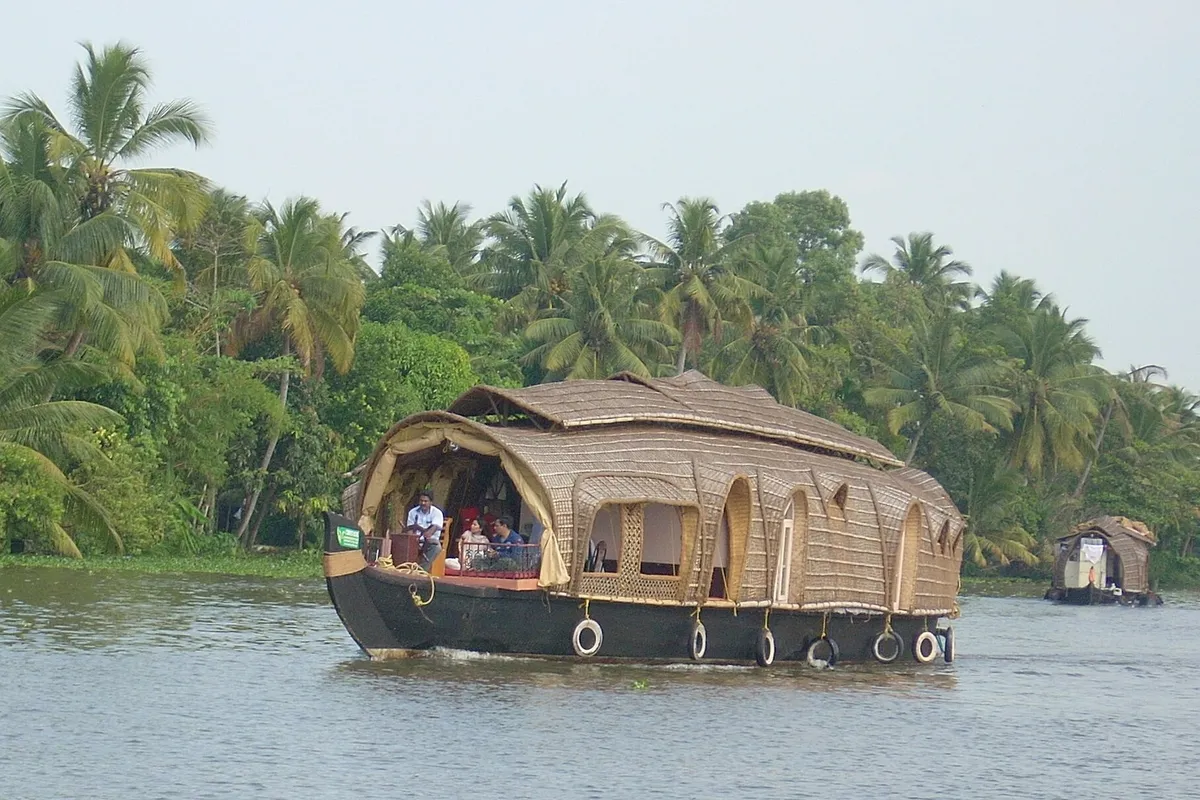
A typical overnight kerala houseboat hotel stay sells an idyllic fantasy of gliding silently through emerald canals, but the operational timetable tells a starkly different story. On a standard 21-hour booking loop, you receive only five to six hours of active engine navigation. The remaining 15 to 16 hours are spent tied to a muddy village bank behind drawn curtains while an auxiliary diesel engine hums near your berth.
Across dozens of inland watercraft I have inspected, houseboats in Alappuzha (Alleppey) exhibit some of the widest gaps between promotional photos and engineering reality. Understanding the vessel classes, navigational curfews, and mechanical compromises is the only way to ensure your night on Vembanad Lake matches your expectations.
Kerala Houseboat Hotel Stay: Vessel Architecture, Engineering, and Tier Standards
Evolution of Kettuvallam Architecture and Modern Maritime Classification
Traditional Kettuvallam architecture originated as utilitarian cargo barges designed to transport grain and spices across shallow backwaters. Master craftsmen assembled hulls from planks of wild jackfruit wood, known locally as Anjili (Artocarpus hirsutus), stitched together with coir rope without a single iron nail. To prevent rot and water ingress, builders caulked the seams with a dense black paste made from boiled cashew nut shell resin and fish oil.
Modern passenger vessels retain this arched wicker profile using treated bamboo and coir matting over an upper superstructure, but the underwater sections have evolved. Many operators now build on flat-bottom steel or composite pontoons to lower maintenance costs. Under the Kerala Inland Vessels Rules, all commercial houseboats must hold an active Kerala Inland Vessel (KIV) registration plate, undergo periodic hull safety surveys, and carry functional GPS units alongside certified marine life vests for every person aboard.
The Kerala Department of Tourism has formally discontinued legacy marketing terms such as Gold Star and Green Palm. Official commercial operations now rely on a strict three-tier regulatory framework documented by the Kerala Department of Tourism classification system, dividing certified craft into Silver Vessel, Gold Vessel, and Diamond Vessel categories based on structural safety, waste handling, and interior amenity standards.
Check the bow or wheelhouse for the painted brass KIV registration plaque. Unregistered boats operate outside state safety inspections, often skipping required machinery surveys and life-saving appliance audits.
Deluxe vs. Premium vs. Luxury Tiers: Air Conditioning Configurations and Living Spaces
The operational gap between vessel tiers comes down to power distribution and climate control. On a entry-level Deluxe boat, cabin air conditioning runs strictly between 9:00 PM and 6:00 AM. During daytime cruising and the sweltering late-afternoon mooring window, ambient temperatures inside the sleeping quarters can climb above 33°C with matching tropical humidity, rendering the cabin uninhabitable until nightfall.
Stepping up to a Premium or kerala backwaters luxury boat alters the mechanical layout. These craft incorporate a fully glass-enclosed living area on the main deck, supported by larger auxiliary generators capable of providing 24-hour climate control throughout both the lounge and sleeping quarters. However, large glass panes create a intense greenhouse effect under direct midday sun, forcing the cooling units to run at maximum output.
| Vessel Class | Bedroom AC Operational Hours | Saloon / Living Area AC | Power Supply Strategy |
|---|---|---|---|
| Deluxe Vessel | 9:00 PM to 6:00 AM only | Open-sided (Ceiling fans only) | Small rear generator; shuts down during daytime cruise |
| Premium Vessel | 24 hours continuous | Partially enclosed / Optional AC | Medium diesel generator; continuous operation |
| Luxury / Diamond | 24 hours continuous | Glass-enclosed living area with continuous AC | Heavy-duty auxiliary generator in soundproof casing |
When selecting a vessel, the cabin position relative to the machinery space is vital. For travelers assessing how mechanical hum impacts rest, reviewing our field notes on river current vibrations and sleep quality offers a direct parallel to the relentless low-frequency vibration of marine generators.
Alleppey Houseboat Rates: Tier Breakdown, Hidden Costs, and Booking Channels
Overnight Vessel Pricing Structures and Seasonal Surge Dynamics
Published alleppey houseboat rates depend heavily on seasonal demand and vessel tier. A standard one-bedroom Deluxe overnight boat for two guests typically ranges from &8377;8,000 to &8377;12,000 ($96 to $144 USD) per night. This tariff operates on an all-inclusive basis, covering the vessel charter, fuel, dedicated crew, and all onboard meals.
For travelers demanding daytime cooling, a one-bedroom Premium boat with unrestricted air conditioning costs between &8377;12,000 and &8377;18,000 ($144 to $216 USD) per night. Top-tier Luxury and Diamond vessels command between &8377;20,000 and &8377;35,000 ($240 to $420 USD) per night, offering high-spec interior finishes, insulated machinery bays, and expansive glass saloons.
During peak holiday windows from December 20 to January 5, as well as the major festive weeks of Diwali and Onam, base tariffs jump by 50% to 100%. Operators enforce strict advance deposits and eliminate off-peak negotiation room.
Avoid the common mistake of booking an individual cabin on a shared four- or five-bedroom boat through third-party platforms. Shared vessels often host mixed parties with incompatible schedules, leaving you powerless over common-area air conditioning, deck music, or overnight noise levels. For transparent breakdown metrics on hidden fees, see our guide on floating hotel booking and true pricing structures.
Booking Pathways: Official DTPC Counters vs. Agents and Direct Jetty Negotiation
Booking through commission-driven intermediaries at transport hubs frequently leads to inflated rates or uninspected sub-standard vessels. To protect arriving passengers, the District Tourism Promotion Council operates an official DTPC House Boat Pre-paid Counter at Finishing Point in Alappuzha (+91 477 2251796 / +91 9400051796), offering regulated rate cards and verified boat assignments.
Direct jetty negotiations require extreme vigilance. While inspecting vessels at the pier allows you to check cabin upkeep firsthand, walking along the dock with luggage exposes you to persistent touts. The standard payment structure requires a 50% advance deposit at the time of reservation, with the remaining 50% paid in cash or via local transfer directly at the boarding pier prior to departure.
Remote mooring stations rarely possess reliable card terminals. Relying on mobile payment apps or international cards at peripheral canal docks frequently results in connection failures, making physical cash reserves essential before departing the commercial center of Alappuzha.
Waterway Routes and Navigation: Alleppey Canals vs. Vembanad Lake
The Classic Alleppey Round: Canals, Embankments, and Agricultural Geography
The standard overnight itinerary departs from either the Nehru Trophy boat race finishing point or the Pallathuruthy boarding point, located roughly 2.4 km from the KSRTC Bus Stand and 5.7 km from the Alappuzha Railway Station. From these commercial docks, houseboats motor past Punnamada Jetty into the broader waters of Punnamada Lake before turning into the SNDP Canal network.
This route skirts the unique landscape of Kuttanad below sea level farming, where community dikes protect paddy fields cultivated one to three meters below sea level. This delta farming system relies on intricate canal barriers to manage water tables. However, between 1:00 PM and 4:00 PM, narrow corridors near Kuppapuram suffer from severe waterway congestion, where dozens of heavy boats idle bow-to-stern, filling the humid air with diesel exhaust.
By late afternoon, the boat exits the main traffic stream and anchors along canal-side hamlet embankments near Kainakary or Nedumudi. While picturesque, these shoreline berths place you within arm's reach of village footpaths and agricultural runoff channels.
Cross-Lake Kumarakom Route: Open Water Cruises and Weather Contingencies
The alternate route crosses the open northern basin of Vembanad Lake, linking the canals of Alleppey with the shoreline of Kumarakom. This itinerary traverses expansive waters toward Pathiramanal Island before approaching the Kavanattinkara docks near the Kumarakom bird sanctuary route. It provides unobstructed horizon views free from the localized canal traffic common to inner Alleppey.
Cruising across this vast freshwater body involves passing through the Thanneermukkom Bund, a massive saltwater regulator barrage equipped with navigation lock gates designed to isolate upstream fresh water from marine tidal ingress. Wide open stretches expose wide-bodied, high-profile houseboats to environmental elements not encountered in narrow village canals.
During sudden pre-monsoon squalls or active monsoon winds, tall houseboats roll uncomfortably due to their shallow drafts and high windage. Under rough lake conditions, harbor masters require captains to divert from open lake crossings into protected inland canals.
Overnight Kettuvallam Booking: Operational Schedule, Crew Protocols, and Dining
The 21-Hour Operational Cycle: Strict Cruising Windows and Mooring Curfews
A standard overnight kettuvallam booking follows an inflexible timetable. Check-in takes place promptly at 12:00 PM, followed by departure and an initial 90-minute cruise. The vessel drops anchor between 1:30 PM and 2:30 PM for lunch, cruises until late afternoon, and must tie up permanently for the night by 5:30 PM. The engine restarts around 7:30 AM the next morning for a brief 90-minute return loop, concluding with checkout at 09:00 AM.
The 5:30 PM curfew is not an operator shortcut; it is a statutory navigation mandate enforced by the Kerala Maritime Board. Commercial boat engines must remain silent from 5:30 PM until at least 7:30 AM to allow local artisanal fishermen to cast and tend their drift nets across the canals without the danger of spinning propellers severing their gear.
Arriving late at the boarding jetty cuts into your actual cruising time. If traffic delays cause you to board at 2:30 PM instead of noon, your captain cannot extend sailing past the 5:30 PM maritime cutoff. That lost cruising window is forfeited entirely without financial compensation.
Every commercial kettuvallam operates with a mandated three-person crew: an authorized Master (Captain), an Engine Driver/Lascar, and a dedicated onboard Cook. The crew sleeps in partitioned quarters near the aft engine compartment.
The APAI Dining Experience: Kuttanadan Menus and Galley Standards
Overnight houseboat charters operate on an APAI (American Plan All-Inclusive) meal plan, with the crew preparing traditional Kuttanadan meals directly in the onboard galley. Lunch is served shortly after departure and centers around traditional Kerala red rice (Matta rice), vegetable thorans, sambar, and fresh, crispy Karimeen Pollichathu (pearl spot fish marinated in local spices and wrapped in banana leaves).
Around 4:30 PM, the cook serves freshly brewed tea and filter coffee accompanied by warm Pazham Pori (crispy batter-fried ripe plantains). Dinner features steamed rice, local chicken or vegetable curries, and flatbreads, followed by a South Indian breakfast of appams, idlis, or dosas before morning checkout.
Onboard fresh water is stored in dedicated hull tanks and used primarily for washing and cooking prep. Reputable crews provide sealed bottled mineral water for direct consumption. Never accept crushed ice in drinks unless you verify it was processed from purified water, and make sure to notify the operator of dietary restrictions like low spice or vegan requirements well before boarding the jetty.
AC Houseboat Kerala Honest Review: Pests, Mechanical Pitfalls, and Safety Realities
Environmental Realities: Generator Fumes, Mooring Vibration, and Evening Insects
In any ac houseboat kerala honest review, the reality of the overnight mooring must be stated plainly. Between 5:30 PM and 8:00 PM, as dusk settles over the canals, swarms of mosquitoes and flying river insects emerge from the vegetation. Cabins must remain sealed during this transition, with window mesh screens fastened shut and mosquito coils lit along exterior decks.
Because the vessel remains stationary all night, electrical power relies entirely on an auxiliary diesel generator. On budget and unclassified houseboats, these uninsulated engines are mounted directly on the open stern deck, generating a continuous low-frequency thrum and vibrating the rear cabin bulkheads. Depending on the prevailing shoreline breeze, diesel exhaust fumes can drift into open deck areas or poorly sealed cabin windows throughout the night.
Another common navigational obstacle is the rapid accumulation of invasive water hyacinth (locally termed African Payal). Dense floating mats of this weed choke canal necks, wrapping around propulsion shafts and clogging raw-water engine cooling intakes, which can temporarily halt navigation until the crew clears the running gear.
Maritime Safety, Sewage Compliance, and Canal Water Hazards
Under Kerala maritime regulations, every houseboat operating across inland waterways must display a valid KIV registration and carry buoyant life jackets in plain sight for every guest aboard. Travelers can reference our comprehensive houseboat hotel safety inspection guidelines to assess bilge safety, mooring lines, and emergency equipment onboard.
Environmental enforcement by the Kerala State Pollution Control Board requires operational holding tanks or approved biological sewage treatment plant (STP) setups. Operators must periodically pump blackwater ashore at designated municipal STP barges. Older vessels with poorly vented holding tanks often suffer from backdraft odors in ensuite bathrooms, especially when moored against hot, windless embankments.
Swimming directly from a houseboat into backwater canals or Vembanad Lake is strictly forbidden by maritime police and vessel crews. The water contains strong hidden undertows, deep agricultural silt beds, and heavy biological contamination from waterway runoff.
Strategic Alternatives and Pre-Boarding Verification Framework
Day Cruise vs. Overnight Stay: Motorboats, Shikaras, and Waterfront Resorts
Choosing between an overnight houseboat and an active day cruise depends largely on your tolerance for mechanical noise and cramped night conditions. A popular alternative combines a quiet three- to four-hour morning cruise on a small, shaded wooden Shikara boat (&8377;600 to &8377;1,000 per hour for the entire boat) with an overnight stay at a luxury waterfront resort on Kumarakom's shoreline.
Shikaras possess a distinct operational advantage: their shallow drafts allow them to navigate narrow, low-bridge residential canals that large houseboats cannot physically enter. Budget travelers can also board the public Kerala State Water Transport Department (SWTD) commuter ferry between Alappuzha and Kottayam for a modest fare of &8377;28 to &8377;30, providing authentic waterway transit without charter costs.
For those interested in how static floating accommodations contrast with operational motor barges, our review of static houseboat rentals and moored hotel barges details the maintenance and comfort trade-offs involved.
Pre-Payment Jetty Inspection Protocol
Before handing over the 50% cash balance at the jetty, step aboard and execute this five-point mechanical and safety audit:
- Inspect Registration Credentials: Check the wheelhouse or bow for an active KIV registration brass plate and confirm the current vessel safety certificate has not lapsed.
- Run the Air Conditioning: Demand that the crew fire up the generator and turn on the bedroom split system; confirm that cold air discharges immediately rather than warm fan circulation.
- Inspect Mesh and Window Seals: Examine bedroom insect screens for tears or gaps around the frames where mosquitoes can penetrate during the twilight mooring.
- Audit Life Jackets: Confirm that commercial-grade life jackets are clearly visible and match the total headcount of your traveling group.
- Check Generator Placement: Inspect the aft deck to see whether the generator sits in an insulated sound box or rests exposed near the rear bedroom wall.
An overnight Kettuvallam stay delivers authentic local food and glimpses of backwater river life. However, securing a quiet, comfortable stay requires booking at least a Premium or Diamond vessel, verifying air conditioning run-hours in writing, and strictly avoiding uninspected budget operators.