 Floating Hotel
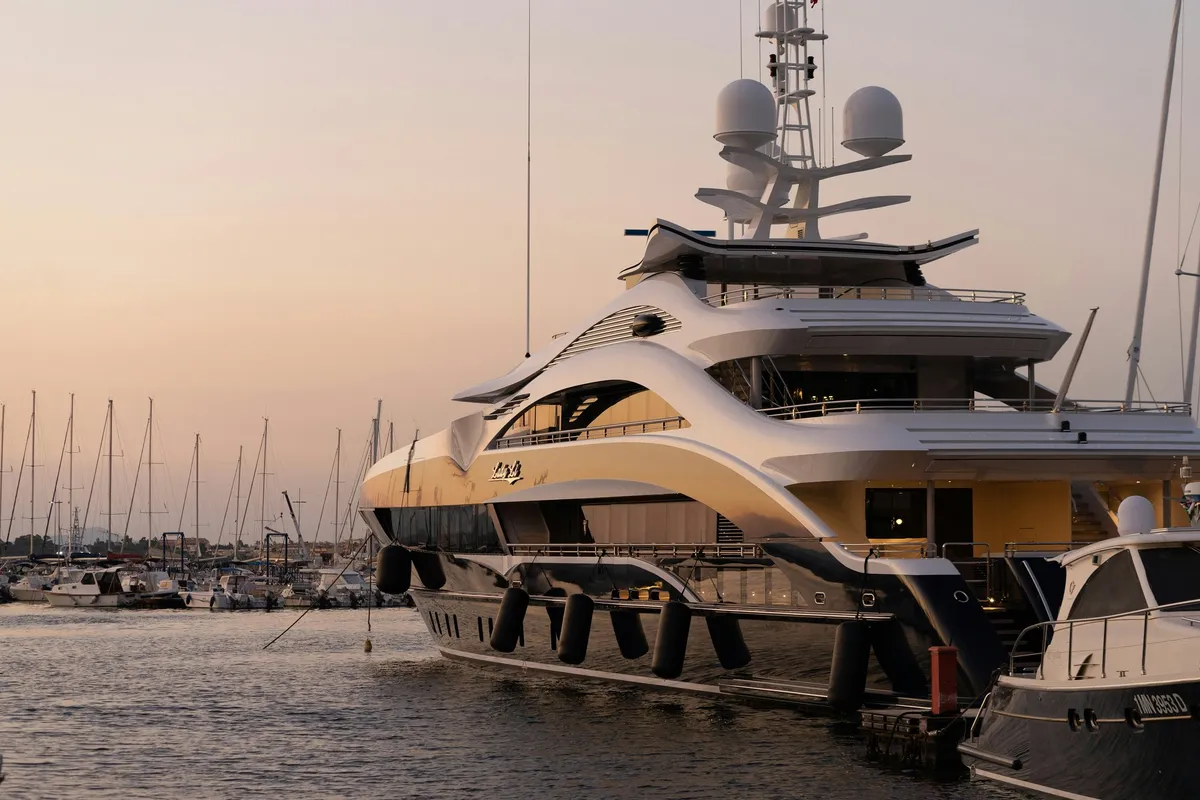
A luxury floating hotel promises the stillness of water paired with five-star service, but the physics of marine hospitality rarely match terrestrial standards without trade-offs. Over twelve years sleeping aboard hulls across four continents, I have found that a steel hull or pontoon reacts to its environment in ways marketing photos never reveal. Hull plate resonance amplifies dockside chatter, municipal tide swings tilt gangways into steep ramps, and remote river lodges demand stringent logistics that dictate your entire travel day.
When you evaluate a high-end water lodge or five-star superyacht hotel, the true benchmark is how effectively naval engineering mitigates these friction points. Below, I examine nine verified luxury floating properties across global harbors, wilderness rivers, and offshore marine zones to detail their true costs, structural quirks, and operational realities.
Selection Methodology: How We Assessed Luxury Floating Accommodation
Evaluation Criteria and Marine Hospitality Benchmarks
Assessing luxury floating accommodation requires looking past Italian marble finishes to inspect what lies beneath the waterline. A land-based suite relies on static foundations, whereas any moored vessel or pontoon must continuously dissipate kinetic energy from tidal currents, wind shear, and commercial vessel displacement. My selection criteria focus on four concrete engineering benchmarks that separate purpose-built marine hotels from precarious houseboats.
First, I evaluated mooring stability, prioritizing permanent steel dolphins, catenary chain lines, and flexible piling collars over basic shore ropes. Second, I verified marine classification compliance, checking for passenger ship life-safety standards, Maritime and Coastguard Agency (MCA) certifications, or AA Hotel Ship accreditation. Third, I reviewed utility independence, including dual marine generator redundancy, shore-power switchover systems, and vacuum-sealed waste containment. Finally, I tested bulkhead acoustic ratings to determine how effectively cabin walls attenuate lower-frequency generator hums and water slap.
How I Evaluated and Compared These Waterfront Properties
Every stay across my harbor inspections follows a strict diagnostic protocol to measure how living water influences guest comfort. I monitor cabin vibrations using acoustic logging tools while auxiliary power systems cycle under heavy load. I record vertical draft changes between low and high tides, measure gangway angles during maximum spring ebbs, and audit transfer punctuality under unpredictable river conditions. I also test in-cabin water pressure when several heads draw simultaneously on the same sanitary riser.
The living water factor: Sound travels through water at roughly four times the speed it travels through air. Steel hulls transmit distant outboard engine chatter and generator vibration directly into your cabin mattress, making bulkhead insulation far more critical on water than on land.
Navigating these hydro-mechanical realities requires understanding how different water bodies dictate room comfort. For an in-depth look at managing motion sensitivities on the water, see my guide to motion sickness on floating hotels.
Comparative Overview: High-End Floating Properties at a Glance
The table below summarizes nine verified luxury floating stays. In the interactive specifications planned for this site, you will be able to sort these properties by Base Entry Nightly Rate or filter by Motion Exposure Index, separating static marina berths from dynamic open-sea shoals and swift wilderness river currents.
| Property Name | Location | Architecture Type | Price From | Key Operational Advantage | Critical Drawback |
|---|---|---|---|---|---|
| Fingal | Edinburgh, UK | Converted NLB Tender Ship | £264 | AA 5-star fit-out; free gangway parking | Enclosed industrial dock; no open seascape |
| Sunborn Gibraltar | Ocean Village, Gibraltar | Purpose-Built Superyacht | £180 | 7-deck layout; top-deck plunge pool and casino | Runway flight noise 1 mile north |
| Sunborn London | London, UK | Non-Motorized Yacht Hotel | £180 | Direct transit link; Royal Docks setting | No onboard pool or gym; airport glidepath |
| Arctic Bath | Harads, Sweden | River Wood Cabins | 5,995 SEK | Dynamic seasonal shift from water to ice | 60-liter boiler limits shower run time |
| The Manta Resort (Underwater Room) | Pemba Island, Tanzania | Offshore Submerged Pontoon | $2,320 USD | Bedroom submerged 4 meters inside reef | Strict age 12+ limit; mandatory eco fees |
| 500 Rai Floating Resort | Khao Sok, Thailand | Lake Reservoir Pontoons | 14,000 THB | Deck-level swimming beneath karst cliffs | 2,500 THB cash deposit; 90-min boat run |
| The FloatHouse River Kwai | Sai Yok, Thailand | Riverfront Teak Villas | 4,800 THB | Spacious 90 m² footprint with natural breeze | Strict 18:00 pier arrival deadline |
| Uakari Floating Lodge | Mamirauá, Brazil | Floating Assacu Rafts | R$ 4,960 | Pristine flooded forest fauna access | 15 kg baggage limit; no air conditioning |
| Queen Elizabeth 2 | Dubai, UAE | Historic 13-Deck Ocean Liner | 350 AED | Unmatched mid-century naval architecture | Check-in age 21+; Tourism Dirham fee |
To help you understand each vessel's practical context before diving into engineering specifics, here is a concise operational summary of each property:
- Fingal: A converted 1963 lighthouse service tender permanently moored at Alexandra Dock in Leith, pairing heritage craftsmanship with certified AA 5-star service.
- Sunborn Gibraltar: A static 142-meter seven-deck yacht hotel featuring top-deck pool dining and an integrated casino inside Ocean Village Marina.
- Sunborn London Yacht Hotel: A moored 108-meter floating hotel on Royal Victoria Dock offering compact executive cabins adjacent to ExCeL London, operating without leisure pool infrastructure.
- Arctic Bath: Freestanding 24 m² timber suites on the Lule River that shift from buoyant open-water cabins in warm weather to ice-anchored platforms in winter.
- The Manta Resort (Underwater Room): A privately moored tri-level pontoon 250 meters off Pemba Island, featuring an underwater master bedroom at four meters depth.
- 500 Rai Floating Resort: Overwater bungalow retreat in Khao Sok National Park featuring villas from 36 to 92 m² accessed via scheduled long-tail boats.
- The FloatHouse River Kwai Resort: Folk-style boutique teak villas anchored along the Khwae Noi River, accessible solely via Resotel Pier before nightfall.
- Uakari Floating Lodge: A community-managed scientific ecolodge built on floating native timber logs designed to absorb 10-to-12-meter seasonal Amazon water shifts.
- Queen Elizabeth 2: A retired Cunard flagship operating as a permanently moored 13-deck heritage hotel in Dubai's Mina Rashid marina.
Five-Star Superyacht Hotel Stays: Permanently Berthed Vessels in Global Harbors
Purpose-Built Superyachts: Ocean Village Marina and Royal Victoria Dock
Purpose-built yacht hotels bridge the aesthetic of mega-yacht charters with the predictability of land hotels. At Sunborn Gibraltar, the 142-meter, seven-deck vessel rests on a permanent berth inside Ocean Village Marina. With 189 rooms and suites starting at £180 per night, it operates as a full-scale resort. The upper deck houses the Aqua Bar, a seasonal plunge pool, and a commercial casino, supported by multiple hydraulic gangways that adjust seamlessly to western Mediterranean tidal changes.
In contrast, Sunborn London is a 108-meter non-motorized vessel moored at Royal Victoria Dock, 350 meters from the Custom House Elizabeth line station. Rates also begin at £180 per night across its 136 rooms, with dining centered around the Lands End restaurant. However, prospective guests often conflate the two sister ships. The London vessel lacks a swimming pool, spa, and fitness center entirely, serving primarily as an executive base for dockland events.
Aviation noise risk: Sunborn Gibraltar lies roughly one mile south of Gibraltar International Airport's active runway, subjecting sun deck guests to intermittent jet blast acoustics. Similarly, Sunborn London sits directly under the approach path of London City Airport, less than one kilometer to the east.
Converted Heritage Liners: Alexandra Dock Leith and Mina Rashid
Converting retired commercial ships into luxury floating hotel properties presents extreme preservation challenges. At Fingal in Leith, the Royal Yacht Britannia Trust transformed a 1963 Northern Lighthouse Board tender into a 23-cabin boutique hotel berthed at Alexandra Dock. With entry rates from £264 per night including breakfast, Fingal holds official AA 5-star accreditation and provides complimentary car parking directly opposite the private gangway. Its compact layout preserves teak decking and engine-room walkways while delivering generous duplex suites.
The Queen Elizabeth 2 in Dubai operates on a completely different scale. Permanently berthed at Mina Rashid Marina across 13 passenger decks, this former Cunard flagship features 447 rooms and suites starting from 350 AED per night. While rates are accessible, guests face operational checkpoints: the primary registered guest must be at least 21 years old at check-in, and the property collects Dubai's mandatory Tourism Dirham fee per bedroom per night at the front desk.
Naval preservation realities: Historic liners feature heavy steel bulkheads that can weaken cellular data reception within lower-deck cabins. Furthermore, original bronze portholes are bolted permanently shut for marine climate control, requiring total reliance on the ship's centralized ventilation.
High-End Water Lodge Retreats: Remote Wilderness and Riverfront Villas
Thai Limestone Basins: Cheow Lan Lake and Khwae Noi River
Southeast Asia's high-end water lodge market relies on buoyant modular platforms rather than converted ship hulls. At 500 Rai Floating Resort, 18 overwater villas sit directly on Cheow Lan Lake inside Khao Sok National Park. Entry rates start at 14,000 THB per night for villas ranging between 36 m² and 92 m². The structural setting allows immediate swimming from your private deck against vertical karst cliffs, but off-grid constraints require careful planning.
Reaching 500 Rai requires boarding a scheduled 500 Rai Floating Resort boat transfer from Ratchaprapha Dam Pier, departing at 11:30 AM or 3:00 PM and taking 75 to 90 minutes across open water. Guests must also pay a mandatory cash damage deposit of 2,500 THB upon check-in, alongside the Khao Sok National Park entrance fee of 300 to 340 THB per person. Electricity runs via dedicated generators and solar banks, which means air conditioning power can be limited during daytime off-peak cycles.
Further north in Sai Yok, The FloatHouse River Kwai anchors 90 m² thatched-roof boutique floating villas on the Khwae Noi River, starting from 4,800 THB per night. Unlike the still waters of Cheow Lan Lake, the Khwae Noi maintains a fierce river current. While this provides natural ventilation, river swimming requires life jackets at all times. Guests transfer via motorized long-tail boat from Resotel Pier, but the river enforces a strict arrival cutoff at 18:00 due to night navigation safety hazards. Late departures face a steep 3,000 THB fee for authorized extensions up to 15:00.
Amazonian Inundation Forests: Conservation Suites at Mamirauá Reserve
In the flooded várzea forests of Brazil, structural engineering must account for extreme hydrological shifts. Uakari Floating Lodge operates 10 guest rooms distributed across five floating timber pontoons moored inside the Mamirauá Sustainable Development Reserve. All-inclusive three-night itineraries range from R$ 4,960 to R$ 5,226 per person, with community naturalist guiding included.
The pontoons float on native assacu (*Hura crepitans*) tree logs secured by steel cables to forest anchors. This flotation assembly smoothly accommodates a 10-to-12-meter seasonal water rise. However, Uakari operates as an ecological research station rather than an opulent resort. Guest accommodations rely entirely on ambient cross-ventilation through screened windows rather than high-draw air conditioning. Electrical power runs on solar banks backed by evening generator runs, and water is filtered directly from the river for domestic washing.
Weight restriction notice: Boat transfers from the regional airstrip at Tefé enforce a strict luggage ceiling of 15 kg per traveler. Excess bags must remain locked at the Mamirauá operational headquarters in Tefé until your return transfer.
Extreme Engineering: Submerged Ocean Suites and Sub-Arctic Ice Havens
The Marine Blue Hole: Engineered Solitude at Pemba Island
The most exclusive water suites challenge conventional marine architecture by building beneath the surface. At The Manta Resort's Underwater Room off Pemba Island, Tanzania, the suite is an anchored offshore platform moored 250 meters from the beach inside a 12-meter-deep natural blue hole. The tri-level pontoon features a rooftop stargazing deck, a sea-level hardwood lounge and bathroom, and an underwater master bedroom submerged four meters beneath the Indian Ocean.
Rates for this submerged sanctuary start at $2,320 USD per night in low season and rise to $2,900 USD per night in high season for two adults on an all-inclusive basis. However, mandatory fees add to the invoice: guests must pay a $45 per person per night marine conservation fee, a $5 per person per night Zanzibar infrastructure tax, and $45 per person each way for airport road transfers. Children under 12 years of age are strictly prohibited due to open-water emergency evacuation protocols.
Living aboard this isolated buoy requires agility. Accessing the submerged bedroom demands climbing down a near-vertical wooden ladder, making the room unsuitable for travelers with restricted mobility. Furthermore, when squalls sweep across the outer reef, swell displacement rocks the pontoon continuously, and nighttime boat tenders to the main resort beach are suspended until wave heights subside.
Sub-Arctic Hydrology: Free-Floating Summers to Frozen River Platforms
In Swedish Lapland, Arctic Bath on the Lule River in Harads solves an opposing environmental challenge: seasonal freezing. The resort's six freestanding 24 m² Water Cabins feature 57.5 m² private sun decks, with rates starting from 5,995 SEK per night. From late spring through early autumn, these circular timber pods float freely on the open river, allowing guests to launch kayaks directly into the midnight sun.
By mid-November, sub-zero temperatures freeze the river solid, locking each cabin into thick ice through mid-April. Architectural survival in this sub-arctic climate relies on automated pellet stoves and integrated hydronic underfloor heating. Despite the high-end design, cabin utility systems carry a distinct off-grid compromise: each Water Cabin uses an individual 60-liter hot water tank. Taking back-to-back hot showers without a 30-to-40-minute reheating interval will quickly result in cold water.
For travelers planning winter visits across Northern Europe, pack slip-resistant boots for frozen gangways, as explained in my comprehensive guide to winter floating hotel stays.
Operational Realities: Technical Friction and Trade-Offs of Living on Water
Mooring Physics, Tide and Current Motion, and Acoustic Isolation
Moored hospitality properties face continuous mechanical stresses that standard hotels never encounter. In tidal estuaries and coastal ports like Leith or Ocean Village Marina, vertical tide cycles force gangways to shift angle throughout the day, requiring articulated steps and rolling caster plates. When spring tides ebb, steel mooring collars often produce high-pitched friction squeaks against concrete piles, which can echo into berths facing the pier.
Open water surfaces also amplify acoustic disturbances. On fast-moving channels like the Khwae Noi River, the constant percussion of water slapping against pontoon hulls creates a low-frequency rumble. Similarly, long-tail boat propeller cavitations cut sharply across calm lake surfaces like Cheow Lan Lake at dawn. If you are sensitive to movement, static harbor basins like Alexandra Dock offer near-zero pitch and roll, whereas anchored platforms like the Manta pontoon transmit continuous wave kinetic energy.
Off-Grid Utilities: Potable Water, Energy Redundancy, and Baggage Limits
Sanitation and power management define the functional boundary of luxury on the water. Converted historic ships and luxury superyachts utilize marine vacuum drainage systems, similar to commercial aircraft. These systems draw waste upward using vacuum pressure into central holding tanks, which creates a sharp pneumatic whoosh every time a toilet flushes through the structural bulkhead.
Remote water lodges must generate their own utilities while complying with local conservation laws. To protect surrounding aquatic reserves, wastewater undergoes multistage biological filtration on dedicated service pontoons before dispersal. Before booking any remote water property, keep this logistics checklist in mind:
- Cash deposit mandates: Properties like 500 Rai enforce cash-only arrival deposits (2,500 THB) because satellite payment terminals fail during storm squalls.
- Luggage weight ceilings: River transfers and small skiffs enforce strict baggage limits, such as Uakari's 15 kg threshold, to maintain vessel trim and draft clearance.
- Tide and daylight locks: Remote piers close departures early for marine safety, including The FloatHouse's 18:00 river transfer shutdown.
Preparing for these spatial and electrical limitations is straightforward once you know what gear works best aboard a floating hull. I have cataloged field-tested recommendations in my dedicated floating hotel packing list.
Scenario-Based Verdicts: Choosing the Ideal Luxury Floating Stay
Urban Harbors vs. Remote Wilderness Sanctuaries
Deciding between an urban superyacht and an off-grid water lodge hinges on your tolerance for operational compromise. Urban harbor vessels in Edinburgh, London, Gibraltar, and Dubai provide municipal utility connections, high-speed fiber internet, immediate land emergency access, and stable gangways. The trade-offs are acoustic and environmental: you stay within active commercial waterways under flight paths, without the opportunity for wild swimming.
Wilderness lodges in Khao Sok, the Amazon, or Lapland offer pristine natural settings and direct deck access to the water. However, you sacrifice utility independence. You must accept generator schedules, localized hot water limits, strict transfer timetables, and weight limits on your luggage. For a broader perspective on how structural setups vary across floating resorts worldwide, see our guide to floating resorts and pontoons.
The Decisive Shortlist: Tailored Travel Scenarios
To help you select the right property for your travel plans, here is how the top options compare across specific requirements:
- Historic maritime character and fine dining: Fingal (Edinburgh). Delivers certified AA 5-star service, master cabin craftsmanship, and private dockside parking. Operational compromise: Berths inside an enclosed, industrial port basin without open ocean views.
- Marine solitude and reef immersion: The Manta Resort (Underwater Room). Offers an underwater master bedroom submerged four meters inside a private coral blue hole. Operational compromise: Rates from $2,320 USD plus mandatory fees, steep vertical ladders, and an age 12+ restriction.
- Architectural wellness and cold-water hydrotherapy: Arctic Bath (Harads). Provides freestanding river suites that transition from open-water summer pontoons to winter ice bases. Operational compromise: 60-liter hot water tanks require 30-to-40-minute intervals between guest showers.
- Limestone landscapes and direct water swimming: 500 Rai Floating Resort (Khao Sok). Provides immediate lake access from overwater decks set against limestone karsts. Operational compromise: Fixed 11:30 AM and 3:00 PM long-tail boat transfers, along with a mandatory 2,500 THB cash deposit.
- Large-scale ocean liner heritage: Queen Elizabeth 2 (Dubai). Delivers authentic transatlantic passenger liner history across 13 decks at accessible rates from 350 AED. Operational compromise: Minimum check-in age of 21, sealed original portholes, and municipal tourism fees.
If your travel takes you across Europe's inland waterways, you can also explore converted cargo barges and city botels in my review of continental waterway floating hotels.