 Floating Hotel
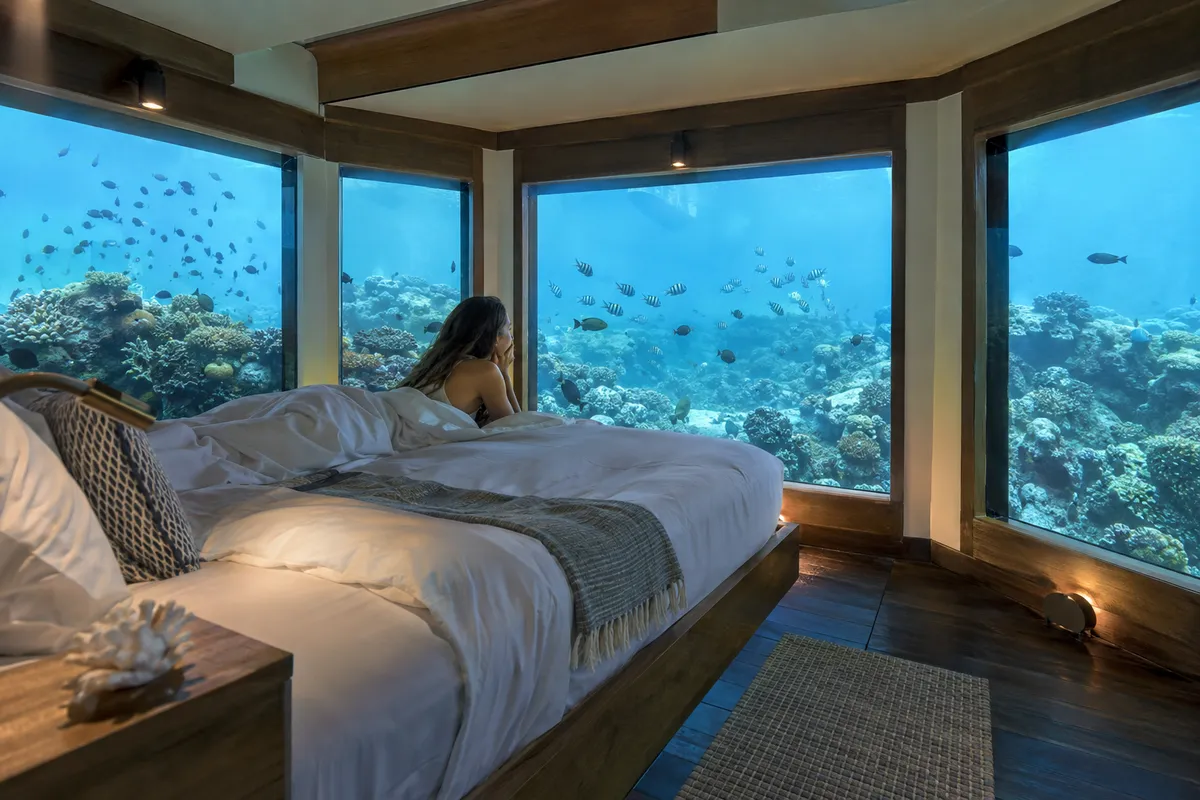
A true submerged floating suite is not an aquarium restaurant in Dubai or a Maldives villa perched on concrete pilings above a reef. Anchored 250 meters off the northern edge of Pemba Island, the structure exposes you directly to open ocean currents, tidal drops, and marine wildlife in the Pemba Channel Conservation Area. In this Manta Resort Underwater Room review, I break down the physical reality of sleeping four meters beneath the Indian Ocean, from the generator-free off-grid battery limitations to the exact 2026 expense ledger.
Over twelve years inspecting waterborne lodgings, I have seen marketing imagery mask severe structural pitch, mechanical engine clatter, and impossible logistics. Here, there are no marble hallways or standard room service carts. Reaching this floating hotel underwater in Tanzania requires navigating rough island roads, enduring strict bush-flight weight caps, and climbing vertical ship ladders. If you know what to expect from the marine head, swell motion, and reef acoustics, it delivers an exceptional encounter with wild pelagic life.
The Manta Resort Underwater Room Review: Offshore Location and Journey to Pemba
Getting to Pemba Island: Chake Chake Airport Transfers and the Ngezi Forest Road
Reaching Pemba Island requires boarding a light turboprop aircraft, typically a Cessna Grand Caravan operated by Coastal Aviation or Auric Air. Flights connect from Abeid Amani Karume International Airport in Zanzibar in about 30 minutes, or from Julius Nyerere International in Dar es Salaam in roughly an hour, touching down at Pemba Airport near Chake Chake. Bush flights strictly enforce a baggage cap of 15 kilograms per passenger, including camera gear and personal items.
Aviation baggage handlers reject hard-shell suitcases because cargo pods beneath the fuselage have tight door openings measuring roughly 76 by 48 centimeters. If your luggage exceeds the limit or cannot be squeezed into shape, it stays behind on the tarmac. Pack soft-sided canvas duffels without rigid external frames, as detailed in my guide on what to pack for a floating hotel stay.
Once you step onto the tarmac at Chake Chake, a resort driver meets you for the overland journey to the remote northern tip of the island. The direct transfer takes approximately 1.5 hours in a four-wheel-drive vehicle and costs $45 USD per passenger each way, according to The Manta Resort additional transfer costs. The final stretch winds across unpaved red-dirt tracks slicing through the protected canopy of the Ngezi Forest Reserve, where deep ruts make for a bumpy, slow-speed transit.
Mooring 250 Meters Offshore: The Coral Blue Hole Setting
The floating suite sits tethered roughly 250 meters from the mainland shoreline within a natural ocean blue hole anomaly. This geological depression in the fringing reef measures approximately 50 meters in diameter and drops to roughly 12 meters deep during high tide. The surrounding reef barrier breaks the open swells of the deep Pemba Channel, creating an isolated marine pocket where ocean predators and reef fish congregate.
Boarding the platform involves wading into the shorebreak and stepping onto an open wooden skiff with an outboard motor. The water transfer takes two to three minutes across shallow turquoise shallows. During embarkation, spray from breaking waves can soak gear, making heavy-duty dry bags mandatory for your cameras, phones, and passport wallets.
Safety protocols dictate that skiff transfers cease when localized wind speeds surpass 25 knots or when heavy sea chop threatens safe boarding. If an unexpected offshore storm rolls across the channel during your check-in slot, the resort team holds you on the beach or puts you up in a mainland room until the swell subsides. You are never left adrift, but nature determines the exact boarding minute.
Architectural Anatomy of the Floating Hotel Underwater Tanzania
Three-Level Floating Design: From Mikael Genberg Underwater Architecture to Third-Gen DNV Engineering
The floating structure is engineered across three functional vertical tiers. At sea level, a local hardwood deck provides a shaded open-air day lounge, dining table, and enclosed utility module. A vertical exterior ladder ascends to the flat hardwood roof terrace, designed for private sunbathing and nighttime stargazing without mainland light pollution. A narrow internal ship ladder leads downward into the submerged bedroom chamber.
The concept originated with Swedish artist and entrepreneur Mikael Genberg, who adapted the structural design principles of his Utter Inn on Lake Mälaren to withstand harsh tropical saltwater conditions. The initial floating unit anchored here in 2013 was decommissioned after years of marine service and scuttled to the sandy seafloor of the conservation area, where it now serves as a functioning artificial reef.
In its place sits an upgraded third-generation floating villa. Constructed at a certified regional shipyard in consultation with Det Norske Veritas (DNV) marine standards, this hull features reinforced ballast tanks, heavy-duty composite framing, and upgraded mooring tethers. Unlike typical overwater structures built on static pilings, as explored in overwater bungalows versus truly floating hotels, this entire pontoon rolls and adjusts with the rising tide.
Submerged Bedroom Four Meters Below: Nocturnal Viewing and Underwater Spotlights
Climbing down the steep wooden steps brings you into the bedroom, positioned exactly four meters beneath the ocean surface. Thick, high-tensile glass panes wrap around the room, offering an uninterrupted view of the blue hole. A centered double bed sits directly between the observation windows, flanked by wraparound blackout curtains that you can draw when daylight breaks across the water.
At night, exterior spotlights mounted beneath each window illuminate the immediate perimeter of the water column. The artificial glow draws in nocturnal marine life, including squid, batfish, octopus, and Spanish dancers that glide against the glass. Trumpetfish and small schools of reef fish hover near the corners of the hull where small barnacles and sponges colonize the steel and timber structure.
The view depends heavily on natural water clarity. During strong tidal shifts or seasonal plankton blooms, light from the underwater lamps bounces off suspended organic matter, producing a cloudy backscatter rather than crystal-clear sightlines. The cabin also carries an unusual sensory profile: you hear the continuous clicking of snapping shrimp, parrotfish teeth scraping coral, and the low groaning vibration of anchor chains shifting under tension.
Keep the underwater spotlights turned off for at least twenty minutes in the middle of the night. As your eyes adapt, you can watch bioluminescent plankton sparkle in the dark water whenever larger fish dart past the observation glass.
Deck Life: Solar Battery Off-Grid Floating Suite, Eco Marine Toilet, and Open-Air Shower
Living on the water requires adjusting to off-grid marine engineering. The entire platform runs autonomously on rooftop solar photovoltaic panels paired with a dedicated marine battery bank. The system powers interior LED reading lights, low-voltage charging outlets, and a specialized bedside cooling system. High-draw electrical heating appliances, including hair dryers, travel irons, and electric kettles, will trip the inverter breakers and are strictly forbidden on board.
Freshwater is supplied via a gravity-fed holding tank installed above the middle deck. This feeds an open-air hardwood shower where you rinse salt off in full view of the ocean horizon. Water pressure is modest, and supply is finite, requiring deliberate conservation during multiple rinses. For a broader look at off-grid resource management afloat, see my analysis of tropical floating eco-resorts and solar limits.
The enclosed bathroom module on the middle deck houses a specialized eco marine toilet. Because waste treatment is managed under strict environmental guidelines within a protected marine sanctuary, guests must use pump mechanisms correctly and avoid flushing foreign paper or synthetic sanitary products. The resort provides biodegradable soaps and reef-neutral toiletries to avoid graywater contamination.
Daily Rhythm, All-Inclusive Inclusions, and Conservation Realities
All-Inclusive Service Logistics: Deck Dining, Kipepeo Spa, and Water Activities
The Manta Resort operates on a fully inclusive board basis. Breakfast, lunch, and dinner, along with all alcoholic and non-alcoholic drinks, are included in the room price. For meals aboard the floating suite, the kitchen packs dishes into insulated thermal boxes and shuttles them across the water via tender skiff at your requested hours. Eating on the sea-level deck is peaceful, though afternoon ocean breezes will cool hot plates faster than inside a standard dining hall.
The middle deck minibar comes stocked with cold drinking water, soda, local beers, and wine. Guests on the platform also retain full access to mainland facilities. This includes one complimentary wellness treatment per person per day at the Kipepeo Spa, though you must take a tender back to the beach banda to receive your massage.
Water sports gear is part of the standard stay. Sea kayaks and stand-up paddleboards remain tied to the platform cleats, allowing you to paddle around the blue hole lagoon whenever current conditions permit. The dive center also schedules complimentary daily guided snorkeling trips along the house reef, providing fins, masks, and snorkels without equipment rental fees.
Dedicated 24/7 Service, Offshore Logistical Support, and Direct Communication
You are left completely alone on the platform during your stay, but you are not cut off from assistance. The resort provides a dedicated mobile phone sealed in a water-resistant case. It is programmed with direct speed-dial numbers for the mainland duty manager, the head chef, and the on-call boat captain.
If you want another pot of coffee, a transfer to the beach, or fresh towels, you place a direct call. During daylight hours, the tender skiff typically pulls up to the platform within five to ten minutes of your request. At night, a boat watch remains stationed on the beach to monitor the anchorage.
Safety protocols cover urgent evacuations. If severe seasickness, sudden panic, or a medical issue arises at two in the morning, the boat crew can reach the platform inside ten minutes to bring you back to a mainland bedroom. Having inspected dozens of floating accommodations, I consider this immediate emergency skiff coverage an essential safety measure for any anchored deep-water platform.
Conservation Model: PECCA Marine Park and Kwanini Foundation Impact Fee
The floating villa sits inside the North Pemba Channel Conservation Area (PECCA). This marine reserve safeguards pristine fringing reefs from illegal industrial trawling and destructive dynamite fishing. The presence of the moored suite acts as a permanent deterrent against poaching inside the 50-meter blue hole sanctuary.
Financially, the operation functions under a conservation-first business model. All net proceeds generated by the Underwater Room are directed through Blue Alliance Marine Protected Areas. These funds directly support marine ranger patrols, boat fuel for enforcement teams, and community reef-monitoring programs across northern Pemba.
On top of the room rate, the resort bills a mandatory Kwanini Foundation Impact Contribution of $45 USD per guest per night for travelers aged 16 and older. These non-refundable funds support local village infrastructure, funding clean drinking water wells, primary schools, and healthcare clinics across surrounding rural settlements.
Realistic Comfort, Swell Motion, and Honest Limitations
Seasickness Swell Motion, Tidal Changes, and Open-Ocean Realities
Moored in open water, the platform experiences continuous movement. Ocean motion depends on seasonal trade winds. The Kaskazi blows from the northeast between December and March, bringing hotter air and generally flatter sea surfaces. From June to October, the Kusi blows steadily from the south and southeast, generating choppy surface conditions and persistent swells across the channel.
Four meters below, inside the submerged bedroom, the motion dynamics feel strange. While the mass of surrounding water dampens rapid surface pitching, the room still rolls with the pontoon above. In pitch darkness, this slow, rhythmic tilting can confuse your inner ear, causing mild nausea even while lying flat on the mattress.
If you are vulnerable to motion sickness, read my diagnostic guide on seasickness and motion dynamics on moored floating hotels. Take non-drowsy medication like meclizine before boarding the skiff, and keep your evening meal light. Once you feel nauseous underwater, staring through the glass at swaying reef structures often worsens the sensation.
If you experience sudden vertigo or claustrophobic disorientation in the submerged bedroom, immediately climb the ladder to the open sea-level deck. Focusing on the fixed mainland horizon quickly stabilizes your balance.
Acoustic Isolation, Marine Lighting Limits, and Off-Grid Constraints
Sleeping submerged in the Indian Ocean is mentally intense. Some travelers expect a sterile resort room with an aquarium window, only to find themselves sealed inside a glass box beneath tons of moving seawater. When nocturnal spotlights are switched off, the darkness outside the window is total, interrupted only by the brief flash of passing reef organisms.
Acoustic isolation from surface wind is complete, but the ocean carries sound efficiently. Metal mooring shackles creak against underwater anchors, and large predatory fish occasionally brush against the hull plates. If you need silent hotel bedrooms, this underwater soundscape can disrupt light sleepers.
Cellular reception is fragile. You may pick up an intermittent 3G or 4G data signal on the rooftop deck, but the four meters of saltwater entirely block radio frequencies. In the bedroom below, mobile phones show zero service bars, as explored in Wi-Fi and cellular reception on metal hulls and pontoons. The suite has no television or broadband router.
Who the Pemba Island Underwater Suite Fits (and Who Should Opt for a Beachfront Villa)
This floating installation is not built for conventional luxury seekers who demand marble bathrooms, full-length mirrors, and 24-hour room service trollies. Navigating the three vertical levels requires climbing steep, wet-deck ship ladders with both hands. It is completely unsuitable for anyone with mobility challenges or chronic joint pain.
The resort enforces a strict safety age limit: children must be at least 12 years old to sleep in the Underwater Room, whereas children aged 7 and up are welcomed in mainland garden and seafront villas. Travelers with severe claustrophobia, nyctophobia, or unmanaged seasickness should skip the overnight stay entirely.
The suite is ideal for certified scuba divers, underwater photographers, and confident swimmers who understand marine environments. The practical approach is booking the Underwater Room for a single night, spending the remaining three or four nights in a land-based Seafront Villa. This balances the offshore experience against the convenience of a traditional room on solid ground.
Manta Resort Zanzibar Rates, Inclusions, and Booking Policies
2026 Nightly Pricing Breakdown, Minimum Stay Policy, and Mandatory Fees
Pricing for the suite reflects its complex offshore engineering and high operational overhead. For 2026, the all-inclusive rate for the Underwater Room is structured by season, based on double occupancy, as published in The Manta Resort Underwater Room rates:
- Low Season (March, June, November): $2,320 USD per night for double occupancy ($1,160 USD per person sharing).
- High Season (January–February, July–October, December): $2,900 USD per night for double occupancy ($1,450 USD per person sharing).
The resort does not allow standalone one-night bookings for the offshore suite. Guests must book a broader resort package subject to a mandatory three-night minimum stay throughout the year, which increases to a five-night minimum during the peak festive period between December 20 and January 10. The table below provides an exact cost breakdown for a realistic high-season itinerary.
| Expense Component | Rate Baseline | Total for 2 Adults |
|---|---|---|
| Night 1: Underwater Room (High Season) | $2,900 USD / room | $2,900 USD |
| Nights 2–4: Seafront Villa ($1,900 USD/night) | $950 USD / person / night | $5,700 USD |
| Kwanini Foundation Impact Contribution | $45 USD / person / night (4 nights) | $360 USD |
| Zanzibar Infrastructure Tax | $5 USD / person / night (4 nights) | $40 USD |
| PMA Airport 4x4 Road Transfers (Roundtrip) | $45 USD / person / way | $180 USD |
| Grand Total (4 Nights All-Inclusive Itinerary) | Fully inclusive package | $9,180 USD |
Booking Deposit, Cancellation Windows, and Monsoon Closure Schedule
Securing a reservation requires booking directly through the resort sales office or an accredited African safari agency like Go2Africa or Tanzania Odyssey. Because there is only one underwater unit in inventory, demand runs high across peak safari extension months.
To confirm a reservation, the resort collects a 30% deposit upon booking, with the remaining 70% balance due 30 days prior to arrival. Cancellation penalties operate on a tiered schedule outlined in The Manta Resort terms and conditions:
- 60 days or more prior to arrival: No cancellation charge (the 30% deposit is fully refundable).
- 59 to 30 days prior to arrival: A 50% cancellation fee of the total booking value is retained.
- 29 days or fewer prior to arrival: 100% of the total booking cost is forfeited with no refund.
Take note of seasonal operating dates. The Manta Resort and the Underwater Room close down completely during April and May each year. This shutdown coincides with the heavy East African masika monsoons, when torrential rainfall and high coastal swells make marine operations impractical.
Cost vs. Experience: Underwater Room vs. Alternative African Reef Accommodations
At $2,320 to $2,900 USD per night, the suite sits in the upper bracket of East African coastal tourism. Assessing its value requires comparing it to top-tier regional marine accommodations rather than standard Zanzibar beach resorts.
Properties like &Beyond Mnemba Island off Zanzibar charge between $2,150 and $3,090 USD per person per night for ultra-exclusive barefoot lodge luxury. However, their bandas sit on solid sand, offering zero underwater views from bed. Conversely, Chumbe Island Coral Park south of Stone Town offers strict conservation-led reef bungalows at roughly $300 to $400 USD per person per night, but amenities are simple eco-huts without underwater bedrooms or dedicated boat service.
The Manta Resort Underwater Room occupies a distinct middle ground. It delivers a liveaboard engineering experience with the service net of a fully inclusive dive resort. You are paying for rare marine engineering and complete ocean detachment, backed by daily spa treatments, boat tenders, and a direct conservation pipeline.
Final Verdict on Sleeping Four Meters Under the Indian Ocean
Is the Pemba Island Underwater Suite Worth the Investment?
For a single night, the room justifies its high rate for travelers who want wild ocean immersion. Stepping down into a submerged bedroom surrounded by deep reef drop-offs, seeing pelagic fish cruise past your pillow, and sleeping under raw starlight on the roof is an experience ordinary hotels cannot replicate.
However, booking two or three consecutive nights on the platform is unnecessary. By the second morning, the limitations of off-grid living—the eco marine toilet, gravity-fed shower pressure, steep vertical ladders, and constant hull movement—begin to wear on comfort. Spending an entire holiday out there will leave you feeling waterlogged and physically fatigued.
The smart strategy is clear: book a four-night package at the resort. Spend your first two nights in a mainland Seafront Villa unwinding from your flight and diving the reef, move out to the Underwater Room on night three for the offshore experience, and return to your villa for the final night to repack your gear on dry land.
Essential Pre-Booking Checklist and Practical Recommendations
Before confirming your flights and wiring a deposit, review these practical steps to avoid logistical headaches on arrival:
- Book 6 to 12 Months Out: With only one underwater unit in existence, high-season dates fill up months in advance.
- Observe Bush Flight Baggage Rules: Use soft-sided duffle bags weighing under 15 kilograms to guarantee clearance on Coastal Aviation or Auric Air flights into Chake Chake.
- Carry a Marine Dry Bag: Pack cameras, battery banks, and electronics inside waterproof roll-top dry bags to protect them from ocean spray during the skiff run.
- Bring Proper Sun and Health Protection: Pack non-nano zinc oxide reef-safe sunscreen (oxybenzone and octinoxate bleach coral polyps) and consult your clinic regarding malaria prophylaxis, as Pemba is an endemic transmission zone.
- Pack Motion Medication: Keep meclizine or acupressure wristbands in your daypack so you can take them before boarding the pontoon if afternoon winds pick up.