 Floating Hotel
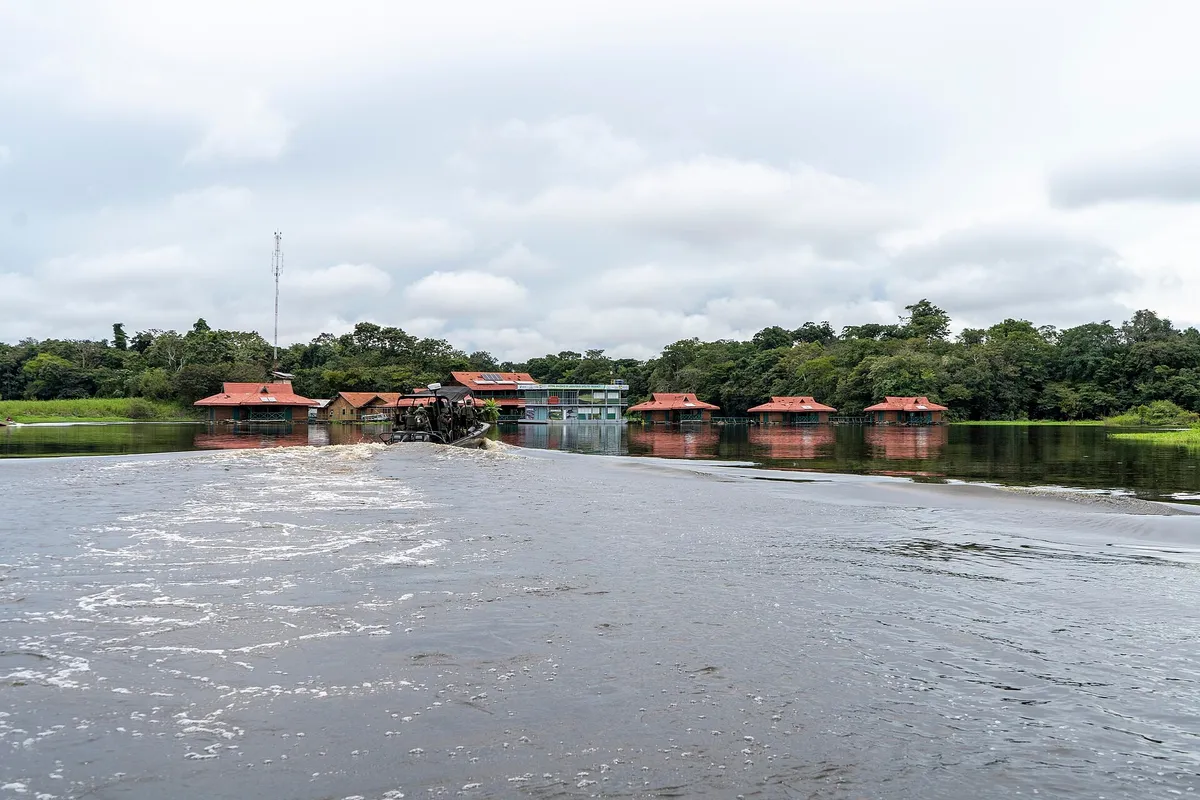
Floating lodges in equatorial wetlands exist on a fragile boundary between structural durability and environmental isolation. My stay at this community outpost in western Amazonas stripped away any romantic marketing illusions: there is no constant air conditioning humming in the background, your boat transfer is tied to rigid regional flight arrivals, and the black caimans resting below the floating walkways are very real. In this Uakari Floating Lodge review, I assess the mechanics, acoustics, real logistics, and operating costs of sleeping on buoyant timber deep inside the Mamirauá Sustainable Development Reserve.
Unlike mainstream jungle resorts clustered around Manaus, this property floats over Lake Mamirauá near the convergence of the Solimões and Japurá rivers. It functions as an off-grid biological research base and community enterprise that houses a maximum of 20 to 24 visitors at any time. If you plan to travel here, understanding the strict schedules, seasonal river swings of up to 12 meters, and stark rustic realities is essential before wiring your deposit.
Getting to Mamirauá: Flights, River Transfers, and Gateway Logistics
Air Connections via Manaus to Tefé Airport
Reaching this remote sector of the Amazon basin requires a commercial flight on Azul Linhas Aéreas connecting Manaus (MAO) to Tefé Airport TFF. The flight takes approximately 1 hour and 10 minutes on regional aircraft. While the airline permits standard checked bags up to 23 kg, the lodge imposes a strict luggage limit of 15 kg per passenger for the river portion of the trip. Any surplus suitcases must be left in central Tefé at the lodge reception desk, where secure storage is provided free of charge.
Equatorial weather systems across the Solimões River valley frequently disrupt flight schedules. Intense tropical rainstorms can ground planes or trigger return flights to Manaus when visibility drops below safety minimums at Tefé's airstrip. Because the lodge boat operates only once on designated transfer days, missing this regional flight creates severe logistical delays. I strongly advise booking an overnight buffer in Manaus before flying westward to Tefé to prevent missing your designated river launch.
Upon disembarking at the single-runway airport in Tefé, a bilingual representative from the lodge greets arriving passengers outside the luggage claim door. Staff verify guest manifests, tag river baggage, and organize air-conditioned road shuttles down to the Tefé riverfront. From the runway exit to the boarding pontoon, the transfer process is orderly, but there is zero leeway if your inward flight is rescheduled.
Pack your 15 kg river allowance inside soft duffel bags and keep essential camera gear, prescription medication, and a change of quick-dry clothes in a sealed dry bag on your lap during all flights and boat runs.
Speedboat Navigation, Port Departures, and Off-Schedule Transfer Surcharges
The river journey to the reserve begins at the municipal port of Tefé. Passengers board a covered aluminum speedboat powered by high-horsepower outboards for a 1.5-hour navigation across the junction of the Solimões River and the dark waters of the Japurá River before entering the quiet channel of Lake Mamirauá. The boat is equipped with upholstered bench seats, fixed overhead canopy roofs, and drop-down vinyl side curtains that shield against heavy spray during sudden downpours.
Scheduled boat transfers are included in the base package price only on fixed check-in and check-out days that coordinate directly with the arrival and departure times of Azul Linhas Aéreas. The administrative base for logistics is located at the Uakari Lodge Tefé reservation office on Rua Quintino Bocaiúva, 414. If you miss the communal boat departure or arrive on non-scheduled days, you must arrange a private transfer charter.
Departing outside the standard itinerary window triggers a mandatory private speedboat surcharge starting at R$ 1,600 each way, which can be shared among up to 10 passengers if others travel with you. On my transit run, river currents were strong, and floating logs drifting from the Solimões required constant vigilance from the pilot. Wearing a life jacket is mandatory throughout the river transfer.
| Transfer Type | Operating Days | Airline Coordination | Additional Surcharge | River Baggage Limit |
|---|---|---|---|---|
| Standard Group Speedboat | Tuesdays & Saturdays | Synced with Azul Linhas Aéreas | Included in package | 15 kg per passenger |
| Private Charter Speedboat | Any non-standard day | Custom schedule | From R$ 1,600 each way | Subject to boat trim |
Arriving in Tefé on unscheduled days without booking a private boat transfer leaves you stranded in town; municipal river taxis do not possess park permits to enter the protected core of Mamirauá Reserve.
Inside the Mamirauá Reserve Amazon Floating Hotel: Structure and Cabin Mechanics
Assacu Trunk Flotation, Steel Mooring Lines, and Vertical River Dynamics
The architecture of this mamiraua reserve amazon floating hotel relies on proven indigenous engineering adapted for permanent habitation. The entire complex consists of five separate floating bungalow rafts linked by uncovered floating plank walkways. Buoyancy is achieved primarily through massive logs of native assacu wood (Hura crepitans). According to technical documentation published by the lodge on how Uakari Lodge floats, assacu timber provides natural buoyancy for up to 30 years before requiring replacement during scheduled dry-dock overhauls.
In addition to traditional timber flotation, the lodge operates an experimental float system under Bungalow 1 (housing Rooms 1 and 2), which rests on high-density polystyrene flotation blocks encased in protective marine barriers. The floating structures do not rest on submerged piles. Instead, they are secured to heavy riverbank trees and underwater deadweights using high-tensile steel cables configured with adjustable tension winches.
This anchoring system accommodates the vertical water level fluctuations of 10 to 12 meters that occur between the flood and dry seasons. The entire lodge rises and falls with the basin's hydrology while maintaining its precise horizontal alignment on Lake Mamirauá. During the peak flood season, the surrounding riverbanks disappear under water, and the forest canopy brushes against the edge of the floating perimeter boardwalks.
Cabin Layout, Acoustic Privacy, and Off-Grid Eco Utilities
The lodge contains 10 guest rooms distributed across five floating bungalows, maintaining an intimate operational footprint. Each room measures approximately 25 m² and features twin beds or a double bed, simple wooden storage shelving, a private tiled bathroom, and a screened veranda facing the flooded forest. Floor-to-ceiling fine mesh screens enclose the rooms to maintain constant cross-ventilation while excluding biting insects.
Living off-grid on river rafts requires strict energy management, similar to the setups I have analyzed in tropical floating eco-resorts with solar power systems. Electrical power is supplied by a solar photovoltaic power bank developed in partnership with the Federal University of Pará (UFPA). Standard Brazilian Type N wall sockets deliver 110V and 220V power for charging camera batteries, smartphones, and low-draw laptops. The electrical system cannot support high-wattage heating appliances; hair dryers, clothing irons, and travel kettles are strictly prohibited to protect the inverter system from overloading.
Cabin acoustics require reasonable expectations. The partition walls between adjoining rooms are constructed from tongue-and-groove timber boards that do not include sound-dampening acoustic insulation. You can clearly hear conversation murmurs, moving luggage zippers, and footsteps from the shared central deck. Hot water for the private showers is heated directly through rooftop solar collectors, meaning morning showers can feel lukewarm if the previous afternoon was heavily overcast.
| Cabin Parameter | Installed Specification | Operational Limitations |
|---|---|---|
| Room Footprint | Approx. 25 m² with private bath | Compact, utilitarian timber finishes |
| Ventilation | Screened window walls & ceiling fan | No air conditioning units installed |
| Electrical Outlets | Brazilian Type N (110V / 220V) | Strict ban on high-wattage heat appliances |
| Sanitation System | Floating multi-stage biological filters | Only biodegradable toiletries allowed |
| Hot Water | Rooftop solar heating panels | Dependent on daily solar exposure |
Wastewater undergoes processing in floating biological treatment tanks before discharging into the river. You must use biodegradable, chemical-free soaps and shampoos to avoid poisoning the beneficial microbial filtration colonies.
Uakari Lodge Tefé Booking: Packages, Prices, and Cancellation Terms
Package Tiers, Themed Itineraries, and Full-Board Inclusions
Operating in an isolated wetland preserve requires fixed expedition packages rather than standard per-night room rentals. When planning a Uakari Lodge booking, you must select an itinerary aligned with the scheduled riverboat transfer days. All base rates are billed in Brazilian Reais (BRL), with foreign currency values fluctuating alongside exchange rates. As verified in September 2026, standard package prices per person based on double occupancy are as follows:
- 3-Night Package (Saturday to Tuesday): From R$ 4,960 per person (~$900 USD). Ideal for travelers with tight regional flight connections.
- 4-Night Package (Tuesday to Saturday): From R$ 5,650 per person (~$1,025 USD). The most popular tier, offering optimal coverage of varied trail and lake zones.
- 7-Night Immersion (Tuesday to Tuesday or Saturday to Saturday): From R$ 8,000 per person (~$1,450 USD). Designed for in-depth naturalist studies and broad seasonal coverage.
- Specialized Birdwatching & Photography Journeys: From R$ 10,265 per person for dedicated 4-night small-boat charters with specialized naturalist guides.
- Historical Henry Walter Bates Expedition: From R$ 10,820 per person for an extended historical-ecological tracking route.
Package prices cover full-board meals (breakfast, lunch, afternoon snack, dinner), guided wilderness excursions twice daily, lectures by Mamirauá Institute researchers, interpretive naturalist services, and round-trip boat transfers from Tefé on designated days. Exclusions encompass commercial flights to Tefé, alcoholic beverages, canned soft drinks, laundry services, and cash gratuities for the local guides and boat pilots.
Direct Reservation Steps, Wire Payments, and Strict Cancellation Policies
Securing a room requires direct coordination through the lodge's reservation team via their online booking portal, email (`[email protected]`), or their official WhatsApp desk (+55 97 98423-1625). Due to the lodge's 10-room capacity, peak flood periods and dry season birding windows book out four to six months ahead. After submitting your travel dates, the reservation desk confirms availability and issues a formal payment invoice.
Payment methods depend on your country of residence. Brazilian citizens typically pay via Pix or TED bank transfers. International travelers can pay via SWIFT bank wire transfers or credit card payment links, which carry credit card processing surcharges. The reservation requires a non-refundable deposit of 25% to 30% to secure the dates, with the remaining balance due 30 days prior to departure from Tefé.
Cancellation rules are strict due to the complex logistics of provisioning an off-grid river station, matching the rigid policies I documented in my guide to floating hotel booking policies and hidden fees. Cancellations made more than 30 days before arrival result in the forfeiture of the deposit, although the lodge may issue an 18-month rebooking credit voucher. Cancellations between 30 and 11 days before departure incur a 50% penalty, while cancellations submitted 10 days or fewer prior to check-in result in a 100% forfeiture of the total package value.
- Submit an availability inquiry with precise passenger names and preferred arrival dates.
- Review the formal itinerary quote and disclose all dietary restrictions or mobility limitations.
- Transfer the required 25% to 30% non-refundable booking deposit within five business days.
- Provide confirmed Azul airline flight ticket codes to guarantee connection with the boat transfer.
- Settle the remaining package balance 30 days prior to landing at Tefé Airport.
Amazon Flooded Forest Lodge Seasons: High Water vs. Dry Lowland Safaris
High-Water Season (May–July): Canoe Safaris Across the Flooded Canopy
Visiting this amazon flooded forest lodge during the high-water period (*cheia*) reveals an entirely aquatic ecosystem. During these months, the Solimões River swells from Andean snowmelt and equatorial rains, raising Lake Mamirauá by 10 to 12 meters vertically. The forest floor of the várzea becomes completely inundated under several meters of nutrient-rich muddy water, shutting down all dry walking trails.
All daily excursions shift entirely to small aluminum skiffs and traditional wooden paddle canoes. Naturalist guides navigate narrow water paths called *igarapés* and flooded forest plains known as *igapós*. Drifting silently among the submerged tree trunks allows you to reach eye level with canopy wildlife that is normally hidden dozens of meters above the ground.
This is the optimal time for spotting the endemic white uakari monkey (Cacajao calvus calvus), distinguishable by its bald crimson face and dense white coat. Three-toed sloths (Bradypus tridactylus) are frequently spotted feeding in cecropia trees, as they are hemmed into the upper canopy by the rising floodwaters. Photographers must bring weather-sealed camera gear and lens rain sleeves: sudden cloudbursts are frequent, and small rocking paddle canoes require fast shutter speeds and optical image stabilization.
For high-water canoe safaris, bring compact 8x42 or 10x42 waterproof binoculars rather than heavy spotting scopes, which are nearly impossible to stabilize inside a moving wooden paddle canoe.
Low-Water Season (September–November): Forest Trails and Riverbed Predators
The low-water season (*seca*) transforms the reserve into an entirely different landscape. As the Solimões recedes, water levels plunge up to 12 meters, draining the flooded forest and exposing muddy riverbanks, sandbars, and terrestrial walking trails. During this period, guests explore on foot wearing tall knee-high rubber boots provided by the lodge, stepping directly onto the damp sediment of the forest floor.
Dropping water levels concentrate aquatic life inside shrinking channels and oxbow lakes. Black caimans (Melanosuchus niger) gather in high densities along muddy banks, while giant pirarucu (Arapaima gigas)—one of the world's largest freshwater scaled fish—frequently breach the surface to gulp atmospheric air. Pink river dolphins (*Inia geoffrensis*, or *boto cor-de-rosa*) and gray tucuxi dolphins (*Sotalia fluviatilis*) patrol shallow river mouths to trap schools of migrating fish.
The dry season also allows for overnight stays at the Casa da Mata treetop shelter. Renovated in 2024, this elevated wooden platform built high in the canopy enables small groups of up to four visitors to sleep overnight in hammocks alongside an experienced local tracker. While terrestrial wildlife viewing peaks during these months, mud can be deep along walking paths, and intense midday heat demands excellent physical stamina.
| Expedition Feature | High-Water Season (May–July) | Low-Water Season (September–November) |
|---|---|---|
| Primary Transport | Electric skiffs & paddle canoes | Foot trails with rubber boots & boats |
| Water Level Differential | Baseline +10 to +12 meters | Baseline river levels, exposed banks |
| Signature Sightings | White uakari monkeys, canopy sloths | Black caimans, breaching pirarucu, dolphins |
| Overnight Tree Shelter | Closed due to surrounding flood | Open for Casa da Mata hammock stays |
| Physical Exertion | Low (seated canoe paddling) | Moderate to high (hiking through thick mud) |
Living on the Rafts: Dining, Excursion Routines, and Honest Drawbacks
Riverside Gastronomy, Daily Field Rhythms, and Researcher Briefings
Meals at Uakari Lodge reflect genuine regional *ribeirinho* food traditions rather than standard international hotel buffet spreads. Dining takes place communally in the central floating dining room. Breakfast features tropical fruits, fresh tapioca crepes, eggs, local cheeses, and dense manioc flatbreads. Lunches and dinners focus heavily on sustainably managed Amazonian river fish, including tambaqui, surubim, and farmed pirarucu, served alongside rice, beans, pumpkin purées, and toasted manioc flours (*farinha*).
Because the lodge is isolated from commercial supply hubs, meal times follow a rigid operational schedule. The kitchen team can accommodate vegetarian, vegan, and lactose-free diets, but you must register your dietary requirements in advance through the Uakari Lodge preparation form before boarding the boat at Tefé. Last-minute dietary substitutions are virtually impossible once you reach the reserve.
Daily life follows the biological rhythms of the forest:
- 05:30: Dawn wake-up gong, followed by regional breakfast.
- 06:30 – 09:30: Morning wildlife excursion via canoe or forest trail during peak animal activity.
- 10:30 – 12:00: Educational presentation by visiting scientists from the Mamirauá Institute.
- 12:30: Communal lunch followed by a mandatory midday siesta during the hottest hours.
- 15:30 – 18:30: Late afternoon boat safari continuing through sunset to spot river dolphins and wading birds.
- 19:30: Communal dinner in the floating restaurant module.
- 20:30: Night boat safari using directional spotlights to locate caiman eyes and nocturnal canopy mammals.
Acoustic Friction, Insect Exposure, and Absolute Water Safety Rules
Staying aboard buoyant rafts in the deep Amazon requires practical trade-offs. The off-grid eco lodge cabin acoustics are unvarnished: the open-timber bungalow construction lets noise travel freely. When your neighbors whisper on their porch, adjust their window screens, or flush their toilets, you will hear it. Furthermore, the jungle night is loud; red howler monkeys (Alouatta juara) vocalize before dawn with territorial roars reaching up to 90 decibels, echoing straight across the open water.
Insect activity varies significantly by season and water chemistry. Because Lake Mamirauá sits in a sediment-loaded white-water river basin rather than stagnant blackwater, mosquito densities are lower than many visitors expect. However, biting midges (*piums*) and sweat bees are common on sunny riverbanks. The lodge asks guests to use biodegradable insect repellents and wear loose, tightly woven long-sleeved shirts to avoid washing toxic DEET compounds into the lake.
Safety on the floating walkways requires absolute discipline. Swimming directly off the bungalow pontoons or mooring steps is strictly prohibited under all circumstances. Dense populations of black caiman (Melanosuchus niger), electric eels, and predatory piranhas live directly beneath the floating timber rafts. Children must wear life jackets whenever stepping out onto the uncovered timber gangways.
Never trail your hands in the water from the floating boardwalks or low-gunwale paddle canoes. Black caimans regularly rest in the shade cast by the floating guest bungalows and strike rapidly at surface movement.
Community-Based Stewardship: The Mamirauá Partnership Model
AAGEMAM Guide Association and Rotating Ribeirinho Employment
Uakari Floating Lodge is not owned by an outside hospitality conglomerate; it is operated as a pioneering community-based ecotourism (CBT) partnership. Founded under the guidance of the Instituto de Desenvolvimento Sustentável Mamirauá, ownership and operational management are shared with local river communities organized under AAGEMAM (Associação de Auxiliares e Guias de Ecoturismo do Mamirauá). The initiative provides sustainable livelihoods to traditional ribeirinho families who previously depended solely on timber harvesting and commercial hunting.
To prevent tourism from disrupting traditional community social structures, the lodge uses a 10-day rotating work shift. Guides, kitchen staff, boat pilots, and housekeepers work at the floating lodge for 10 days before returning to their home villages to tend to subsistence crops, fishing, and family life. According to the official financial review on community tourism outcomes at Uakari Lodge, the property welcomed 653 guests in 2025, with more than half selecting the 4-night itinerary.
This operational model generates direct economic benefits. In 2025, Uakari Lodge transferred a record R$ 607,688.05 in direct service wages and tourism revenue to the AAGEMAM association. More than 90 local community members were actively employed across the lodge's operational divisions throughout the year, demonstrating that conservation can provide competitive, long-term employment in the deep Amazon.
Conservation Integration: Scientific Research and Sustainable Quotas
Every guest stay directly supports ongoing field research inside the 1,124,000-hectare Mamirauá Sustainable Development Reserve. The reserve is divided into three functional zones: the Strict Preservation Zone (*Zona de Preservação Total*), where only scientific research is permitted; the Sustainable Use Zone (*Zona de Uso Sustentável*), where communities harvest fish and timber under scientific management; and the Ecotourism Zone (*Zona de Ecoturismo*), where the floating lodge operates.
Visiting the lodge puts you in direct contact with conservation biologists. The presentations delivered before lunch are not canned tourist slideshows; they are working briefings by biologists tracking the recovery of pirarucu populations, monitoring telemetry collars on wild jaguars, and cataloging arboreal primate groups. Part of your package fee funds the surveillance teams that protect the reserve's outer channels against illegal commercial poachers.
This integrated framework has transformed pirarucu conservation across the Amazon. By combining community-enforced fishing quotas with scientific stock assessments, wild pirarucu numbers inside the reserve have rebounded by more than 400% over the past two decades. Staying on these floating rafts directly finances the continuation of that environmental equilibrium.
Final Verdict: Comprehensive Uakari Floating Lodge Review and Evaluation
The Ideal Expedition Profile vs. Who Should Skip This Lodge
Uakari Floating Lodge is an exceptional field station for travelers who value conservation, wildlife photography, and authentic cultural engagement over luxury hotel perks. If your travel goals center on observing wild primates, tracking caimans with knowledgeable ribeirinho guides, and supporting genuine community stewardship, few places anywhere in the Amazon basin can match this floating platform.
Conversely, this property is unsuited for vacationers seeking a polished resort experience. If you require continuous air conditioning, cocktail service on demand, swimming pools, high-speed Wi-Fi to stream video, or rigid schedule autonomy, you will likely find the rustic reality frustrating. The physical demands of boarding small boats multiple times a day and enduring equatorial heat require baseline mobility and an open, flexible mindset.
| Reserve Your Stay at Uakari Floating Lodge If: | Consider a Traditional Amazon Resort If: |
|---|---|
| You prioritize rare endemic wildlife encounters over resort comforts | You need continuous air conditioning to sleep comfortably |
| You want your expenditure to fund local communities directly | You want private a la carte dining and craft cocktails |
| You are comfortable with natural ventilation and timber acoustics | You prefer paved walking pathways and swimming pools |
| You can adhere to set regional flight and boat departure days | You require flexible, daily check-in and check-out windows |
Trade-Off Assessment and Pre-Departure Preparation Checklist
My final assessment balances high logistical complexity against unmatched environmental authenticity. The lack of soundproofed walls, the 15 kg boat luggage limit, and the midday heat on the rafts are real trade-offs. However, the experience of listening to pink river dolphins surfacing beside your bungalow at daybreak, guided by ribeirinho experts whose families have inhabited these riverbanks for generations, makes those rustic limitations well worth accepting.
Before you transfer your non-refundable deposit to the reservation desk in Tefé, complete this five-point pre-departure verification checklist:
- Coordinate Arrival Days: Confirm that your inbound Azul flight lands at Tefé Airport on a designated Saturday or Tuesday to avoid the R$ 1,600 private speedboat transfer penalty.
- Reserve a Manaus Buffer: Schedule at least one overnight hotel stay in Manaus before your flight to Tefé to absorb potential regional flight cancellations caused by equatorial storms.
- Check Packing Dimensions: Review your duffel bag sizes to ensure you can separate a 15 kg allotment for the river boat run, leaving hard-sided excess luggage at the Tefé office, as detailed in our guide on what to pack for a floating hotel stay.
- Obtain Brazilian Reais Cash: Withdraw sufficient cash in BRL in Manaus or Tefé to cover beverage tabs and tips for your guides, as credit card terminals do not function in the reserve.
- Update Health Records: Check that your yellow fever vaccination and routine travel immunizations are up to date before departing for the Solimões River basin.