
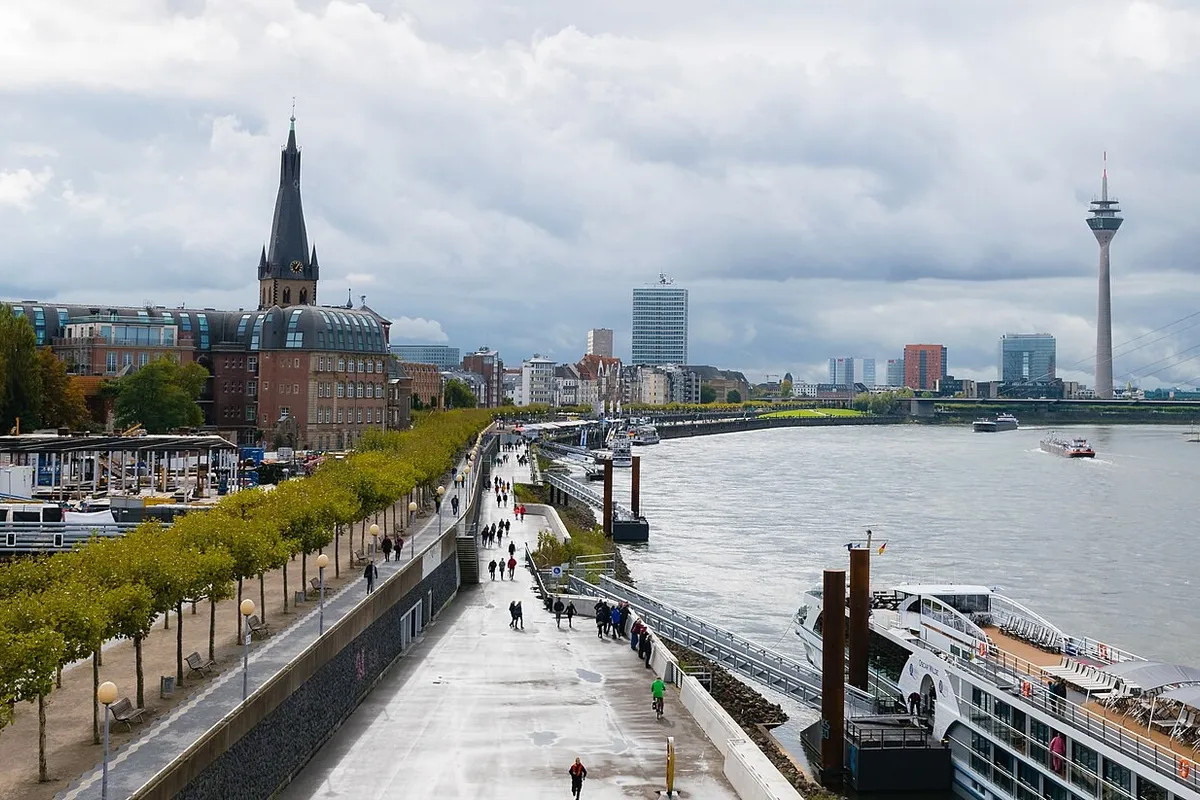
Municipal emissions rules across Northwest Europe now strictly penalize stationary diesel exhaust, compelling port authorities along the Rhine to mandate electrical shore hookups for chartered passenger vessels. For travelers booking a moored river cruise as hotel during major industrial trade fairs, this shift eliminates constant generator vibration at core city quays but introduces rigid municipal mooring schedules and non-negotiable booking terms that can catch business travelers off guard.
Docked river vessels offer dedicated, walkable berths near high-demand exhibition centers for delegations who secure multi-night blocks well in advance. However, solo professionals attending single-day conferences, guests with reduced mobility, and light sleepers often find that the spatial constraints and structural acoustic realities of a river ship create serious friction compared to land-based lodging.
The Mechanics of a Moored River Cruise as Hotel: Fleet Utilization and Urban Deployment
European river cruise ships do not sit idle when seasonal passenger sailings taper off. Instead, vessel operators integrate their tonnage into the municipal hospitality infrastructure of trade fair corridors like the Rhine-Ruhr, transforming luxury cruisers into static urban accommodations.
Repurposing Off-Season Fleets into Seasonal River Boat Hotel Accommodations
The standard European river cruising calendar runs from April through October, leaving high-value hulls underutilized during the late autumn and winter months. Vessel owners bridge this revenue gap by reflagging ships for static hospitality, deploying a seasonal river boat hotel directly against urban quays during industrial trade fairs such as MEDICA or Drupa. These floating lodgings are officially categorized as "Hotelschiff" under German port administration frameworks, serving as contracted extensions of municipal hotel capacity.
Booking distribution does not operate like standard resort ticketing. Commercial inventory is brokered primarily through specialized exhibition platforms, municipal convention offices like the Düsseldorf Convention Bureau, and regional charter operators such as Köln-Düsseldorfer KD Hotelships. When I inspected registration desks at the Messe quays, reservation sheets listed corporate delegate blocks rather than individual tourist vouchers.
Vessel capacity remains strictly defined by shipbuilding geometry. The purpose-built accommodation ship KD Moment, introduced to static commercial operations on the Rhine, measures 135 meters in length and features 86 double cabins with a certified ceiling of 171 guests, according to official specifications published by Köln-Düsseldorfer. Fleet feasibility for such urban charters is high: the Central Commission for the Navigation of the Rhine (CCNR) reports that approximately 96% of active European river cruise vessels are fitted with onboard shore connection switchgear, allowing fully electric static hotel service.
| Operational Parameter | Navigating Passenger Cruise Vessel | Stationary Urban Hotel Ship |
|---|---|---|
| Regulatory Status | Active commercial navigation (RheinSchPV) | Moored accommodation barge ("Hotelschiff") |
| Bridge & Deck Crew | Full nautical crew (Captain, Helmsman, Sailors) | Minimal duty watch / safety officer on shift |
| Safety Briefing | Mandatory muster drill within 24 hours | Static evacuation plan posted inside stateroom |
| Main Engine State | Active propulsion via diesel-electric shafts | Cold iron status; engines completely shut down |
| Waste Discharge | Continuous onboard biological treatment | Closed retention holding tanks pumped to municipal sewers |
Waterfront Infrastructure and Environmental Mooring Compliance
Mooring a 135-meter hotel vessel next to residential or business quarters requires full compliance with urban clean air and noise directives. In major hubs, vessels moored along municipal embankments can no longer run their diesel plants indefinitely. For instance, municipal regulations in Düsseldorf dictate that passenger vessels docked longer than 30 minutes at berths equipped with electrical infrastructure are legally obligated to connect to municipal Landstrom shore power, eliminating localized emissions and engine noise.
Similar strict standards apply downstream. Terminal authorities at Cruise Port Amsterdam enforce mandatory shore power connections across all river ship quays at the PTA berths. Along the entire navigable Rhine corridor, this requirement is legally triggered by navigational sign B.12 under Section 7.06(3) of the Rhine Police Regulations (RheinSchPV). Wherever that sign is posted, auxiliary engines must be switched off once connected.
Compliance is not universally seamless across all peripheral European quays. In secondary industrial berths or temporary overspill terminals in Cologne and Basel, high-voltage shore power bollards are not always available at every mooring dolphin. When Landstrom is unavailable, ships must rely on on-board auxiliary diesel generators under temporary municipal exemptions, introducing localized exhaust odors and faint mechanical hums to the pier environment. You should consult my analysis of urban botels across Europe to understand how different cities manage dockside services.
- Verify that your designated ship berth is connected to an active municipal Landstrom bollard to avoid nocturnal generator hum.
- Confirm the exact walking distance from the mooring bollard to the nearest U-Bahn or tram station using physical maps rather than straight-line estimates.
- Check whether the approach route along the riverbank features paved, illuminated sidewalks suitable for rolling luggage at night.
- Identify whether your ship is moored at an outer commercial dolphin requiring a passenger transfer pontoon or directly along the city quay wall.
Inside the Berth: Space Optimization and Cabin Types in a River Cruise Cabin Hotel Room
Sleeping on an inland vessel requires an adjustment of spatial expectations. The dimensions of a river cruise cabin hotel room are dictated by civil engineering constraints that date back decades, shaping every square inch of the living and bathroom quarters.
Standard Dimensions, Lock Constraints, and French Balcony Staterooms
Unlike ocean liners that expand outward across multi-tiered superstructures, every European river cruise vessel must fit into standardized lock chambers along the Rhine, Main, and Danube. Standard lock basins enforce maximum vessel dimensions of 135 meters in length and 11.4 meters in beam, as detailed in industry analyses by World of Cruising. This structural limit caps double cabin sizes between 12 and 15 square meters (130 to 160 square feet).
On upper accommodation decks, operators maximize perceived space by installing a French balcony stateroom layout. This design features floor-to-ceiling sliding glass doors that open inward against an exterior safety railing. While this allows fresh air and river views, it does not provide an exterior step-out veranda. The interior footprint remains tightly packed, with built-in desk units, wall-mounted flat screens, and narrow clearances around the bed perimeter.
Under-bed storage clearance typically measures around 28 to 30 centimeters (11 to 12 inches). When I unpacked in a standard upper-deck double berth, my rigid suitcase with a 31-centimeter profile could not slide beneath the frame, forcing me to store the open bag vertically against the closet door. Packing soft-sided or collapsible duffel bags is essential if you want to retain open floor space.
| Feature | Standard Terrestrial Hotel Room | French Balcony River Cruise Cabin |
|---|---|---|
| Average Floor Space | 18 to 25 m² | 12 to 15 m² |
| Furniture Layout | Freestanding, modular, repositionable | Fixed joinery bolted to steel bulkheads |
| Luggage Storage | Dedicated luggage bench and spacious closet | Limited under-bed cavity (approx. 28–30 cm clearance) |
| Window Functionality | Standard casement window or sealed double-glazing | Full-height sliding door against an exterior railing |
| Bathroom Perimeter | Standard domestic plumbing with full door radius | Modular fiberglass wet cell with inward-swinging door |
Waterline Cabins and Marine Sanitary Installations
The most economical rooms aboard static accommodation ships occupy the lower hull deck, commonly referred to as waterline cabins or "swan-view" rooms. On older European river ships, such as the MS L'Europe operated by CroisiEurope, entry-level lower-deck double cabins measure between 9 and 13 square meters. These berths sit partially below the water surface, offering only narrow, fixed horizontal slit windows placed near ceiling level that cannot be opened for ventilation.
Sanitary plumbing aboard inland hotel ships utilizes marine vacuum drainage systems rather than gravity drains. Effluent travels through narrow piping measuring only 40 to 50 millimeters in diameter, pulled into centralized collection tanks by pneumatic suction pulses. Disposing of facial wipes, sanitary items, or dense paper into these bowls triggers an immediate blockage of the vacuum valve, disabling the toilet for the entire cabin block until an engineer clears the line.
Hot water delivery depends on centralized circulation loops. During peak morning departure periods between 07:00 and 08:30—when dozens of trade fair attendees shower simultaneously before opening hours—water heating cycling can experience temporary drops in line pressure and delivery temperature. Furthermore, shipboard electrical circuits are engineered with strict low-amperage breakers; using high-draw personal travel irons or industrial salon hair stylers often trips local cabin fuses.
Never flush facial wipes, paper towels, or personal hygiene products down a vacuum toilet system. Marine suction lines measure just 40 to 50 millimeters in diameter and will immediately choke, cutting off bathroom sanitation for your cabin and neighboring berths.
Environmental Comfort: Acoustic, Climate, and Telecom Realities Aboard Floating Hotels
Static river vessels provide an intriguing waterfront setting, but their structural composition introduces environmental factors absent in standard concrete buildings. Steel frames, thin partitions, and river traffic create specific acoustic and climatic dynamics.
Bulkhead Acoustic Attenuation and Low-Frequency Noise Transmission
Inland cruise vessels are constructed using lightweight modular sandwich panels to minimize displacement and maintain draft limits. Dividing bulkheads and cabin doors generally deliver an airborne sound reduction index estimated between 35 and 42 dB. In practice, this means conversational speech from adjoining rooms, corridor foot traffic on commercial carpeting, and television audio easily transmit through the walls.
Acoustic comfort is also heavily influenced by berth location and electrical source. When a static vessel docks at an unpowered berth and runs its auxiliary diesel generator, lower aft cabins endure continuous low-frequency vibrations and ambient noise levels ranging from 45 to 55 dBA. Even at fully electrified berths, physical river dynamics persist: commercial freight convoys navigating the navigation channel create hydrodynamic surge and wake, generating sudden hull roll and audible creaking in interior joinery.
For those sensitive to nocturnal disturbances, reviewing our guide on river current vibrations and sleep quality helps identify which hull sections suffer the least displacement. Selecting the right berth requires evaluating both engine placement and quay proximity.
- Avoid lower-deck aft cabins situated directly above propulsion shafts, rudder compartments, or auxiliary machinery rooms.
- Avoid cabins placed immediately adjacent to the main lobby entrance where heavy gangway foot traffic vibrates the deck plating.
- Request staterooms on the forward third of the middle or upper deck to minimize machinery noise and maximize separation from service galleys.
- Inspect the door perimeter for acoustic drop-seals; if gaps are visible beneath the door, corridor noise will enter unrestricted.
HVAC Operational Modes and Hull-Induced Faraday Shielding
River vessel climate control systems operate via centralized fan-coil networks connected to hydronic loops. In many vessels, these setups utilize two-pipe hydronic circuits, meaning the entire vessel is locked into either cooling or heating mode depending on seasonal settings. During unseasonable weather swings in early spring or late autumn, the system cannot provide active air conditioning if the central plant is set to heating, leaving cabins stuffy unless sliding doors are opened.
Digital connectivity aboard moored vessels presents an equally significant hurdle. The welded steel hull plates and fire-insulated bulkheads act as an unintentional Faraday cage, severely attenuating cellular RF signals inside lower waterline cabins. While upper staterooms with large glass apertures receive acceptable LTE and 5G signal from urban cell towers, guests on lower decks frequently drop cellular voice calls and data connections.
Moored hotel ships compensate by offering shared onboard Wi-Fi, routed through external cellular or satellite links. However, when 150 corporate delegates log on simultaneously between 07:00 and 08:30 to download fair catalogs or join video conferences, available bandwidth drops sharply. You can review detailed technical strategies in our report on Wi-Fi and cellular reception on metal hull ships.
| Deck Level | Cellular Signal Penetration | Natural Ventilation | Acoustic Exposure Profile |
|---|---|---|---|
| Upper Deck (French Balcony) | High (large glass exposure) | Excellent (sliding door access) | Foot traffic from public sun deck overhead |
| Middle Deck (Promenade) | Moderate to High | Moderate (sliding door or large opening) | Lobby transit noise and gangway vibrations |
| Lower Deck (Waterline) | Severely attenuated (Faraday effect) | None (fixed non-opening slit windows) | Hydrodynamic water slap, hull creak, machinery hum |
Berthing Mechanics: Rafting Alongside, Gangway Inclines, and Accessibility Bottlenecks
Docking a river ship in a crowded city center involves maritime berthing practices that differ entirely from checking into a terrestrial hotel. Pier shortages and fluctuating river levels directly dictate your privacy, safety, and physical access.
Double-Berthing Dynamics, Daylight Loss, and Privacy Impacts
During major industrial events, riverfront quay space fills up quickly. To accommodate incoming vessels, port authorities permit "rafting"—also known as double-berthing or triple-berthing abreast. On the Rhine, this practice is formally regulated by Section 7.05(4) of the RheinSchPV and denoted by navigational sign E.5.3, which indicates with Roman numerals (II or III) how many hulls may moor side by side.
When your ship is assigned an outer berth, you do not board directly from the quay. Instead, you must cross the gangway onto the first ship, walk across its reception lobby or open deck, and cross a second connecting bridge to reach your vessel. In autumn and winter, external linking decks become slick from rain, river fog, and morning frost, demanding careful footing and slip-resistant footwear.
Double-berthing completely alters in-cabin privacy. If your cabin faces inward toward a rafted vessel, your window looks directly into a metal hull or an opposing cabin less than two meters away. When I stayed on an inner rafted hull in Cologne, daylight was blocked so completely that I had to keep the blackout drapes drawn around the clock to prevent guests across the gap from seeing directly into my room.
When checking in, always ask whether your stateroom faces the open river or the quay. If the ship is rafted against another vessel, an inward-facing cabin will have zero natural light and require your curtains to stay closed 24 hours a day.
Gangway Angles, Watertight Coamings, and Elevator Operational Boundaries
Connecting a floating vessel to a fixed municipal quay requires an articulating gangway that moves with changing river water levels. Under European marine equipment standard EN 14206:2003, shipboard gangways may operate safely at operational angles up to 30 degrees (approximately a 57% slope). This technical limit starkly contrasts with terrestrial accessibility standards such as DIN 18040-1 or ADA guidelines, which mandate ramp slopes no steeper than 6% (1:16 to 1:20).
During seasonal water level shifts on the Rhine—tracked at critical gauge stations like Pegel Kaub and Düsseldorf via ELWIS—gangway inclines fluctuate dramatically. At low river gauges, the incline from the pier down to the ship deck frequently exceeds 15% to 20%, creating an impassable barrier for manual wheelchair users and travelers pulling heavy luggage.
Internal navigation introduces further physical barriers. Marine safety regulations under ES-TRIN Chapter 19 require raised watertight coamings and structural fire door sills measuring 5 to 15 centimeters (2 to 6 inches) across public thresholds. Furthermore, vessel elevators provide limited coverage. On the KD Moment, the passenger elevator links only the middle and upper cabin decks and the restaurant; it does not reach the lower accommodation deck (Deck 1) or the open sun deck, leaving those zones accessible exclusively via steep stairwells.
| Mobility Device | Gangway Usability (EN 14206) | Interior Threshold Clearance | Elevator Deck Coverage |
|---|---|---|---|
| Manual Wheelchair | Impractical without physical assistance (>15% slope) | Blocked by 5–15 cm watertight coamings | Middle and upper decks only; waterline deck excluded |
| Powered Wheelchair | High risk of tipping on steep articulated ramps | Requires portable threshold ramps at all sills | No access to lower accommodation deck or sun deck |
| Walking Frame / Rollator | Hazardous during damp river frost conditions | Must be lifted across fire door and bulkhead sills | Accessible on middle and upper decks; stairs to Deck 1 |
| Standard Luggage Trolley | Requires deliberate physical effort on steep slopes | Must be lifted over all bulkhead sills manually | Functional only between middle and upper accommodation decks |
Trade Fair Economics: Docked Cruise Ship Accommodation vs. Terrestrial Hotels
Reserving a docked cruise ship accommodation during convention weeks requires understanding specialized contractual terms. Commercial hotel-ship operators apply pricing models tailored specifically to exhibition demand surges.
Exhibition Corridor Pricing Models and Minimum Stay Clauses
During major trade fairs such as MEDICA in Düsseldorf, standard corporate hotels across the city routinely sell out months ahead, allowing seasonal hotel ships to command peak rates. Official booking tariffs published by KD Hotelships for vessels like the MS Charles Dickens and MS Carmen establish bed-and-breakfast cabin rates starting at €329 per night for single occupancy, plus a mandatory double occupancy surcharge of €39 per night.
The primary financial hurdle for business travelers is the operator's minimum stay requirement. During high-demand fairs, KD Hotelships enforces a strict minimum stay of four nights. This contractual clause locks single guests into an unavoidable base cost of €1,316 (€329 × 4) and double occupants into €1,472, regardless of whether their conference schedule requires only a one- or two-night stay.
Outside convention peaks, pricing drops considerably. In off-peak and shoulder windows, static berths on older ships can trade between €90 and €160 per night, though pricing must always be verified directly through seasonal schedules. Cancellation terms during trade fairs are exceptionally strict, with contracts frequently imposing 100% forfeiture penalties from the moment of reservation confirmation.
| Booking Scenario | Static Floating Hotel (4-Night Minimum) | Suburban Terrestrial Hotel (Flexible Booking) |
|---|---|---|
| 1-Night Exhibition Visit | €1,316 (forced 4-night payment at €329/night) | €240 to €350 (actual single night rate) |
| 2-Night Exhibition Visit | €1,316 (forced 4-night payment at €329/night) | €480 to €700 (actual two-night rate) |
| 4-Night Exhibition Visit | €1,316 (exact match with minimum stay clause) | €960 to €1,400 (subject to surge pricing) |
| Double Occupancy Extra | €39 per night (€156 total over 4 nights) | Variable (€20 to €50 per night) |
| Cancellation Policy | 100% penalty upon corporate contract execution | Free cancellation typically up to 14–30 days prior |
On-Site Hospitality Inclusions and Operational Shortcomings
Hospitality operations aboard stationary river ships follow a streamlined bed-and-breakfast format. The morning buffet is included in the base rate, offering continental fare engineered to move guests out efficiently between 06:30 and 09:30. However, these vessels do not maintain full-service hotel infrastructures: you will not find 24-hour room service, in-house laundry facilities, or corporate fitness centers on board.
Luggage logistics require careful planning. Stateroom checkout is strictly enforced at 10:00 to prepare cabins for incoming blocks. Unlike traditional hotels with dedicated concierge holding areas, river vessels possess limited lobby space and rarely offer secure post-checkout luggage storage. Corporate guests departing late in the afternoon must bring their bags directly to the exhibition center cloakrooms.
Mooring locations dictate daily transit times. Ships docked near the Theodor-Heuss-Brücke or Messe-Nord berths provide walkable access to the northern exhibition gates. Conversely, berths along the central Altstadt promenade require transit via Düsseldorf Stadtbahn lines U78 or U79 to reach the fairgrounds, adding commute time during morning rush hours. Before packing, make sure to review our guide on what to pack for a floating hotel stay.
- Reserve luggage lockers at the trade fair center in advance, as static vessels rarely hold bags after the 10:00 morning checkout.
- Pack high-attenuation foam or silicone earplugs to block modular bulkhead sound leakage and early morning gangway traffic.
- Bring compact, soft-sided rolling luggage that compresses flat to clear the restricted 28–30 cm under-bed frame clearance.
- Download offline transit maps and exhibition hall layouts before boarding to circumvent shipboard Wi-Fi and lower-deck cell attenuation.
Static Cruise Hotel Pros Cons: Final Verdict and Traveler Decision Matrix
Weighing static cruise hotel pros cons comes down to balancing walking proximity against the realities of marine civil engineering. A moored river cruise as hotel provides a practical solution to urban room shortages, but it is not a direct substitute for a conventional hotel room.
Synthesizing Tradeoffs: When a Moored Berth Outperforms Traditional Rooms
A static river berth delivers clear advantages during peak city-wide sellouts. When terrestrial hotels within a 15-kilometer radius are fully booked, a chartered river cruiser guarantees centrally located lodging at a fixed, contracted price without hidden municipal resort surcharges. Berths positioned adjacent to exhibition grounds eliminate crowded morning commuter rail journeys, enabling delegates to walk directly to morning appointments.
Furthermore, the widespread adoption of municipal shore power connections across major Rhine ports ensures that modern operations remain clean. In cities like Düsseldorf and Amsterdam, static hotel ships draw power quietly from the city grid, eliminating diesel exhaust smells and heavy engine vibration. Delegates enjoy reliable hot breakfasts, quiet night moorings, and uninterrupted views across the river—provided their berth faces the water.
| Operational Advantages | Operational Liabilities |
|---|---|
| Direct walking access to riverside convention centers | Strict 4-night minimum stay clauses during trade fairs |
| Contracted fixed rates without predatory surge additions | Compact cabin footprint (12–15 m²) with fixed furniture |
| Predictable on-board breakfast buffet included in base rate | Thin acoustic bulkheads (35–42 dB sound attenuation) |
| Zero engine exhaust emissions at electrified Landstrom berths | Risk of double-berthing (curtains closed 24/7 facing opposing hull) |
| Uninterrupted panoramic views on outer river-facing staterooms | Steep gangways (up to 30°) and raised 5–15 cm door coamings |
Definitive Booking Filter: Who Should Avoid Floating Accommodations
Specific traveler profiles should actively bypass static river cruise hotels. The combination of steep gangways compliant with marine standard EN 14206, high watertight door coamings mandated by ES-TRIN rules, and passenger elevators that bypass the lower deck makes these vessels unsuitable for wheelchair users and travelers with severe mobility impairments.
Light sleepers who wake easily from footsteps, plumbing cycling, or passing barge wash will find marine modular bulkheads frustratingly permeable. Similarly, remote business executives who need to stream live video or manage heavy VPN data pipelines will struggle with lower-deck Faraday cage attenuation and congested satellite or cellular Wi-Fi routers. If you fall into these categories, booking a land-based hotel along the regional S-Bahn network—even 20 to 30 kilometers outside the city center—provides a far more comfortable, barrier-free stay.
- Evaluate Mobility: If you use a wheelchair, rollator, or have balance concerns, reject floating berths due to steep gangway slopes and interior door sills.
- Calculate Stay Length: If your trip spans only 1 or 2 nights, compare the forced 4-night hotel-ship cost (€1,316+) against a flexible terrestrial room further along the transit line.
- Assess Baggage: If traveling with large, rigid suitcases exceeding 28 cm in depth, recognize they will not fit under the bed and will obstruct your walking path.
- Check Sleep Sensitivity: If low-frequency humming, corridor speech, or gentle hydrodynamic swell disrupts your rest, choose a traditional brick-and-mortar hotel.