

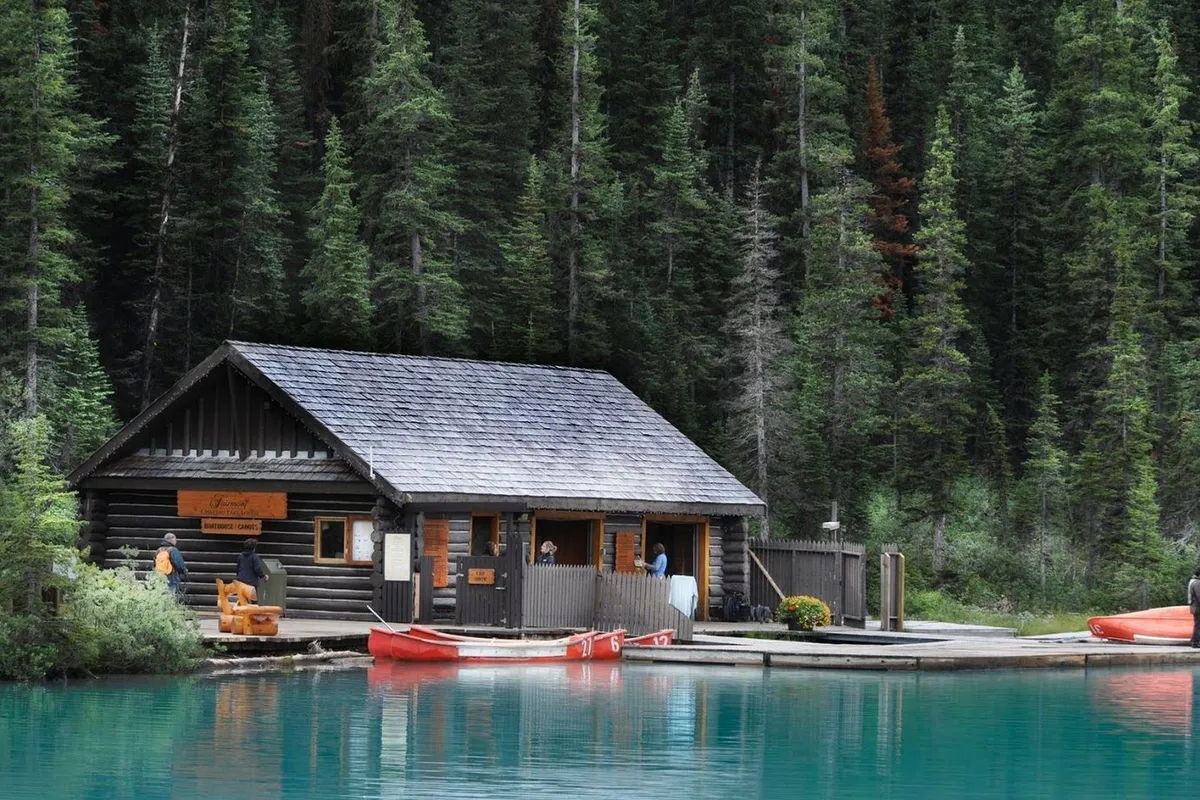
Stepping onto the pontoon dock at Nimmo Bay after the floatplane engine cuts out, the first thing that hits your ears is not pristine forest silence. It is the deep, steady roar of a 5,000-gallon-per-minute waterfall crashing into MacKenzie Sound. Over twelve years reviewing waterborne properties across four continents, I have learned that remote lodges rarely match the hushed serenity of their marketing brochures. If you are researching this Nimmo Bay Wilderness Resort review, you need operational transparency: how the pontoons behave under Pacific swells, what the strict flight luggage allowances actually mean for your gear, and whether the steep 2026 rates deliver genuine wilderness value.
Anchored at the foot of Mount Stephens in British Columbia’s southern Great Bear Rainforest, Nimmo Bay operates for five months each year, opening in mid-May and closing in mid-October. The property accommodates a maximum of 26 guests across nine two-bedroom cabins. More than half of the shared infrastructure–including the reception lounge, dining room, and outdoor fire dock–floats directly on heavy marine pontoons that rise and fall with extreme coastal tides. The remaining footprint rests on stilts driven into the seabed and bedrock flanking the waterfall.
Location and Route: Reaching MacKenzie Sound Without Roads
The Two-Leg Air Transfer from Vancouver (YVR)
Nimmo Bay has no road access whatsoever. The standard transit route departs from the South Terminal at Vancouver International Airport (YVR) and operates on a strict schedule aligned with resort check-ins on Mondays and Thursdays. You board a private 1-hour charter flight to Port Hardy Airport (YZT) at the northern tip of Vancouver Island. From Port Hardy, Wilderness Seaplanes transfers passengers into De Havilland Beaver or Otter floatplanes for a 20-minute low-altitude flight across Queen Charlotte Strait straight onto the resort’s floating dock, as detailed on the Nimmo Bay getting here guide.
For the 2026 season, this mandatory round-trip air transfer package from Vancouver costs $2,299 CAD per person. Your outbound flight departs YVR South Terminal early in the afternoon, which means incoming commercial flights to Vancouver must arrive by 11:00 AM at the latest. On the return leg, your floatplane and wheel-plane connection lands back at YVR South Terminal in the late afternoon. Booking outward international flights before 9:00 PM is a logistical gamble; booking a room at the Fairmont Vancouver Airport for the transition nights eliminates significant travel friction.
Pack exclusively in soft-sided duffel bags without rigid frames or extendable pull handles. Floatplane cargo bays have tight triangular geometries and an unyielding baggage limit of strictly 15 kg (35 lbs) per passenger. Bags exceeding this threshold or rigid hard-shell suitcases will be repacked into resort duffels and left behind in secure airport lockers at Port Hardy.
Weather Delays, Luggage Realities, and No-Drive Isolation
Coastal British Columbia generates heavy maritime morning fogs and sudden storm fronts. When low ceiling fog rolls into Queen Charlotte Strait, floatplanes remain grounded on the water at Port Hardy until visibility clears. A weather delay of two to four hours is an ordinary operational occurrence in coastal aviation. Independent road-trippers driving Vancouver Island can leave a vehicle in the paid secure long-term parking lot at Port Hardy Airport (YZT) and book solely the floatplane shuttle segment directly to the lodge, which costs $1,350 CAD per person round-trip for 2026.
Once the floatplane takes off from the dock, you are completely cut off from municipal infrastructure. There are no convenience stores, pharmacy deliveries, or walk-in medical clinics anywhere in MacKenzie Sound. If an emergency occurs during severe storm fronts that ground both floatplanes and commercial helicopters, medical evacuation depends on maritime Coast Guard vessels or military search-and-rescue aircraft, as commercial operators cannot fly through zero-visibility fog.
Nimmo Bay Intertidal Cabin and Resort Layout: Architecture Over the Tides
Waterfront Stilt Cabins vs. Terrestrial Forest Cabins
The resort’s nine guest accommodations split into two distinct structural categories: six Waterfront Intertidal Cabins and three Forest Cabins. Each cabin measures approximately 700 square feet, configured with two separate bedrooms, a shared central living area, one bathroom, a beverage wet bar, and an open wooden porch. The interior design emphasizes coastal minimalism, featuring local cedar finishes, natural wool textiles, and organic bath amenities from Sangre de Fruta.
Choosing between these configurations requires understanding the shoreline dynamics. The six Waterfront Cabins stand on heavy timber pilings positioned inside the tidal zone. At high tide, salt water swirls directly below your floorboards. At low tide, however, the water recedes completely, leaving the pilings exposed over bare mud, kelp beds, and damp rocks. Guaranteeing a Waterfront Intertidal Cabin requires an extra surcharge of $575 CAD per cabin, per night over base rates. By contrast, the three Forest Cabins sit on solid bedrock anchored along the rushing freshwater creek. They offer identical interior layouts and bedding configurations at the base package rate, nestled under western red cedars and moss-covered granite.
| Cabin Category | Foundation Type | Physical Footprint | Acoustic Environment | Nightly Surcharge (2026) |
|---|---|---|---|---|
| Waterfront Intertidal Cabin (6 units) | Timber stilts over intertidal marine bed | Approx. 700 sq ft (2 bed, 1 bath) | Rhythmic wave lapping at high tide; hollow silence and creaks at low tide | +$575 CAD per cabin / night |
| Forest Cabin (3 units) | Terrestrial bedrock foundation in forest | Approx. 700 sq ft (2 bed, 1 bath) | Constant, powerful background rumble from the nearby cascading waterfall | Included in base package |
Floating Pontoons: The Main Lodge, Dining Room, and Fire Dock
The operational core of Nimmo Bay does not touch the land. The Little River dining room, guest lounge, and wide open-air fire dock sit on engineered floating pontoons chained to the granite shoreline. These pontoons rise and fall continuously with the Pacific tides, which fluctuate by 3 to 4.5 meters (10 to 15 feet) twice every 24 hours. If you want to understand how this compares to other waterborne hotels, our breakdown of overwater bungalows vs truly floating hotels details the structural differences between anchored pontoons and fixed pilings.
Movement on the main lodge pontoons is dampened by massive stabilizing chains, eliminating rapid wave roll, but you will feel a slow, buoyant lift whenever a tender boat pulls alongside. The connection between the terrestrial forest trails and the floating lodge relies on heavy articulated steel gangways. At extreme high tide, these gangways lie nearly horizontal. At low tide, the floating docks sink 15 feet below the shore anchors, tilting the ramps into steep 35-degree downward slopes. Sturdy footwear with high-traction rubber outsoles is essential to navigate the damp metal slip-guards safely.
Off-Grid Engineering: Waterfall Micro-Hydro and Waste Systems
Maintaining a high-end wilderness resort requires serious mechanical infrastructure. Nimmo Bay generates up to 80–85% of its annual electrical power via an on-site Pelton wheel micro-hydro system driven by the plunging waterfall. Pristine mountain runoff enters a high-elevation penstock pipe, generating pressurized clean electricity that powers the resort’s kitchen equipment, heating loops, and hot water systems without continuous generator hum. During late-summer low-water flow periods, automated clean diesel generators spin up to supplement peak electrical loads.
Potable water is drawn straight from the pristine mountain creek, passing through a high-volume multi-stage filtration setup paired with ultraviolet (UV) sterilization units. Wastewater treatment is equally rigorous. Blackwater and graywater flow into a marine-grade Hydroxyl biological processing plant tucked behind the service docks. This biological system digests waste using aerobic bacterial colonies, discharging treated, odorless effluent that meets strict coastal marine protection standards. To compare how off-grid engineering functions in tropical environments, read our review of rain catchment and waste systems in floating eco-resorts.
Daily Experience: Floating Wellness, Coastal Cuisine, and Wilderness Excursions
Floating Cedar Saunas and Waterfall Hot Tubs
Nimmo Bay’s wellness setup is integrated directly into the fjord. Anchored several hundred meters out in the middle of the bay are two custom wood-fired floating cedar saunas. You cannot walk to them; access requires paddling out on a sea kayak, balancing on a stand-up paddleboard, or requesting a quick transfer on an aluminum skiff. Once aboard the sauna raft, an attendant has the cedar wood stove burning hot. The recovery routine is straightforward: step from the 85°C dry cedar hot room directly onto the floating deck and jump into the 9°C salt waters of MacKenzie Sound.
For land-based relaxation, the resort built two open-air cedar soak tubs directly into the wooden boardwalk stairs at the base of the waterfall. Piping-hot fresh creek water fills the tubs while icy spray from the plunging falls misting your shoulders provides a natural contrast. For similar contrast-therapy traditions on the water, see our field guide to Nordic floating cabins and off-grid saunas. Use of the floating saunas and waterfall hot tubs is included in all base packages, though guests schedule 60-minute private windows upon arrival to ensure uncrowded rotation.
Included Marine Adventures and Heli-Excursion Add-Ons
The baseline inclusive rate includes all non-motorized and localized water activities: open sea kayaking, guided coastal paddleboarding, old-growth temperate rainforest hiking, and dockside fly-casting tutorials. Naturalist-led excursions aboard covered aluminum boats explore the surrounding fjords for bald eagles, harbor seals, and sea lions. Peak humpback whale and orca viewing runs through July, August, and September, while dedicated estuary boat trips to view grizzly bears feeding on Pacific salmon runs peak from late August through early October.
Helicopter adventures represent a completely separate financial tier. Operated in partnership with WestCoast Helicopters using Eurocopter A-Star aircraft, these flights lift guests directly from Nimmo Bay’s shoreline helipad into the alpine wilderness of the Coast Mountains:
- Heli-Adventure Excursion: Access to remote mountain ridges, ancient ice caves, and glacier walks costs $11,550 CAD per day (for 1–2 guests) or $15,750 CAD per day (for 3–5 guests).
- Heli-Fly-Fishing Expedition: Guided wilderness river angling for steelhead and wild salmon in isolated valleys runs $16,799 CAD per day (up to 4 anglers).
- Heli-Paddleboarding Add-On: Landing with inflatable boards on pristine high-altitude alpine lakes adds a $1,200 CAD equipment fee to standard flight hours.
Sea-to-Table Gastronomy and Floating Dock Dining
Culinary operations at the floating Little River restaurant revolve strictly around Vancouver Island and British Columbia coastal ecosystems. Three meals a day, plus dockside snacks and field lunch hampers, are included in the package. Menus shift with local seasonal harvests: freshly cracked Dungeness crab, wild spring salmon, diver-caught sea scallops, and spot prawns, paired with foraged forest chanterelles and coastal sea asparagus. House-poured table wines focus on small-scale organic vintners from the Okanagan Valley, alongside regional craft beers from Vancouver Island.
The physical kitchen operates on a tiny floating platform thousands of miles away from distribution warehouses. Guests must complete a mandatory Guest Information Form at least 30 days prior to arrival detailing all allergies and medical dietary exclusions. Because emergency grocery drops by floatplane cost thousands of dollars, the culinary crew cannot improvise complex off-menu substitutes for unannounced dietary restrictions once you land on the dock.
Real-World Comfort: Tides, Soundscapes, Digital Isolation, and Physical Demands
Noise Levels, Gangway Movement, and Intertidal Shifting
Moored water lodges present unique sensory realities. If you book one of the three Forest Cabins, understand that the micro-hydro waterfall is loud. It generates a non-stop, 65-decibel white-noise roar 24 hours a day. Light sleepers who require silent rooms will need earplugs, while those who love white noise will sleep deeply. On the other hand, the six Waterfront Intertidal Cabins present hydraulic acoustics: during high tides and windy afternoons, waves slap continuously against the timber pilings right underneath your bedroom.
The floating central lodge, bar, and outdoor lounge decks have a persistent marine buoyancy. When small wake from departing aluminum tenders hits the pontoon skirts, coffee cups on outdoor tables clink and the timber planks flex subtly underfoot. Guests prone to severe vestibular disturbance or acute motion sickness should review our practical analysis of motion sickness on moored floating hotels, though the sheltered topography of MacKenzie Sound protects the bay from large ocean swells.
Connectivity, Board-Walking Mobility, and Wilderness Hazards
Cellular reception does not exist in MacKenzie Sound. There are zero cellular towers within dozens of nautical miles. Nimmo Bay provides satellite Starlink Wi-Fi across the central lodge and guest cabins. In clear weather, bandwidth easily handles email, messaging apps, and Wi-Fi voice calls, but performance degrades during torrential Pacific rainstorms. This is a property designed for disconnecting rather than running corporate data pipelines, as discussed in our guide to floating hotels for remote work.
Nimmo Bay is completely unsuitable for wheelchair users or travelers with serious knee and mobility limitations. The entire resort relies on exposed cedar boardwalks, steep staircase descents to the waterfall tubs, and articulated floating gangways that drop at harsh 35-degree angles during low tides. Boarding whale-watching boats and kayaks requires stepping across shifting pontoon edges.
Wilderness hazards are immediate and real. Mount Stephens and the surrounding forest are home to healthy populations of grizzly bears, coastal black bears, cougars, and coastal wolves. Guests are barred from hiking beyond the marked boardwalk perimeters without an armed professional guide carrying bear spray and wildlife deterrents.
Nimmo Bay Wilderness Resort Rates, Seasonal Tiers, and Cancellation Rules
2026 Package Pricing: Spring vs. Peak Season
Nimmo Bay sells stays exclusively as fixed multi-night all-inclusive packages. Because arrivals and departures occur solely on Mondays and Thursdays, stays are restricted to 3 nights (Thursday to Monday), 4 nights (Monday to Thursday), or 7 nights. Base pricing covers twin-share accommodation in a Forest Cabin, all gourmet meals, house beverages, and guided non-motorized excursions, confirmed via the active Nimmo Bay 2026 rates schedule.
Rates split into two operational seasons: the spring Nature and Nurture season (May to June 15) and the peak Wild and Refined summer/fall season (mid-June through mid-October). Children aged 2 to 12 traveling with two paying adults receive a 25% discount on the base inclusive package rate.
| Duration | Spring Season Rate (Per Person) | Peak Season Rate (Per Person) | Mandatory Air Transfer (Per Person) | Stilt Cabin Upgrade Surcharge |
|---|---|---|---|---|
| 3 Nights (Thu–Mon) | $8,399 CAD | $10,199 CAD | $2,299 CAD | +$575 CAD / cabin / night |
| 4 Nights (Mon–Thu) | $11,199 CAD | $13,595 CAD | $2,299 CAD | +$575 CAD / cabin / night |
| 7 Nights (Full Week) | $19,595 CAD | $23,795 CAD | $2,299 CAD | +$575 CAD / cabin / night |
All-Inclusive Value Audit: What Is and Isn't Covered
Evaluating an all-inclusive wilderness lodge requires looking at what gets added to the final folio. The published base package covers your cabin, guided sea kayaking, stand-up paddleboarding, boat tours, loaner outdoor gear (Mustang survival flotation suits, Helly Hansen rain gear, rubber boots), open-pour house wines, local craft beers, and meals. To evaluate how these package numbers stack up across the market, browse our world guide to the best floating resorts.
The hidden expense is in the mandatory logistics, taxes, and service charges:
- Mandatory Charter Air Transfer: Adds $2,299 CAD per person round-trip from Vancouver.
- Taxes: British Columbia applies 5% federal Goods and Services Tax (GST) plus regional accommodation taxes (PST/MRDT) of up to 8–11% on room portions.
- Staff Gratuity: Nimmo Bay staff pools gratuities across the entire culinary, guide, and dock operations team. The recommended industry guideline is 15% to 18% of the pre-tax base package rate.
- Optional Paid Add-Ons: Spa treatments at the wellness cabin range from $350 to $600 CAD per treatment, and cellar-reserve wines carry standard premium markups.
For a couple booking a 3-night peak summer stay in a stilted Waterfront Cabin, the final all-in invoice–including base stay ($20,398 CAD), stilt surcharge ($1,725 CAD), round-trip Vancouver air charter ($4,598 CAD), taxes, and standard gratuities–totals between $32,000 and $34,000 CAD.
Strict Cancellation Penalties, Voucher Terms, and Full Buyouts
Booking a stay at Nimmo Bay carries substantial financial risk if your plans change. A 35% non-refundable deposit is due at the time of booking, with the remaining 65% balance due 90 days before your arrival date. Under the resort’s official cancellation terms, money paid is non-refundable:
- Cancellations 90+ Days Prior: Cash refunds are not issued. Your deposit converts into a transferable future travel credit voucher that does not expire, minus a mandatory administration penalty of $500 CAD per person.
- Cancellations Under 90 Days: 100% of the entire booking fee (including base rate and air transfers) is completely forfeited. You receive no refund and no travel vouchers.
- Exclusive Resort Buyouts: Full-property buyouts (covering all 9 cabins) require 120 days notice for cancellation, subject to a non-refundable $35,000 CAD cancellation fee. Within 120 days of arrival, 100% of the buyout rate is forfeited.
Due to the zero-refund 90-day cancellation threshold and unpredictable Pacific coastal weather that can disrupt floatplane departures, you should never book Nimmo Bay without a robust Cancel For Any Reason (CFAR) travel insurance policy.
Target Guests and Alternatives: Who Should Book and Who Should Skip
Who Gets Maximum Value from Nimmo Bay
Nimmo Bay targets travelers who want intimate immersion in temperate rainforest ecology paired with refined cuisine and wellness. Because capacity caps at 26 guests, you never experience crowded dining rooms or competitive boarding queues for marine tenders. The two-bedroom layout makes each cabin exceptionally practical for two couples traveling together or families with children ages 6 and up who can safely handle open docks.
If you want to spend mornings paddleboarding past sea lions, afternoons sweating in a wood-fired sauna anchored in the middle of a saltwater fjord, and evenings drinking Okanagan Valley pinot noir on a pontoon by an open fire, Nimmo Bay delivers an execution few wilderness lodges in the world can replicate.
When to Choose an Alternative Lodge
Nimmo Bay is not designed for every luxury traveler. If your specific travel goals fall outside its boutique wilderness niche, consider three well-established British Columbia alternatives:
- For Pure Grizzly Photography: If your priority is photographing grizzly bears from fixed, elevated platforms on river salmon runs without paying for luxury wellness amenities, look into Great Bear Lodge in Smith Inlet.
- For Large Resort Amenities and Saltwater Salmon Fishing: If you want a full Relais & Châteaux experience with heated outdoor swimming pools, full-service tennis courts, and heavy ocean sportfishing cruisers, book Sonora Resort in the Discovery Islands.
- For Drive-In Road Access and Mobility Needs: If you have limited physical mobility, travel with bulky equipment, or wish to avoid floatplanes entirely, Tweedsmuir Park Lodge in the Bella Coola Valley provides vehicle road access via Highway 20.
Final Verdict: Does This Great Bear Rainforest Floating Lodge Justify the Cost?
Practical Strengths vs. Unavoidable Friction
Nimmo Bay Wilderness Resort succeeds because it maintains a tiny human footprint inside an immense coastal ecosystem. The micro-hydro turbine supplies 80–85% of the power using clean falling water, and the floating pontoon design preserves the intertidal shoreline while offering genuine ocean immersion. The sea-to-table food execution and the wild setting of the floating cedar saunas are world-class.
The friction points are purely logistical and financial. The mandatory two-leg flight package adds $2,299 CAD per person, the 15 kg baggage limit requires ruthless packing discipline, and the strict 90-day cancellation policy leaves zero margin for personal scheduling emergencies. The steep gangway transitions during 15-foot tidal shifts mean anyone seeking effortless flat ground will find the property physically challenging.
Final Booking Recommendations and Planning Horizon
Peak season dates (July through September) sell out 10 to 14 months in advance due to the 9-cabin inventory limit. If you want to optimize your budget, look at the early spring season from mid-May through June 15: rates are lower ($8,399 CAD vs. $10,199 CAD for 3 nights), the waterfall runs at its highest volume, and snow still caps Mount Stephens. Secure your cabin booking and confirmed floatplane slots on the resort's Monday/Thursday grid before finalizing connecting transcontinental flights into Vancouver, and confirm your travel insurance covers remote medical evacuation and flight weather cancellations.