

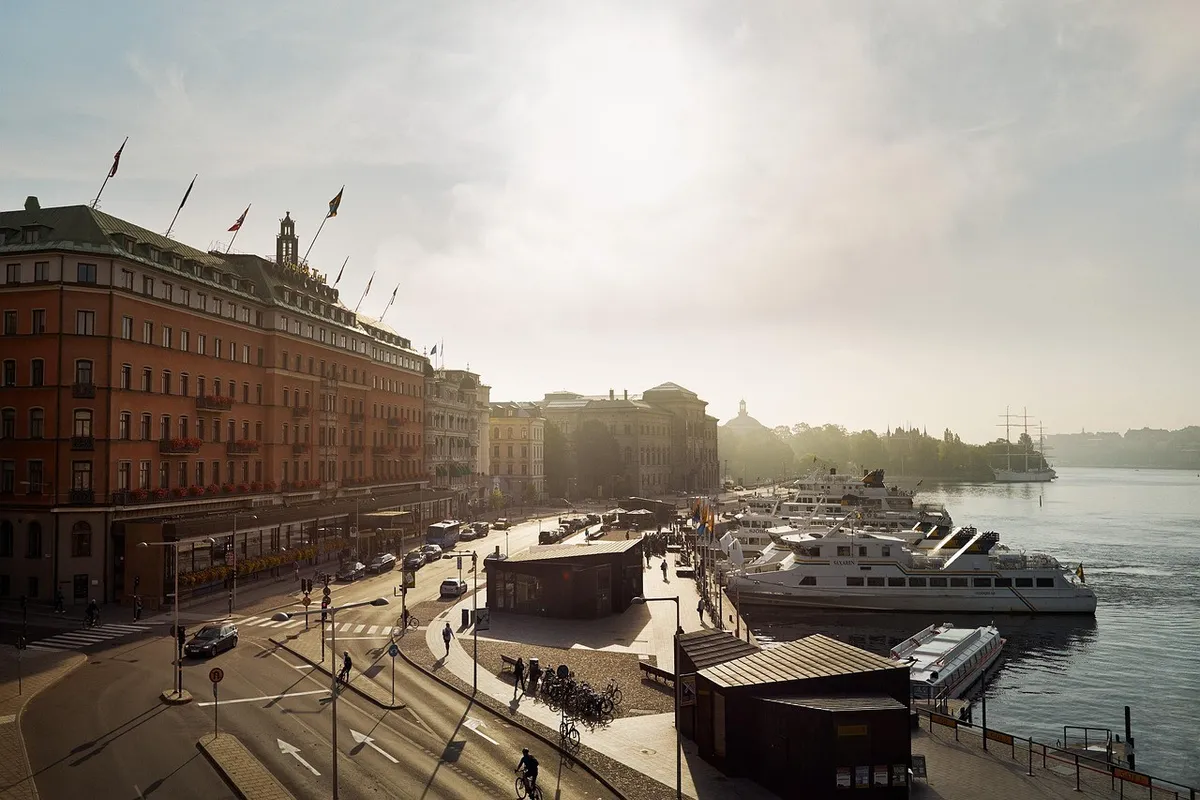
Stockholm botels offer a direct alternative to standard mainland hotel rooms, placing travelers directly on the freshwater surface of Lake Mälaren. Moored along the historic quays of Riddarholmen and Söder Mälarstrand, these converted motor yachts, coasters, and passenger ships provide central waterfront quarters within walking distance of Gamla Stan and Södermalm. However, living afloat involves distinct operational realities–including companionway stairs, narrow steel doors, marine wet heads, and winter ice–that differ markedly from land-based lodging.
To help you select the right berth, I have assessed the active hotel ships permanently moored in central Stockholm. This guide benchmarks exact cabin footprints, en-suite versus corridor bathroom provisions, luggage accessibility across quayside terrain, and actual walking routes from Stockholm Metro stations.
Criteria for Selection and Comparative Evaluation
To deliver an unvarnished assessment of Stockholm’s moored fleet, I evaluated each property against five operational benchmarks:
- Mooring Permanence & Berth Legitimacy: Vessels must maintain certified, year-round hospitality operations at official municipal moorings along Riddarholmen or Söder Mälarstrand.
- Onboard Cabin Authenticity: Guest accommodation must reside physically inside the hull or superstructure of the ship, distinguishing true botels from land-based hostels operating adjacent historic craft.
- Nautical Ergonomics & Facilities: Measurement of interior floor space (6–10 m² standard footprints), berth dimensions, private en-suite wet heads versus communal corridor bathrooms, and quayside gangplank angles.
- Transit & Topographical Friction: Route complexity from nearest Metro stations, factoring in flat bridge crossings versus steep climbs up the granite cliffs of Södermalm.
- Heating & Hull Performance: Verification of winter electrical heating, hull condensation barriers, and municipal bubbler de-icing systems during Lake Mälaren freeze cycles.
Below is the specification for interactive filtering across Stockholm’s moored fleet, designed for upcoming dynamic widget implementation:
- Sort Presets: Base Rate (Low to High), Base Rate with Breakfast (Low to High), Distance to Metro (Meters), Total Ship Capacity (Cabins).
- Toggle Filters: Private En-suite Head Included, Buffet Breakfast Included in Base Rate, Guest Self-Catering Kitchen Available, 24-Hour Reception Desk, Step-Free / Flat Quayside Approach.
| Vessel / Botel | City | Vessel Type | Price From | Key Advantage | Key Drawback |
|---|---|---|---|---|---|
| Mälardrottningen Yacht Hotel | Stockholm | 73m Classic Motor Yacht (1924) | 625 SEK | Moored at Riddarholmen with flat Gamla Stan access; private en-suite bathrooms and hot breakfast buffet included in all 65 cabins. | Compact sailor bunk cabins (6–8 m²); steep companionway stairs without passenger elevators; lower-deck portholes do not open. |
| Rygerfjord Hotel & Hostel | Stockholm | Triple-Hulled Converted Ship Complex (1950) | 550–650 SEK | Direct panoramic views of Stockholm City Hall across Riddarfjärden; communal self-catering kitchen; 24-hour reception on Ship 1. | 800m walk with a steep cliff descent from Mariatorget station; economy cabins use shared facilities; buffet breakfast costs 120–130 SEK extra. |
| The Red Boat (Den Röda Båten) | Stockholm | Two-Vessel Vintage Botel (1914 steel / 1946 wood) | 590 SEK | Lowest entry rates on Söder Mälarstrand; authentic wood-paneled maritime interior; bed linen included in all rates. | Front desk closes at 23:00 (no 24-hour reception); shared corridor bathrooms in budget cabins; towel rental fees apply to economy bunks. |
| af Chapman (STF Skeppsholmen) (not yet reviewed / shoreside accommodation only) | Stockholm | 1888 Full-Rigged Tall Ship | Deck access only / Berths ashore | Historic landmark berthed opposite the Royal Palace; seasonal open-air deck bar and cultural space. | Onboard cabin accommodation ceased permanently in late 2022; overnight hostel guests stay solely in the shoreside Hantverkshuset barracks. |
Anatomy of Stockholm Botels: Moored Ship Accommodation on Lake Mälaren
How Lake Mälaren Waterfront Cabins Differ from Standard Urban Hotels
Moored vessel accommodation in Stockholm operates upon the calm freshwater of Lake Mälaren, specifically within the Riddarfjärden basin. Because this inland lake is separated from the Baltic Sea by the locks at Slussen and Hammarby, guests encounter no marine swell, oceanic tidal shifts, or saltwater odors. During the ice-free seasons, the primary water motion consists of gentle wake wash from passing sightseeing boats and the SL commuter ferry line 89, which runs past the moorings between Klara Mälarstrand and Tappström for a standard 42 SEK fare. Motion is subtle, producing an occasional light rocking rather than pitch or heave.
Winter conditions introduce unique operational physics to the hulls along Riddarholmskajen and Söder Mälarstrand. During peak freezing periods, Lake Mälaren’s surface freezes solid, locking the vessels into rigid ice sheets and eliminating movement entirely. To safeguard historic riveted steel plates and wooden hulls from crushing lateral pressures, municipal operators deploy bubbler aeration systems along the keels, as detailed by the Stockholm City Real Estate Department (Fastighetskontoret). These continuous air-injection loops circulate warmer bottom water along the hulls to prevent solid ice adhesion.
Living spaces aboard these craft reflect naval constraints rather than terrestrial hotel norms. Cabins feature cambered ceilings, structural bulkheads, steel door coamings, and heavy brass portholes near the waterline. Those planning trips during sub-zero conditions should note our wider analysis of winter floating hotel stays, as hull insulation on vintage ships relies heavily on supplementary electrical convectors to combat metallic cold-bridging.
Light sleepers sensitive to morning water traffic should request an inboard cabin or a berth on the shoreward side of the vessel, which shields interior bunks from wake wash generated by early commuter ferries crossing Riddarfjärden.
Critical Cabin Logistics: Gangplanks, Ensuites, and Linen Policies
Navigating Stockholm’s moored botels requires reasonable mobility. Boarding takes place via inclined gangplanks fitted with non-slip treads that adjust slightly to lake water levels. Once on board, historic layouts dictate steep internal companionways, narrow corridors, and raised threshold coamings designed to contain water tight integrity. None of the historic floating vessels in Stockholm feature passenger elevators, making them ill-suited for heavy oversized rolling trunks or wheelchair transit.
Bathroom configurations vary significantly between properties and cabin tiers. Certain vessels provide private marine wet heads–compact fiberglass or tiled compartments housing an integrated toilet, washbasin, and uncurtained floor-drain shower. Budget cabins frequently rely on shared corridor facilities, dividing single-occupancy shower rooms and water closets along the central companionways. For a technical comparison of these tight marine layouts, consult our guide on compact ship quarters and cabin wet rooms.
Administrative policies across all Stockholm botels adhere strictly to standard Swedish hospitality regulations. Properties operate entirely on a cashless basis, requiring debit or credit cards for all quayside payments, bar tabs, and luggage locker fees. Smoking is banned by statutory law throughout all interior cabins and covered decks, backed by automated optical smoke alarms and severe onboard penalty charges. While bed linen is provided across all properties, budget hostel berths on vintage hulls require checking whether towels are included or rented separately at reception.
Smoking anywhere inside a cabin or interior deck triggers immediate statutory fines up to 2,000 SEK. Smoke detection systems aboard historic steel vessels connect directly to marine monitoring panels at the reception desk.
Riddarholmen Botel: Heritage Motor Yacht Mälardrottningen
The Barbara Hutton Legacy: Stepping Aboard the 73-Meter 1924 Flagship
Moored permanently at Riddarholmskajen 4, Mälardrottningen Yacht Hotel occupies a 73-meter motor yacht commissioned in Kiel in 1924. Once owned by Woolworth heiress Barbara Hutton, the vessel underwent a structural cabin expansion in 2024, increasing its capacity to 65 guest cabins. Unlike vessels berthed below the cliffs of Södermalm, Mälardrottningen offers exceptionally flat quayside transit, connecting to the Gamla Stan metro station via a 300 to 400-meter paved walk over the Riddarholmsbron footbridge without stairs or incline.
The operational hub centers around an enclosed aft deck lounge and Brasserie Hutton, supported by a 24-hour staffed reception desk on board. A substantial operational advantage of Mälardrottningen is its pricing structure: every overnight room rate includes a full hot buffet breakfast served in the dining salon, eliminating the quayside morning meal surcharges common across budget floating hostels. Check-in commences at 15:00, with check-out scheduled until 12:00.
Vehicular access to Riddarholmen is strictly regulated. The ship maintains zero dedicated private parking spaces on the quay. Motorists must utilize the municipal pay-and-display quayside parking bays directly in front of the gangway, which charge standard central city zone rates via local municipal parking applications.
Cabin Layouts, Porthole Views, and Living Quarters at Riddarholmskajen
Cabins aboard Mälardrottningen are configured efficiently within the steel hull and superstructure. Standard double bunk sailor cabins offer a footprint of 6 to 8 m², featuring stacked upper and lower berths, wall-mounted reading lights, and narrow hanging wardrobes. Rates for entry-level sailor cabins start from 625 SEK per night. Upgraded cabins with exterior water views expand the floor plan to 8 to 10 m², while upper-deck suites provide outward-facing windows and private outdoor terrace access.
Every cabin on Mälardrottningen includes a private en-suite bathroom module. These tiled wet heads incorporate a basin, toilet, and an overhead shower head draining into a central deck sump, ensuring travelers avoid walking down corridor companionways in the middle of the night. Detailed specs are listed on the official Mälardrottningen cabin specifications page.
Certain structural trade-offs exist due to the vessel’s vintage hull design. Portholes in lower-deck waterline cabins are permanently sealed for marine safety and cannot be opened for ventilation. Internal climate control relies on ducted air exchange supplemented by adjustable electrical heating panels. Furthermore, thick riveted steel bulkheads create Faraday-like shielding, meaning Wi-Fi signal strength occasionally attenuates inside lower-deck berths.
If you need reliable natural ventilation and stronger Wi-Fi signal reception, book an Upper Deck or Promenade cabin, where windows open directly onto the gangway deck above the waterline.
Söder Mälarstrand Boat Hotels: Budget Berths Facing Stockholm City Hall
Rygerfjord Hotel & Hostel: Three Interconnected Vessels on Södermalm’s Waterfront
Berthed along Söder Mälarstrand Kajplats 12–14, Rygerfjord Hotel & Hostel comprises three vintage passenger vessels linked together by secure steel catwalks. Together, the three hulls house 90 guest cabins and 183 beds, as detailed in the official Rygerfjord fleet specifications. The primary appeal of this mooring is its unhindered vantage point: cabins and upper decks on the starboard side look directly across the waters of Lake Mälaren toward the red-brick facade and tower of Stockholm City Hall (Stadshuset).
Rygerfjord operates a hybrid hospitality model. Entry-level budget rooms start from 550 to 650 SEK per night for compact private cabins utilizing clean shared corridor bathrooms. Upgraded captain-class cabins on the upper deck feature private en-suite heads and expanded floor plans. Unlike traditional hostels, Rygerfjord provides bed linen and towels within all published rates. A 24-hour reception desk on Ship 1 manages arrivals, check-in starts at 15:00, and check-out is required by 11:00.
A notable feature for budget travelers is the communal guest kitchen located on the accommodation vessel. Equipped with electric cooking hobs, microwave ovens, cookware, and domestic refrigerators, it allows self-catering in a city known for high dining costs. For those preferring prepared meals, the onboard restaurant serves an optional morning buffet breakfast for 120 to 130 SEK for adults (approximately 100 SEK for children). Municipal quayside self-parking along Söder Mälarstrand costs roughly 200 SEK per day via local parking meters.
The primary hurdle is the quayside approach. The walk from the nearest metro stop, Mariatorget (Red Line), measures approximately 800 meters. Reaching the waterline requires either descending the steep vehicular ramp of Torkel Knutssongatan or navigating exposed outdoor granite stairways cut into the Södermalm bluff, which proves physically demanding when hauling heavy wheeled luggage.
The Red Boat (Den Röda Båten): Vintage Wooden Hulls and Co-Living Quarters
Moored just east along the same embankment at Södermälarstrand Kajplats 10, The Red Boat (Den Röda Båten) delivers an intimate, vintage maritime atmosphere. The complex comprises two joined vessels: a 1914 riveted coaster hull and the 1946 timber-and-steel cargo vessel Ran of Stockholm, encompassing a combined total of 37 guest cabins. The interiors retain original nautical woodwork, varnished bulkheads, brass hardware, and narrow wooden staircases.
Rates at The Red Boat begin at 590 SEK per night for standard double-bunk cabins, positioning it as one of the most accessible budget entry points along the central waterfront. While bed linen is included across all bookings, guests staying in economy cabins with shared corridor bathrooms must pay a small rental fee for towels if they do not carry their own. Private en-suite cabins are available in limited numbers on the upper deck.
Operating logistics differ from Rygerfjord and Mälardrottningen in one crucial operational aspect: The Red Boat’s reception desk operates strictly between 07:00 and 23:00, according to the official The Red Boat terms of service. The property does not maintain a 24-hour front desk. Travelers arriving after 23:00 must contact management prior to arrival to secure late-check-in door access codes. Furthermore, interior Wi-Fi coverage is uneven across the lower steel hull, making the upper communal salon the best area for remote work.
If your flight lands late at Stockholm Arlanda, notify The Red Boat before 22:00 to arrange your self-check-in keypad code. There is no quayside staff available to open the gangway door after 23:00.
The Skeppsholmen Myth: Why the af Chapman Is No Longer a Botel
Disentangling af Chapman’s Hull from STF Stockholm Skeppsholmen Vandrarhem
For decades, international travel guidebooks highlighted the 1888 full-rigged iron ship af Chapman, berthed at Flaggmansvägen 8 on Skeppsholmen island, as Stockholm’s premier floating hostel. Many third-party accommodation listings still publish photos of the majestic tall ship when marketing rooms for STF Stockholm Skeppsholmen Vandrarhem. This creates persistent confusion for arriving visitors.
The operational reality is unequivocal: overnight passenger accommodation aboard the ship af Chapman ceased permanently in late 2022. Due to lease expirations with municipal authorities and extensive structural maintenance requirements on the iron hull, Svenska Turistföreningen (STF) fully withdrew its sleeping berths from the vessel. Guests booking the hostel today stay exclusively in the adjacent 19th-century brick naval barracks ashore, known as Hantverkshuset, as confirmed by the STF Skeppsholmen property register. Not a single hostel guest sleeps aboard the sailing ship.
What Travelers Can Actually Experience on the Historic Tall Ship Today
While sleeping in the rigging or below decks is no longer possible, the ship remains a vital public heritage asset on Stockholm’s waterfront. In May 2026, the City of Stockholm reopened the fully restored open-air deck of af Chapman as a seasonal public venue featuring a summer café, bar, and open-air event stage, as announced in the Stockholms stad public release.
Visitors seeking genuine overnight floating accommodation should reserve their berths on Mälardrottningen, Rygerfjord, or The Red Boat. However, an evening visit to the teak deck of af Chapman remains worthwhile. During the warmer months, you can stand beneath its towering masts with a drink and take in direct panoramic views across the water toward the Royal Palace and Gamla Stan.
How I Compared Stockholm’s Waterfront Ship Cabins
Bulkhead Acoustics, Usable Footprints, and Plumbing Ergonomics
Assessing floating botels requires looking past charming nautical brass to measure interior structural performance. In comparing these vessels, I focused first on acoustic isolation between cabins. Historic steel bulkheads transmit vibration readily, while wooden bulkheads like those aboard the Ran of Stockholm offer minimal deadening against neighbor conversations. I observed early morning footsteps on the deckheads and monitored sound transmission from closing companionway doors across all three properties.
Cabin footprints were evaluated for usable living clearance rather than gross floor measurements. In a 6 to 8 m² sailor cabin, a fixed steel ladder accessing an upper bunk can reduce open deck space to barely 1.5 square meters. I assessed whether a standard 65-liter travel bag could lie flat without obstructing cabin door arcs or the swing of the marine wet head entrance.
Plumbing efficiency is equally critical on converted vessels. I checked hot water temperature stability, pressure delivery, and drainage speeds in the marine floor sumps. Onboard wet heads require efficient gravity or pump discharge systems; sluggish floor drains turn a compact bathroom into a flooded basin after a four-minute shower.
Luggage Rolling Friction, Cliff Topography, and Winter Thermal Resilience
Logistical friction outside the hull often shapes the guest experience more than the cabin itself. I conducted timed walk tests with a 15-kilogram rolling suitcase from the primary transit stations. The flat 400-meter paved approach from Gamla Stan to Riddarholmen offers smooth rolling with zero steps, whereas the 800-meter route from Mariatorget down Torkel Knutssongatan to Söder Mälarstrand involves rough cobblestones, a 12% road gradient, and high rolling resistance that quickly wears down suitcase caster wheels.
Finally, I assessed thermal resilience during freezing weather. Metal hulls act as thermal conductors, creating condensation behind unlined hull plates when exterior water temperatures hover near zero degrees Celsius. I inspected radiator placement beneath portholes, the effectiveness of perimeter weather-stripping along companionway exits, and how well internal electrical heating kept bunk spaces warm without excessive air dryness.
Choosing Your Mooring: Decision Scenarios for Stockholm Botels
Best for Private Ensuites, Included Breakfast & Flat Transit: Mälardrottningen
Mälardrottningen Yacht Hotel represents the premier choice for travelers who prioritize frictionless logistics and private facilities. Situated on Riddarholmen, it provides seamless, step-free access to the Old Town and the Gamla Stan metro station. Every cabin features its own en-suite bathroom, and the inclusion of a hot buffet breakfast in the base rate offsets its higher entry price of 625 SEK compared to Södermalm hostels. It is ideally suited for couples, business travelers, and visitors arriving with wheeled luggage who want a classic shipboard stay without compromising on private plumbing.
Best for Self-Caterers, Groups & Panoramic City Hall Views: Rygerfjord
Rygerfjord Hotel & Hostel is optimal for budget-conscious independent travelers, groups, and extended stays. Its three-ship complex at Söder Mälarstrand features a communal self-catering kitchen that allows guests to prepare their own meals, significantly trimming daily food expenditure in Stockholm. While entry-level berths (550–650 SEK) rely on shared corridor bathrooms and breakfast carries an extra charge (120–130 SEK), its starboard cabins deliver unmatched waterfront panoramas of Stockholm City Hall. Choose Rygerfjord if you pack light and appreciate a social hostel atmosphere backed by a 24-hour reception desk.
Best for Low Base Rates & Maritime Vintage Character: The Red Boat
The Red Boat (Den Röda Båten) caters to solo backpackers and maritime heritage enthusiasts seeking traditional craftsmanship at the lowest available price. Starting at 590 SEK per night, its wood-lined cabins across the 1914 coaster and 1946 wooden ship offer distinctive charm. However, guests must accommodate practical trade-offs: reception closes promptly at 23:00, economy cabins require renting towels, and navigating the vessel demands stepping over authentic raised coamings and up narrow stairs. It is ideal for agile travelers wanting an authentic nautical bunk on Söder Mälarstrand without paying for hotel-level amenities.
For more detailed room reviews across Sweden and Europe’s inland waterways, explore our complete directory of Stockholm floating hotels on Lake Mälaren or see our overview of European urban botels and converted barges.