Treat the rates on this page as orientation, not a quotation. They are the lowest listed prices on the operators' own pages and the major booking sites, and they move sharply with the season. Two taxes sit on top of almost every quote: Amsterdam's tourist tax on the net room rate, and, since 1 January 2026, VAT on short-stay accommodation, which the Dutch tax office applies to boat cabins as well.
What Counts as a Real Hull Cabin
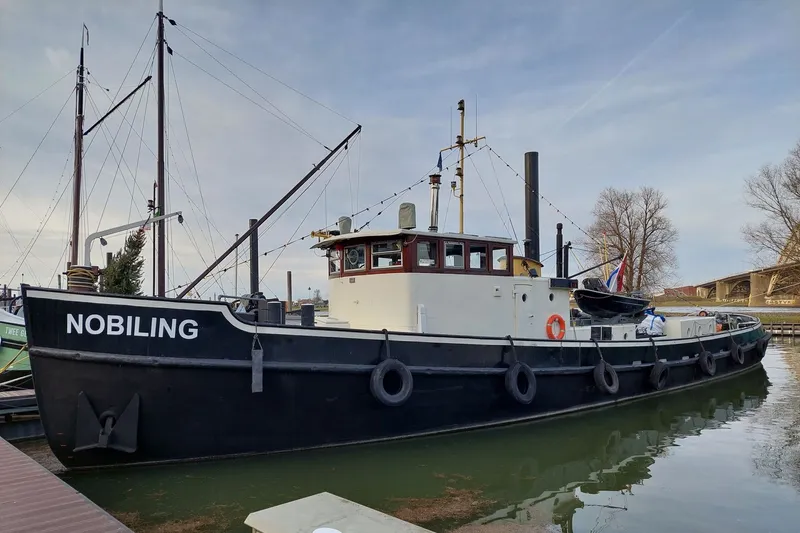
Not everything floating on Dutch water is a real ship. Plenty of waterfront properties in the city are rectangular concrete pontoons topped with timber-frame boxes, and inside they feel exactly like a land apartment. I kept this page to vessels that began life as working cargo carriers, inland passenger ships, sailing barges or maritime beacon vessels.
That choice has physical consequences. In a converted freight ship the shape of the hull dictates the room: the steel walls curve inward near the floor, portholes sit close to the waterline, and bulkheads cut the old hold into tight sleeping quarters. Headroom is best on the upper deck. If you want flat walls, wide doors and a lift, book a pontoon studio instead. If you want a porthole and a rivet line, the hull boats are what you are looking for.
How I compared these nine ships
Every vessel here began as a working hull: seven converted freight or passenger barges on the Oosterdok, a 1923 sailing tjalk and a 1952 Trinity House lightvessel across the IJ. Cabins sit in the original hold or deckhouse.
I ranked them on four things a headline rate hides. The bathroom comes first, because one shower for four cabins reads very differently from four showers for fifteen. Breakfast is the second: a full Dutch spread is worth ≈ $22 (€20) to ≈ $39 (€35) a day for two against eating out near Centraal. Then the mooring season, and how far the berth sits from the station. Guest scores on the cheapest Oosterdok boats sag on comfort and cleanliness more than on location, so the bathroom carried the most weight.
What Each Vessel Costs and Includes
Two tables, because the vessels sell on two different bases. The seven Oosterdok boats charge per cabin; the two Noord properties are let as a whole boat or a suite, so a nightly figure means something else. Both tables give the lowest listed rate for a standard double or twin.
| Vessel | Mooring | Hull and build | From, per cabin | Bathroom | Breakfast |
|---|---|---|---|---|---|
| Vita Nova | Oosterdok, Steiger 2 | Converted motor freight barge | ≈ $72 (€65) | Shared corridor showers and toilets | Usually not included |
| AmicitiA | Oosterdok, Steiger 3 | Converted freight barge | ≈ $77 (€70) | Shared corridor showers and toilets | Included |
| MPS Holland | Oosterdok, Steiger 3 | Motor passenger barge, 1952 | ≈ $83 (€75) | Shared or en-suite by category | Optional |
| Anna Maria II | Oosterdok 51, piers 3-4 | Historic botel ship | ≈ $83 (€75) | Shared corridor, basin in cabin | Optional |
| Passengership Avanti | Oosterdok, Steiger 3 | Converted 1930s Dutch barge | ≈ $88 (€80) | Shared: 4 showers, 5 toilets for 15 cabins | Included |
| Hotelschip Gandalf | Oosterdok 2 | Converted cargo barge | ≈ $94 (€85) | En-suite shower and toilet in every cabin | Included, served 08:30-10:30 |
| Hotelboot Zwaan | Oosterdok, winter berth (October-March) | Charter barge, sails April to September | ≈ $110 (€100) | En-suite in all 8 cabins | Included |
| Vessel | Mooring | Hull and build | Basis | Bathroom | Breakfast |
|---|---|---|---|---|---|
| Hotel Asile Flottant | Noord, De Ceuvel | Six restored ships, including the 1923 tjalk De Amsterdam | Per boat; De Amsterdam sleeps 6 | One bathroom on De Amsterdam | Kitchenette, no cooking allowed |
| Lightship Amsterdam | Noord waterfront | 1952 British lightvessel LV-12 | Per suite, from about $330 (€300) | En-suite with shower and bath | Included |
Converted Freight Ship Hotels at Oosterdok Pier: Central Budget Cabins
Vita Nova, AmicitiA and MPS Holland on Steigers 2 and 3
If the aim is sleeping on water within walking distance of the station without paying ≈ $220 (€200), the wooden jetty at Oosterdok is where you look. Vita Nova sits at Steiger 2, roughly a kilometre east of Amsterdam Centraal, and holds the cheapest berth in the table. You are renting a wooden bunk box with a small corner basin and a mirror, and the partitions between cabins are thin enough that you will learn your neighbour's alarm tone.
One pier further along, opposite the green copper roof of the NEMO Science Museum, AmicitiA and MPS Holland share Steiger 3, both about 900 metres to a kilometre from the station exit. AmicitiA's upper-deck lounge and terrace look straight across the water, a fair trade for lower-deck cabins where you turn sideways to pass between the bunks. MPS Holland's 1952 hull carries a mix of shared and en-suite rooms, so the category you click matters more than the price.
A wet evening taught me how exposed the last stretch of that walk is. I came down Oosterdokskade with a 65-litre rucksack and a laptop bag, rain driving sideways off the basin, and covered the final metres flat-footed and slow because the steel deck had gone slick. On board, the saloon smelled of wet wool drying over a radiator, and a kettle somewhere never quite stopped.
Gandalf, Avanti and Anna Maria II: What the Shared-Bath Savings Cost You
A common mistake on the big booking sites is assuming that a higher nightly price buys a private bathroom. Among the neighbouring ships on the Oosterdok, only Hotelschip Gandalf at Oosterdok 2 puts a shower and toilet inside every cabin, and its Booking.com guest score of 8.7 from close to 385 reviews is the strongest on the pier. Breakfast runs 08:30 to 10:30 with vegetarian, vegan and gluten-free options, the cabins are heated, and the location rating from couples is 9.3.
Passengership Avanti at Steiger 3 is the largest of the budget hulls: fifteen cabins share four showers and five toilets, workable if you shower early or late, and the included breakfast has a good reputation, with tea and coffee available all day. Read the small print. Wi-Fi reaches the public areas rather than the cabins, comfort scores sit at 6.3 out of 10 in guest reviews, and children are not accepted.
Anna Maria II, at Oosterdok 51 on the same jetty, follows the shared-facility formula with traditional bunks and a basin in the cabin. Rates and reviews on these three sit close together, so the bathroom category and the breakfast usually decide the booking, and the name on the bow rarely does.
Hotelboot Zwaan: Navigating Winter-Only Mooring Schedules
Search for Hotelboot Zwaan in July and you will come up empty. From April through September the ship unties its lines and runs multi-day cycling cruises through the Netherlands and Belgium, and its Amsterdam berth is a winter arrangement: the operator's own site says the boat is stationed in the heart of the city from the beginning of October to the end of March, according to the official Hotelboot Zwaan schedule. If your dates fall in summer, the choice is to join one of those cruises or to move the booking to another Oosterdok boat for the city stay.
That touring life shows in the maintenance. All eight cabins have a private hot shower and toilet, breakfast is included, sheets and towels come with the room, and rates start around $110 (€100). The Captains Lodge is a different proposition: a 50 m² apartment with its own kitchen and wheelhouse views, off-season only, from ≈ $110 (€100) a day with a seven-night minimum.
One cabin deserves a warning. The Lovers Nest sits in the bow behind its own entrance and its own steep stairs, which is charming at check-in and less so with a suitcase. Smoking is forbidden inside the ship, there is a covered area on deck, and the Public Library two minutes away is where guests go for free internet.
Historic Tjalks and Specialized Vessels in Amsterdam Noord
Hotel Asile Flottant at De Ceuvel: Private Deck Living on a 1923 Tjalk
If a two-person bunk beside fourteen strangers sounds claustrophobic, the alternative is to rent the whole vessel. Moored along the Johan van Hasseltkanaal at Korte Papaverweg 2, inside the De Ceuvel eco-hub, Hotel Asile Flottant is a group of six restored ships let as independent floating apartments. The one to know is De Amsterdam, a 1923 Dutch tjalk of 23 by 4 metres with 60 m² inside: a double bed of 160 × 200 cm in a separate bedroom, two singles of 90 × 200 cm in the living room, two connected singles of 80 × 200 cm, one bathroom, free Wi-Fi, linen and towels, and limited free parking.
A tjalk, for the record, is a historic sailing cargo barge, first built in the seventeenth century and recognisable by the wooden leeboards on each side that stopped it drifting sideways. De Amsterdam was built for transport, and the conversion kept the iron hull and the wooden interior rather than hiding them, down to the wall covering printed with life-size canal houses.
Two rules shape a stay. The kitchenette handles coffee, tea and cold food only; the no-cooking rule is stated plainly on the operator's page, so plan on Café de Ceuvel next door or dinner across the water. And the mooring sits in an industrial, artistic corner of Noord, a 15 to 20 minute walk from the ferry landing, which is why a bicycle rental earns its keep here.
Lightship Amsterdam: Two Suites in a 1952 Lightvessel
For maritime steel without the bunks, Lightship Amsterdam is the retired British lightvessel LV-12, built in 1952 and now moored in Noord. A lightship carried lantern machinery, generators and crew quarters for weeks on station, so the hull is deeper and beamier than a canal barge, and the owners have carved out exactly two suites: the Machinery Room in the old engine space and the Upper Store in the bow. Both come with a king-size bed, a private bathroom with shower and bath, a minibar, a coffee machine, free Wi-Fi and a front-deck terrace, with breakfast included and served in the room or outside when the weather allows. Rates start around $330 (€300), and the boat is listed as adults only and no cooking; the Lightship Amsterdam site and its booking page carry the current suite rates.
What you trade for that is the postcard centre. The mooring is in the working harbour of Noord, reached by ferry and then a walk or a bike ride, and the view is cranes and container barges rather than canal houses.
For scale, the Oosterdok cabins are bunk rooms: two berths, a basin and just enough floor to dress one person at a time. De Amsterdam gives six guests 60 m² across a 23 by 4 metre hull. The two lightvessel suites belong in the same bracket as the tjalk, with high steel ceilings and full bathrooms.
Inside a Dutch Barge Hotel in Amsterdam: Physical Realities and Risks
Steep Companionways, Narrow Gangways, and Luggage Handling
Boarding a working hull is a physical act. Amsterdam's Oosterdok and canal basins sit behind locks at a controlled level, so unlike a tidal port the gangway does not climb and fall through the day. What you get instead is a perforated metal ramp that turns slick in an autumn downpour.
Past the bulwark, the boat sets the terms. Historic ships keep water out with raised steel sills at every doorway, so you step high and duck low as you move through the deckhouse. Going below is the real test: the companionway ladders are steep enough that you turn and descend backwards with both hands on the rails, and the treads are shallow enough to punish leather soles. A hard-shell rolling case is the wrong luggage for this. A soft duffel goes down under one arm and stores under a bottom bunk.
The one time I ignored that advice, a 25 kg hard-shell case got away from me on the second step and took a chip out of the varnish on a bulkhead. I carried it back up the same way the next morning and left it in a locker at Centraal before the train home, and I have travelled with a duffel ever since.
- Pack soft: duffels and rucksacks fit the companionways and the space under a bottom bunk.
- Wear rubber soles on painted steel decks and wet timber piers.
- Anyone with knee, hip or balance problems should book a ground-level studio rather than a below-deck berth.
Below-Waterline Acoustics, Harbour Motion, and Climate Control
Seasickness is rarely the issue on an Amsterdam botel. The Oosterdok basin and the Noord canals are sheltered, so there is almost no roll or pitch, and the most you feel is a soft nudge against the fenders when a tour boat passes.
Sound is the bigger variable. Steel is a sounding board, and in a lower bunk your ear sits close to the plating, where you hear ripples slapping the hull, a bilge pump switching itself on, and the macerator of the nearest toilet. The wooden partitions between cabins on the budget barges block very little of it.
One winter night on the Oosterdok, a bilge pump started up at 03:00 and ran in short bursts until dawn. I lay there listening to it the way you listen to a dripping tap, and in the morning the skipper told me it was routine after a week of rain. Earplugs live in my washbag now.
In autumn and winter the heated boats use hot-water radiators, and the discomfort is condensation: single-pane portholes collect water inside when the air outside drops near freezing, and a small cabin with four people in it is stuffy by morning. Cracking the porthole or the vent an inch overnight is the standard fix, and it is why a radiator you can control matters more than a few extra square metres of cabin.
Getting to the Piers and Paying for It
Walking from Amsterdam Centraal vs Taking Free IJ Ferries to Noord
Where your ship is tied up decides your arrival. The seven Oosterdok vessels, Vita Nova through winter-moored Zwaan, need no bus, tram or ferry. Leave Centraal on the city side, pass the bike parking and the OBA library, and follow Oosterdokskade for ten to fifteen minutes on flat pavement to the piers.
For Asile Flottant and Lightship Amsterdam you cross the IJ from the north side of the station. The free GVB IJ ferries carry pedestrians, cyclists and mopeds at no charge on F1 to F7; F3 to Buiksloterweg runs day and night, while the NDSM routes (F4, and F7 from Pontsteiger on the west side) stop overnight, which matters if you arrive on a late train. Following a GVB timetable expansion that took effect on 1 September 2026, the Oostveer (F1), Distelwegveer (F6) and Houthavenveer (F7) now run more often and later into the evening, so reaching Noord after dinner is easier than it used to be. In bad weather I check the GVB app, which carries the live ferry disruption notices, before walking to the pontoon.
Tourist Tax, VAT and the Rules That Trip Up Bookings
Every quote on these boats is before tax. Under the 2026 City of Amsterdam tax tariff, the municipal tourist tax is 12.5% of the net overnight rate, excluding VAT. On top of that, the Dutch tax office has applied 21% VAT to short-stay accommodation since 1 January 2026, replacing the old 9% rate; the rule is set out in the Belastingdienst page on the VAT rate for accommodation and explicitly covers boat cabins.
Run the arithmetic once. A shared-bath cabin at ≈ $88 (€80) with breakfast, two nights, comes to ≈ $180 (€160) before tax and ≈ $200 (€180) with the tourist tax. A ≈ $100 (€95) cabin without breakfast, with the tax settled on arrival, costs ≈ $210 (€190) plus ≈ $26 (€23.75), and the two breakfasts you then buy near the station close most of that gap.
Payment and cancellation on small ships
- Avanti's booking-site listing takes the room charge online on the property's behalf and advises cash for extras.
- Hotelboot Zwaan takes cash on arrival and no credit cards, and asks a ≈ $22 (€20) deposit for the room key.
- Hotelschip Gandalf asks a ≈ $22 (€20) cash damage deposit, returned at check-out.
- Cancellation windows of seven to fourteen days, or non-refundable deposits, are normal on ships with a handful of cabins, because a last-minute no-show is very hard to resell.
One more number for anyone planning ahead: Amsterdam's coalition agreement, presented in June 2026, sets out a rise in the tourist tax from 12.5% to 16% from 2027, with 20% pencilled in by 2031.
Check-In, Left Luggage, and What Happens When a Ship Is Away
Arrival Windows and Where to Leave Bags
The nine vessels here are run by small crews with no 24-hour front desk, and the arrival window is the one thing worth settling in writing when you book. Give the boat your train or flight time and ask when someone will be on board; a late-evening arrival on a boat whose gangway shuts for the night needs a message in advance.
If you land before your cabin is ready, Amsterdam Centraal has luggage lockers inside the station, open from 05:00 to 01:00, and Lockerpoint runs a 24-hour locker store a few minutes away from about $7.7 (€7) per 24 hours. Storing a bag for the day is cheaper than paying for an extra night on board.
If the Ship You Want Is Not at the Pier
Zwaan is the only vessel on this list that leaves, and it does so every summer. If your dates fall between April and September, check whether the boat is cruising and, if so, book another Oosterdok berth for the city stay. The Noord vessels and the remaining Oosterdok barges keep their moorings all year.
Wi-Fi and Cooking on Board
On the older Oosterdok barges, Wi-Fi is advertised for the public areas rather than the cabins: Gandalf, AmicitiA and Avanti all list it that way, and Zwaan points guests to the Public Library two minutes away. The two Noord properties put it in the room. None of the seven Oosterdok boats offers a guest kitchen, and cooking is banned on both Noord vessels, where De Amsterdam's kitchenette is limited to coffee, tea and cold food and Lightship Amsterdam states plainly that guests cannot cook.
Final Verdict: Which Amsterdam Barge Fits Your Travel Scenario?
Match the trip to the vessel before you match the vessel to the price. The table below prices a two-night stay with the tourist tax added, using the lowest listed cabin rate in each case.
| Scenario | Vessel | Two nights, tourist tax added |
|---|---|---|
| Solo, weekend, lowest price | Vita Nova, shared bath | about $160 (€146) |
| Couple, breakfast included | AmicitiA | about $170 (€158) |
| Couple, private bathroom and breakfast | Hotelschip Gandalf | about $210 (€191) |
| Winter weekend, private bathroom | Hotelboot Zwaan, October to March | about $250 (€225) |
| Family of six, whole boat | De Amsterdam, Asile Flottant | priced per boat |
| Two people, suite with a bath | Lightship Amsterdam | from about $740 (€675) |
Best Oosterdok Freight Barges for Solo Travelers and Short Layovers
Arriving by train for one or two nights with convenience as the priority? Stay on the Oosterdok pier. If every euro counts and a corridor shower is acceptable, AmicitiA and Avanti at Steiger 3 include breakfast in the base rate, which is worth more to a two-night stay than a couple of euros off the headline price.
If sharing a toilet with fourteen other cabins is a dealbreaker, the answer is Gandalf at Oosterdok 2, where a private heated shower and toilet in every cabin and the best-reviewed breakfast on the pier come with it. Travelling between early October and late March, check Zwaan first: eight en-suite cabins with breakfast included.
Best Restored Historic Hulls for Families, Groups, and Longer Stays
Families, groups of four to six and anyone staying more than three nights should look across the IJ. Chartering De Amsterdam at Asile Flottant gives six people 60 m², five beds and a private deck inside De Ceuvel, on the understanding that hot meals are cooked elsewhere. Couples who want historic steel and a long soak have one option on this list with a bathtub, and it is the lightvessel.
What I Would Skip
Two things I would leave alone. The Captains Lodge at Hotelboot Zwaan is the first, unless you are staying a week: off-season only, from ≈ $110 (€100) a day, seven-night minimum, which rules out a weekend and makes a short stay poor value against the ship's ordinary cabins. The second is AmicitiA if guest scores matter to you. Its main Tripadvisor listing sits at 2 out of 5, which converts to 4 out of 10; a second Tripadvisor page for the same boat averages 3.5 out of 5, or 7 out of 10; and on Booking.com the cabins hold 7.4 out of 10. Gandalf, for comparison, is 8.7 out of 10 on Booking.com. That spread says the experience varies with the cabin and the season, and the same jetty has better-reviewed berths at a similar price.
If you want to cook, or if anyone in your party cannot manage steep ladders, skip hull cabins altogether: the no-cooking rule applies on both Noord vessels, and the below-deck berths on the Oosterdok barges put a ladder between you and every exit. A ground-level studio is the better booking.