 Floating Hotel
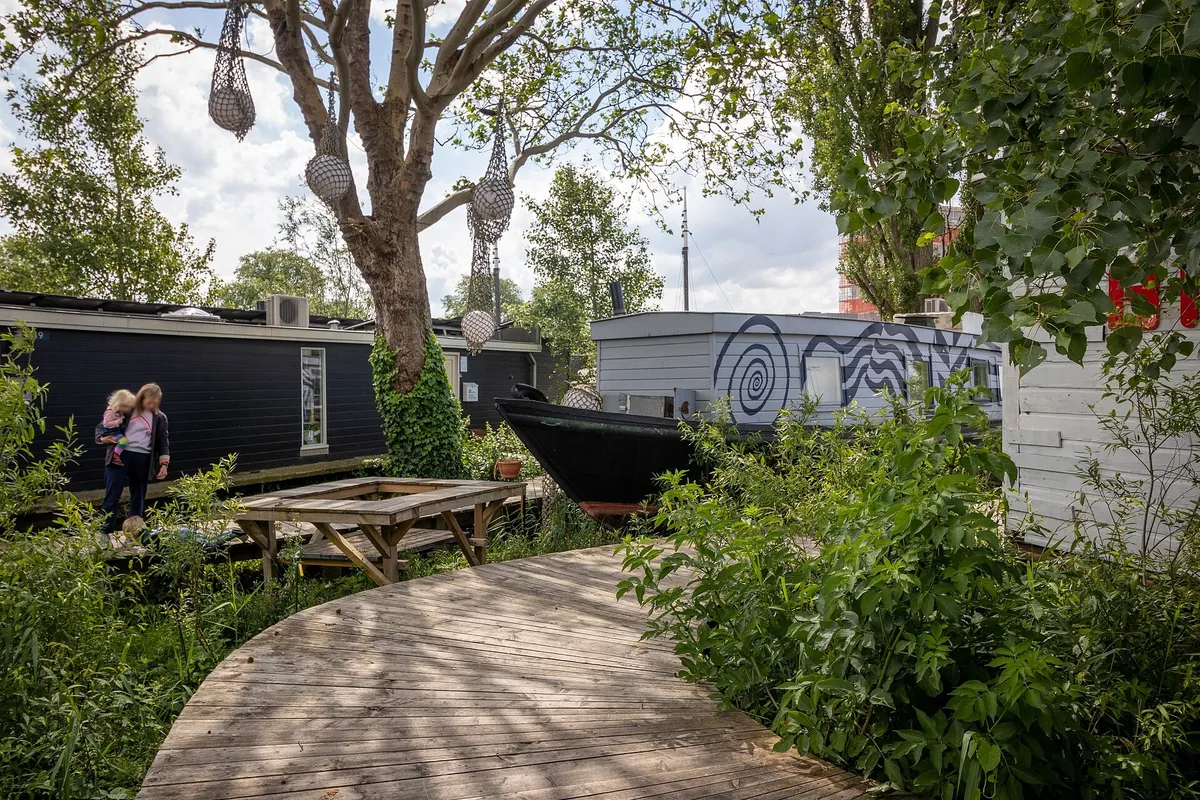
Stepping aboard a converted vessel often reveals compromises that slick booking galleries leave out: cramped head compartments, damp hulls, and unpredictable dockside noise. In this Hotel Asile Flottant Amsterdam review, I break down the physical build, daily logistics, and living quarters across its fleet of restored historic ships moored in Amsterdam Noord.
Moored along the quiet banks of the circular cleantech quarter known as De Ceuvel, this micro-hotel operates as a permanent fleet of six distinct historic Dutch and Danish working boats. Rather than functioning as a standard hotel corridor on water, each vessel functions as a self-contained private suite with its own independent access, layout challenges, and marine mechanical systems.
Hotel Asile Flottant Amsterdam Review: Heritage Ships in a Regenerative Eco-Hub
The Ceuvel-Volharding Heritage: Mooring in Amsterdam's Circular Cleantech Quarter
The hotel is situated at Korte Papaverweg 2 in Amsterdam Noord, berthed in the sheltered Johan van Hasseltkanaal. This basin formerly housed the Ceuvel-Volharding historic shipyard, an industrial site that underwent extensive ground remediation using phytoremediation plants to extract heavy metals and pollutants from the soil.
Today, the De Ceuvel eco-park forms an internationally recognized cleantech quarter where repurposed houseboats sit on land amidst cleansing grasses, connected by elevated winding wooden jetties. The six operational ships of Hotel Asile Flottant remain tied directly in the adjacent canal water, securely fastened to wooden pilings.
The surrounding Buiksloterham neighborhood mixes active light industry, creative studios, and modern residential developments. The lively NDSM Wharf creative district sits 1.5 kilometers to the west, while the A’DAM Toren and Eye Film Museum rise 2 kilometers directly south along the IJ riverbank.
Transit Routes and Mooring Access: Ferries, Metro 52, Cycling, and Parking Realities
Reaching the ships from Amsterdam Centraal station requires a straightforward water crossing. Pedestrians and cyclists can board the free Buiksloterweg GVB ferry at the rear of the central railway station. The ferry crossing takes 3 minutes and operates 24 hours a day. From the Buiksloterweg dock, reaching the hotel takes an 18-minute walk or a 6-minute bike ride along Papaverweg.
If you prefer underground rail, Metro Line 52 runs from Centraal north to Noorderpark station in 2 minutes. From Noorderpark, connecting GVB bus 38 brings you to Mosplein in roughly 5 minutes, leaving a 500-meter walk southwest along Papaverweg to reach the canal gate. While bikes are free on ferries, the GVB transit network permits standard bicycles on Metro Line 52 only during off-peak hours (weekdays 09:00–16:00 and after 18:30, all day on weekends) with a specialized transit bike ticket, while standard bicycles are strictly prohibited aboard GVB city buses.
Hotel Asile Flottant operates without a 24-hour reception desk. Guests must coordinate their estimated time of arrival with management beforehand to facilitate an in-person key handover on the pier.
On-site parking is severely constrained: the property maintains only 3 dedicated parking bays, which must be reserved directly with management prior to arrival. If those bays are occupied, drivers must utilize municipal street parking along Korte Papaverweg in parking zone Noord 90 (Tariff 7), charged at €1.60 per hour Monday through Saturday from 09:00 to 19:00 and Sunday from 12:00 to 19:00, with free parking during overnight hours.
Historic Boat Hotel Amsterdam Noord: Vessel Profiles, Floor Plans, and Capacities
Couple-Centric Heritage Hulls: Anneliese Cutter and North Sea Botter UK85
The smallest vessel in the fleet is Anneliese, a 1942 Danish fishing cutter measuring 25 square meters. It is configured for two guests, centered around a king-size bed measuring 180 by 200 centimeters. The interior pairs original timber ribs with a compact wet cell and an open seating corner, with base rates beginning at €193 per night.
For those drawn to traditional wooden shipwrighting, the UK85 represents an authentic 1922 oak North Sea Botter measuring 18 by 5 meters, offering 30 square meters of interior space. The letters "UK" denote its historical home fishing port of Urk, formerly an island in the Zuiderzee. The boat sleeps up to four guests across two double beds measuring 140 by 200 centimeters built directly into the timber forepeak, starting from €269 per night.
In the forepeak of the UK85, overhead clearance drops below 1.90 meters, requiring taller travelers to bend while moving between bunks. Ventilation is maintained through original operable deck light prisms and solid wood deck hatches. Both small vessels provide outdoor seating on their aft decks, giving guests an immediate waterline view across the canal.
Mid-Size Restorations: Les Six Frères and Steel Tjalk De Amsterdam
Les Six Frères is a 1940 luxury motor vessel measuring 22 by 4 meters with an interior area of 50 square meters. Its layout is uniquely suited to privacy: it accommodates up to four guests across two fully separated cabins located at opposite ends of the hull, separated by the central raised salon and steering position. Nightly rates start from €269.
In contrast, De Amsterdam is a 1923 traditional Dutch Tjalk cargo barge constructed from riveted steel, measuring 23 by 4 meters with a spacious 60 square meter floor plan. Originally designed with retractable leeboards to navigate shallow inland waterways–now permanently secured in hotel configuration–the hold has been converted into a wide open-plan living area that sleeps up to six guests from €293 per night.
Because De Amsterdam keeps its open cargo-hold architecture, sleeping berths sit within partitioned timber alcoves rather than isolated staterooms. This layout works well for families or close friends, whereas two couples traveling together will find far better acoustic isolation aboard Les Six Frères.
Flagship Group Vessels: Haringlogger Holland VII and Sea-Going Cutter De La Soul
The largest historic vessel berthed at the site is Holland VII, an 80-square-meter 1911 Haringlogger fishing cutter certified as "Floating Dutch Heritage" (Varend Erfgoed) in the Netherlands. Accommodating up to six guests starting at €388 per night, its expansive interior features robust exposed framing, a full dining area, and three separate sleeping compartments.
The second flagship is De La Soul, an imposing 1954 sea-going cutter measuring 22 by 5 meters with 65 square meters of living space. Configured with three independent bedrooms sleeping up to six guests, this vessel starts from €393 per night. Its signature interior feature is a private central screening lounge equipped with a digital projector, screen, and motorized remote-controlled red velvet curtains.
| Vessel Name | Vessel Type & Year | Interior Size | Max Capacity | Starting Rate |
|---|---|---|---|---|
| Anneliese | Danish Cutter (1942) | 25 m² | 2 Guests | €193 / night |
| UK85 | Oak North Sea Botter (1922) | 30 m² | 4 Guests | €269 / night |
| Les Six Frères | Motor Vessel (1940) | 50 m² | 4 Guests | €269 / night |
| De Amsterdam | Steel Tjalk (1923) | 60 m² | 6 Guests | €293 / night |
| Holland VII | Haringlogger (1911) | 80 m² | 6 Guests | €388 / night |
| De La Soul | Sea Cutter (1954) | 65 m² | 6 Guests | €393 / night |
Living Aboard: Marine Infrastructure, Living Conditions, and Acoustic Realities
Marine Systems in Practice: Macerator Pump Toilets and Companionway Ladders
Staying aboard vintage vessels requires adjusting to real marine mechanical systems. Waste management relies on specialized electric macerator pump toilets that grind and discharge waste through flexible lines connected to the municipal sewer network. Throwing anything other than ordinary toilet paper into the bowls–such as wet wipes, facial tissues, or sanitary products–will jam the impeller blades.
The hotel enforces a strict policy regarding marine plumbing: clearing an avoidable macerator blockage caused by foreign items results in a direct deduction from your €200 security deposit.
Accessing the lower decks involves descending steep companionway marine stairs set at angles approaching 70 degrees, with companionway hatches measuring under 65 centimeters wide. Raised steel coamings and timber bulkheads require careful step-over movements. Guests should bring soft duffel bags rather than rigid oversized suitcases, which cannot clear the companionway turns or fit into narrow cabin passageways, a standard requirement detailed in our packing list for floating hotels.
Kitchenette Realities: Strict No-Cooking Policies and Neighborhood Dining
Every boat features a designated galley counter equipped with an under-counter refrigerator, sink basin, electric kettle, and Nespresso pod coffee machine. However, to comply with strict municipal marine fire codes governing historical wooden and steel hulls, open cooking hobs, hot plates, and ovens are strictly forbidden across all six ships.
This no-cooking kitchenette policy means self-catering is limited to cold breakfasts, sandwiches, and simple prepared food. For grocery provisions, full-scale Dirk and Albert Heijn supermarkets operate at Mosveld and Mosplein, exactly 500 meters away on foot. For fresh sourdough loaves and pastries, Broodbakkerij Ex is located 1.2 kilometers away at Waddenweg 10.
Directly beside the mooring pontoon, Café De Ceuvel provides immediate dining without leaving the quarter. The venue operates a dedicated zero-waste, plant-based kitchen serving seasonal organic lunches and dinners, though reservations are highly recommended during warm weekends.
Movement and Acoustic Dynamics: Water Stillness vs. Evening Deck Chatter
Because the ships are permanently moored inside the sheltered, inland Johan van Hasseltkanaal, guests will not experience sea swell, heavy rolls, or wake motion from commercial shipping vessels. The canal water level is managed by city sluices, maintaining an almost motionless waterline that prevents motion sickness, as examined in our study of motion sickness on moored floating hotels.
Sound dynamics, however, require realistic expectations. While the submerged timber and insulated steel hulls provide solid dampening against exterior wind and water sloshing, sound travels easily across open canal water. Café De Ceuvel operates an active outdoor terrace and music events immediately adjacent to the boardwalk until 23:00 on weekdays and until 01:00 on Friday and Saturday nights.
Laughter, conversation, and background music from the cafe terrace remain clearly audible on ship decks and through open skylights during operating hours. Travelers who go to sleep early on weekends should keep forward hatches closed and carry a pair of basic foam earplugs.
Pricing Structure, Local Taxes, and Booking Policies for an Asile Flottant Private Ship Stay
Base Nightly Rates, Dutch VAT, and Amsterdam Municipal Tourist Taxes
Base accommodation pricing ranges from €193 per night for the two-person cutter Anneliese to €393 per night for the six-person cutter De La Soul. However, finalizing a reservation in the Netherlands requires factoring in regional lodging taxes that add substantial fees to the advertised hull rate.
For 2026, the Netherlands levies a standard 21% Value Added Tax (BTW) on short-stay hotel and lodging accommodations. On top of that, the City of Amsterdam imposes an official municipal tourist tax of 12.5%, which is calculated directly on the accommodation rate excluding VAT, per the official Amsterdam tourist tax regulation.
| Expense Component | Calculation Basis | Worked Example Rate |
|---|---|---|
| Base Nightly Hull Rate | Contracted vessel fee | €200.00 |
| Dutch Lodging VAT (BTW) | 21% on base rate | €42.00 |
| Amsterdam Tourist Tax | 12.5% on base rate (excl. VAT) | €25.00 |
| Total Required per Night | Combined lodging and statutory fees | €267.00 |
When booking an asile flottant private ship stay, ensure your payment calculations account for this roughly 33.5% combined tax burden on top of the net nightly figure.
Payment Schedules, Security Deposit Bonds, and Cancellation Penalties
Direct bookings processed through the Hotel Asile Flottant reservation system operate on a clear two-stage payment structure. Guests must settle a 50% deposit at the time of reservation, while the remaining 50% balance is charged automatically 30 days prior to the check-in date.
Upon arrival, the operator takes a mandatory €200 refundable security bond to cover potential damage or unauthorized smoking aboard. This deposit is released following an inspection of the boat’s condition and marine sanitation system after departure.
Standard check-in begins at 15:00, while check-out must be completed by 11:00. The property enforces a tiered cancellation schedule:
- 60 days or more before arrival: Cancellation incurs a minor 1% administrative card-processing fee.
- 30 to 59 days before arrival: Cancellation forfeits 50% of the gross booking total.
- Fewer than 30 days before arrival: Cancellation results in a 100% non-refundable forfeiture of the full booking sum.
Practical Constraints and Alternative Options: Who Should Skip De Ceuvel Floating Boats?
Physical Mobility Barriers, Toddler Hazards, and Ergonomic Challenges
Due to the historical preservation of these hulls, none of the ships meet modern barrier-free accessibility guidelines. Boarding involves stepping over narrow, unguarded gangways that can turn slick in wet weather, followed by descending vertical companionway ladder stairs into the living quarters.
Doorways feature raised bulkheads requiring deliberate steps, ceiling clearances in forepeaks dip below standard standing heights, and the adjacent boardwalks have open water drop-offs without safety nets. For wheelchair users or travelers managing severe joint or mobility issues, staying aboard these vessels is practically impossible.
Families traveling with toddlers should also reconsider booking. The combination of open perimeter railings, direct canal drops, and steep internal ladder hatches demands continuous visual supervision, making traditional land-based family hotels far safer.
Urban Distance Trade-Offs and Mainland Boutique Alternatives
Mooring in Amsterdam Noord trades immediate central access for space and character. Getting to the central Canal Ring (Grachtengordel) takes roughly 25 to 30 minutes each way via the Buiksloterweg ferry and connecting trams. If your priority is stepping straight out into the historic museum district, alternative lodging choices may better match your plans.
- Crane Hotel Faralda: Located at NDSM Wharf, offering 3 designer industrial suites inside a converted harbor crane from €600 per night with elevator access, as compared against unconventional stays in our Botel Amsterdam NDSM review.
- Sir Adam Hotel: Positioned inside the A’DAM Tower directly at the ferry slipway, offering contemporary hotel suites, continuous desk service, and rapid transit access from €220 per night.
- Canal Ring Houseboats: Traditional houseboats moored on the Prinsengracht or Keizersgracht deliver direct canal living within the center, though nightly rates routinely exceed €350 and hulls experience frequent wash from tourist cruise boats.
Final Verdict: Is an Asile Flottant Private Ship Stay Worth Booking?
Guest Suitability Matrix: Ideal Travelers vs. Clear Mismatches
Hotel Asile Flottant offers an authentic maritime stay that rewards travelers who value living aboard restored industrial heritage over standard corporate hotel conveniences.
Book this property if:
- You appreciate classic maritime construction, exposed joinery, and private hull layouts.
- You value circular cleantech initiatives and want to support the regenerative De Ceuvel community.
- You are comfortable using bicycles or ferries to commute into central Amsterdam.
- You are booking a group stay on Holland VII or De La Soul and want an authentic communal space.
Look elsewhere if:
- You need an elevator, ground-level step-free access, or struggle with steep ship companionways.
- You plan to cook hot family meals on an electric or gas stove.
- You require absolute quiet before 23:00 on weekends while adjacent cafe events run.
- You want an on-site front desk team to handle luggage and concierge bookings around the clock.
Value Assessment and Essential Pre-Arrival Checklist
At rates running from €193 to €393 per night (excluding statutory taxes), Hotel Asile Flottant provides outstanding spatial value compared to standard hotel rooms across Amsterdam, especially for small groups sharing a multi-cabin vessel. Before you finalize your booking, keep this four-step arrival checklist in mind:
- Coordinate your exact estimated arrival window directly with property management to ensure a smooth key handover at Korte Papaverweg 2.
- Reserve one of the 3 private parking spaces in advance if bringing a vehicle, or load a mobile parking app for zone Noord 90 street meters.
- Pack soft duffels or unstructured luggage to fit through the narrow ship companionways, alongside flat footwear with non-slip soles.
- Plan grocery stops at Mosplein for cold provisions, keeping in mind that the galleys exclude hot plates and cooking stoves.