Cargo Hold or Passenger Deck: What the Hull Decides
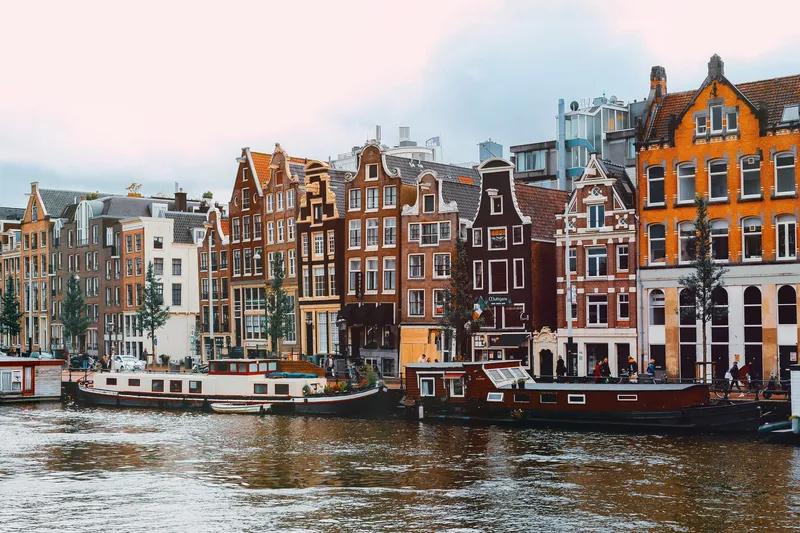
Promotional photographs of Amsterdam's historic barges show the salon, the coffee machine and the water outside the portholes. They tend to leave out the companionway you carry your bag down, and the fact that the ship you are booking may not be in the city at all when you arrive. Two questions settle whether a converted vessel suits you: what was this hull built to carry, and does it stay put during your dates.
A Dutch vrachtschip was built to swallow bulk freight through open hatches; a passagiersschip was built to move people. Convert the first type into a botel and guest cabins get carved out of the hold, between ribs and stringers that cannot be cut away without weakening the hull. Cabins of 5 to 8 square metres are the norm, with bunk beds, a fitted washbasin and a walk down a central gangway to the shower: Vita Nova at Oosterdok Steiger 2 is the clearest local example, its twin bunk rooms sitting inside the old hold, heated by radiator pipes off a central boiler, with toilets and showers shared across the hallway.
Passenger hulls behave differently, because their interiors were organised around crowds from the start. Wider companionways, higher deckhead clearances, and on ships such as MPS Holland a private en-suite wet room tucked into every cabin compartment. The compromise lands on the stairs: passenger decks were stacked tightly above the engine room, so the ladders down to the lower cabins are often the steepest on the quay.
Will the Ship Still Be in Amsterdam?
A calendar mismatch spoils more Amsterdam boat stays than noise or cabin size. Hotelboot Zwaan spends the cold half of the year in the city, as its own site states: the ship is stationed in central Amsterdam from the beginning of October until the end of March, then leaves to run multi-day cycling and sailing charters. The same page lists eight cabins with private hot shower and toilet, breakfast included, a covered roof terrace, and a 50 m² Captain's Lodge apartment let only off-season, from ≈ $110 (€100) a day with a seven-night minimum. Between April and September, ship and berth belong to the charter season.
The second part of the question is legal. An overnight stay on a moored ship is a land accommodation contract, not a cruise ticket; the boating and mooring rules published by the City of Amsterdam – 6 km/h as a general speed limit, 7.5 km/h on the Oosterdok itself, a valid vignette for any berth – bind the skipper and the permit holder. Guests carry none of that liability, though they do live with the consequence: by law, these hulls barely move.
The Fleet at a Glance: Cabins, Rules and Rate Benchmarks
Seven historic vessels take overnight guests in Amsterdam, and the differences between them shape the stay more than the headline price does. Rates below are benchmarks taken from operators and agencies; live quotes move with occupancy and season, a figure given per person comes from a group tariff, and a figure given per night comes from a booking channel. Walking distances are measured to Amsterdam Centraal.
Read the bathroom column before the price column, and the seasonal note before either: two of these ships are winter addresses only.
| Vessel | Berth and walk to Centraal | Hull | Rate benchmark | What you gain | What it costs you |
|---|---|---|---|---|---|
| Hotelboot Zwaan | Oosterdok Steiger 3, 10–12 min | Converted passenger barge, 8 cabins | Captain's Lodge from ≈ $110 (€100)/day (7-night minimum); cabins per night | Private hot shower and toilet in every cabin, breakfast included, covered roof terrace | In the city only from October to March; cash on arrival, no cards; ≈ $22 (€20) key deposit |
| Lightship Amsterdam | Mariadistelkade 6, Noord; free F3 ferry plus about 15 min on foot | British lightvessel, 1950s steel | Around $380 (£290)/night via specialist channels, 2-night minimum | Two architect-designed suites of 60–65 m², private decks, freestanding bath | Every city trip starts with a ferry; no cooking; no cots or extra beds |
| AmicitiA | Oosterdok Steiger 3, opposite NEMO, about 10 min | 1897 freight barge, 36 berths | Operator group rate ≈ $66 (€60) per person, breakfast and packed lunch | Central berth, large communal lounge, no minimum age | Showers and toilets along the corridor; 100% first-night bank deposit for groups of 8+ |
| Vita Nova | Oosterdok Steiger 2, 10–12 min | Converted cargo barge, twin bunk cabins | Operator group rate ≈ $66 (€60) per person | Cheapest central berth, heated cabins, breakfast | Shared bathrooms; compact bunks; check-out window 06:00–10:30 |
| MPS Holland | Oosterdok Steiger 3, about 900 m | River passenger ship, 11 cabins | Operator group rate ≈ $88 (€80) per person, buffet breakfast | Private en-suite bathroom in every cabin | Booking conditions rule out children up to 11; arrival window must be advised; 100% deposit for groups |
| Passengership Avanti | Oosterdok Steiger 3, about 10 min | 1930s passenger vessel, 30 berths | Operator group rate ≈ $66 (€60) per person; half-board ≈ $83 (€75) | Central heating and climate control, washbasin in every cabin, check-in until midnight | Shared corridor facilities; supplements for groups of 8+ |
| Hotelschip Gandalf | Oosterdok Steiger 2/3, 12–15 min | Converted passenger hotel ship | Rates on request | Quiet basin berth, breakfast salon, classic profile | Same winter-only pattern as Zwaan, so dates must be confirmed first |
If a private bathroom is the deciding factor, the Oosterdok list narrows to MPS Holland and Hotelboot Zwaan. AmicitiA, Vita Nova and Passengership Avanti all put the showers at the end of a corridor, which works for a short stay and wears thin by the fifth night.
What Gets Added to the Room Rate
Two levies sit on top of every boat cabin in Amsterdam, and since 1 January 2026 they add roughly a third to the net price. Accommodation VAT for short stays rose from 9% to 21%, and the Belastingdienst counts boat cabins among the rooms it covers: its page on the btw-tarief logies also folds in the gas, water and sanitary facilities that come with the cabin. On top of that the city charges a tourist tax of 12.5% of the overnight price excluding VAT, as set out in the City of Amsterdam tourist tax rules.
Percentages hide the money that matters. A ≈ $66 (€60) per person group tariff quoted net lands near ≈ $88 (€80) per person once both levies are applied, which closes most of the gap between a botel cabin and a mid-range hotel room on the same night.
The ≈ $17 (€15) day tourist tax that turns up in searches is a different levy: cruise operators pay it per passenger for day visits by transit sea and river cruise ships, and it has nothing to do with guests sleeping aboard a moored botel.
Deposit habits are the other surprise. Zwaan asks for payment in cash on arrival, accepts no credit cards and holds a ≈ $22 (€20) deposit against the room and entrance key. AmicitiA and MPS Holland ask groups of eight or more for a bank transfer covering the whole of the first night before anyone boards.
Nothing about the Oosterdok quay signals a departure from the card era, which is why the cash rule has caught me out exactly once: I stepped off the ferry with two bank cards and an empty wallet, walked back to Centraal Station for an ATM and paid for a cabin in twenties twenty minutes later than planned. Fifty euros in notes now travels with me to every one of these piers.
Prices are quoted in euros, so a dollar budget needs today's rate; the European Central Bank euro reference rates publish one every working day.
Oosterdok: Six Ships on Two Quays
The Oosterdok basin serves as Amsterdam's main berthing reserve for vintage passenger hulls. Moored along Steigers 2 and 3, directly overlooked by the green copper slopes of the NEMO Science Museum, these ships sit in calm, non-tidal water with the historic centre 10 to 15 minutes away on foot. Living conditions vary considerably from hull to hull.
MPS Holland and Zwaan: Cabins With Their Own Bathroom
MPS Holland is the only ship in the row designed around passengers from the keel up: 11 cabins, each with an enclosed modular wet room, a marine-grade washbasin and an electric macerator toilet, moored roughly 900 metres from Centraal. Booking conditions rule out children up to 11 years old, and the operator asks for the intended arrival window in advance, though check-in itself runs to just before midnight. Breakfast is a buffet in the timber-panelled salon. It is also the most-reviewed botel in the basin, averaging close to three out of five on Tripadvisor across more than a hundred reviews, so reading the newest ones is worth the ten minutes before committing to a week.
Zwaan is smaller and softer at the edges: eight cabins of two or three beds, each with a private hot shower and toilet, breakfast included, and a covered roof terrace that keeps the weather off. Two details from the operator's own page carry practical weight. Payment is cash on arrival, with no card option, and the two-person cabin in the bow, the Lovers Nest, is reached by stairs the operator flags as steep in writing, which makes it the wrong choice with a heavy bag. The same page points guests to the free internet at the OBA public library two minutes away and makes no promise of Wi-Fi in the cabins, which is the honest summary of connectivity on this quay.
AmicitiA, Vita Nova and Avanti: the ≈ $66 (€60) Tier
Price-first travellers end up comparing three conversions of working hulls, all with communal sanitation. AmicitiA, built in 1897 as a freight carrier, takes 36 guests in bunk cabins with storage hooks and a hot-and-cold washbasin; toilets and showers sit along the passageway. There is no minimum age, which makes it the friendliest ship in the basin for families with small children who can manage steep maritime stairs, and the Wi-Fi lives in the public deckhouse salon.
Vita Nova has the same bones on Steiger 2 – twin bunk rooms inside a converted hold, radiator heating off a central boiler, showers across the hallway – with a check-in window from 14:00 to 22:30 and an unusually early check-out from 06:00 to 10:30.
Passengership Avanti, a 1930s conversion with 30 berths on Steiger 3, is the warmest of the three in winter, thanks to a central climate and heating system retrofitted through the hold, and the only one of the trio with a washbasin inside every cabin. Groups of eight and above pay supplements and work to separate cancellation terms, but check-in runs until midnight.
Hotelschip Gandalf sits alongside them, a converted passenger ship that follows Zwaan's pattern of winter hotel work and summer charters, with rates given on request. Anyone comparing it with the other five should confirm the dates before the price.
Noord: A Lightvessel, a Free Ferry and a Fifteen-Minute Walk
Crossing to the northern bank of the IJ changes the scale of the stay. The old docklands around NDSM and Buiksloterweg berth ships too large for the shallow city canals, and the price of that quiet is a ferry ride every time you want the centre.
The outlier is Lightship Amsterdam, a British lightvessel built in the 1950s, which its operators describe as having guided sailors off the English coast. Moored at Mariadistelkade 6, the ship now holds two architect-designed suites, the Machinery Room and the Upper Store, of roughly 60 to 65 square metres each. Both come with a private entrance from the deck, a king-size bed, a minibar and a bathroom with a walk-in shower and a freestanding bath, plus the run of a large front deck. Cooking is not possible in either suite. Rates through specialist channels sit around $380 (£290) a night against a two-night minimum, check-in runs from 15:00 to 22:00, and departure is by 11:00. Children are welcome, though cots and extra beds are not provided.
Crossing the IJ on the F3
Free GVB ferries leave from the rear of Centraal Station around the clock. The F3, the Buiksloterweg service, sails at least five times an hour in each direction and takes under five minutes; from the landing it is about fifteen minutes on foot to Mariadistelkade 6 along the residential side of the canal, or under five by bicycle. The F2 heads for the eastern docklands instead. The GVB app carries live departure times and disruption notices and passes them to the national 9292 planner.
The crossing is never the slow part. I walked from the Buiksloterweg landing to the lightship in driving rain one autumn, which is how I learned that the canal footpath offers almost no shelter and that the extra ten minutes over the ferry ride is the stretch maps leave out. The return at first light, with the whole IJ in front of the boat, costs nothing.
What Steel Does to Sleep, Heat and Signal
Converted freight barges weigh upwards of 150 to 300 displacement tons and sit low in a sheltered basin, so you will feel no pitch, roll or heave; the wash from a passing tour boat arrives as a faint momentary sway. Sound travels further than you expect. Below decks a steel hull behaves like a drum: a bilge pump switching on under the cabin sole, boots on the deck plate overhead, the gangway flexing against the quay at high water, voices carrying from two cabins away. Shore power keeps most of these ships silent at the quay, but a generator running alongside is audible in the cabins nearest the engine room. Earplugs are the most useful item in the bag on one of these ships.
Heat needs a little planning. In cold months the single-glazed bronze portholes run with condensation by morning. Avanti maintains automated climate control; the older freight hulls lean on radiator loops fed from a boiler, which warm a cabin unevenly and dry nothing. Mobile reception fades in berths below the waterline, and the router is usually in the salon: at AmicitiA that is the only place Wi-Fi is offered, while Zwaan sends guests to the public library instead. The technical reasons are set out in the separate article on Wi-Fi and mobile reception inside metal hulls.
Berth position matters as much as hull weight. The Oosterdok is a closed basin behind the NEMO building, so the water stays flat and the ships register little of the traffic leaving the lock; berths on the open IJ, such as the lightvessel's at Mariadistelkade, take the wash of every ferry and river cruise ship that passes, and on those decks the mooring lines and the gangway are what you hear at night. For light sleepers, the basin is the better berth.
Getting Below Deck With a Bag
Vessel ergonomics were designed around cargo capacity and crew utility, not guest leisure. Stepping below means descending steel companionway stairs pitched at angles between 45 and 60 degrees, and anyone with knee or balance trouble will find them hard work. Doorways carry raised steel watertight sills, or coamings, standing 15 to 25 centimetres above the deck plate to stop water moving between compartments; they are also where guests trip most often. Converted historic ships offer no wheelchair access, and an elevator retrofit is impossible inside hulls this narrow.
My own worst moment on this quay involved luggage, not weather. I reached an Oosterdok barge one spring evening with a full-size hard-shell case, started down a companionway closer to a ladder than a staircase, and wedged it on the second step. Getting it to the bottom took two hands, one knee and a good deal of noise on a steel deck. The soft duffel I carry now folds flat under the lower bunk frame and weighs nothing when it is empty.
- Ask before you try: there is almost always someone aboard who has carried a hundred bags down that ladder.
- Carry the case in front of you, not over your shoulder; the handrail on these stairs is short and rarely where you expect it.
- Leave the big bag in the salon or flat under the lower bunk and live out of a day bag for the rest of the stay.
Space inside a 6 to 8-square-metre cabin runs out quickly. A hard-shell case cannot be laid flat without blocking the doorway and the washbasin, which is why the packing list I use for barge trips is built around soft luggage, one adaptor and shoes with grip. Cabins on these ships hold two people comfortably and three only if everyone travels light.
Choosing, and Two Things Worth Skipping
One question separates a good booking from a disappointing one: is the ship static at its berth for every night you have paid for? Zwaan and Gandalf move with the charter season, and a berth photographed in July can be empty in October, so get the answer in writing along with the arrival window; several of these ships are run by one or two people who also make the breakfast.
Two things I would skip. The bow cabin on Zwaan is best avoided unless you like ladder-steep stairs, and planning Zwaan for a summer trip is wasted effort because the ship is not in the city at all. Beyond that, the lightship in Noord is the wrong kind of luxury if your days are about walking the centre: five free minutes each way multiply when you cross four times a day.
Where that leaves a shortlist. Pay for a private bathroom and the choice is MPS Holland all year or Zwaan in winter; take Vita Nova or AmicitiA when the berth matters more than the room; book the lightship when the ship is the reason for the trip. The remaining Amsterdam botels, from the Amstel to the NDSM wharf, each have their own review on this site.
Arrival-day checks:
• Steiger 2 and Steiger 3 sit minutes apart on the same quay and are easy to confuse with luggage in hand, so confirm the number before you leave Centraal.
• Wet steel deck plates and handrails are slick in rain; grip matters more than it does on a hotel staircase.
• If your train or flight slips, telephone the operator; after the stated check-in window there is unlikely to be anyone on the gangway.