 Floating Hotel
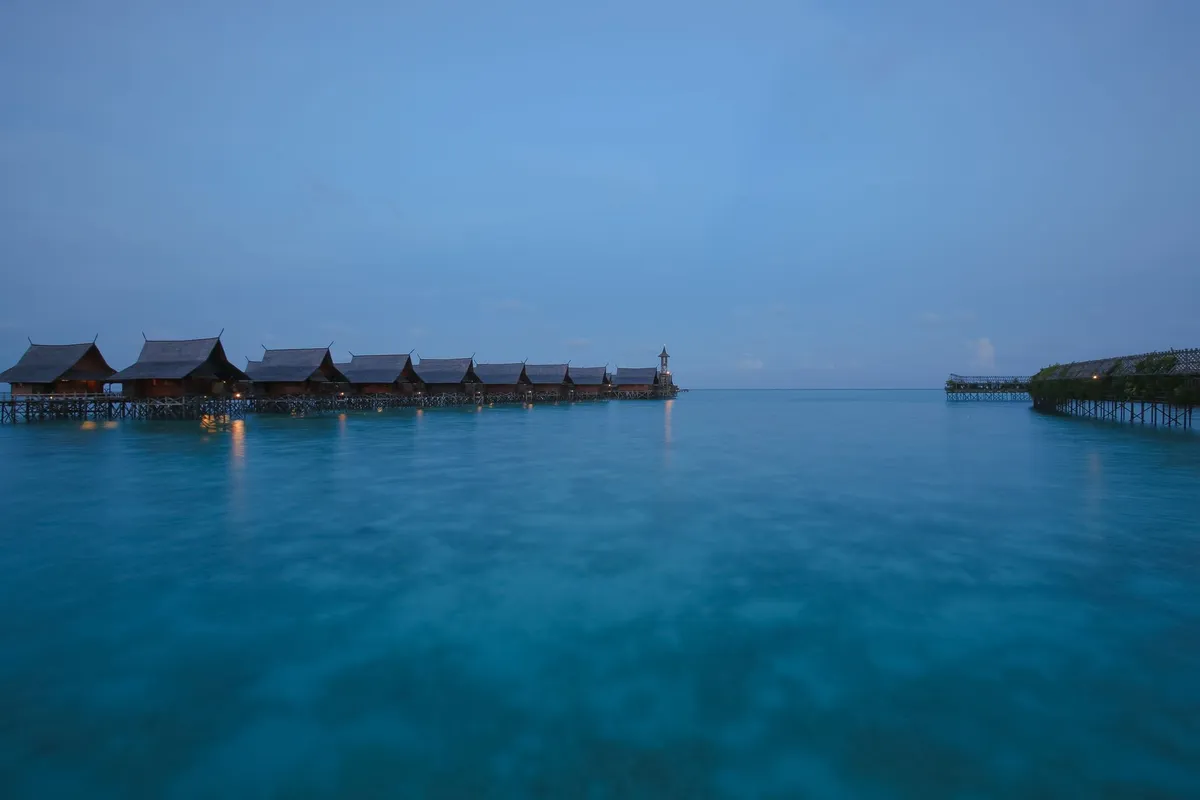
When booking a room over the sea, hotel marketing departments routinely blur the lines between stationary stilt structures and buoyant vessels. The physical distinction between an overwater bungalow vs floating hotel dictates your daily comfort, sleep quality, and physical safety. Over twelve years of staying in waterborne accommodations across Europe, the Americas, and Southeast Asia, I have learned that the engineering underneath your bed shapes everything from how your morning coffee sits on the nightstand to whether you can swim from your deck at 2:00 PM.
A stilt villa relies on rigid columns anchored permanently into the seabed, while a floating hotel rides on a buoyant hull that moves continually with the tide. This structural divergence creates contrasting realities for kinetic motion, shore access, plumbing mechanics, and fiscal costs. Understanding these mechanical parameters helps you avoid costly booking mistakes and vacation-ruining vestibular surprises.
Foundation vs. Flotation: Structural Engineering in Overwater Bungalows and Floating Hotels
Fixed Stilt Foundations and Static Pier Engineering
An overwater bungalow is not a floating structure; it is an elevated land building erected over an aquatic substrate. The entire load is transferred directly into the coral sand or marine bedrock through a pile-driven foundation. Marine contractors install these using heavy-gauge driven steel casing pipes, spun precast reinforced concrete columns, or ultra-dense tropical hardwoods such as Belian (ironwood, Eusideroxylon zwageri) and Azobé.
Because these piles penetrate deep into the seabed, they provide absolute structural overwater villa stability against standard wave chop. Under normal lagoon conditions, you will experience zero hydrodynamic heave, pitch, or roll. The structure behaves like a concrete foundation on land, isolating interior spaces from vertical movement.
However, static piles remain vulnerable to harsh marine mechanics. Subsea steel pilings face severe galvanic corrosion in saline electrolytes, requiring continuous cathodic defense via sacrificial zinc or aluminum alloy anodes and thick epoxy wraps. Tropical storm surges exert heavy cyclic lateral shear loads against the rigid shafts. When sea levels or storm surges rise, the deck cannot adjust, exposing the superstructure to upward wave slamming underneath the floorboards.
| Piling Material | Primary Corrosion / Degradation Mechanism | Structural Load Capacity | Typical Marine Service Life |
|---|---|---|---|
| Spun Precast Concrete | Chloride ingress causing internal rebar spalling | High (150–400+ kN per pile) | 30–50 years |
| Treated Marine Hardwoods (Belian / Azobé) | Marine wood-boring organisms (Teredo navalis) | Moderate (80–180 kN per pile) | 20–35 years |
| Heavy-Gauge Steel Pipe Casings | Galvanic oxidation; microbially influenced corrosion | Very High (300–600+ kN per pile) | 25–40 years (with cathodic protection) |
Buoyancy Pontoons, Hull Configurations, and Mooring Systems
A truly floating resort takes the opposite technical route by displacing water mass according to Archimedes' principle. Instead of penetrating the subsoil with static columns, the building rests on buoyant hulls. These typically consist of heavy precast concrete pontoon boxes filled with expanded polystyrene (EPS) cores, welded steel catamaran barges, or modular high-density polyethylene (HDPE) cubes.
To prevent floating hotels from drifting away, marine engineers deploy specialized tethering infrastructure. Common solutions include spud pole anchoring—where the pontoon collar rides up and down fixed vertical guide poles—and submerged heavy-chain catenary moorings connected to deadweight seabed sinkers. High-end eco-resorts often install elastic mooring cables, such as those engineered by Seaflex, which elongate under tidal pull to keep platforms stable without dragging heavy metal chains across fragile seabed ecosystems.
Buoyancy engineering imposes strict payload displacement ceilings. Adding heavy furnishings, plunge pools, or large guest gatherings lowers the available freeboard height. Furthermore, submerged pontoon surfaces accumulate barnacles, macro-algae, and tubeworms. Floating hotels must schedule in-water diver scraping every 12 to 36 months to remove biological fouling and preserve structural waterline integrity.
| Mooring System | Maximum Water Depth Limit | Tidal Range Tolerance | Seabed Physical Footprint | Maintenance Interval |
|---|---|---|---|---|
| Spud Pole Anchoring | 10–15 meters | Limited by pole length (typically <5 m) | Localized vertical pile points | Annual collar inspection |
| Seaflex Elastic Moorings | 30+ meters | High (adapts elastically to 8+ m tides) | Minimal (compact screw anchors) | Visual dive check every 24 months |
| Heavy Catenary Chains | 50+ meters | Very High (unlimited with slack chain) | Extensive sweep radius on benthos | Link caliper check every 12–24 months |
Hydrodynamics and Sensation: Overwater Villa Stability vs Floating Hotel Motion
Kinetic Motion Profiles: Roll, Pitch, and Hydrodynamic Heave
The sensory contrast between stilt villas and floating platforms is immediate. On fixed pilings, a cup of water placed on your bedside table remains still during a passing squall. On a buoyant pontoon, you will encounter continuous multi-axis motion, including rotational roll (side-to-side), pitch (forward-aft tilt), and vertical hydrodynamic heave.
Human vestibular physiology is sensitive to specific wave dynamics. According to medical motion sickness standards (ISO 2631-1 and BS 6841), peak kinetosis sensitivity occurs in low-frequency vertical oscillations between 0.16 Hz and 0.25 Hz. When low-amplitude ocean groundswells or boat wakes match this frequency, sensitive individuals experience dizziness, nausea, and disorientation even inside a moored hotel room.
External environmental disturbances amplify these movements. In active river corridors or open harbors, passing commercial vessels generate sudden wakes that induce abrupt structural roll. Guests staying on floating barges frequently monitor tools like MarineTraffic to identify incoming nighttime vessel traffic. When choosing a floating room, I look for berths situated near the platform's center of buoyancy on the lower deck, where rotational angular displacement is lowest. If you are prone to kinetosis, read our breakdown on motion sickness on moored floating hotels.
Berth Selection Diagnostic: If you are sensitive to movement, avoid end-of-pontoon corner suites. Angular displacement increases outward from the center of flotation, making roll and pitch twice as pronounced at outer perimeter corners during cross-current swells.
Acoustic Profiles: Wave Slap Resonance vs Mooring Groans
Sound carries differently through stilt footings compared to hollow buoyant hulls. Overwater bungalows produce a low-frequency drumming sound known as wave slap acoustic resonance. When wind-driven surface chop strikes cylindrical timber or concrete piles beneath the villa, hydraulic energy reverberates directly through the floor framework into the sleeping quarters.
To mitigate wave slap, builders install heavy elastomeric neoprene pads between the pile tops and structural timber floor beams. Some resorts also install submerged perimeter wave-deflector skirts to break up surface waves before they reach the main structural piles. Without these sound-dampening buffers, choppy water hitting the foundation piles can keep light sleepers awake.
Floating hotels exchange wave-slap drumming for mechanical friction noises. As tides rise and fall, heavy catenary chains groan under tensile load, elastomeric cords squeak under strain, and gangway articulation rollers scrape against dock plates. On river platforms, floating debris occasionally thuds against the upstream hull, generating hollow metallic vibrations throughout the berth. You can explore how water currents affect nighttime soundscapes in our analysis of tidal swells and river current vibrations.
| Acoustic Trigger | Underlying Vibration Mechanism | Typical Decibel Range | Common Structural Mitigation |
|---|---|---|---|
| Lagoon Wind Chop | Wave crests slamming cylindrical foundation piles | 42–58 dBA (low-frequency pulse) | Neoprene bearing pads; wave-breaking skirts |
| Mooring Chain Tension | Steel links flexing under tidal and wind load | 48–65 dBA (metallic friction) | Rubber sleeve dampening; synthetic tethers |
| Gangway Transition | Wheel rollers traversing dock plates during swell | 50–68 dBA (intermittent scrape) | Polyurethane-coated rollers; nylon glide pads |
Tidal Dynamics and Water Access: The Difference Between Stilt Villas and Floating Rooms
Lagoon Elevation Changes, Low Tide Clearance, and Deck Swimming
The operational difference between stilt villas and floating rooms becomes clear during daily tidal cycles. An overwater bungalow deck sits at a fixed elevation chosen to remain safely above the highest astronomical tide. As a result, when the tide recedes, the water level below your floor drops away while the deck stays put.
In shallow coral lagoons, spring low tides often drop the water depth below knee height. This exposes rocky bottoms, dead coral heads, and bare sand patches, eliminating low tide clearance and making swimming directly from your deck stairs temporarily impossible. I monitor tide forecast apps like Tides Near Me to verify whether daylight hours coincide with high slack water before planning open-water swims.
Shallow lagoon water also creates physical hazards. Diving headfirst from an overwater bungalow deck is dangerous. Hitting a shallow reef or sandbar below 1.2 to 1.5 meters can cause acute cervical spine fractures (C4–C7) and paralysis. Entering the water should always be done feet-first via the access ladder, and only after checking the current lagoon depth.
Lagoon Water-Entry Rule: Never jump or dive into the water from a fixed-stilt villa platform. Check the water depth at the bottom of the ladder, verify current speed, and descend feet-first to avoid hidden coral heads exposed during low-tide phases.
Constant Waterline Proximity vs Gangway Incline Extremes
Floating platforms deliver a different water experience: your deck rises and falls with the tide. A truly floating hotel maintains an unchanging freeboard height between the deck surface and the water throughout the year. Swimmers, paddleboarders, and kayakers can step into the water with ease, regardless of whether it is high or low tide.
However, that vertical flexibility shifts the physical challenge to the shoreline connection. To connect floating pontoon modules to dry land, resorts use articulated aluminum gangways. In areas with significant tidal ranges, astronomical low tides pull the floating platform down, tipping the gangway slope angle into a steep incline exceeding 25 to 30 degrees.
This steep angle creates access challenges for people with reduced mobility. Under the U.S. Access Board Boating Facilities standards (Chapter 10, Section 1003), standard pedestrian ramps require a gentle 1:12 (8.33%) slope, though gangways are permitted to be steeper if they measure at least 80 feet (24.4 meters). In macro-tidal harbors, wet aluminum ramps become slippery and difficult to navigate with heavy wheeled luggage.
| Tidal Vertical Drop | Slope on a 12-Meter Gangway | Calculated Incline Ratio | Physical Accessibility Classification |
|---|---|---|---|
| 1.0 Meter | 4.8° | 1:12.0 | Standard ADA accessibility compliant |
| 3.0 Meters | 14.5° | 1:3.9 | Steep ramp; manual wheelchair hazard |
| 5.0 Meters | 24.6° | 1:2.2 | Severe incline; dangerous slip hazard when wet |
Utilities, Marine Infrastructure, and Environmental Footprint
Marine Sanitary Engineering: Gravity Mains vs Vacuum Holding Systems
Managing blackwater and freshwater over an open body of water requires specialized plumbing engineering. In overwater bungalow resorts, utilities run beneath the wooden boardwalks. Potable water, electricity, and rigid polyvinyl chloride (PVC) gravity sewer pipes follow the support piles back to a central wastewater treatment plant on the main island.
Floating hotels cannot use rigid gravity sewer pipes because continuous movement would snap standard PVC joints. Instead, floating rooms rely on flexible utility expansion loops and marine vacuum sewage systems, such as those built by Jets or Tecma. These systems pull waste through vacuum lines using less than one liter of water per flush.
Blackwater is directed through flexible shoreline umbilical hoses or gathered in a marine holding tank housed inside the pontoon hull. These tanks feature automated shut-off sensors and backflow preventers to stop accidental waste discharge if the platform lists. For an in-depth view of off-grid wastewater management, see our guide on tropical floating eco-resorts and graywater processing.
The engineering flow differs fundamentally between the two structures:
- Overwater Villa: Gravity Toilet Flush → Rigid Boardwalk PVC Line → Terrestrial Island Treatment Plant
- Floating Hotel: Marine Vacuum Flush → Pontoon Holding Tank / Macerator → Flexible Umbilical Hose → Municipal Sewer Tie-in
Benthic Substrate Preservation vs Shading Effects
Both structural approaches impact the seabed below. Installing a pile-driven foundation causes localized damage during construction. Hydraulic percussion hammers fracture coral substrates, stir up silt, and create underwater acoustic shockwaves that temporarily drive away local fish and marine life. However, once installed, the piles occupy a relatively small surface area on the seabed.
Floating pontoon resorts avoid driving support piles across the entire floor plan, protecting the substrate from widespread drilling. But their wide hulls cast continuous shadows over the seabed. Large concrete pontoons block 80% to 90% of Photosynthetically Active Radiation (PAR) from reaching the water below.
This prolonged shade limits photosynthesis for zooxanthellate hermatypic corals and can cause seagrass beds (such as Enhalus and Posidonia) to thin out directly beneath the hull. On the other hand, floating platforms are easier to decommission: when a resort closes, the pontoons can be untethered and towed away without leaving concrete pilings stuck in the reef.
| Environmental Factor | Fixed Stilt Foundation Footprint | Wide-Body Pontoon Footprint |
|---|---|---|
| Initial Substrate Disruption | High (hydraulic drilling and pile driving) | Low to Minimal (point-source anchor setting) |
| Water Column Turbidity | Temporary construction siltation plume | Negligible during standard mooring |
| Benthic Light Attenuation | Low (sunlight passes easily between piles) | Severe (80–90% PAR blocked under hull) |
| End-of-Life Decommissioning | Permanent underwater scars; concrete remains | Complete removal via tugboat towing |
Cost Realities, Locations, and Operational Limits in Aquatic Hospitality
Luxury Stilt Villas: Maldivian Rate Tiers and Statutory Markups
Overwater bungalows are concentrated primarily in tropical lagoons across French Polynesia and the Maldives. These properties sit at the top of the global lodging price scale. In the Maldives, nightly rates for premium pool villas (such as Anantara Kihavah) start between $1,800 and $3,200 USD per night, while top-tier options like Soneva Jani start from $5,500 USD per night and reach beyond $25,000 USD per night for multi-bedroom water reserves.
Base rates do not tell the whole story. As outlined by the Maldives Inland Revenue Authority, resort stays carry a mandatory government Green Tax of $12.00 USD per person per night (covering all adults and children aged 2 and older; infants under 2 are exempt). Guests must also factor in a mandatory 10% service charge and a 17% Tourism Goods and Services Tax (TGST).
Because the 17% TGST applies to the combined total of the room rate and the 10% service charge, the actual statutory markup equals 28.7% ($1.10 imes 1.17 = 1.287$). That percentage must be added to your base rate before calculating the nightly Green Tax. Check our detailed guide on floating hotel booking costs and hidden fees for a breakdown of these pricing structures.
| Billing Component | Rate / Calculation Formula | Sample 5-Night Stay Cost (2 Adults) |
|---|---|---|
| Base Villa Nightly Rate | $2,000.00 USD per night | $10,000.00 USD |
| Mandatory 10% Service Charge | 10% applied to base rate | $1,000.00 USD |
| Tourism Goods & Services Tax (17%) | 17% on base rate + service charge | $1,870.00 USD |
| Statutory Subtotal (28.7% markup) | Compounded statutory taxes | $12,870.00 USD |
| Maldives Green Tax | $12.00 USD per person / night | $120.00 USD |
| Total Invoice Payable | Full out-of-pocket expenditure | $12,990.00 USD |
River Barges, Ice-Bound Cabins, and Floating Pontoons Worldwide
Truly floating resorts operate in diverse climates worldwide, offering different room standards and price points. In Sweden, the floating hotel Salt & Sill on Klädesholmen Island features 23 guest rooms built across 6 concrete pontoon modules, with standard double rates ranging between 1,500 SEK and 3,500 SEK (~$145 to $340 USD) per night. You can read my full room inspection in our Salt & Sill floating hotel review.
In Kanchanaburi, Thailand, river accommodation spans two distinct categories. River Kwai Jungle Rafts has operated off-grid floating bamboo pontoons on the River Kwai since 1976. Its 120 to 121 rooms use traditional kerosene lamps, have zero electrical outlets, and lack air conditioning. Rates run from 2,200 THB to 4,500 THB (~$65 to $135 USD) per night with half-board. The river current here runs fast, so swimming without a life vest is dangerous. Downriver, The FloatHouse River Kwai offers modern comfort with 90-square-meter air-conditioned teakwood floating villas priced from 4,500 THB to 9,000 THB (~$130 to $260 USD) per night.
Urban and sub-arctic destinations have embraced buoyant hospitality as well. OFF Paris Seine operates 54 floating rooms and 4 suites aboard a stationary catamaran barge moored on the River Seine in Paris, with rates between €180 and €350 (~$195 to $380 USD) per night. In Swedish Lapland, Arctic Bath features 6 floating 24-square-meter Water Cabins on the Lule River that float in summer and freeze solid into the river ice each winter. Rates run from 5,995 SEK to 12,000+ SEK per night, and the property charges a one-time pet fee of 500 SEK (~$48 USD) for designated cabins. Explore similar northern stays in our guide to Nordic water cabins and off-grid saunas.
| Property Name | Country / Water Body | Flotation Mechanism | Nightly Rate Range (USD Eq.) | Key Operational Trait |
|---|---|---|---|---|
| Salt & Sill | Sweden / Kattegat Sea | Heavy concrete pontoon boxes | $145 – $340 USD | Year-round sea swimming from swim deck |
| River Kwai Jungle Rafts | Thailand / Noi River | Interlinked bamboo rafts | $65 – $135 USD | Off-grid; kerosene lamps; fast river currents |
| The FloatHouse River Kwai | Thailand / River Kwai | Engineered pontoon platform | $130 – $260 USD | 90 m² teak villas; full AC; river moorings |
| OFF Paris Seine | France / River Seine | Welded catamaran steel barge | $195 – $380 USD | Moored urban hull; passing boat wake roll |
| Arctic Bath | Sweden / Lule River | Hybrid pontoon timber frame | $580 – $1,160+ USD | Freezes into river ice during winter; 500 SEK pet fee |
Traveler Decision Matrix: Overwater Bungalow vs Truly Floating Resort
Personal Vulnerability Profiling: Motion, Accessibility, and Swimming
Choosing between a stilt villa and a floating room comes down to three personal factors: balance sensitivity, physical mobility, and how you plan to use the water. If you live with vestibular conditions—such as Mal de Débarquement Syndrome (MdDS), Benign Paroxysmal Positional Vertigo (BPPV), or vestibular hypofunction—avoid floating platforms. The low-frequency kinetic roll will trigger symptoms, making a stationary pile-supported overwater villa the safer choice.
Mobility limitations also tilt the balance toward stilt bungalows. Overwater resorts link their villas to land using level wooden boardwalks that stay flat regardless of the tide. By comparison, floating pontoons require you to cross articulated gangways that can reach steep 25-degree slopes during spring low tides, creating hazards for wheelchairs and walking aids.
If your main priority is spontaneous, anytime swimming, a floating hotel has the advantage. You can step directly off the swim deck into deep water at any hour without checking the tide. In an overwater bungalow, low tide can leave you with shallow, unswimmable water right below your deck ladder.
Use this four-step screening process when deciding where to book:
- Vestibular Sensitivity: If anyone in your party is prone to motion sickness, book a fixed-stilt villa to ensure zero rotational roll.
- Mobility Equipment: If using a wheelchair or walking aid, choose a fixed-boardwalk overwater resort to avoid steep gangway ramps.
- Tide Independence: If you want deep water at your deck ladder 24/7 without checking tide charts, book a floating hotel.
- Total Budget: If your nightly budget is under $500 USD, look at floating hotels; luxury overwater bungalows start far higher once taxes are included.
Final Technical Verdict and Trade-Off Assessment
Overwater bungalows and truly floating hotels serve different travel styles and environmental conditions. Overwater bungalows provide spacious, rock-solid footing and sweeping lagoon views. But their fixed decks remain vulnerable to long-term sea-level rise and shallow low-tide conditions, and their nightly rates remain among the highest in the hospitality industry.
Truly floating hotels showcase adaptive marine engineering. Because their hulls rise and fall with the waterline, they adjust naturally to shifting tides and rising sea levels. They offer immediate deep-water swimming access and a lower average price point, balanced against continuous gentle movement and changing gangway inclines.
For broader accommodation options, see our guide to the world's best floating resorts. Match your physical needs to the underlying engineering to ensure a comfortable stay on the water.
| Evaluation Metric | Fixed-Stilt Overwater Bungalow | Buoyant Truly Floating Hotel |
|---|---|---|
| Hydrodynamic Motion Stability | 5 / 5 (Zero roll, pitch, or heave) | 2 / 5 (Continuous multi-axis motion) |
| Low-Tide Swimming Continuity | 2 / 5 (Shallow water interrupts access) | 5 / 5 (Unchanging freeboard deck height) |
| Universal Wheelchair Accessibility | 4 / 5 (Flat boardwalks at all times) | 2 / 5 (Steep gangway inclines at low tide) |
| Acoustic Calm in Choppy Water | 2 / 5 (Noticeable wave-slap drumming) | 3 / 5 (Mooring squeaks and chain groans) |
| Pricing Transparency | 2 / 5 (High mandatory statutory taxes) | 4 / 5 (Standard VAT and lodging taxes) |