 Floating Hotel
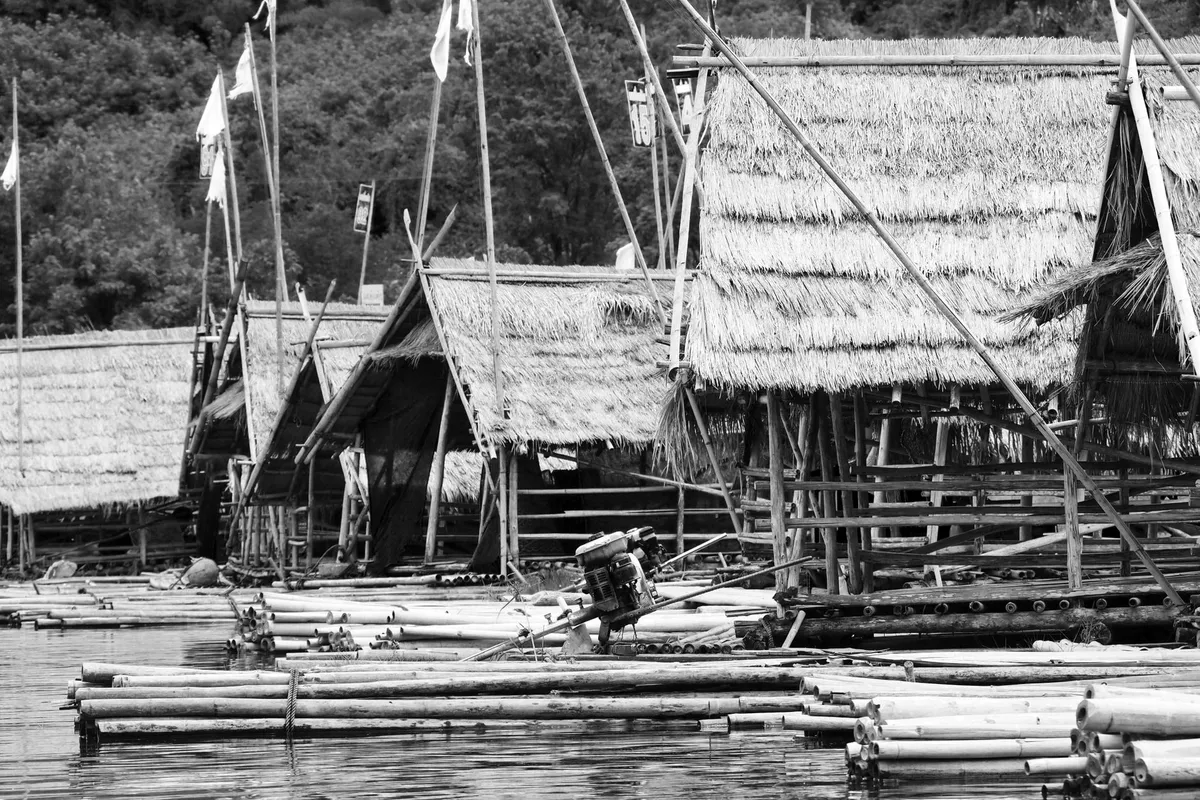
My field notes from sleeping on river vessels and floating lodges across the globe show that most operators quietly run diesel generators at night to keep air conditioning and refrigeration alive. This River Kwai Jungle Rafts review examines a genuine exception: an off-grid bamboo raft resort in Kanchanaburi where electric cables do not exist, rooms rely on kerosene flame lanterns, and the running water in your bathroom is pumped directly from the river current beneath your floorboards.
Moored along the forested bends of the Kwai Noi River inside Sai Yok National Park, the property has operated under this uncompromising preservation model for decades. Before you commit to booking, you need to understand the physical realities of living directly on fast-flowing water with unheated showers, acoustic transparency between rooms, and strict daylight-only boat transfers.
River Kwai Jungle Rafts Review: Overview and What Off-Grid Living Means on Kwai Noi River
Heritage, SERENATA Concept, and the Floating Architecture
Founded in 1976 and managed by the SERENATA Hotels & Resorts group, River Kwai Jungle Rafts was built on an ecological conservation philosophy long before eco-tourism became a marketing buzzword. The resort floats inside the dramatic limestone valley of Sai Yok National Park, moored directly against the riverbank of the Kwai Noi River. The complex consists of interconnected bamboo rafts resting on heavy pontoon bases, thatched with local palm fronds and anchored securely to the bedrock of the riverbed with thick mooring cables designed to flex with seasonal water levels.
Unlike modern floating hotels that install heavy concrete caissons and onboard treatment barges, this property preserves vernacular Mon craftsmanship. Local craftsmen weave the bamboo walls and assemble the structural timbers using traditional joinery methods. During my stay, walking along the central floating boardwalk revealed how the entire chain of guest rooms moves gently in rhythm with the river current, flexing without rigid resistance against the passing surges.
This construction style creates a direct connection to the surrounding riverine ecology. If you want to compare how different river stays manage waste and structural design, my analysis of tropical floating eco-resorts and their ecological limits details the trade-offs between vernacular bamboo pontoons and modern pontoon platforms.
The River Kwai Jungle Rafts Electricity Reality: Kerosene Lamps and Device Charging
When researching this off-grid floating hotel in Thailand, you must take the lack of power literally: there is zero river kwai jungle rafts electricity inside any guest cabin. The property has no connection to the regional power grid and deliberately runs no generators for guest accommodations. You will find no wall sockets, no ceiling fans, no air conditioning units, and no electric bulbs inside your room.
Lighting is entirely analog. Every evening around 18:00, resort staff walk the boardwalks to trim wicks and ignite traditional kerosene hurricane lamps mounted outside each door and inside the rooms. The warm, low-intensity glow provides sufficient ambient visibility to navigate the bedroom and bathroom, but reading fine print or organizing luggage requires a personal headlamp.
Power and High-Draw Appliance Policy: Guest rooms have zero electrical outlets. The central charging station located at the reception and restaurant desk supports low-power electronics only, such as smartphones, camera battery cradles, and power banks. High-wattage heating appliances like hair dryers, curling wands, and travel kettles cannot be used anywhere on the floating rafts.
Leaving a mobile phone or camera battery at the central charging station requires tagging your gear and retrieving it during operational desk hours. If you rely on multiple camera batteries or power-intensive devices, bringing two fully charged 20,000 mAh power banks is essential to avoid competing for communal wall taps.
Connectivity Paradox: Zero In-Room Wi-Fi vs. Cellular Network Coverage
Because there is no electrical infrastructure across the guest rafts, the resort operates without any guest Wi-Fi network. You will not find an internet router at reception or in the dining dining pavilion. For travelers who require constant corporate access, this makes remote work virtually impossible through standard hotel amenities.
However, an interesting telecommunications paradox exists along this stretch of the Kwai Noi River. Despite the total absence of property-wide Wi-Fi, commercial cellular towers positioned along Highway 323 transmit decent 4G and 5G mobile signals down into the river valley. Thai SIM cards from carriers like AIS and True provide adequate cellular data across most of the floating verandas, allowing basic messaging and navigation access.
I recommend purchasing a local data SIM card at Bangkok's Suvarnabhumi or Don Mueang airports prior to traveling westward. Download offline regional maps on Google Maps or Maps.me before boarding your river transfer, as signal dips occasionally occur in the deepest limestone gorges between the pier and the resort.
Location and Transit: Phutakien Pier Transfers, Train Routes, and Arrival Logistics
Access via Phutakien Pier (Resotel Pier): Boat Schedule and Parking
River Kwai Jungle Rafts cannot be reached by car or foot; the lodge is accessible exclusively by water. Travelers driving from Bangkok take Highway 4 to Highway 323 through Kanchanaburi town, continuing northwest toward Sai Yok District to reach Phutakien Pier, also known locally as Resotel Pier (GPS: 14.281035, 99.000796). The pier facility provides free, secured open-air vehicle parking for registered hotel guests, monitored by ground attendants.
From the pier, the resort operates complimentary scheduled longtail boat transfers that whisk guests upriver through the national park forest. The boat journey takes approximately 15 to 20 minutes against the river flow, docking directly at the hotel's floating arrival deck.
| Transfer Type | Schedule Window | Frequency | Cost |
|---|---|---|---|
| Check-In Shuttles | 14:00 – 18:00 | Hourly departures | Included in room rate |
| Check-Out Shuttles | 08:00 – 12:00 | Hourly departures | Included in room rate |
| Private Charter Transfer | Outside scheduled windows | On demand (daylight only) | 1,000 to 1,200 THB per boat |
Boarding these narrow wooden boats requires stepping down onto wet pontoon steps and balancing your weight. For luggage handling advice and footwear selection on wet gangways, check my packing list for floating hotels and boarding logistics.
Public Transit from Bangkok: Death Railway Train and Local Songthaew Transfers
Reaching the resort by public transit is straightforward if you plan around railway timetables. The classic route begins in Bangkok at Thon Buri Railway Station aboard the historic 3rd-class train bound for Nam Tok, traversing the dramatic wooden Wang Pho Viaduct on the Death Railway line. The train ticket costs approximately 100 THB for foreign travelers and offers open-window wooden bench seating along the scenic river cliffs.
You disembark at the railway terminus, Nam Tok railway station. Exiting the platform, shared pickup trucks known as songthaews wait to transport arriving travelers to Phutakien Pier, covering the remaining 10 kilometers of paved road for a fixed fare of 150 THB per person.
- Board the morning 3rd-class train from Bangkok's Thon Buri Station to Nam Tok railway station (~100 THB).
- Cross the Wang Pho Viaduct and enjoy open-air views of the limestone valley.
- Exit at Nam Tok station and board a local songthaew direct to Phutakien Pier (150 THB per passenger).
- Check in at the pier desk and board your complimentary scheduled longtail boat shuttle to the rafts.
Off-Schedule Arrivals, Private Boat Charters, and Pier Logistics
If road traffic delays your arrival past 18:00, you will miss the complimentary shuttle window. Arriving outside the standard schedule requires booking a private longtail boat charter at the Phutakien Pier desk for an out-of-pocket fee of 1,000 to 1,200 THB per boat per trip.
Strict River Navigation Curfew: Longtail boat operations on the Kwai Noi River halt completely at nightfall due to fast currents, unlit channels, and submerged drift logs. The pier reception closes at 18:00, and local safety rules prohibit passenger boats from running after 18:30. If you arrive after dark, you cannot reach the floating rafts and must arrange emergency lodging on the mainland at your own expense.
I always aim to reach Phutakien Pier no later than 15:30. This buffer ensures you clear check-in formalities, load luggage onto the longtail boat, and reach your cabin well before dusk settles over the river valley.
Cabin Layouts and Living Comfort: Standard Rafts vs. Jungle Vibe
Standard Bamboo Rafts vs. Jungle Vibe Cabins: Space and Bedding
Accommodations at this bamboo raft hotel in Thailand are arranged along two parallel floating strings moored end-to-end. The Standard Floating Bamboo Raft rooms measure approximately 28 square meters, including the internal bedroom, private rear bathroom, and front river-facing veranda. Inside, you find hand-woven bamboo partition walls, polished tropical hardwood floorboards, and handcrafted wooden furniture built by local Mon craftsmen.
For guests traveling in small groups or desiring marginally more space, the upgraded Jungle Vibe floating rooms offer 30 square meters of floor space. These cabins accommodate up to three adults, featuring a double bed alongside an extra single bed. In every cabin, each bed is sheltered by a large, fine-mesh mosquito net suspended from the bamboo ceiling rafters.
| Cabin Category | Floor Area | Maximum Occupancy | Bed Configuration |
|---|---|---|---|
| Standard Floating Bamboo Raft | 28 sq m | 2 adults | 1 Double bed or 2 Twin beds |
| Jungle Vibe Raft | 30 sq m | 3 adults | 1 Double bed + 1 Single bed |
Walking across the floorboards reveals subtle irregularities typical of split-bamboo joinery. The furnishings are purposefully utilitarian: wooden clothing pegs, a luggage bench, bedside stands for kerosene lanterns, and firm spring mattresses covered in clean cotton linens.
Bathroom Realities: Unheated Cold Water Showers and Plumbing Over the River
Each raft cabin features an en-suite private bathroom located at the back of the room, separated by a bamboo door. The bathroom setup includes a ceramic flush toilet, a tiled sink basin, and an open overhead shower. Because there is no electrical supply to power water heaters, the property provides an unheated cold water shower fed by river water that passes through settling and sand filtration tanks.
During the hotter dry season months, a cold water shower feels restorative after an afternoon exploring the jungle trails. However, from December through January, overnight air temperatures in Kanchanaburi frequently dip to 15–18°C, dropping the river water temperature down toward 19–21°C. Taking an unheated shower early in the morning during these winter weeks is an intense shock to the system.
Families traveling with toddlers or older guests sensitive to cold water should take note. If an unheated shower is a total dealbreaker, you will be much better served by an on-grid floating alternative with dedicated water heaters.
Riverfront Verandas, Current-Facing Hammocks, and Water Motion
The standout architectural feature of every cabin is its private bamboo deck extending out over the water. Stepping outside, you find heavy wooden lounge chairs and a woven fabric hammock slung between structural bamboo posts, hovering directly above the rushing Kwai Noi current. It is an exceptional vantage point for observing kingfishers, monitor lizards, and the dense limestone cliffs across the riverbank.
Because the rafts float on open pontoons, they respond continuously to river hydrology. Water discharge levels upstream from the Vajiralongkorn Dam cause the river height and flow velocity to change between morning and evening. Under normal circumstances, the rafts experience only a gentle, steady sway that most travelers barely register.
However, when motorized longtail shuttle boats speed past the resort, their displacement wake creates sudden lateral pitch and roll. If you are sensitive to movement on water, read my practical field guide on managing motion sickness on moored floating hotels to understand how river currents affect your inner ear.
On-Site Activities, River Jumping, and Mon Cultural Immersion
Kwai Noi River Jumping: Currents, Safety Vests, and Exit Ladders
The signature guest activity during any Kanchanaburi bamboo raft stay is river jumping. Every cabin is equipped with certified buoyant life jackets hanging on the veranda wall pegs, and wearing them is strictly mandatory before entering the water. You simply walk to the upstream end of the resort boardwalk, step into the water, and let the river current carry your body downstream.
Floating past the long chain of guest verandas with limestone bluffs towering overhead is thrilling, but it demands situational awareness. The Kwai Noi River is powerful, with current speeds accelerating to 5–7 km/h during the monsoon season (July through October), when the water turns an opaque reddish-brown.
River Drift Safety Exit: You must swim actively toward the bamboo pontoons as you approach the final downstream raft. Sturdy wooden exit ladders are mounted on the downstream platform. If you miss the final ladder, the river current will carry you into thick shoreline jungle downstream, requiring an emergency longtail boat retrieval by resort staff.
Guided River Excursions and Mon Village Hinterland Exploration
For organized river exploration, the hotel arranges guided bamboo rafting and kayaking trips along a scenic five-bend stretch of the Kwai Noi. These excursions cost 1,000 THB per person, which covers safety equipment, a certified local river guide, personal insurance, and a longtail boat tow to pull your craft back upstream to the resort moorings.
Immediately behind the floating rafts, a cleared forest trail leads up the riverbank into a traditional Mon village. The Mon people are an indigenous ethnic group originally from neighboring Myanmar, many of whom have lived along this river border region for generations. The village community maintains strong cultural independence, and staff at the lodge are drawn primarily from this local settlement.
Walking the village path brings you to a Mon community school supported by the resort, an active Buddhist monastery nestled among teak trees, and a replicated Mon Golden Rock shrine modeled after the sacred Kyaiktiyo pagoda. Respectful dress covering shoulders and knees is expected when walking through the monastic grounds.
Evening Mon Theater Raft Performances and On-Site Payments
Cultural engagement continues after sunset. Every evening at 20:00, following the communal dinner served at 19:00, traditional Mon cultural dance performances take place on the resort's dedicated floating Mon Theater Raft located at the far end of the pontoon chain. The performance lasts 45 minutes, accompanied by traditional xylophones, brass gongs, and drums, with admission priced at 150 THB per guest.
Handling transactions on the river requires forward planning. Because the rafts have no electric power or telecom lines, the resort operates without electronic card machines or ATM terminals.
Cash-Only Resort Policy: There are no credit card processing terminals or ATMs anywhere on the floating rafts. Settle in cash for optional activities, traditional massages (from 400 THB per hour), bar drinks (local beers cost 120–140 THB; sodas cost 50–60 THB), and Mon dance show admissions using Thai Baht (THB). Withdraw sufficient cash in Kanchanaburi town before arriving at Phutakien Pier.
Realities, Acoustic Flaws, and Tropical Environmental Conditions
Acoustic Transparency: Bamboo Weave Walls and River Traffic Noise
While the setting feels serene, this bamboo raft hotel in Thailand does not provide acoustic privacy. The guest rooms share single-layer woven bamboo walls that provide zero acoustic insulation. You will hear your neighbor whispering, rustling sheets, coughing, and turning suitcase zippers as if they were in the same room. Furthermore, because the floorboards are joined over shared wooden crossbeams, footsteps on the exterior boardwalk transmit noticeable vibrations directly into the bed frames.
Morning tranquility ends early on the river. Beginning around 06:00 to 06:30, longtail supply boats and park service vessels fire up un-muffled automobile engines to haul provisions and staff. The high-pitched mechanical roar echoes loudly across the narrow river canyon.
If you are a light sleeper, packing dense silicone earplugs is non-negotiable. To understand how water vibrations travel through floating timbers, read my detailed research on river current vibrations and their impact on sleep quality.
Tropical Climate Management: Natural Ventilation, Humidity, and Insects
Living without air conditioning in tropical Thailand requires adapting to ambient jungle conditions. Cabins rely exclusively on passive natural ventilation. Cool air drafts rise from the running river through narrow seams in the floor planking, and cross-breezes circulate through slatted bamboo eaves. During the dry winter months (November to February), night temperatures drop comfortably into the low 20s or high teens Celsius, making sleep pleasant under cotton sheets.
During the humid, hot season from March to May, daytime interior cabin temperatures can climb over 35°C, turning rooms into warm enclosures until the river air cools down after midnight. You must also manage jungle insect life carefully around your living space.
- Keep your bed's mosquito net tucked tightly under the mattress before dusk settles.
- Extinguish outdoor veranda lamps before opening your cabin door to avoid drawing flying insects inside.
- Apply insect repellent containing 20–30% DEET when sitting on the veranda after 18:00.
- Shake out shoes left on the open bamboo deck before slipping your feet into them in the morning.
Pricing, Seasonality, Booking Rules, and Cash Requirements
Seasonal Price Tiers, Half-Board Inclusions, and Extra Expenses
Rates at River Kwai Jungle Rafts fluctuate based on rainfall patterns and tourist volume in Kanchanaburi. Room inventory is almost universally sold on a half-board basis, which includes a buffet breakfast and a multi-course set Thai dinner served in the floating dining pavilion.
As checked on direct booking channels in September 2026, nightly room prices follow distinct seasonal pricing tiers:
- Low Monsoon Season (May – October): Nightly rates start from 3,200 THB to 3,800 THB for standard double occupancy.
- High Dry Season (November – February): Nightly rates range from 4,500 THB to 5,500 THB, with peak holiday surcharges around Christmas and New Year.
- Shoulder Season (March – April): Rates average between 3,500 THB and 4,200 THB, accompanied by high daytime ambient heat.
Incidentals add up quickly on the water. Expect to budget 400 THB per hour for a traditional Mon massage on the dedicated spa raft, 120 to 140 THB for a cold Singha or Chang beer (330 ml), and 50 to 60 THB for soft drinks. Keep a reserve of 1,500 to 2,500 THB in physical banknotes per day to cover meals, tips, and optional activities comfortably.
Booking Channels, Cancellation Penalties, and Check-In Policies
Reservations can be secured directly through the SERENATA Hotels booking engine or via major online travel platforms like Agoda and Booking.com. Flexible direct rates generally allow cancellation without penalty up to 14 days before your arrival date; during peak holiday windows, this cutoff extends to 30 days. Non-refundable promotional rates carry a 100% penalty upon cancellation.
When presenting yourself at Phutakien Pier for boarding, bring your confirmed digital or printed hotel voucher alongside physical passports for all party members. The pier staff verify your booking, tag your luggage, and issue your assigned longtail shuttle pass before guiding you to the boarding pontoons.
Final Verdict: Who Should Book a Kanchanaburi Bamboo Raft Stay and Who Should Skip It
The Ideal Guest Profile: Disconnectors, Adventurers, and Eco-Travelers
River Kwai Jungle Rafts delivers an authentic, screen-free river retreat that modern commercial hospitality has almost entirely abandoned. If you crave an absolute digital detox, appreciate falling asleep to the hum of running water under kerosene lantern light, and enjoy drifting down a jungle river in a life jacket, this stay is an unforgettable encounter with nature.
It is perfectly suited for active couples, outdoor adventurers, and mindful travelers who want to immerse themselves in Mon village heritage without the distraction of television or social media. For most guests, a stay of one or two nights hits the ideal sweet spot: sufficient time to recharge and soak in the raw river atmosphere without accumulating fatigue from living without modern appliances.
Dealbreakers: Who Should Choose an On-Grid Kanchanaburi Resort Instead
This off-grid floating hotel in Thailand will be miserable for travelers who require climate control, warm showers, or constant connectivity. You should skip this property if you:
- Cannot sleep without active air conditioning or an electric fan blowing during tropical nights.
- Require hot water showers for comfort, hygiene, or medical needs.
- Have mobility limitations that make walking over narrow bamboo walkways and stepping into wet boats unsafe.
- Need to charge high-draw electronics, laptops, or CPAP medical equipment overnight.
- Are a light sleeper disturbed by thin bamboo walls, neighbor murmurs, and early 06:00 longtail boat engines.
If you desire the floating river lifestyle on the Kwai Noi River but refuse to sacrifice 220V power, hot showers, and air conditioning, book a river villa at The FloatHouse River Kwai instead. Alternatively, the land-based River Kwai Resotel, serviced from the same Phutakien Pier, provides full grid power, swimming pools, and standard hotel amenities right on the forested shoreline.