
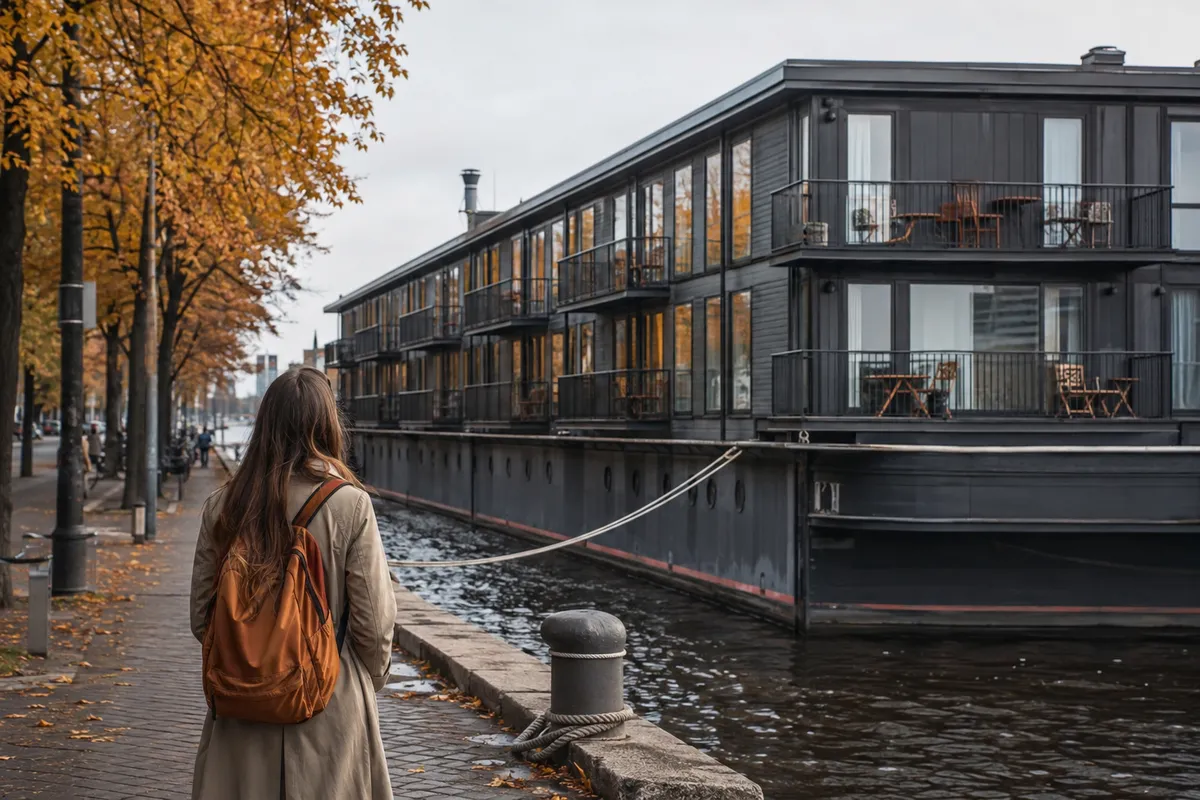
Securing low season floating hotel deals across Europe and Asia requires looking past steep nominal rate drops to calculate revised national taxes and local levies. In 2026, the Netherlands increased its national VAT on short-stay hotel and botel accommodation from 9% to 21%, while municipal surcharges in hubs like Amsterdam and Paris substantially inflate final checkout folios. Published autumn discounts of 35% to 50% often mask these fiscal adjustments alongside microclimatic challenges like rapid hull cooling and drafty single-pane glazing.
A converted barge or harbor vessel suits self-sufficient travelers prioritizing central berths and waterfront perimeters who can tolerate narrow companionways, steep gangways, and mechanical background noise. It is poorly suited for light sleepers sensitive to creaking mooring lines, travelers with reduced mobility facing wet metal ramps, or anyone seeking uninterrupted luxury hotel amenities during off-peak operational cutbacks. Navigating the autumn shoulder requires calculating the full net checkout figure while auditing onboard heating systems and mooring logistics before booking.
European Botel Price Drops: Navigating Autumn Shoulder Rates and Hidden Taxes
Western Europe Waterfronts: Amsterdam Mooring Discounts and Compounding Levies
At Amsterdam's 3-star Botel moored at NDSM Wharf, nightly autumn shoulder rates drop to approximately €90–€130 ($100–$145 USD), down 35% to 50% from high-summer rates of €180–€250, as detailed on the Botel Amsterdam room directory. However, this apparent saving is heavily offset at checkout by statutory tax compounding. Under current Dutch tax law, guests face a mandatory national accommodation VAT of 21% outlined by the Dutch Tax and Customs Administration, which replaced the previous 9% rate.
On top of this national VAT, the City of Amsterdam assesses a municipal tourist tax of 12.5% calculated on the net room rate, verified through the City of Amsterdam Tourist Tax portal. On an invoice I reviewed for a €110 shoulder cabin at NDSM Wharf, the 21% VAT added €23.10 while the 12.5% municipal tax added €13.75, pushing the effective nightly expense to €146.85 before local service additions.
On the Seine in Paris, the 4-star floating hotel OFF Paris Seine discounts standard cabins to €173–€240 ($190–$265 USD) during the late autumn shoulder season, down roughly 30% to 40% from peak summer pricing of €380–€420. Guests must factor in the mandatory Parisian taxe de séjour of €8.45 per adult per night, which includes an updated 200% regional Île-de-France Mobilités transit surcharge published on the French Service-Public portal. Minor guests under 18 years old remain legally exempt from this French municipal accommodation charge.
| Property | Published Shoulder Rate | Statutory VAT Rate | Local Stay Surcharges | Effective Nightly Total |
|---|---|---|---|---|
| Botel Amsterdam (NDSM Wharf) | €110 ($120 USD) | 21% (€23.10) | 12.5% net (€13.75) | €146.85 ($160 USD) |
| OFF Paris Seine (Paris) | €190 ($210 USD) | Included in tariff | €8.45/adult/night | €198.45 ($218 USD) |
When calculating western European botel discount booking totals, always separate the net tariff from local stay taxes; in Amsterdam, local tourist tax surcharges and revised 21% VAT together add roughly 33.5% above net base tariffs.
Central and Northern European Rivers: Midweek Savings from Prague to Stockholm
East and north of the Rhine, discounted boat hotel rates translate into far clearer bottom-line savings due to nominal flat fees or the absence of city-level bed levies. Good Hotel London, a 148-room floating platform moored at Royal Victoria Dock, offers off-peak autumn shoulder midweek rates dropping to £85–£110 ($110–$145 USD) per night, compared to summer peaks exceeding £180–£230 ($240–$300 USD), with no municipal tourist tax applied. For deeper background on these conversions, consult our European urban botel overview.
In Prague, Boat Hotel Matylda on the Vltava River reduces autumn shoulder cabin rates to 1,892–2,300 CZK ($82–$100 USD) per night from summer high-season rates exceeding 3,500 CZK ($150 USD). The Czech capital charges an overnight municipal stay fee of 50 CZK (~$2.20 USD) per person per night for stays up to 60 days, established by the Prague City Hall stay fee ordinance. This nominal flat fee adds less than 3% to an off-peak invoice.
At Stockholm's Riddarholmen, the 65-cabin historic yacht hotel Mälardrottningen offers autumn rates starting from 625 SEK to 850 SEK ($60–$82 USD) per night, down from summer peaks exceeding 1,500 SEK ($145 USD). Because Sweden does not levy local municipal tourist taxes on hotel beds, northern European berths deliver high price efficiency for a cheap botel booking autumn itinerary.
| Vessel / Location | Peak Summer Base Rate | Autumn Shoulder Base Rate | Local Bed Tax Structure |
|---|---|---|---|
| Good Hotel London (UK) | £180–£230 ($240–$300 USD) | £85–£110 ($110–$145 USD) | None (0%) |
| Boat Hotel Matylda (Czechia) | 3,500+ CZK ($150+ USD) | 1,892–2,300 CZK ($82–$100 USD) | 50 CZK (~$2.20 USD)/person/night |
| Mälardrottningen (Sweden) | 1,500+ SEK ($145+ USD) | 625–850 SEK ($60–$82 USD) | None (0%) |
When Is the Best Time to Book a Floating Hotel? Seasonal Windows and Operational Constraints
The Autumn Shoulder Sweet Spot: Value Windows vs. Maintenance Freeze-Ups
Finding the best time to book floating hotel stays requires balancing rate reductions against waterway operational shifts. Between late September and mid-October, water temperatures remain relatively stable, sundecks are typically accessible, and heating systems run at moderate loads. Nightly savings reach 25% to 35% across most European basins while operations continue on full schedules.
From late October through late November, off-peak floating hotel deals reach peak discounts of 40% to 50%, but operational compromises multiply rapidly. Daylight shrinks, deck furniture is stowed, and northern canal systems schedule lock closures for winter engineering works. Vessels scheduled for routine five-year dry-dock inspections often pull out of service during November, shrinking available inventory in key harbors.
Water temperature drops also influence cabin microclimates. As harbor basins cool below 10°C (50°F), lower-deck steel hulls begin acting as large thermal conductors. If you plan to reserve an off-peak berth, book six to eight weeks in advance for mid-October dates, or four weeks out for November stays when operators discount unallocated inventory.
| Shoulder Phase | Average Discount | Basin Water Temp | Onboard Amenities Status | Operational Risks |
|---|---|---|---|---|
| Early Shoulder (Late Sep–Mid Oct) | 25%–35% | 13°C–17°C | Full exterior deck access | Minimal; occasional seasonal rainfall |
| Late Shoulder (Late Oct–Late Nov) | 40%–50% | 5°C–10°C | Exterior decks stowed, reduced hours | Hull drafts, early lock maintenance |
Direct Operator Outreach vs. OTAs: Cabin Position Over Speculative Perks
Online travel agencies aggregate discounted boat hotel rates efficiently, but booking directly via the vessel's reservation desk yields greater control over berth placement. Off-season floating hotels run at 40% to 60% occupancy, leaving substantial cabin choice across decks. A complimentary river-facing room upgrade is never a guaranteed contractual right, but direct contact allows travelers to negotiate physical cabin attributes.
When communicating with an on-site front desk, request an upper-deck cabin above the waterline to avoid the cold, uninsulated bilge line. Specifically request placement away from the ship's bow thruster housings, gangway access ramps, and the shore-power transformer vault. These areas generate continuous low-frequency vibrations that carry through steel framing.
On historic conversions, ask whether the cabin has secondary glazing or hydronic radiators before confirming your reservation. Front desks can rarely swap rooms late at night if a single-glazed porthole draft makes the berth uncomfortable. Our detailed floating hotel booking guide covers additional negotiation tactics for hidden berth fees.
Never rely on verbal assurances of off-peak room upgrades upon arrival; on small-inventory vessels with under 70 berths, remaining upper-deck suites are routinely decommissioned or winterized to cut heating overhead.
Autumn Houseboat Dynamics: Shoulder Season Houseboat Prices and Operational Schedules
Tropical Backwaters: Alleppey Houseboat Tiers and Generator Restrictions
In the Kerala backwaters around Alleppey, shoulder season houseboat prices between September and November drop significantly before the December holiday surge. A 1-bedroom Deluxe houseboat averages ₹8,000–₹10,000 ($95–$120 USD) per 21-hour overnight charter during the autumn shoulder, compared to peak holiday tariffs reaching ₹14,000–₹25,000+ ($165–$300+ USD). However, standard Deluxe vessels enforce strict power parameters.
On standard Deluxe houseboats, generator-powered cabin AC runs strictly on an overnight schedule from 9:00 PM to 6:00 AM. During daytime cruising and afternoon mooring along the canal banks, the central generator is switched off to manage fuel consumption and noise. Onboard daytime cooling relies entirely on 12V ceiling fans powered by an inverter battery bank.
In contrast, Premium and Luxury tier hulls feature full-time generator AC that operates continuously throughout the afternoon heat and evening mooring. On a Deluxe hull I boarded in mid-October, the saloon temperature reached 32°C (90°F) at 3:00 PM while waiting for evening mooring. Travelers requiring continuous climate control should verify the mechanical tier before paying a non-refundable deposit.
| Houseboat Category | Shoulder Price (21-hr) | Peak Season Price | Generator AC Operational Hours | Daytime Power Setup |
|---|---|---|---|---|
| Deluxe | ₹8,000–₹10,000 | ₹14,000–₹18,000 | Strictly 9:00 PM – 6:00 AM | Inverter battery (fans only) |
| Premium | ₹11,000–₹14,000 | ₹18,000–₹24,000 | Continuous / On-demand | Full-time generator |
| Luxury | ₹15,000–₹22,000 | ₹25,000–₹38,000+ | Continuous 24-hour service | Dual silent marine generators |
Archipelago Floating Lodges: Truncated Services and Seasonal Culinary Packages
At Salt & Sill, Sweden's pioneering floating hotel moored at Klädesholmen, autumn operations transition to a low-season amenities schedule. As coastal winds rise in October and November, the property adjusts reception coverage, requiring all arrivals after 18:00 to coordinate key collection in advance via an automated lockbox code. The on-site restaurant scales back operations to select days of the week, as posted on the Salt & Sill dining schedule.
To offset truncated mid-week facilities, Scandinavian coastal hotels combine reduced room tariffs with seasonal culinary packages. Salt & Sill features specialized autumn packages built around the local shellfish harvest, such as a traditional 4-course lobster dinner menu priced at 1,245 SEK (~$120 USD) per person. For broader context on coastal pontoon structures, see our review of floating resorts and pontoon sea lodges.
These culinary packages often provide better net value than booking standalone discounted rooms that leave guests stranded without dining on isolated quays. When booking off-peak archipelago accommodations, always cross-reference property dining hours against local village ferry schedules to prevent arriving after bridge links or water taxis stop operating.
Hull Physics, Drafts, and Heating: Preserving Onboard Cabin Comfort
Thermal Management: Managing Hull Condensation and Dew-Point Bridging
The primary environmental challenge of autumn botel stays is interior hull condensation. When autumn river water drops below 10°C (50°F), the submerged steel or concrete hull cools the lower bulkheads below the cabin's dew point. Warm, humid indoor air striking these cold exterior plates deposits liquid moisture behind wall liners and along uninsulated bilges.
Single-glazed brass and aluminum portholes act as intense thermal bridges. During cold mornings, moisture runs down interior framing onto carpeting or berth timber if condensation drains are blocked. On an October stay along the Vltava, I noted moisture accumulating under the mattress corners where bedding rested directly against the exterior steel skin without a perimeter thermal break.
To mitigate moisture accumulation, select cabins with slatted bed platforms elevated off the cabin sole, keep interior bathroom extractor fans running continuously to exhaust vapor, and avoid drying wet rain gear directly over unvented electric radiators. For more practical living space observations, consult our guide to cabin living realities on water.
Upon entering an autumn botel cabin, check the lower edge of exterior portholes and lift mattress corners; persistent dampness or peeling silicone sealant indicates active thermal bridging across the hull skin.
Heating Systems and Shore-Power Limitations on Converted Vessels
Houseboat heating efficiency varies widely between purpose-built modern pontoons and retrofitted commercial barges. Converted freighters frequently rely on central hydronic radiator loops powered by an oil-fired or pellet boiler in the forward hold. These systems deliver steady radiant warmth without parching the air, though they react slowly to sharp temperature drops at dusk.
Modern floating hotels often utilize reverse-cycle heat pumps. These units heat interior spaces quickly, but their exterior compressors—mounted on open pontoon decks—can vibrate through the cabin ceiling when ambient river temperatures dip near freezing. They also dry cabin air aggressively, aggravating respiratory discomfort in confined berths.
Older botels sometimes supplement inadequate central heating with plug-in convection heaters. This approach strains the vessel's shore-power connection. When dozens of cabins simultaneously operate 2,000-watt electric heaters alongside hair dryers, marine breaker panels risk tripping, cutting power across entire pontoon sections until engineering staff reset the mains switchboard.
| Heating Technology | Response Time | Acoustic Footprint | Shore-Power Load | Air Quality Impact |
|---|---|---|---|---|
| Hydronic Radiator Loops | Slow (2–4 hours) | Silent (occasional pipe tick) | Low (boiler-driven) | Maintains natural humidity |
| Reverse-Cycle Heat Pumps | Fast (15–30 mins) | Moderate fan & hum | Moderate (compressor) | Dries cabin air heavily |
| Portable Convection Heaters | Fast (15 mins) | Silent | High (trips 10A/16A fuses) | Localized dry heat |
Navigational Hazards and Weather Vulnerabilities of Autumn Berths
River Hydrodynamics: Hydrologic Surges, Moorings, and Acoustic Amplification
Autumn weather patterns introduce significant hydrologic changes to European river berths. Heavy upstream rains along the Seine, Rhine, and Vltava trigger river stage fluctuations that shift moored pontoons vertically along their pilings. These height changes require deck crews to make midnight mooring line adjustments, producing noticeable deck winching noise and sudden vessel rolling.
Pontoon gangway safety requires extra attention during autumn months. Falling leaves mixed with morning river dampness and frost coat steel diamond-mesh ramps, creating severe slip hazards. As river levels surge, gangway angles steepen dramatically, making access difficult with wheeled luggage. The mechanics of dynamic river anchorages are detailed in our analysis of river hotels and moored cruise operations.
Furthermore, cold, dense autumn air over calm water creates a natural acoustic ducting effect. Sound waves refract downward toward the cooler water surface instead of dispersing upward into the atmosphere. Mooring line creaks, pontoon fender rubbing, and 5:00 AM commercial barge traffic carry with unusual clarity into river-facing staterooms.
| Environmental Factor | Summer Baseline | Autumn Reality | Practical Guest Impact |
|---|---|---|---|
| Acoustic Transmission | Sound disperses into warm air | Refracts downward across cold water | Barge wash & line creaks sound twice as loud |
| Gangway Incline | Stable horizontal or gentle pitch | Sharp angle changes from river surge | Steep ramps; slick leaf debris underfoot |
| Mooring Movement | Static pontoon positioning | Nocturnal line adjustments by crew | Occasional midnight winching noises & roll |
Regulatory Disruptions: Maritime Safety Closures and Cancellation Recourse
Coastal and bay-based floating hotels face strict regulatory oversight when autumn storms develop. In Halong Bay, Vietnam, the Quang Ninh Port Authority regulates all overnight cruise operations and floating vessels. During autumn tropical depressions, the authority issues port authority docking bans as late as 3:00 PM on departure day, immediately canceling overnight departures.
When marine weather cancellations occur under official port mandates, standard marine operators provide a 100% full refund for the vessel stay with no cancellation penalties, as outlined under the Swan Cruises Halong cancellation terms. However, this statutory cruise refund covers only the boat charter itself.
Connecting expenditures—including private van transfers from Hanoi, non-refundable domestic flights, or pre-booked harbor hotel nights—are entirely excluded from vessel refunds. Travelers booking autumn floating stays in coastal zones subject to monsoons or tropical cyclones must carry independent trip-interruption insurance that covers port authority cancellations.
A 100% vessel refund issued due to a port authority docking ban does not reimburse missed connecting flights or stranded land transfers; confirm that your private travel policy covers bad-weather marine stoppages.
The Autumn Botel Verdict: Evaluating When Shoulder-Season Value Outweighs Waterfront Trade-offs
Final Decision Matrix: Ideal Candidates vs. Travelers Better Suited for Land Lodging
Securing low season floating hotel deals provides notable value when expectations align with marine operating conditions. A river-facing stateroom in Prague or London at 40% below summer rack rates offers a distinct perspective on urban waterways, provided you can handle minor mechanical realities. If your itinerary permits flexible arrival hours and you appreciate maritime engineering, an autumn shoulder booking works well.
Conversely, travelers requiring silent sleeping environments, seamless accessibility, or around-the-clock room service should book conventional land-based hotels. Damp river air, steep gangway angles, and truncated autumn dining options can turn a budget-friendly off-peak stay into a frustrating experience for those expecting standard hotel operations.
| Stay on Water This Autumn If: | Book Land-Based Lodging If: |
|---|---|
| You want central urban berths at 35%–50% below peak summer rack rates. | You are a light sleeper sensitive to mooring squeaks, wind, or early barge wash. |
| You can comfortably handle steep, wet gangways and narrow companionways. | You have reduced mobility or travel with heavy wheeled luggage alone. |
| You plan around early reception cutoffs and off-peak dining schedules. | You require 24/7 front desk coverage and guaranteed late-night room service. |
| You want a unique perspective on historic waterfronts without summer crowds. | You suffer from cold sensitivity or respiratory reactions to humid, enclosed air. |
Strategic Booking Protocol: 5-Point Autumn Reservation Blueprint
Before submitting credit card details for an autumn shoulder floating hotel deal, complete this five-point verification sequence:
- Calculate the True Checkout Folio: Add national VAT (21% in the Netherlands) and local bed taxes (12.5% in Amsterdam, €8.45/adult in Paris, 50 CZK in Prague) to evaluate true net savings.
- Audit the Primary Heating Method: Verify whether the vessel utilizes central hydronic radiators or reverse-cycle heat pumps, and avoid cabins relying solely on portable electric convectors.
- Check Front Desk Operational Hours: Confirm check-in cutoffs with the property; off-peak archipelago properties often unstaff front desks after 18:00.
- Verify Auxiliary Power Configurations: On tropical backwater houseboats, check whether generator AC runs 24/7 or is restricted to a night-only window (9:00 PM to 6:00 AM).
- Protect Connecting Travel Expenses: Confirm port authority cancellation procedures and verify that independent insurance covers connecting land transit in case of bad-weather docking bans.