 Floating Hotel
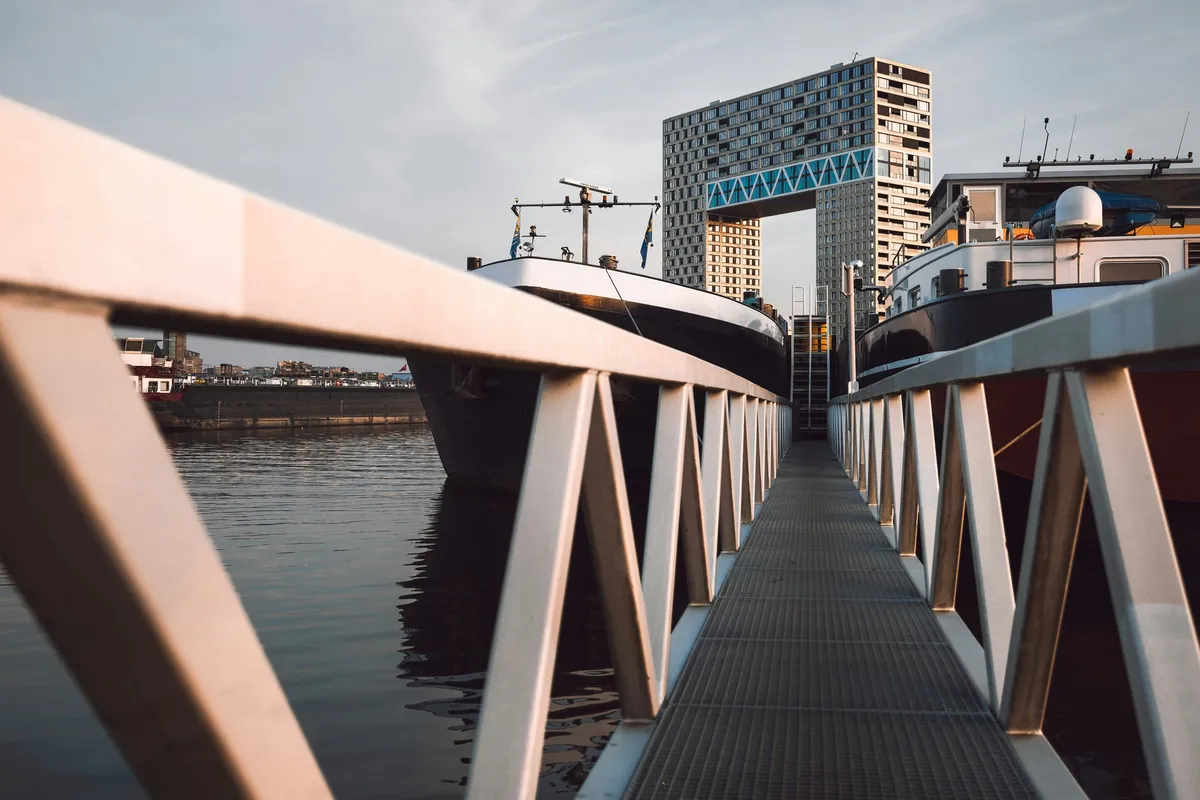
Evaluating European Floating Hotels: Engineering Realities vs. Romance
After stepping across more than seventy boarding ramps over the last twelve years, I have learned that the water surface beneath your mattress defines your stay far more than thread count or breakfast spreads. Many travelers book european floating hotels anticipating romantic harbor reflections, only to spend their nights listening to creaking steel hawsers, feeling the sharp lurch of commuter ferry wakes, or struggling up an unexpectedly steep ramp at low tide with heavy wheeled luggage.
Sleeping on water involves real mechanical and hydrodynamic trade-offs. The physical behavior of a vessel depends on whether it sits in an open tidal basin, an active inland commercial river, or an engineered, locked dock. Understanding how mooring hardware, hull draft displacement, and municipal tourist levies interact gives you an accurate picture of your actual nightly costs and physical comfort before you step aboard.
Wake, Tide, and Roll: How Hull Draft Displacement Dictates Onboard Motion
The primary factor governing motion sickness and onboard stability is water displacement combined with basin shelter. A heavy ship like a converted lighthouse tender or a multi-deck yacht hotel possesses significant hull draft displacement, creating high roll inertia that resists minor chop. In contrast, shallow-draft converted flat-bottom barges respond immediately to surface disturbance. When sleeping on european waterways, lateral roll—the side-to-side rocking induced by passing vessel displacement wakes—is the motion that most commonly disrupts sleep.
Waterway topography dictates this movement. Mooring along active inland thoroughfares like the Vltava in Prague or the Seine in Paris exposes a vessel to continuous displacement waves from morning sightseeing boats and nighttime freight barges. Conversely, berthing inside an impounded dock basin—such as Royal Victoria Dock in London or Alexandra Dock in Leith—uses lock gates to isolate the hull from river currents and tidal swell, producing near-zero lateral movement according to my inspections on motion sickness on moored floating hotels.
Gangway Incline and Shore Access: Why Water Levels Dictate Physical Accessibility
Shore-to-ship connections are governed by basic geometry: the gangway incline angle θ varies according to the formula tan(θ) = Δh / L, where Δh represents the vertical distance between the quay wall and the ship’s boarding deck, and L is the length of the gangway. On tidal estuaries where natural water level amplitude can swing by four to five meters twice a day, a gangway that presents a gentle five-degree slope at high water can turn into a punishing twenty-five-degree climb at extreme low tide.
Conversely, in impounded locked basins where water levels are strictly maintained by harbor authorities, the gangway slope remains virtually static throughout the day and night. Beyond the incline itself, getting to the ramp often introduces friction: historic quaysides across European port districts frequently feature uneven, centuries-old cobblestones, high threshold steps over watertight bulkhead sills, and open-mesh metal gangway grating that catches slim shoe heels and suitcase wheels.
How I Compared River Botels and Harbor Hotel Ships Across Europe
To establish an objective benchmark across Europe's waterborne accommodations, I developed a structured inspection method focusing on naval architecture, gangway mechanics, and operating rules. This system looks past staged marketing photos to evaluate how a moored vessel actually performs as a functional hotel room. I assessed each property based on mooring rigidity, acoustic transmission through the hull plates, step-free access feasibility, and the net nightly price including municipal taxes.
The Mooring Rigidity and Hydrodynamic Stability Index
Mooring stability depends on how a vessel is secured to the shore infrastructure. During my inspections, I classify berths into three distinct operational categories:
- Class A (Impounded Basin): Non-tidal locked docks with zero current and negligible surface chop, where bollard tension remains constant and gangway ramps do not shift vertically.
- Class B (Sheltered Marina Basin): Semi-enclosed saltwater or deep-water berths subject to minor wind-driven chop and gradual tidal lift, but protected by outer breakwaters from open-sea swell.
- Class C (Active Riverway / Estuary): Open riverbanks exposed to directional currents, seasonal water-level swings, and lateral wake displacement from passing commercial and tourist traffic.
Mooring loads for these river vessels generate line tensions measured in tens of kilonewtons (kN) rather than the massive loads seen on oceanic infrastructure. A critical element of botel mooring stability is quayside acoustic dampening. As river currents or wake washes cause a hull to shift, unlubricated steel cables, tensioned hawsers, and compressed rubber D-fenders rub against stone quays. Without elastomeric dampening sleeves or properly spaced pneumatic rollers, this friction transmits low-frequency groans directly into adjacent cabin bulkheads.
The Hidden Costs of Waterborne Hospitality: Surcharges, Plumbing, and Shore Rules
The true nightly rate of a waterborne stay frequently diverges from the advertised booking rate once local regulations and marine mechanical limits enter the equation. Municipalities across Europe assess visitor fees differently: some charge flat per-person nightly tourist taxes, while others levy percentage taxes directly on room revenue. On water, plumbing constraints also introduce severe financial liabilities for guests.
Because botels sit at or below municipal sewer levels, guest bathrooms rely on marine macerator pump plumbing. These units use high-speed cutting impellers that discharge waste through narrow 25 mm to 32 mm flexible lines. Flushing wet wipes, sanitary items, or excessive paper jams the macerator blade instantly. Across European operators, repairing a jammed pump can incur penalty charges of up to €200, alongside tedious maintenance delays. Harbor rules also restrict guest activities: port authorities enforce strict harbor swimming prohibitions around commercial moorings, carrying heavy statutory fines.
Plumbing Rule: Marine macerator toilets cannot process anything other than standard cellulose toilet paper. Disposing of wipes, facial tissues, or foreign objects causes immediate mechanical failure, and botel policies routinely charge up to €200 in maintenance call-out fees to the guest folio.
Comparative Inventory Overview
The following register summarizes verified waterborne accommodations across Europe, outlining structural characteristics, base rates, compulsory municipal surcharges, and mobility limitations.
| Accommodation | City | Waterway / Basin Type | Baseline Rate (From) | Compulsory Taxes / Fees | Key Structural Advantage | Key Operational Constraint | Step-Free PMR Access |
|---|---|---|---|---|---|---|---|
| Botel Albatros | Prague, Czechia | Vltava River (Active riverbank) | €56 / night | 50 CZK (~€2.00) / adult / night | 90 refitted 1930s Art Deco cabins; economical central river berth | Prone to excursion boat wakes; steep gangway; no onboard lift | No (Stairs & steep gangway) |
| Botel Matylda | Prague, Czechia | Vltava River (Active riverbank) | €85 / night | 50 CZK (~€2.00) / adult / night | Moored by Dancing House; authentic historic cargo barge hull | Dual-hull layout requires crossing exposed gangways; no lift | No (Narrow gangways & steps) |
| Botel Amsterdam | Amsterdam, Netherlands | IJ Waterfront (NDSM Pier 3) | €95 / night | 12.5% municipal tourist tax | 175 berths + rooftop Letter Suites; direct free transit ferry | High local municipal tax; exposed to NDSM wind gusts & chop | Limited (Ramp board; partial lift) |
| OFF Paris Seine | Paris, France | River Seine (Quai d'Austerlitz) | €150 / night | €8.45 / adult / night | 58-cabin custom twin-hull catamaran; integral plunge pool | High per-person tourist levy; wake roll from passing river cruisers | Partial (Quayside ramp; narrow corridors) |
| Sunborn Gibraltar | Ocean Village, Gibraltar | Marina Basin (Deep-water berth) | £180 (~€210) / night | None (Included in base rate) | 189-room 142m purpose-built superyacht; casino; broad beam | Subject to coastal marina wind gusts and bay tidal chop | Yes (Boarding ramp & internal lifts) |
| Sunborn London Yacht Hotel | London, United Kingdom | Royal Victoria Dock (Impounded dock) | £180 (~€210) / night | None (VAT included) | 108m hull in locked basin: zero tidal swell, zero river current | 350m walk to Custom House station; surrounding dockland wind | Yes (Step-free ramp, lift, 10 PMR rooms) |
| Hotel CPH Living | Copenhagen, Denmark | Christianshavn Canal (Harbor) | 1,400 DKK (~€188) / night | None (VAT included) | Floor-to-ceiling glass wall cabins; converted German barge hull | 1,000 DKK harbor swimming fine; narrow gangway; no lift | No (Narrow ramp, internal stairs) |
| Fingal | Edinburgh, United Kingdom | Alexandra Dock, Leith (Impounded dock) | £264 (~€308) / night | None (Breakfast & VAT included) | Non-tidal basin ensures static gangway angle; luxury refit | Premium price point; requires tram connection to central city | Yes (Static ramp, internal lift, 2 PMR rooms) |
| Arctic Bath | Harads, Sweden | Lule River (Sub-Arctic river) | 6,500 SEK (~€570) / night | None (VAT included) | Free-floats in summer; completely freezes into solid river ice in winter | Remote location; external wooden walkways freeze over in winter | Partial (Boardwalk ramp; seasonal ice steps) |
Interactive Inventory Planning: If you are planning an itinerary with mobility aids or heavy gear, sort this inventory by Impounded Docks to ensure flat gangway transitions and zero rolling motions. Budget travelers should prioritize filtering by Net Nightly Cost, paying close attention to percentage-based municipal tourist levies.
River Botels in Europe: Active Current Berths on the Vltava, Seine, and Lule
Mooring a hotel vessel directly in a natural river current introduces unique operational conditions. River botels europe operators must balance the aesthetic appeal of iconic waterfront views with the physical forces of river discharge, floating debris, passing wakes, and seasonal water-level shifts. These three locations showcase how river moorings behave under differing geographical and seasonal conditions.
Prague’s Vltava Riverfront: Botel Albatros and Botel Matylda Compared
Along the Vltava, river botels sit moored parallel to stone-faced urban quays. Botel Albatros reopened in September 2026 following an extensive capital refit that introduced 1930s Art Deco styling across its 90 guest cabins. Anchored along the Ludvíka Svobody Embankment, lead rates begin at €56 (~$62 / 1,400 CZK) per night. This makes it an exceptionally budget-friendly central stay, though its multi-deck steel structure transmits the rhythmic slap of excursion steamer wakes throughout the afternoon.
Further upriver along Masarykovo nábřeží, Botel Matylda offers an alternative configuration. It comprises two permanently moored vessels: the converted historic cargo barge Matylda and the purpose-built hotel vessel Klotylda, with entry double cabins starting from €85 (~$94 / 2,130 CZK) per night. While its location near the Dancing House provides scenic river perspectives, walking between the reception on one vessel and cabins on the other requires traversing exposed gangway connections that become slick when damp.
Guests booking either Vltava river accommodation must account for the local arrival logistics. The approach from street level down to the riverbank requires descending steep cobblestone ramps with no handrails, making wheeled luggage difficult to manage. Furthermore, the mandatory Prague municipal tourist tax of 50 CZK (~€2.00 / $2.20) per adult per night is not included in prepaid room vouchers and must be settled separately at check-in per local tax guidance on Czech Republic tourist tax rules.
OFF Paris Seine: Design Catamaran Living on an Urban Thoroughfare
Moored at 86 Quai d'Austerlitz, OFF Paris Seine represents a departure from traditional converted cargo hulls. This 58-key catamaran botel operates as a stationary pontoon structure with no propulsion engines, featuring a central lounge, an integrated plunge pool, and guest cabins starting at €150 (~$165) per night. The twin-hull catamaran design offers higher initial roll resistance than a rounded single hull, but its location on an active commercial riverway presents clear physical realities.
Heavy commercial barges and tourist bateaux-mouches constantly ply this stretch of the Seine. As these vessels pass, their displacement wakes travel beneath the catamaran pontoons, producing short, sharp hull vibrations and low-amplitude rolls. While the motion rarely dislodges items from nightstands, light sleepers will notice the periodic creak of the shore moorings as the pontoons adjust to passing wash.
The financial overhead of staying on the Seine requires careful calculation. French lodging rules apply the full Paris tourist tax (taxe de séjour) to the property. For classified four-star accommodations, the 2026 fee totals €8.45 per adult per night, broken down across municipal, departmental, regional, and the compulsory €5.20 Île-de-France Mobilités surcharge as published by Service-Public France. For two adults sharing a cabin, this adds €16.90 per night directly to the folio at reception.
Arctic Bath (Sweden): Extreme Sub-Arctic River Floating and Ice-Lock Freezing
Situated on the Lule River near Harads in northern Sweden, Arctic Bath approaches river berthing from a distinct engineering perspective. The retreat features six floating Water Cabins (24 m² interior area) anchored to the riverbed, with nightly entry rates starting at 6,500 SEK (~€570 / $625). The structural dynamics of these cabins change completely between summer and winter.
During the open-water season from May to October, the cabins drift freely within the constraints of their submerged anchor lines, exhibiting a gentle, barely perceptible river sway. However, from mid-November to mid-April, the Lule River freezes solid. During this phase, the cabins become locked in deep river ice, eliminating hull movement entirely and effectively turning them into static terrestrial structures on a frozen plane.
Reaching these cabins requires crossing extended timber boardwalks stretching from the forest shore. In sub-zero temperatures, river spray and packed snow coat these walkways in slick rime ice. The property provides traction cleats for guest footwear, which are necessary when walking across the exposed gangways during the sub-arctic winter months.
Harbor Stays and Dockside Superyachts: Impounded Basins and Maritime Berths
Harbor stays offer a noticeably different maritime environment than inland river moorings. Harbor floating hotel rates typically reflect larger cabin footprints and extensive onboard amenities, but stability depends heavily on harbor engineering. The difference between an impounded dock basin and an open marine basin determines whether your vessel moves with coastal tides or sits motionless in locked water.
London and Gibraltar: The Superyacht Hotel Model
The Sunborn group operates purpose-built floating yacht hotels in two contrasting maritime environments. Berthed in East London, the Sunborn London Yacht Hotel is a 108-meter non-motorised luxury vessel moored at Royal Victoria Dock, 350 meters from the Custom House Elizabeth Line and DLR station. Baseline room rates start from £180 (~€210 / $234) per night. In June 2026, the London Borough of Newham Council approved planning permission for Sunborn International to construct an Evolution Series replacement vessel featuring seven decks and 223 guest rooms at this berth, as detailed in the Sunborn International planning notice.
Royal Victoria Dock is an impounded dock basin. Water levels are managed behind massive lock gates, isolating the 108-meter hull from the River Thames’ five-meter tidal range and river currents. As a result, onboard motion is essentially absent. Conversely, its sister vessel, Sunborn Gibraltar, is a 142-meter, 189-room superyacht berthed in Ocean Village Marina with entry rates from £180 (~€210 / $234) per night. Although shielded from open Atlantic breakers, the marina is a open saltwater basin. Guests on upper decks will notice subtle hull roll and wind heel during gusty westerly winds blowing across the Bay of Gibraltar.
Fingal (Edinburgh): Historic Luxury Tender in Alexandra Dock
Moored at Alexandra Dock in Leith, Fingal is a converted 1963 Northern Lighthouse Board tender transformed into a 23-cabin five-star boutique hotel ship. Baseline cabin tariffs begin at £264 (~€308 / $343) per night, which includes an à la carte breakfast. The ship sits adjacent to the historic port district, accessible via a two-minute walk from the Port of Leith tram stop.
The primary structural asset of Fingal’s berth is the surrounding dock engineering. Alexandra Dock is an impounded non-tidal basin operated by Forth Ports. Lock gates regulate water levels, isolating the ship from the severe tidal swings of the Firth of Forth. Because the water level remains static, the red-carpeted boarding gangway connecting the cobbled quayside to the entrance deck maintains a permanent, gentle incline.
This static setup provides exceptional stability. Step-free gangway access leads smoothly across the threshold plate onto the reception deck. An onboard elevator serves all guest levels, making Fingal one of the few waterborne hotels in Europe capable of comfortably accommodating wheelchair users and guests with limited mobility.
Hotel CPH Living and Botel Amsterdam: Canal and Shipyard Conversions
Urban barge conversions provide an alternative stay in major port cities, though their working waterfront settings require specific compromises. In Copenhagen’s Christianshavn district, Hotel CPH Living is a 12-room floating hotel built upon a converted German cargo barge hull moored at Langebrogade 1A. Rates start from 1,400 DKK (~€188 / $206) per night, offering compact cabins with full-height glass walls facing the harbor channel.
While the water appears calm, guests must heed local harbor bylaws. Copenhagen Port safety regulations enforced by By & Havn strictly prohibit diving or swimming directly into the harbor channel from the hotel’s sundeck or gangway, as outlined in the By & Havn harbor safety rules. Swimming is restricted entirely to designated municipal harbor baths, and violators face on-the-spot police fines of 1,000 DKK (~€134). Access is via a narrow gangway, and the interior layout relies on compact stairs without elevator support.
In the Netherlands, Botel Amsterdam is berthed at NDSM-Pier 3 along the IJ waterfront. The property features 175 standard cabins alongside rooftop Letter Suites, with entry rates from €95 (~$105) per night. Guests reach the site via the free municipal ferry from Amsterdam Centraal. However, staying here carries a significant tax premium: Amsterdam levies a 12.5% municipal tourist tax on transient lodging revenue, adding €11.88 per night to a €95 room rate as noted by the City of Amsterdam tourist tax office. Additionally, the open expanse of the NDSM basin leaves the hull exposed to northwesterly winds and surface chop from passing commercial ferries.
Practical Botel Logistics: Gangway Angles, Noise Transmission, and Plumbing
Living aboard an urban botel introduces technical and logistical constraints rarely encountered in standard masonry hotels. Space efficiency, mechanical infrastructure, and hull sound propagation directly influence daily comfort. Managing your luggage, respecting marine plumbing, and selecting the right cabin position are key to avoiding common frustrations on the water.
Navigating Gangway Angles, Luggage Handling, and Accessibility Barriers
Waterborne hotel access varies widely depending on vessel design and dock infrastructure. Standard accessibility ratings fall into three operational tiers across European floating properties:
- Fully Step-Free Accessible: Facilities featuring static or gently graded ramps, internal passenger elevators, and compliant accessible staterooms. Sunborn London provides a gentle ramp, internal elevators, and 10 designated accessible bedrooms, while Fingal in Edinburgh features a low-gradient, carpeted gangway, full elevator transit, and two purpose-built accessible cabins documented by AccessAble UK.
- Partially Accessible: Vessels with quayside access ramps and onboard lifts that remain constrained by environmental or structural factors. OFF Paris Seine provides a quayside ramp and elevator, but changing river levels can steepen the approach, and interior cabin corridors remain narrow.
- Physically Inaccessible: Historic barge conversions featuring narrow metal gangways, high watertight bulkhead coamings, steep companionway steps, and zero elevator infrastructure. Botel Albatros, Botel Matylda, and Hotel CPH Living fall into this category and cannot accommodate wheelchairs.
Marine Sanitary Systems and Nighttime Acoustic Realities
Sanitary management on water relies on marine macerator pump systems rather than conventional gravity drainage. Cabin toilets discharge into compact motorized macerators with rotary blades that pulverize waste before pumping it through small-diameter pipes into holding tanks or city mains. Never flush wet wipes, cotton pads, paper towels, or hygiene products down these units. A mechanical blockage can immobilize your bathroom, cause room transfer disruptions, and trigger repair surcharges up to €200 from the hotel management.
Acoustic insulation aboard steel and aluminum hulls also follows maritime physics. Water transmits low-frequency sound with remarkable efficiency. In active river basins, water slapping against the bow plates can echo inside forward cabins, while aft berths often pick up mechanical hum from auxiliary generators, air-handling chillers, and bilge pumps. For the quietest stay, request a midships cabin situated well above the waterline, away from boarding gangways, reception entry doors, and service machinery compartments.
Scenario-Based Recommendations: Choosing Your Waterway Stay
Matching your travel preferences with the correct hull type and mooring basin ensures you enjoy the unique qualities of waterborne lodging without unwelcome surprises. Use the recommendations and trade-off comparison below to select the right vessel for your next trip.
| Traveler Scenario | Primary Recommendation | Alternative Option | Deciding Mechanical Factor |
|---|---|---|---|
| Motion-Sensitive & Step-Free Access | Fingal (Edinburgh) | Sunborn London | Impounded locked docks prevent all current and tidal roll; verified step-free boarding ramps and onboard lifts. |
| Strict Budget / Central Urban Berth | Botel Albatros (Prague) | Botel Matylda (Prague) | Sub-€100 starting rates; central river views; requires navigating cobblestone quays and manual stairs. |
| Design & Social Atmosphere | OFF Paris Seine (Paris) | Botel Amsterdam | Custom catamaran pontoon with plunge pool bar; must budget for Paris's €8.45/adult nightly visitor tax. |
| Harbor Views & Modern Minimalism | Hotel CPH Living (Copenhagen) | Sunborn Gibraltar | Floor-to-ceiling glass waterfront views; requires observing strict local harbor swimming prohibitions. |
| Extreme Seasonal Immersion | Arctic Bath (Harads) | None (Unique category) | Completely motionless when frozen solid into river ice from November to April; free-floating in summer. |
Trade-Off Matrix: Botel vs. Land-Based Hotel
Before committing to a non-refundable waterborne reservation, weigh these five operational differences against a standard land-based hotel:
- Cabin Footprint: Waterborne berths are naturally more compact. Standard botel cabins average 10 m² to 14 m², whereas land-based hotel rooms typically start at 18 m² to 22 m².
- Motion Exposure: Active river basins produce periodic wake rolling from commercial boat traffic. Impounded docks eliminate this, matching terrestrial stability.
- Acoustics: Steel hulls reflect hull-slapping water sounds and mechanical hums; land hotels rely on double-stud drywall insulation. Midships cabins provide the best sound isolation.
- Luggage Transit: Accessing a botel often involves crossing public quayside cobblestones and inclined metal ramps. Land hotels typically provide level curb-to-lobby transit.
- Plumbing Sensitivity: Marine macerator toilets cannot process anything beyond toilet tissue without risking a severe pump clog and penalty fees.