 Floating Hotel
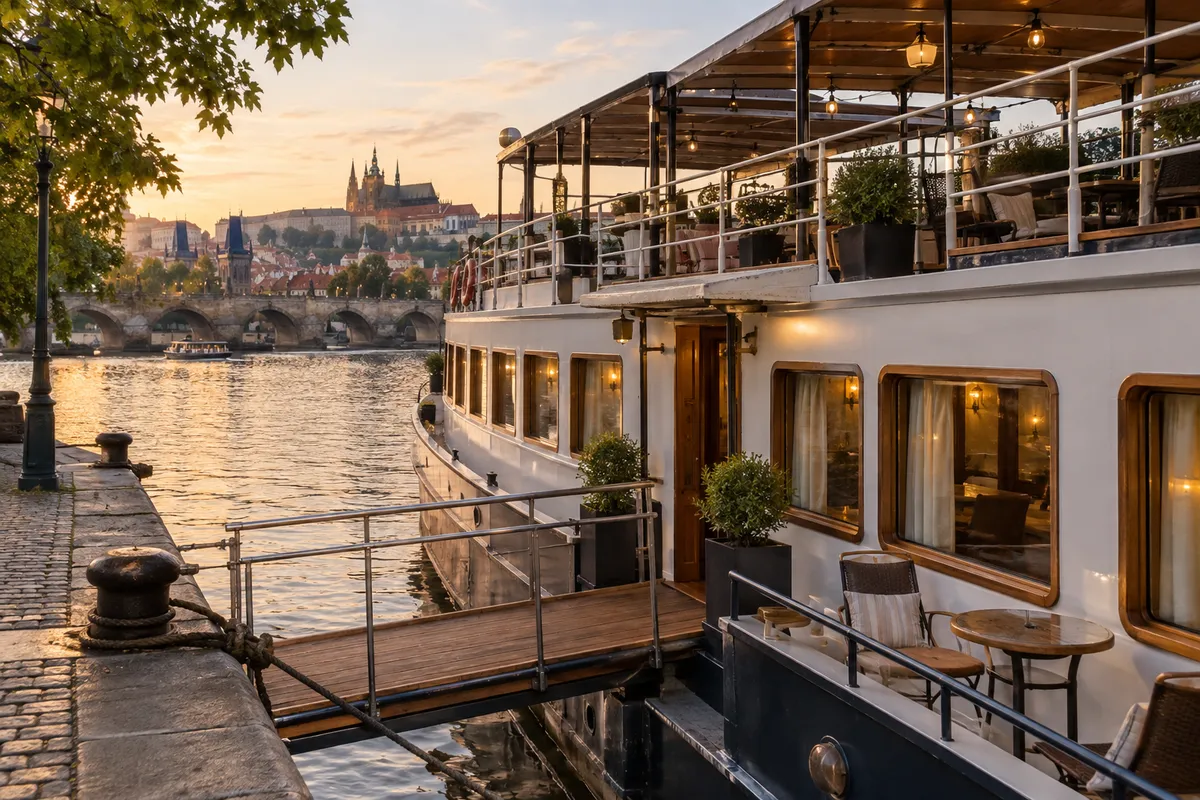
A berth on the water changes the entire geometry of a city stay. When you check into Europe floating hotels, you trade uniform concrete foundations for moving moorings, rhythmic water displacement, and the distinctive mechanics of marine living. Over twelve years of lodging aboard European river pontoons and harbor craft, I have learned that the difference between a restful night and an exhausting ordeal comes down to physical specifications: the structural incline of the gangway at low tide, the decibel rating of a bathroom macerator pump, and the acoustic damping between your cabin bulkhead and passing river traffic.
In this guide, I review the operational reality of ten primary continental botels and floating hotel ships permanently moored across France, the Netherlands, Denmark, the Czech Republic, Sweden, and the United Kingdom, alongside a baseline look at Nordic ice-bound water cabins. Every property listed here has been evaluated against engineering constraints, accessibility thresholds, and true municipal overnight costs so you can select the right vessel for your journey.
Selection Standards and Verification Methodology for Europe Floating Hotels
Mooring Stability, Gangway Accessibility, and Marine Infrastructure
To qualify for inclusion in my European waterway inspections, a floating accommodation must operate as a legally licensed stationary lodging permanently moored to an authorized quay, wharf, or dock basin. It must maintain continuous shore umbilical hookups for freshwater supply, three-phase electrical power, and municipal blackwater sewage discharge. Chartered navigation boats and transient cruising vessels are excluded; every vessel reviewed here serves as a stationary riverboat accommodation or harbor hotel ship.
Mooring physics dictate daily comfort. Purpose-built stationary pontoons and converted flat-bottomed cargo vessels displace water differently than historic round-bilge ships. On open river arteries like the Seine or the Vltava, passing tourist cruisers and freight barges generate dynamic hydrographic displacement. This pontoon wake motion causes vessels to roll and heave against their shore moorings. In contrast, enclosed dock basins like London's Royal Victoria Dock maintain constant water levels behind lock gates, minimizing kinetic movement.
Gangway engineering is another critical variable. Under European maritime standard EN 14206:2003, passenger gangways fitted with cross-cleats or ribbed steps may operate at angles up to 30 degrees. However, international accessibility standards for persons with reduced mobility (PRM) mandate that barrier-free ramp inclines not exceed a 1:12 gradient (roughly 4.8 degrees). During severe seasonal low-water conditions on inland rivers, the empirical gangway slope can easily reach steep angles around 18 degrees, transforming a simple walk ashore into a demanding climb with heavy luggage.
Gangway Luggage Advisory: When boarding converted cargo barges or historic hulls, carry compact soft-sided luggage rather than oversized hard-shell cases. Narrow companionways, raised deck coamings, and steep gangway steps make rolling luggage impractical during low river stages.
Navigating Regulatory Reality: Municipal Tourist Taxes and Vessel Classifications
Sleeping on European waterways does not exempt guests from municipal lodging regulations. On the contrary, European harbor hotel stays and urban botels fall squarely under city hospitality tax codes. Many travelers fail to account for how these surcharges alter the checkout balance, especially where cities apply percentage levies rather than flat fees.
In Prague, the municipal authority levies a flat local stay tax of 50 CZK (approximately €2.00) per person per night, established under the Prague City Hall tourism fee regulation. In Paris, a 4-star floating hotel like OFF Paris Seine collects a mandatory taxe de séjour of €8.45 per adult per night, detailed in the OFF Paris Seine booking terms. That adds €16.90 per night to a couple's bill before room charges.
Amsterdam enforces the highest turnover-based levy in Europe: a 12.5% municipal tourist tax calculated against the net lodging price, as confirmed by the City of Amsterdam Tax Department. For a standard €95 stay at Botel Amsterdam, the city tax adds €11.88 per night. Additionally, municipal safety ordinances set strict occupancy limits on heritage craft: converted vessels at Hotel Asile Flottant are limited to a legal maximum of 4 persons per boat to comply with emergency evacuation corridors.
Comparative Overview of Continental Botels Across European Waterways
Master Comparison: Rates, Vessel Profiles, and Mooring Realities
The European botel landscape spans multiple structural categories. You will encounter repurposed twentieth-century cargo vessels, double-deck purpose-built river pontoons, converted passenger steamers, and high-specification retired tenders. The baseline nightly rates below reflect entry-level double cabins during standard operating periods, excluding peak event premiums.
The comparative table below details ten urban floating properties across six European countries. Note that remote wilderness projects operate under different logistical constraints; for example, Arctic Bath in Harads, Sweden, charges starting rates of 6,500 SEK per night for its 24-square-meter floating Water Cabins that freeze solid into the Lule River ice during winter, functioning as an off-grid architectural spa rather than a city transit base.
| Property Name | City | Vessel Type | Keys | Starting Price | Primary Operational Advantage | Primary Operational Drawback |
|---|---|---|---|---|---|---|
| OFF Paris Seine | Paris, France | Stationary Catamaran Pontoon | 58 | €150 | Central Seine mooring; integrated plunge pool and dockside transit links | Noticeable river wake roll; €8.45 per adult nightly municipal tax |
| Botel Albatros | Prague, Czechia | Converted Botel Hull | 90 | €56 | Old Town proximity; 1930s Art Deco styling refit across 84 standard keys | Compact standard berth dimensions; strict 5,000 CZK smoking fine |
| Botel Matylda | Prague, Czechia | Paired Barge & Ship Hulls | 24 | €85 | Intimate two-vessel layout on quieter Masarykovo nábřeží embankment | Split vessel operations; narrow companionway access stairs |
| Botel Amsterdam | Amsterdam, Netherlands | Purpose-Moored Riverboat | 175 | €95 | Free municipal ferry transit directly to Centraal Station | Industrial shipyard setting; 12.5% municipal tourist tax added |
| Hotel Asile Flottant | Amsterdam, Netherlands | Converted Heritage Vessels | 6 | €165 | Autonomous private historic hulls at De Ceuvel eco-wharf | No cooking stoves allowed; strict 4-person unit occupancy cap |
| Hotel CPH Living | Copenhagen, Denmark | Converted German Cargo Barge | 12 | €188 (1,400 DKK) | Floor-to-ceiling panoramic harbor glazing; central Christianshavn base | Early 10:00 AM check-out; lack of mechanical central air conditioning |
| Rygerfjord Hotel & Hostel | Stockholm, Sweden | Moored Historic Ships (3) | 90 | €57 (650 SEK) | Unobstructed City Hall view from Lake Mälaren quay | Shared bathroom tiers in entry cabins; steep interior stairwells |
| The Red Boat | Stockholm, Sweden | Paired Steamer & Coaster | 36 | €51 (590 SEK) | Accessible central Stockholm budget pricing on Södermälarstrand | Front desk closes at 23:00; compact bunk cabin layouts |
| Sunborn London Yacht Hotel | London, UK | Luxury Yacht Pontoon | 136 | €212 (£180) | 108m superyacht layout; enclosed non-tidal Royal Victoria Dock mooring | Docklands location distant from central West End; event surcharges |
| Fingal | Edinburgh, UK | Converted NLB Lighthouse Tender | 23 | €311 (£264) | Exceptional historic marine craftsmanship; private Alexandra Dock basin | Premium pricing tier; Leith harbor location requires transit to city center |
Dynamic Dataset Application: Filtering by Vessel Class and Waterway Topology
Choosing between continental botels requires matching your travel needs against vessel architecture. High-capacity riverboats like Botel Amsterdam (175 rooms) operate much like conventional budget hotels with floating foundations. They feature high guest turnover, long central corridors, and automated front desks, but trade off intimate nautical character. At the opposite end, single-hull conversions like Hotel Asile Flottant offer complete spatial privacy aboard historic craft, yet come with strict self-catering and luggage limitations.
Waterway topology also alters your stay. River-based moorings along the Seine and Vltava experience seasonal current fluctuations, floating debris, and hydraulic wake displacement from passing river traffic. Enclosed dock basins like Edinburgh's Alexandra Dock or London's Royal Victoria Dock isolate vessels behind lock systems, eliminating river currents and tidal heave. On Swedish freshwaters, Lake Mälaren hotel ships enjoy minimal tidal movement, though open-water quays remain exposed to winter winds.
Vessel Filtering Strategy: If you are sensitive to movement or noise, filter your choices toward enclosed dock basins (such as Fingal in Leith or Sunborn in London) or wider lake quays rather than high-density river channels with continuous commercial barge traffic.
Western Europe Harbor and River Stays: Paris, Amsterdam, and Copenhagen
Seine River Catamaran Hotel: Modern Urban Design at OFF Paris Seine
Positioned at 86 Quai d'Austerlitz on the left bank of the Seine, OFF Paris Seine is a purpose-built floating catamaran botel comprising 58 rooms and suites. The vessel consists of two floating hulls connected by a central pontoon housing a plunge pool, a lounge bar, and a dining deck. The property operates without self-propulsion engines, moored permanently between the Pont d'Austerlitz and Pont de Charles de Gaulle.
Check-in opens at 16:00 and room check-out is set for 12:00 midday, giving guests a longer morning window than most maritime lodgings. The interior architecture is modern, with compact double cabins starting from €150 per night. Cabins on the river-facing side offer unobstructed waterline views across the Seine, while dockside rooms face the quay and metro tracks leading to Gare d'Austerlitz.
The primary operational compromise here is kinetic movement. The Seine is an active commercial waterway. Tourist shuttles like the Batobus and heavy freight barges produce substantial wakes throughout their operational hours, from early morning until late evening. As these wakes hit the catamaran's twin hulls, the pontoon rolls gently and compresses its heavy rubber quay fenders. If you book here, expect low-frequency fender groans and slight list angles whenever heavy river traffic passes.
Amsterdam Waterfront Contrasts: Industrial NDSM Wharf vs. De Ceuvel Heritage Craft
Amsterdam presents two completely distinct philosophies for boat hotels in Europe. At the industrial NDSM Wharf in Amsterdam North, Botel Amsterdam offers 175 floating rooms alongside five distinctive architectural Loft Letters mounted on the top deck. With entry rates starting from €95 per night, it provides an economical base directly connected to Amsterdam Centraal Station via the free municipal F4 NDSM ferry, which runs every 15 to 30 minutes.
A twenty-minute walk east, along the Johan van Hasseltkanaal at the De Ceuvel sustainability park, Hotel Asile Flottant provides a completely different experience. Rather than a multi-room barge, Asile Flottant consists of six individually restored heritage ships permanently moored in an off-grid canal pocket, with rates from €165 per night. Each historic vessel has been converted into an autonomous guest suite with reclaimed woodwork and private deck access.
Operational rules aboard Asile Flottant reflect its heritage status. Under the Hotel Asile Flottant vessel amenities guide, all units operate under a strict no-cooking policy: guest galleys include refrigerators, electric kettles, and Nespresso pod machines, but contain zero hot plates, ovens, or gas stoves to eliminate fire hazards on timber superstructures. Furthermore, local fire safety regulations cap occupancy at a strict maximum of 4 persons per vessel, making these historic hulls unsuitable for larger groups.
Amsterdam Tax Impact: Remember that Amsterdam's 12.5% tourist tax applies across all botel categories. On a three-night weekend stay at Asile Flottant totaling €495, the municipal tax adds €61.88 upon arrival. Ensure you budget for this turnover tax when comparing rates to other European capitals.
Harbor Panorama and Wake Dynamics at Copenhagen's Hotel CPH Living
Berthed at Langebrogade 1A in Christianshavn, Hotel CPH Living is a 12-room floating hotel ship converted from a German commercial cargo barge. Positioned just south of the Langebro bridge, the vessel sits directly on Copenhagen's inner harbor channel, a five-minute walk from Christianshavn Metro Station. Entry rates start from 1,400 DKK (approximately €188) per night.
The standout feature of this conversion is its harbor-facing wall: all twelve double rooms feature floor-to-ceiling glass that looks directly across the waterline toward the city center. The environmental engineering is documented in the CPH Living technical profile, which confirms that heating is supplied by a closed-loop geothermal marine heat pump that extracts thermal energy directly from harbor water to supply underfloor heating.
The trade-offs involve summer climate management and operating hours. Hotel CPH Living does not feature central mechanical air conditioning in its cabin specifications. While the floor-to-ceiling panoramic glass windows open to catch coastal harbor breezes, summer afternoons can create significant solar heat gain; the property provides portable floor fans to assist ventilation during warm spells. Departing guests face an early 10:00 AM check-out deadline, while check-in opens at 14:00. Harbor wake motion is generally modest, though harbor tour boats generate low swells during daytime schedules.
Central, Northern, and British Waterway Botels: Prague, Stockholm, London, and Leith
Historic Vltava River Botels: Comparing Albatros and Matylda in Central Prague
The Vltava River through Prague contains the highest concentration of continental botels in Europe. Two established options on opposite banks illustrate contrasting conversion styles: Botel Albatros near the Štefánikův Bridge, and Botel Matylda moored along Masarykovo nábřeží near the Dancing House.
Botel Albatros completed a comprehensive capital refit that redesigned its interior cabins in 1930s Art Deco styling. The vessel operates 90 guest units: 84 standard double cabins, 3 Deluxe cabins, and 3 Family cabins, as detailed on the Botel Albatros accommodation registry. Entry rates start from €56 per night. Standard cabins are compact, measuring roughly 9 to 11 square meters, but the refit added fresh wall paneling, updated en-suite shower pods, and individual climate units. The vessel enforces a strict 100% non-smoking policy across all interior spaces, backed by a mandatory 5,000 CZK (€200) penalty fee.
Across the river, Botel Matylda offers a more secluded atmosphere. The property divides its 24 rooms across two permanently berthed hulls: the original converted cargo barge Matylda (housing 6 rooms and an Italian restaurant) and the newer hotel ship Klotylda (housing 18 rooms), with rates starting from €85. Cabins aboard Matylda feature rich dark-wood paneling and brass portholes, creating an authentic nautical ambiance. Both properties collect Prague's municipal stay tax of 50 CZK (€2.00) per guest per night at reception.
Prague Embankment Access: Both Albatros and Matylda sit below street level. Reaching the gangways requires walking down cobblestone embankment ramps or stone stairways that can be slick during wet winter months. Choose Matylda if you want immediate tram access at Jiráskovo náměstí.
Lake Mälaren Hotel Ships: Budget Cabins and Heritage Moorings in Stockholm
Along Södermälarstrand on the southern shore of Stockholm's Lake Mälaren, several vintage vessels offer budget-friendly sleeping on European waterways, positioned directly across the basin from the red-brick Stockholm City Hall. The two primary operators are Rygerfjord Hotel & Hostel and The Red Boat (Den Röda Båten).
Rygerfjord is an extensive floating complex comprising three permanently moored historic vessels connected by walkways, operating 90 cabins with starting rates from 650 SEK (approximately €57). The ship offers an open-air deck restaurant and multiple cabin tiers. Standard cabins feature en-suite shower heads, while economy options utilize shared maritime bathrooms along the central companionway.
Moored a short walk to the east at Kajplats 10, The Red Boat operates 36 cabins across two historic hulls: a 1914 steamship and a 1946 coastal survey vessel. Nightly rates start from 590 SEK (approximately €51). Rooms are ultra-compact; single and bunk cabins recall vintage maritime crew quarters, with narrow doorways and raised threshold coamings.
A vital operational consideration at The Red Boat is reception hours. The front desk operates from 07:00 to 23:00 daily. Guests arriving after 23:00 must follow late check-in procedures, using numeric keycodes delivered via email to access the outer gangway gate and retrieve cabin keys from automated lockboxes. If you arrive late from Arlanda Airport without digital access details, you will find yourself stranded on the quay.
British Dockland Conversions: Luxury Superyacht and Lighthouse Tender in London and Leith
In the United Kingdom, high-specification ship conversions operate within enclosed commercial dock systems rather than flowing riverbanks. This setup completely eliminates the heave and roll common to open waterways.
In East London, Sunborn London Yacht Hotel is a 108-meter non-motorised luxury yacht hotel berthed at Royal Victoria Dock. Offering 136 staterooms and suites, with rates starting from £180 (approximately €212), the vessel features teak decks, a grand spiral staircase, and private balconies overlooking Canary Wharf. Berthed within a 350-meter walk of Custom House station (served by both the Elizabeth line and the DLR), it provides rapid transit into central London while sitting in calm, non-tidal waters.
Further north in Scotland, Fingal is moored at Alexandra Dock in the historic Port of Leith, Edinburgh. Commissioned in 1963 as a lighthouse tender for the Northern Lighthouse Board, this 239-foot ship underwent a £5 million transformation into a 23-cabin floating hotel, with rates starting from £264 (approximately €311). The level of maritime craftsmanship is exceptional: curved teak decks, polished brass fittings, and leather-paneled walls preserve the tender's engineering history.
Because Alexandra Dock is an enclosed basin managed by harbor lock gates, Fingal experiences zero tidal motion or passenger wake. The primary compromise is geographical: Leith is approximately three miles north of Edinburgh's Princes Street, requiring a 20-minute tram ride via the Ocean Terminal extension to reach the city center.
Technical and Practical Realities of Sleeping on European Waterways
Marine Macerator Toilets, Hull Insulation, and Condensation Control
Sub-deck plumbing and climate dynamics on floating hotels differ fundamentally from municipal land buildings. The majority of converted barges and historic ships rely on marine macerator toilets (often manufactured by Saniflo). These units use small-diameter discharge pipes paired with an electric motor-driven blade that shreds waste before pumping it uphill into shore sewage mains.
Macerator systems are acoustically noticeable. Whenever a cabin head is flushed, the electric motor emits a sharp mechanical hum that lasts between five and twelve seconds, easily heard through adjacent cabin bulkheads. Furthermore, these systems cannot tolerate non-organic matter; flushing sanitary items, wet wipes, or heavy paper will instantly jam the impeller, taking the en-suite head out of commission until a maintenance engineer disassembles the pump unit.
Hull thermal performance also demands attention. Steel hulls conduct temperature rapidly from surrounding water. In spring and autumn, the hull below the waterline remains cold (frequently below 10°C), creating a steep thermal gradient if the cabin air is heated. Unless the ship features professional spray-foam insulation, warm indoor air hitting bare steel bulkheads creates condensation. This moisture gathers behind bed frames or under floorboards, generating a faint metallic or damp scent characteristic of older botels. In modern refits like Albatros or CPH Living, vapor barriers mitigate condensation, but porthole cross-ventilation remains essential.
Marine Head Etiquette: Never dispose of tissues, makeup wipes, or packaging into a botel toilet. Keep a wastebasket alongside the head. A jammed macerator motor will flood your cabin bathroom and trigger substantial repair charges from the vessel management.
Wake Motion, Pontoon Bumper Squeaks, and Gangway Inclines
Moored vessels move continuously, even in protected urban rivers. When commercial river craft, passenger ferries, or sightseeing boats motor past, their displacement waves push against the botel hull. The vessel lifts slightly, rolls outward, and then settles back against the quay.
This kinetic motion places stress on mooring lines and protective pneumatic fenders or rubber bumpers. As the fenders compress between the steel hull and the concrete or stone quay wall, they produce rhythmic, high-pitched friction squeaks. This acoustic rubbing is especially noticeable along active commercial routes like the Seine and the Vltava during daylight navigation windows when river shuttles operate with high frequency. Travelers sensitive to intermittent squeaks should pack silicone earplugs.
Gangway mechanics also respond to water fluctuations. While standard EN 14206 permits gangway slopes up to 30 degrees for vessels fitted with footholds, a ramp angle exceeding 12 to 15 degrees makes rolling a four-wheeled suitcase awkward. During severe canal dry spells or low-water river stages, gangways can pitch steeply down from high stone quays, requiring guests to step carefully down metal rungs while gripping handrails.
Final Scenario Verdicts: Matching Travelers to Boat Hotels in Europe
Best Picks for Urban Explorers, Design Enthusiasts, and Luxury Travelers
Every floating accommodation excels under specific travel parameters. Matching your budget and personal preferences to the right hull type guarantees a memorable stay on the water.
- For Urban Explorers and Budget Travelers: Botel Albatros in Prague (€56) and Rygerfjord in Stockholm (650 SEK / €57) deliver the best price-to-location ratios. Albatros puts you within walking distance of Old Town Square with newly refitted Art Deco cabins, while Rygerfjord provides sweeping views of Stockholm City Hall across calm lake waters.
- For Modern Design and Waterfront Atmosphere: OFF Paris Seine (€150) offers an unmatched setting for couples and design enthusiasts, featuring an on-deck plunge pool and sunset river views, provided you budget for the Parisian tourist tax and daytime wake motion.
- For Heritage Authenticity and Ecotourism: Hotel Asile Flottant in Amsterdam (€165) provides autonomous private stays aboard restored vintage vessels in an innovative creative district, ideal for travelers who prefer independent living over standard hotel service.
- For Flawless Maritime Craftsmanship: Fingal in Edinburgh (£264) represents the gold standard of historic ship restoration in Europe, offering true five-star luxury in a peaceful, locked dock basin away from city-center crowds.
Operational Trade-offs, Accessibility Red Lines, and Land-Based Alternatives
Before booking a boat hotel in Europe, acknowledge the clear physical red lines where a floating stay becomes ill-advised:
- Wheelchair Users and Reduced Mobility: Converted historic barges and older botels (including Matylda, Rygerfjord, and The Red Boat) are fundamentally inaccessible for wheelchair users. Steep gangways, raised bulkhead coamings, and narrow spiral companionways present unavoidable barriers. If you need step-free access, book an accessible shore-side hotel or select purpose-built yacht hotels like Sunborn London that feature passenger elevators and wide pontoon ramps.
- Severe Motion Sensitivity: If slight kinetic heave or tidal tilt triggers vertigo or motion sickness, avoid river-moored botels on the Seine or Vltava. Instead, look to locked dock basins like Fingal, or choose a traditional quayside land hotel.
- Large Family Groups: Properties like Asile Flottant enforce legally binding occupancy limits (maximum 4 persons per vessel), while standard cabins on Albatros and The Red Boat are designed strictly for one or two guests.
- Strict Climate Preferences: If you require continuous mechanical central air conditioning chilled below 20°C during midsummer, skip unconditioned conversions like CPH Living and choose modern climate-controlled structures like OFF Paris Seine or Sunborn London.
For more details on vessel mechanics, passenger reviews, and room layouts, explore our complete guides to European urban botels, European river and harbor hotel stays, and the sensory realities of cabin life on the water.